War · Ukraine · Crimea
Zelenskyy confirms Crimean Bridge attack — and with that confirmation, the story of this week’s strikes on the Kerch crossing changes. Ukraine is no longer silent about who hit Vladimir Putin’s signature bridge. President Volodymyr Zelenskyy said on X that the attack answered Russian strikes on Ukrainian infrastructure, bridges among them, and he described it as the seventh stage of an operation that ran for several weeks, developed and coordinated by the SBU security service and the General Staff, Reuters reported on Tuesday. His message to Moscow was a single sentence: war will always return to where it began.
Track it live: https://signalpostnews.com/tracker/ukraine-war-map
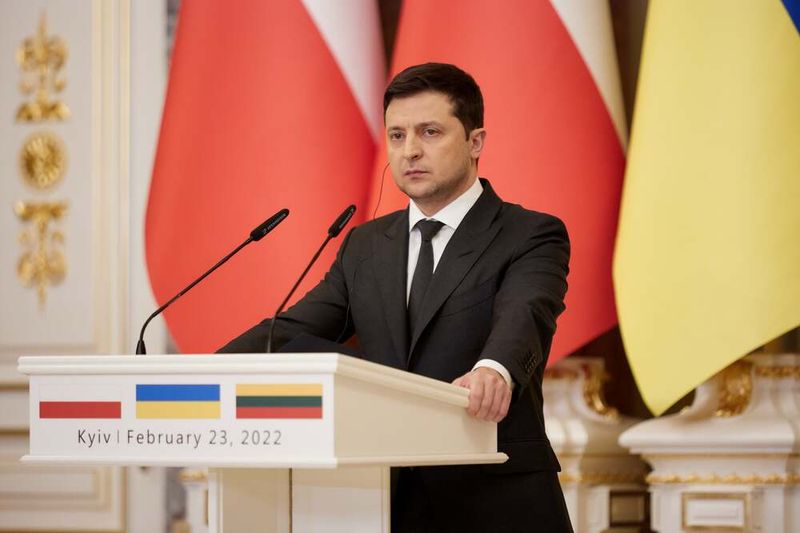
KYIV, November 17, 2026 — The claim came from the president himself. Volodymyr Zelenskyy confirmed the attack on the Crimean Bridge and said it was carried out in response to Russian attacks on Ukrainian infrastructure, including bridges, Reuters reported on Tuesday. Writing on X, he said Ukraine was “reminding Russia that war will always return to where it began.” The confirmation ends the posture Kyiv held through two nights of strikes on the crossing — the posture this newsroom recorded in our report on the Crimean Bridge second strike that suspended traffic overnight, where Ukraine had not claimed the attack. It has now, at the highest level, and the way Zelenskyy claimed it is the news: not as a single opportunistic hit, but as the final stage of a planned campaign.
That framing matters because of what it asserts about capability. A president who describes an attack as the seventh stage of a weeks-long operation is telling two audiences — Moscow, and the partners Ukraine will face across negotiating tables this week — that the bridge was not reached by luck. He is describing a method: a sequence, prepared over weeks, by the two institutions that sit at the centre of Ukraine’s war, the SBU security service and the General Staff. Everything in this article about the operation’s design is Zelenskyy’s account, attributed to him and to the reporting that carried it; Ukraine has published no operational detail beyond his statement, and none is invented here.
The seventh stage: what Zelenskyy said the operation was
Zelenskyy said the attack was the seventh stage of an operation that lasted several weeks, according to Reuters’ reporting syndicated by Devdiscourse on Tuesday. The SBU security service and the General Staff developed and coordinated the operation, he said. Before the bridge itself was struck, Ukrainian forces destroyed air defence systems, radars, electronic-warfare equipment and other targets in stages — each earlier stage, in his telling, stripping away a layer of the protection Russia wraps around the crossing, until the final stage reached the bridge itself.
Read carefully, the statement is a claim about sequencing rather than a battle report. Zelenskyy did not publish dates, target lists or strike counts for the six earlier stages, and this article does not supply them. What his account does is connect dots that were visible separately across recent weeks — attacks on the sensors and air defences that guard Crimea’s approaches — and assert that they were one design rather than a series of disconnected raids. That assertion is itself a signal. The SBU is the service that has owned the bridge file before, including the underwater operation against the crossing’s supports that Ukraine described in June 2025; pairing it publicly with the General Staff presents this week’s strikes as a joint, institutional campaign rather than a single service’s special operation. Zelenskyy also congratulated the armed forces and the intelligence services on the operation, the Wall Street Journal reported — a public commendation that underlines how deliberately Kyiv is owning this one.
The timing of the claim is part of its content. Zelenskyy spoke on the eve of President Vladimir Putin’s trip to China for meetings culminating in the first-ever Trump–Xi–Putin trilateral in Shenzhen later this week, and the Kremlin said Putin has been informed of the bridge attack, Reuters reported. A claim of responsibility delivered at that moment is not housekeeping. It is leverage, announced: Ukraine arrived at Shenzhen week able to say that it had planned for weeks, dismantled defences in stages, and struck the Russian president’s most symbolic project twice in two nights — while U.S.-brokered talks continue and while Moscow argues that time and attrition are on its side.
What Kyiv says struck the bridge
Ukrainian officials said drones began hitting the bridge on Monday, and that Flamingo and Neptune cruise missiles, together with more drones, completed the attack early on Tuesday, the Wall Street Journal reported. That munitions account — drones first, then Ukraine’s two named long-range cruise missiles in the culminating strike — is the Ukrainian officials’ account as carried by the Journal, and it is attributed to them here; no independent source has published a verified inventory of what struck the crossing, and Signal Post News does not present one.
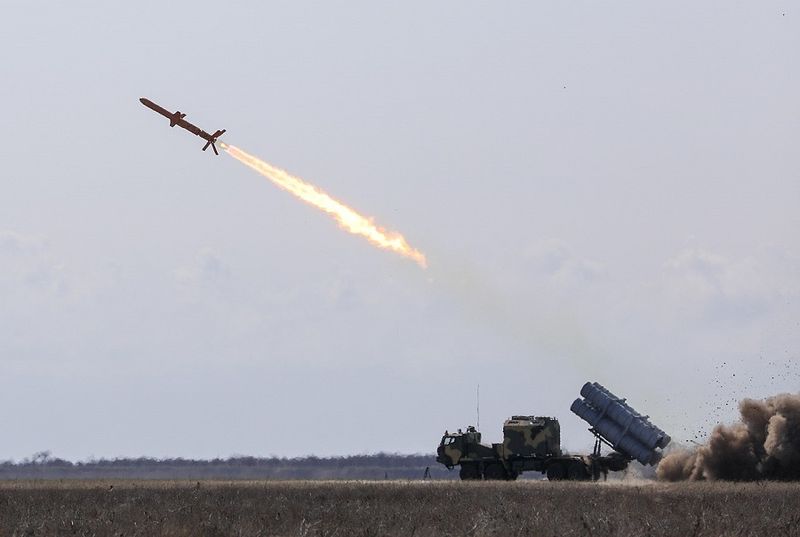
The sequence the officials described matches the shape of the week as it was reported at the time. Monday’s opening attack — covered in full in our account of Ukraine’s record drone barrage against Moscow and the Crimea Bridge — was followed within a day by the heavier second strike. If the officials’ account is accurate, the two nights were not two operations but the visible end of one: the drone-led opening Zelenskyy’s staged design would predict, and a missile-weighted finish once the defences around the strait had been worked over. That reading is an interpretation of attributed claims, and it is labelled as such; the verified core remains narrower, and the next section keeps it narrow on purpose.
The damage: three accounts, kept separate
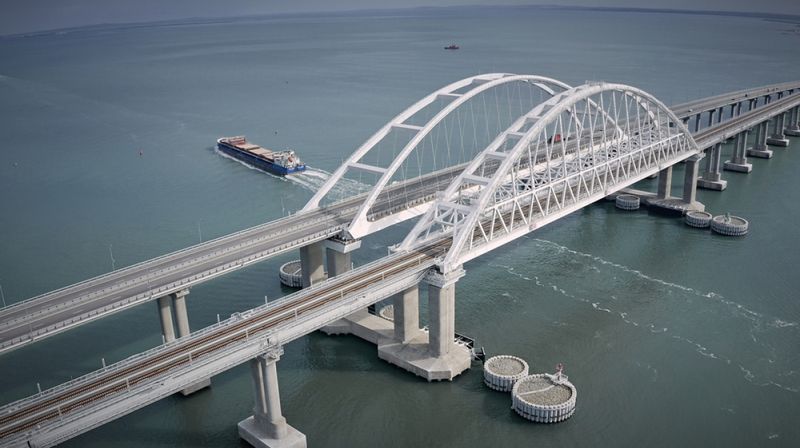
What Tuesday’s strike did to the bridge is described differently by each source family, and the differences are the story as much as the damage itself. The Wall Street Journal reported that Ukrainian strikes destroyed a section of the bridge early on Tuesday, and that a section collapsed into the sea together with one of the two arches that span the shipping channel, according to photographs circulating on social media; the extent of any damage to the rail section was not immediately clear, the Journal said. That arch account rests on social photographs, and it is carried here exactly on that basis — attributed to the Journal and to the social imagery it cited, not as independently established fact.
Reuters drew a firmer line around what it could stand behind. An unverified video circulating on social media appeared to show the entire road arch span collapsed into the Kerch Strait, blocking navigation — and Reuters could not verify the footage. Signal Post News follows that discipline in full: no collapse footage or still from social media is presented in this article as verified, no file photograph here depicts Tuesday’s damage, and the strongest verified statement available remains the one our second-strike report established — traffic suspended on the crossing, with the extent of Tuesday’s structural damage not officially confirmed by Moscow. Zelenskyy’s confirmation settles who Kyiv says did it. It does not, by itself, settle what was destroyed, and readers should hold those two questions apart precisely because both capitals have reasons to blur them.
The Kremlin’s public line, for its part, has addressed Monday and not yet Tuesday. The Kremlin said Monday’s first attack caused only minor damage, Reuters reported — that is the Kremlin’s characterisation, attributed to it, and it predates the second strike. No official Russian confirmation of Tuesday’s damage extent had been published in the reporting this article draws on. Russia’s Transport Ministry said road and rail traffic over the bridge was suspended, the Journal reported. And Russia’s Investigative Committee opened a criminal case over what it called an act of terrorism, acknowledging structural damage in doing so, according to the Reuters syndication and Financial Times reporting carried in the brief for this story — the committee’s characterisation, attributed, and notable chiefly because a criminal case is an odd instrument for a strike Moscow would prefer to describe as inconsequential.
The casualty accounts still do not agree
One part of the record has not moved since the second strike was first reported, and this article does not move it either. Sergey Aksyonov, the Russian-installed head of Crimea, said two people were killed in the attack on Crimea, as reported by Reuters. Russia’s Transport Ministry said there were no casualties, as reported by the Wall Street Journal and CNN. Those accounts conflict. They are presented here exactly as their sources gave them — attributed, unmerged, and unresolved — because no verified basis exists on which to choose between them, and because a confirmation of responsibility from Kyiv does not adjudicate a dispute between two Russian institutions about the human cost on the night. If either account is revised on the record, this newsroom will update its reporting and note the revision.
The other direction: Kyiv’s bridges, briefly
Zelenskyy framed the bridge operation as an answer, and the strikes he was answering deserve a brief, attributed record here — no more, because Signal Post News has covered them in depth in our report on the Zelenskyy, Witkoff and Kushner talks and the warning of major Russian strikes. Kyiv’s mayor said Russia struck the capital’s North and South bridges — a claim Moscow later confirmed, Reuters reported. The strikes partially damaged Kyiv’s metro and caused power and water outages and transport restrictions in the capital. Deputy Energy Minister Artem Nekrasov said the overnight energy strikes left consumers without power in eight regions — Dnipropetrovsk, Donetsk, Zaporizhzhia, Mykolaiv, Odesa, Sumy, Chernihiv and Chernivtsi — with the situation “extremely difficult” in Dnipropetrovsk and Zaporizhzhia. Local officials said three people were injured in the Cherkasy region. Russia’s Defence Ministry confirmed on Telegram that it had hit transport, military and energy facilities in Kyiv, Zaporizhzhia, Cherkasy and Dnipropetrovsk, along with port infrastructure and cargo ships; Reuters could not independently confirm the battlefield claims. In the same nights, Moscow’s mayor, Sergei Sobyanin, said roughly 800 drones flew toward the Moscow region and that 321 were brought down en route — his figures, as carried in Reuters’ full reporting and attributed to him here, inside the wider record-setting drone counts both ministries have claimed this week.
Set side by side, the two bridge stories are why Zelenskyy’s sentence lands. Russia struck bridges in Kyiv; Ukraine struck the bridge at Kerch; and the Ukrainian president named the exchange a doctrine — bridge for bridge, with the war returned to the place he says it began, the annexation project that has symbolised Russia’s hold on Crimea since 2014. Doctrines announced on X are still doctrines: they tell the adversary what to expect next time, and they tell one’s own public what the strikes were for.
The bridge, and what a severed arch would mean
The Crimean Bridge runs 19 kilometres across the Kerch Strait between Russia’s Taman Peninsula and Kerch. It was once a key supply route into occupied Crimea; today, with Russia relying principally on the land corridor through occupied southern Ukraine, the crossing carries mainly residents and visitors, according to the reporting this article draws on. It remains a gateway between the Sea of Azov and the Black Sea for grain, oil and liquefied petroleum gas shipping — which is why the unverified image of an arch in the navigation channel matters beyond symbolism: a span in the strait would obstruct the shipping lane itself, a consequence no source has yet verified.
The crossing’s attack history is the context for Zelenskyy’s “seventh stage” language. A truck bomb tore into the road span in October 2022, killing four people. Seaborne drones struck it again in July 2023. Ukraine’s SBU described an underwater operation against its supports in June 2025. And this week came Monday’s and Tuesday’s strikes — the sequence Zelenskyy now says was staged over several weeks, with the defences around the strait as the first six items on the list. Each previous attack was followed by closure, repair and a restricted reopening; what is different this time is not only the reported scale but the claim of design, made by the president, in advance of any Russian damage assessment.
One further claim from Zelenskyy belongs in this context, fenced with its attribution. On Sunday, he said Ukraine’s campaign against Russian refineries had knocked out over half of Russia’s refining capacity. Reuters could not verify that claim, and two industry sources told Reuters the reduction was about 30 percent. The refinery figure is carried here as Zelenskyy’s claim alongside the check Reuters applied to it — never as established fact — because it belongs to the same argument as the bridge claim: a president presenting, in one week, a ledger of deep-strike results, and inviting his audiences to total it.
Why this matters
The confirmation converts a strike into a strategy, and strategies have consequences that strikes alone do not. By owning the operation — its weeks of preparation, its staging, its two sponsoring institutions — Kyiv has removed Moscow’s option of treating the bridge attacks as an embarrassment to be minimised and forgotten. The Kremlin’s Monday line, that the first attack caused only minor damage, now sits against a Ukrainian president congratulating his services on a seven-stage success and a Russian investigative committee opening a terrorism case that acknowledges structural damage. The gap between those accounts is not a detail; it is the information war running in parallel with the strike war, and on Tuesday both were fully visible at once.
For the diplomacy, the claim cuts in two directions, and honest analysis has to hold both. As leverage, it is formidable: Ukraine enters the Shenzhen week demonstrating reach, patience and a working deep-strike complex — drones, Flamingo and Neptune missiles, and the intelligence preparation Zelenskyy describes — at the moment its partners are being asked for interceptors and financing and its adversary is arguing that Ukraine’s position only weakens with time. As escalation, it is equally real: a publicly announced bridge-for-bridge doctrine invites the reply it names, and the obvious targets for that reply are the Kyiv bridges and energy system Russia struck this week and can strike again. Zelenskyy has plainly priced that risk in — his framing casts the doctrine as response, not initiative — but a doctrine, once announced, obliges its author to keep answering, and obliges the adversary to keep testing whether the answer still comes.
For Crimea’s logistics, the practical question is narrower than the symbolism and will be answered by engineers, not statements. If the Journal’s social-photo account is right and a road section and an arch are down, the road crossing faces a repair programme measured in months, not the days of previous closures, while the unclear extent of any rail damage leaves the crossing’s most militarily useful span an open question. Russia’s land corridor absorbs much of the military weight either way — that is precisely why the bridge’s loss is survivable for Moscow’s war and devastating for its story. The bridge was built to make Crimea’s annexation look permanent and ordinary. Every week it spends closed, damaged or defended by a stripped and battered air-defence screen makes it look like what Zelenskyy says it is: the place the war began, and a place the war can always return to.
What happens next
Three watchpoints follow from Tuesday’s claim. The first is verification: a daylight, independently checkable account of the arch and the rail span — from imagery either side releases, from shipping movements through the strait, or from a Russian damage statement that goes beyond Monday’s “minor damage” line — will decide whether the seventh stage was a severing or a scarring. The second is retaliation: Russia’s pattern this week points at Kyiv’s bridges and energy grid, and Zelenskyy’s doctrine tells Ukrainians to expect the exchange to continue rather than conclude. The third is Shenzhen: Putin, informed of the attack before his China meetings, now sits down with Presidents Trump and Xi with his signature bridge as the week’s defining image — and Ukraine’s president, who will not be in the room, has made sure the bridge is in it. Follow Signal Post News for updates from Crimea, Kyiv and Shenzhen, and share your thoughts below.
Sources
- Reuters, November 17, 2026 — “Ukraine strikes Crimean Bridge second day; Russia pounds Kyiv bridges” (Osborn / Golovnya, opened in full): Zelenskyy confirmed the attack on the bridge, said it was in response to Russian attacks on Ukrainian infrastructure including bridges, and wrote on X, “We are … reminding Russia that war will always return to where it began”; the Kremlin said Putin has been informed and that Monday’s first attack caused only minor damage, with no official confirmation of Tuesday’s damage extent; unverified social video appeared to show the entire road arch span collapsed into the Kerch Strait blocking navigation, and Reuters could not verify the footage; Aksyonov’s statement that two people were killed; Klitschko’s North and South bridge claims, later confirmed by Moscow, with the metro partially damaged; Deputy Energy Minister Artem Nekrasov’s statement that eight regions were left without power; three injured in the Cherkasy region, per local officials; Russia’s Defence Ministry Telegram confirmation; and Sobyanin’s figures of roughly 800 drones toward the Moscow region and 321 brought down en route.
- Reuters via Devdiscourse, November 17, 2026 — “Zelenskiy says Ukraine struck Crimea bridge in response to Russian attacks on infrastructure”: Zelenskyy said the attack was the seventh stage of an operation that lasted several weeks; the SBU security service and the General Staff developed and coordinated it; and Ukrainian forces destroyed air defence systems, radars, electronic-warfare equipment and other targets in stages on the way to the bridge. Carried throughout this article as Zelenskyy’s statement, attributed.
- The Wall Street Journal, November 17, 2026 — “Ukrainian strike severs part of Russia’s Crimean Bridge”: Ukrainian strikes destroyed a section of the bridge early on Tuesday, with a section collapsed into the sea together with one of two arches spanning a shipping channel, per social photos, and the extent to the rail section not immediately clear; Ukrainian officials said drones began hitting on Monday, then Flamingo and Neptune cruise missiles plus more drones completed the attack early on Tuesday; Zelenskyy congratulated the armed forces and intelligence services; and Russia’s Transport Ministry said road and rail traffic was suspended and that there were no casualties.
- Signal Post News, related coverage: Crimean Bridge Second Strike Collapses a Road Section and Halts Traffic Again, as Russia Claims a Record 1,441-Drone Night; Ukraine’s record drone barrage strikes Moscow and the Crimea Bridge; Zelenskyy, Witkoff and Kushner talks and the warning of major Russian strikes.
- Photos: President Zelenskyy in Kyiv, February 23, 2022, Office of the President of Ukraine; a Neptune cruise-missile test launch, Defense Express via defence-ua.com; the Crimean Bridge’s arches over the Kerch Strait, Vesti Crimea via vesti-k.ru — each credited in its caption. All are file photographs; none depicts Tuesday’s strike or its damage, and no verified damage imagery of Tuesday’s attack is licensed for use.