Kyiv ballistic missile strike: waves of Russian ballistic missiles and drones struck Kyiv from late Sunday evening, October 18, into Monday morning, killing one person and injuring eight, according to the Associated Press and Ukraine's State Emergency Service. The first wave hit a medical facility in the Desnianskyi district and a building in the Dniprovskyi district, and later waves damaged a left-bank metro station and a 25-storey residential building. The Kyiv Independent's journalists in the capital reported the first explosions arrived at the same moment as the air-raid sirens rather than after them. President Volodymyr Zelenskyy said the overnight assault — 16 ballistic missiles and more than 200 drones by his count — damaged more than 10 energy facilities in 11 regions and cut power to at least 550,000 families, and that Kyiv once again received no early warning from partners. The strikes came hours after Zelenskyy said the United States had resumed sharing the intelligence that warns Ukraine of Russian ballistic launches, and on a day when President Donald Trump defended his sanctions waiver for Moscow in a social media post accusing Zelenskyy of not wanting to end the war.
Ukraine / The missiles arrived with the alarm, not after it — and they landed hours after Kyiv said its warning lifeline was back
Track it live: follow the front lines on the Signal Post News Ukraine War Map and armed conflicts worldwide on the Live Global Wars Tracker.
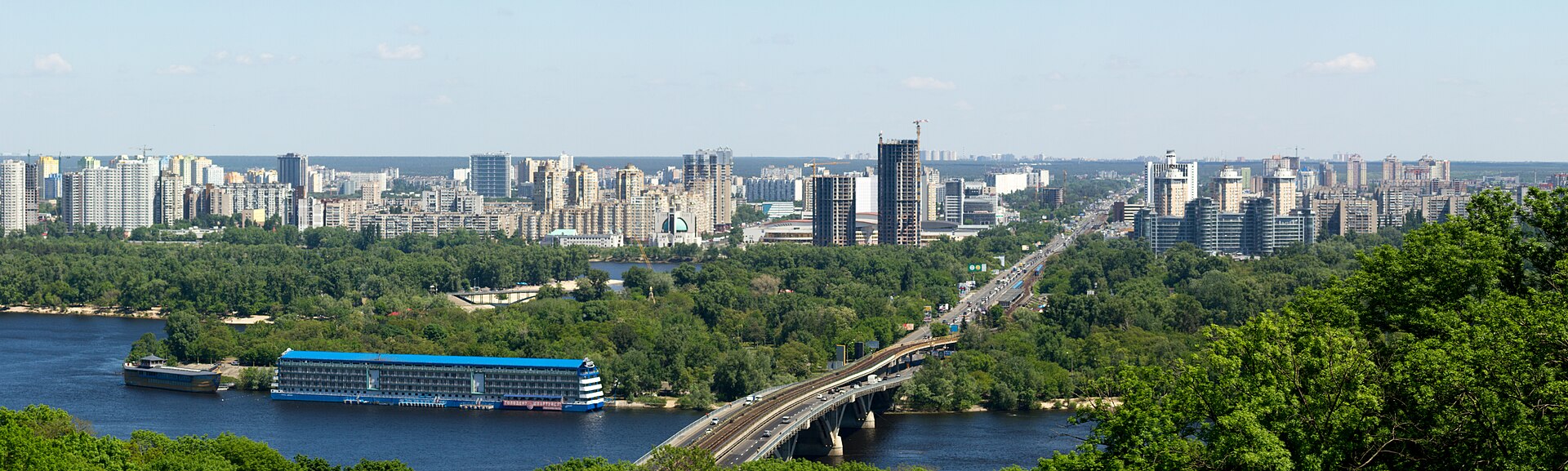
KYIV, Ukraine — Waves of Russian ballistic missiles and drones struck Kyiv from late Sunday evening into Monday morning, killing one person and injuring eight, according to the Associated Press, reporting the figures of Ukraine's State Emergency Service and the Kyiv City Military Administration. The first explosions, at around 11 p.m. local time on Sunday, arrived at the same moment as the air-raid sirens meant to warn of them. "A medical center in the Desnianskyi district was hit in the strike," Mayor Vitali Klitschko reported, according to the Kyiv Independent, which also reported a second building hit in Dniprovskyi and emergency services dispatched to both sites — the two districts that make up most of Kyiv's left bank, across the Dnipro from the government quarter. The Kyiv Independent's chief editor, Olga Rudenko, reported that phone alerts went off moments before the blasts while street sirens began "howling during the explosions." One of the newspaper's reporters, Kateryna Denisova, said she had about three minutes to shelter between the mobile alert and the first explosions — which, she noted, is usual for a ballistic threat. The person killed was a 21-year-old woman, according to Kyiv local reporting of the mayor's account. Klitschko initially reported three people injured; the toll rose to eight as emergency services completed their sweep of the impact sites, and later waves damaged a metro station and a 25-storey residential building on the left bank.
What is known, and what is not
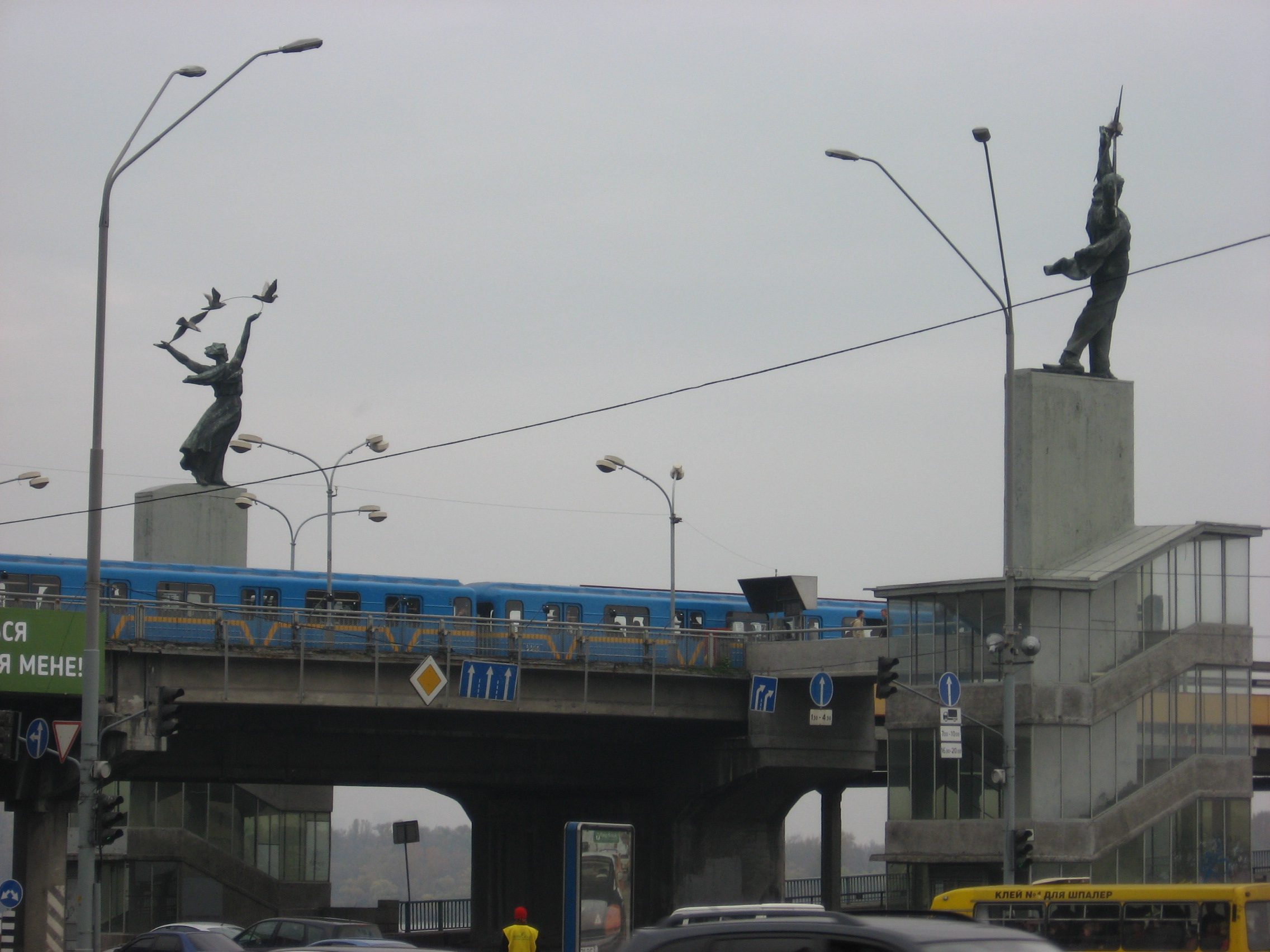
The picture assembled by Monday morning is considerably fuller than the first reports, and it is worth separating what is confirmed from what is claimed. The State Emergency Service's confirmed toll for Kyiv is one person killed and eight injured. Ukraine's Air Force said Russia launched ballistic missiles, cruise missiles and 269 drones overnight, that air defences destroyed or suppressed 243 drones and four missiles, and that strikes were recorded at 25 locations, with debris falling at eight more. In Desnianskyi, a private medical facility and one of the city's metro stations were damaged, the Kyiv City Military Administration said via AP; the Kyiv Independent identified the damaged stations as the above-ground Chernihivska and Lisova stations, which were temporarily closed for repairs, and Klitschko said debris damaged the station's rails and the metro's power-supply rails. In Dniprovskyi, debris falling in open areas damaged educational institutions and a sports facility, and struck non-residential buildings. In Solomianskyi, where five of the injured were hurt, debris from the later waves struck a 25-storey residential building, and a fire on the third floor of a medical facility located in a 25-storey residential building was extinguished; windows were damaged in nearby buildings and a shopping centre. What remains unconfirmed: the precise type of every missile fired, the intended targets, and whether the toll is final. Russia's defence ministry has now published its own account of the strike, carried below; its claims about what it hit have not been independently verified.
The nationwide toll: more than 10 energy facilities hit, 550,000 families without power
President Volodymyr Zelenskyy put the night in nationwide terms in a post on X on Monday. "Another Russian ballistic missile attack came in several waves overnight, and once again, there was no early warning from our partners," he wrote. By his count, Russia launched 16 ballistic missiles and more than 200 drones of various types, including jet-powered Shahed drones, and energy facilities were attacked in 11 regions: Vinnytsia, Volyn, Kirovohrad, Kyiv, Mykolaiv, Zhytomyr, Khmelnytskyi, Kharkiv, Ternopil, Odesa and Rivne. "In this one night alone, more than 10 energy infrastructure facilities were damaged, and the lights went out for at least 550,000 families. Repair crews are working at the sites," he said, adding that a medical clinic, a school, a metro station and ordinary residential buildings were also damaged. His framing is his position, stated here as he stated it: Ukraine, he said, has responded positively to every ceasefire proposal, while "ballistics, 'Shaheds,' and killings are, again and again, Russia's responses," and partners should "call the aggressor an aggressor and help Ukraine protect lives." His launch figures — 16 ballistic missiles and more than 200 drones — are a presidential tally and sit alongside, not inside, the Air Force's operational count of 269 drones launched and 243 destroyed or suppressed; the two counts are compiled differently, and they are presented here as their authors gave them.
Hours after the warning system became the story
The timing is what elevates Sunday's strike from a grim routine to a test of a claim made the same day. Hours earlier, President Volodymyr Zelenskyy had said in comments reported by Reuters that the United States had resumed providing Ukraine with critical intelligence to help it defend against Russian missile strikes after a brief pause. Speaking to NBC's Meet the Press, Zelenskyy said the sharing had been interrupted and later "de-blocked." "We are very thankful for this," he said. "Now it works." Ukraine relies on U.S. intelligence to spot the fast-moving ballistic missiles Russia fires in waves at its cities, Reuters reported — the very category of weapon that hit Kyiv on Sunday evening. The Kyiv Independent noted, in fairness to the physics, that ballistic missiles commonly give very little warning even when surveillance works: they fly high and fast and can cover the distance from Russian launch areas to Kyiv in minutes. Ukrainian officials have previously explained that satellite surveillance of launch sites can be vulnerable to transmission delays, and that weather can interfere with the space-based infrared satellites that watch for launches. All of that context is now well documented on this site from last week's strikes, when Kyiv said ballistic missiles arrived on two consecutive days with no allied warning at all — an episode that killed two people in the same Desnianskyi district on October 13. Read that background here: Zelenskyy and the no-warning dispute. Sunday's strike does not by itself prove the restored sharing failed. It proves something narrower and, for Kyiv's residents, more important: restored or not, the warning on Sunday was measured in moments. The night then ran the comparison itself. The later waves, in the early hours of Monday — further explosions were reported around 3 a.m. and again near 7 a.m. — arrived after air-raid alerts and Air Force warnings had been issued, Klitschko and the Kyiv Independent reported: the warning system working as designed, over the same city, hours later. The contrast between the two waves is the accurate frame — not a lifeline simply 'back,' but a lifeline whose value, when it works, is measured in single minutes.
A Sunday of accusations in Washington and Kyiv
The missiles landed at the end of a day on which the war's diplomacy was conducted in public, at volume, and mostly at cross purposes. President Donald Trump, defending the executive order with which he waived sweeping new sanctions on Russia late on Friday, wrote on social media on Sunday: "My decision on Russia is a very simple one. I am in the process of negotiating Peace in the war between Russia and Ukraine, and don't want to do anything that will drive, foolishly, Russia away from the bargaining table." He added that "great progress is being made," including, he said, in hostage negotiations, and accused Zelenskyy of using Russian diesel refineries as targets and of not wanting to end the war — "and probably never did." Zelenskyy, on Meet the Press, warned that if the United States formally took Russia's side it would be a historic mistake: "If the United States will take the side of Russia, of course we will not prevail," he said, while insisting, "We want to trust him, and I hope that he will change his decisions." In a separate interview with Bloomberg published the same day, he said steps appeared to have been taken to convince Ukraine to capitulate. Treasury Secretary Scott Bessent, appearing on the same NBC programme, pushed back on Kyiv's account of the sanctions move, saying no sanctions had been lifted on Friday and that only the embargo on Russian diesel had been eased, and he criticised European governments for continuing to finance Russia through energy purchases. Zelenskyy also said he had spoken on Sunday with U.S. envoy Steve Witkoff and Jared Kushner in what he called "nonstop communication" toward peace. The sanctions waiver itself, and the 60-day review Secretary of State Marco Rubio attached to it, are covered in depth here: Trump waives the Graham Act sanctions. None of Sunday's exchanges changed a single fact on the ground. Sunday evening supplied one.
Moscow's account: a "massive strike" on military-industrial targets
Russia's defence ministry said on Monday that its forces had carried out a "massive strike" on targets in Kyiv and the capital region. The ministry said the attack targeted military-industrial facilities, storage sites for cruise missiles and drones, and data centres, using ground-launched precision weapons and drones. In the fuller account carried by AP, its target list included a data centre, a logistics hub it said stored drone and Flamingo cruise-missile components, an industrial facility making drone components, a locomotive depot where it said missiles are stored, and a polymer-materials plant in the Kyiv region; the ministry also said its forces struck a bulk carrier at sea some 130 kilometres (80 miles) southwest of Odesa that it alleged was carrying military or dual-use cargo. Reuters has not independently verified the ministry's target claims, and they are carried here strictly as Moscow's account. Set against it is Kyiv's: a medical facility, a metro station, schools, a sports facility and homes damaged, and a 21-year-old woman dead. Neither capital's characterisation of the targets is endorsed here; the civilian damage is what Ukrainian officials, emergency services and reporters on the ground documented.
Why this matters
Start with the building. A medical centre is the most protected category of civilian object in the laws of war, and it is also, in this war, a recurring address: Kyiv's districts have now recorded strikes on or near medical facilities in successive weeks, and Desnianskyi — a district of several hundred thousand people, the most populous in the capital — has absorbed a nine-storey apartment block hit on October 13 that killed two and injured 21, a thermal power plant campaign, and now a medical centre. Ukraine calls such strikes war crimes. Russia's defence ministry said on Monday that the overnight strike targeted military-industrial facilities, storage sites for cruise missiles and drones, and data centres — a claim Reuters has not independently verified — and it has not addressed the medical centre report specifically. What can be said without taking either capital's word is that the pattern of targets around the left bank — power, housing, and now healthcare, within a few square miles — is the pattern of a pressure campaign against a city's ability to live through winter, which is precisely what Zelenskyy's Sunday tally of 76 energy attacks in a week was assembled to argue. That tally is here: Russia hit Ukraine's energy sector 76 times in a week, Zelenskyy says.
Then consider the warning. The week's real strategic revelation was not a weapon but a dependency: Kyiv revealed, by complaining about it, that its ballistic-missile warning runs through Washington. That dependency is now a known lever, and levers get pulled. Sunday's strike will be read in Kyiv through that lens whatever the technical facts turn out to be — if the alert came three minutes before impact, the question becomes whether three minutes is what "it works" means. The honest answer involves physics as much as politics: a ballistic missile launched from Russian territory reaches Kyiv in roughly the time it takes to read this section, and no intelligence relationship on earth changes that arithmetic by more than minutes. What intelligence changes is the difference between three minutes and none — between a hospital that has moved its patients from the top floors and one that has not. On October 13, Kyiv said it got none. On Sunday, by its own journalists' accounts, it got moments. The gap between those two numbers is the whole argument.
There is also a symmetry in the target lists that neither capital will welcome. Moscow's published list — data centres, drone and cruise-missile storage, logistics — mirrors the target set Ukraine struck around St. Petersburg hours earlier: an oil terminal, a logistics hub, a data centre. Both capitals are now publicly framing data centres and logistics as military targets, which widens the category of places that can be struck — and explained afterward — in every exchange to come.
The numbers in context
The Air Force's overnight accounting put Russia's launch at ballistic missiles, cruise missiles and 269 drones, with 243 drones and four missiles destroyed or suppressed and strikes recorded at 25 locations; Zelenskyy's own count — 16 ballistic missiles and more than 200 drones — describes the same night through a different ledger. Sunday's strike is the third ballistic episode over Kyiv in six days. On October 13, missiles hit a Desnianskyi apartment building and the Darnytska CHPP-4 thermal plant, killing two and injuring 21, including an eight-year-old child, by the mayor's count. A further strike followed within 24 hours. Zelenskyy said on Sunday that Russia had attacked Ukraine's energy, oil and gas sectors 76 times in the week since Trump announced an energy ceasefire neither side confirmed, and that Russia's weekly output across Ukraine ran to nearly 2,700 attack drones, some 1,700 guided bombs and 66 missiles. The traffic is two-way: on the same weekend, Ukraine fired one of its largest drone waves of the war at Russia — Moscow said it downed 1,015 drones overnight into Sunday — killing one person and injuring 15 around St Petersburg's oil terminal, data centres and warehouses, in defiance of Trump's demand that Kyiv stop hitting Russian energy infrastructure. That wave is covered here: Ukraine's 1,000-drone wave at St Petersburg and Moscow. Put together, the weekend's ledger describes a war whose tempo is rising on both sides at exactly the moment its diplomacy is being conducted by social media post — each capital striking the other's infrastructure while arguing, in public, about which of them is obstructing peace.
What happens next
The first counting is done, and its figures — one killed, eight injured, and an Air Force tally of 269 drones launched — are the ones that will stand unless officials revise them. What the accounting cannot settle is how many ballistic missiles were intercepted; Kyiv's shortage of Patriot interceptors, the only system it fields that reliably engages ballistic missiles, is the constraint Zelenskyy himself named this week when he called more Patriots the "minimum" condition for any energy-strike restraint. In Washington, the strike lands in the middle of a congressional fight over the sanctions waiver, in which Republican critics have already called the easing an embarrassing concession; a medical centre in flames, or even merely damaged, is the kind of image that moves that argument. And in the background, the Witkoff–Kushner channel Zelenskyy described on Sunday continues, with the president insisting great progress is being made and neither capital able to point to a document. The missiles, at least, are punctual. Kyiv's residents will spend another night measuring their safety in the distance between a phone buzzing and a siren starting — and on Sunday, by the accounts of the journalists who lived it, that distance was almost nothing at all.
Sources
Reporting for this article is based on: the Kyiv Independent's on-the-ground reporting of the October 18–19 strikes (explosions simultaneous with sirens; Mayor Klitschko's statements on the Desnianskyi medical centre, the Dniprovskyi building and the damaged Chernihivska and Lisova metro stations; Olga Rudenko's and Kateryna Denisova's accounts), republished by Bytes Europe; Radio Free Europe/Radio Liberty's report of the strike and of Klitschko's initial statement that at least one person died; Reuters, "Russian strike kills woman, hits Kyiv subway station, mayor says" (October 19) and its report of the Russian Defence Ministry's "massive strike" statement (October 19, via Devdiscourse syndication); the Associated Press, "Russian missiles and drones hit Kyiv overnight, killing 1 and injuring 8" (October 19), reporting the State Emergency Service toll, the Air Force totals and the Kyiv City Military Administration's district-by-district account; President Zelenskyy's October 19 post on X, as reported by the Jerusalem Post, The Times and AnewZ; the State Emergency Service via Ukrinform; Reuters, "US resumes intelligence sharing with Ukraine after pause, Zelenskiy says" (October 18) and "Zelenskiy says Russia attacked Ukrainian energy sector 76 times in past week" (October 18); USA Today's report of Trump's October 18 post and the congressional reaction; and CNN's October 18 report on the Trump–Zelenskyy exchange. The confirmed toll — one killed, eight injured — is the State Emergency Service's count as reported by AP; the woman killed was identified in Kyiv local reporting as 21 years old.