Ukraine strikes Perm oil refinery
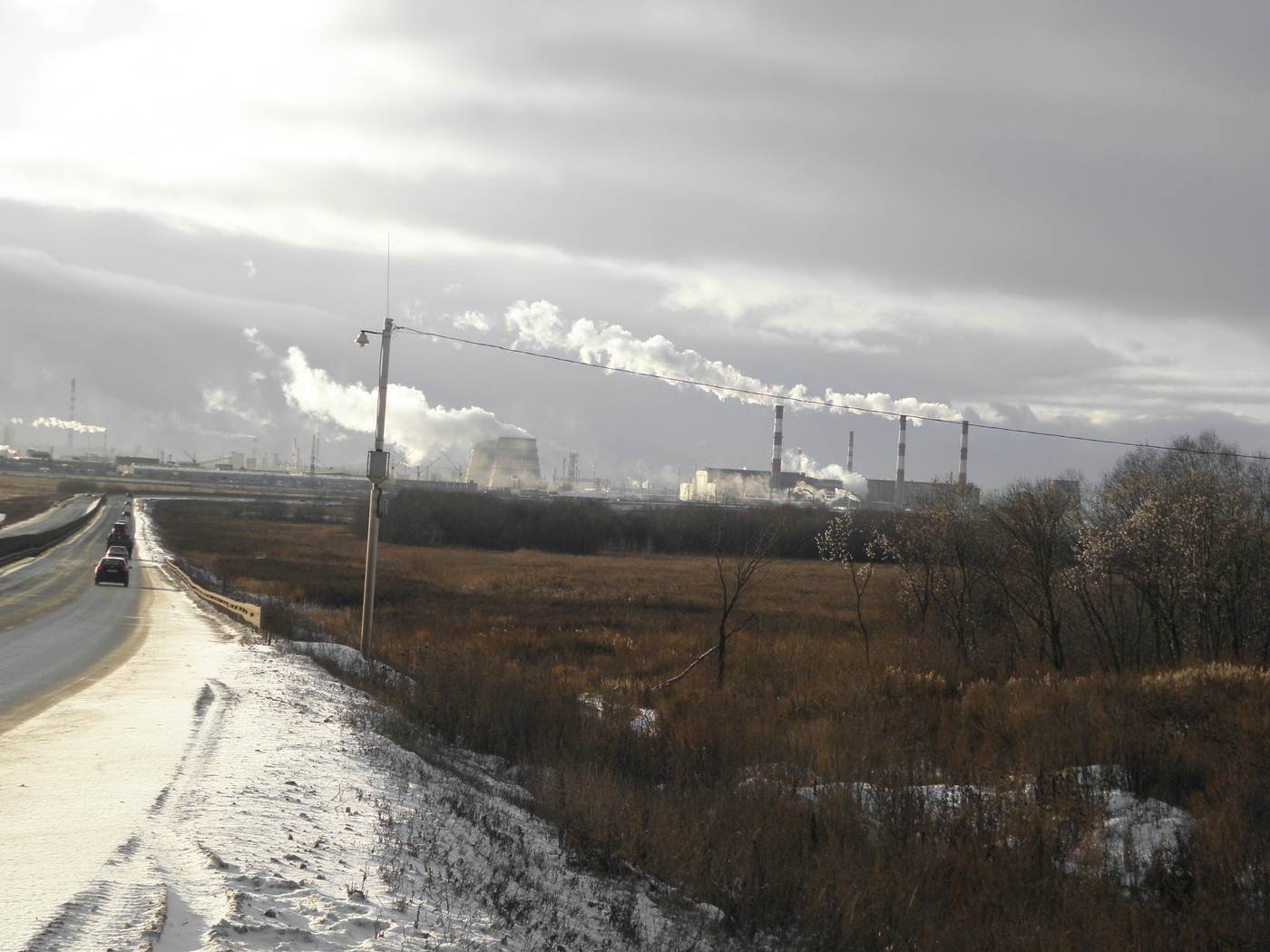
Ukraine strikes Perm oil refinery — and this time the flames are visible from 1,500 kilometres away. Overnight on September 25, 2026, Ukrainian drones hit the LUKOIL-Permnefteorgsintez refinery in the Russian city of Perm, one of the country's largest oil-processing plants, setting it ablaze according to eyewitness and monitoring-channel reports. In the same wave, the Iskra electronics plant in Ulyanovsk — a facility in Russia's Almaz-Antey air-defence conglomerate — was struck, air defences battled 88 drones over Voronezh, and a drone attack in Belgorod killed one civilian and wounded another. Perm regional governor Dmitry Makhonin confirmed on Telegram that a "massive" drone attack had targeted an industrial facility in his region. Reuters could not independently verify the exact site or extent of the damage — a caveat that applies to much of this distant, fast-moving story, and one we keep in view throughout.
What happened overnight
Perm: the refinery that keeps burning
The Perm strike is the latest chapter in what has become a campaign-within-the-war. Monitoring channels reported the LUKOIL refinery set ablaze; governor Makhonin said air defence units and mobile fire groups were repelling the attack, and that there were no preliminary reports of casualties. This is not Perm's first fire. The refinery — processing around 13 million tonnes of crude a year, roughly 262,000 barrels a day, making it one of Russia's ten largest — was struck in April and May (Ukraine's SBU confirmed both), on July 29 (when, industry sources told Reuters, a drone fire forced the shutdown of the CDU-5 primary crude distillation unit, about 34 per cent of the plant's capacity), and on August 21 (after which Reuters reported operations were suspended). Each hit compounds the last: with Western sanctions cutting off specialised repair equipment, fixing a crude distillation unit is measured in months, not weeks.
Ulyanovsk: the Almaz-Antey connection
The strike on the Iskra plant in Ulyanovsk, some 700 km east-southeast of Moscow, is arguably the more strategically interesting target. Iskra manufactures semiconductor components and electronics used in communications and computing systems — and it sits inside Almaz-Antey, the conglomerate that builds the very S-400 and S-500 air-defence systems Russia uses to shoot down Ukrainian drones. There is a symmetry to it: Ukraine is now striking the factories of the air-defence industry. Governor Alexei Russkikh said eight people, including a child, were injured and that industrial and civilian infrastructure was damaged — a reminder that deep strikes, however "precision" their intent, carry civilian risk.
Voronezh and Belgorod: the wide arc
The wave was not confined to two cities. Voronezh governor Alexander Gusev said air defences had destroyed 88 drones overnight over the regional capital and at least six districts; four people were injured, and residential buildings, vehicles and industrial facilities were damaged. In Belgorod, a Ukrainian drone struck a truck overnight, killing one civilian and wounding another, according to the regional operational headquarters. The geography tells its own story: Perm at ~1,500 km, Ufa (~1,200 km, struck September 23 per the independent outlet Astra), Rostov and Krasnodar oil depots (September 24, per local authorities via the Kyiv Independent) — Ukraine's long-range drone arm now ranges across the entire European half of Russia.
Why this matters
Economic warfare, by the numbers
Ukraine's deep-strike campaign has one explicit purpose: to shrink the oil revenues that fund Russia's war. The numbers suggest it is working, at a cost. Russia's production of road fuels has nosedived under the campaign; in early September the government imposed temporary bans on most exports of gasoline and diesel — an extraordinary admission for a petrostate. The Perm refinery alone accounts for roughly 262,000 barrels a day of capacity; the CDU-5 unit knocked out in July processed 12,930 tonnes a day, about a third of the plant. Add sanctions — the US and Britain have targeted LUKOIL and Rosneft directly, and Bulgaria's LUKOIL operations needed a sanctions reprieve this month — and Russia's refining sector is being squeezed from two directions: Ukrainian drones from the sky, Western sanctions from the ledger.
The 1,500-kilometre line has been crossed — repeatedly
After the September 7 strikes on Perm and Tatarstan, Zelensky said Ukraine aimed to extend the range of its strikes beyond 1,500 kilometres. The September 25 wave is that promise kept. Range is strategy: every kilometre deeper into Russia forces Moscow to spread thin an air-defence network that was built to protect the front, not a continent-sized rear. But it also invites the counter-argument Moscow makes — Putin has called these strikes "blatantly terrorist methods" against civilian infrastructure — and raises the escalation question that hangs over every deep strike: what does retaliation look like, and who pays for it? The residents of Kyiv's Pechersk district, hit by a Russian drone the same morning, are one answer. (See our companion report.)
Multiple angles — who gains, who loses
Kyiv's bet
For Ukraine, the campaign is the best bad option available. It cannot match Russia's artillery or manpower; it can, however, impose costs that compound. Every refinery fire is fuel Russia cannot sell, cannot export, and cannot put in a tank. The campaign also has a diplomatic function: arriving in New York for the UN General Assembly with fresh evidence that Ukraine can reach into Russia's industrial heartland strengthens Zelensky's hand when asking for the Patriots and sanctions enforcement that make the rest of the strategy possible.
Moscow's problem
For Russia, the strikes are a slow-burn humiliation with material consequences. A petrostate that must ban fuel exports is a petrostate in trouble; the domestic fuel crisis of recent months has been, as analysts have noted, more embarrassing to the Kremlin than many battlefield setbacks. Moscow's response has been twofold: air defences (88 drones downed over Voronezh in a night is itself a statistic of scale) and retaliation against Ukrainian energy infrastructure — the mirror campaign that left Kyiv bracing for winter.
What critics and analysts say
Energy analysts caution that the damage, while real, is reversible given time and money — but both are in short supply under sanctions, and repeated hits on the same facilities (Perm has now been struck at least five times this year) suggest Ukraine understands this. Other observers note the civilian toll on both sides: eight injured in Ulyanovsk, a civilian killed in Belgorod, a 14-year-old killed in Kyiv the same morning. The air war is becoming a war of mutual economic and civilian attrition, and the question is whose system breaks first.
What happens next
Three trajectories are worth watching. First, the fuel numbers: if Russia's road-fuel production falls further, expect more export restrictions, domestic price spikes, and political pressure on the Kremlin — the classic signs of a sanctions-plus-strikes squeeze. Second, the technology race: Russia is deploying faster, higher-flying drones against Ukraine; Ukraine is extending its reach deeper into Russia. Both sides are innovating faster than defences can adapt. Third, the diplomacy: the United States is stepping up de-escalation efforts even as the bombs fall, and Zelensky used his UNGA appearance to push for both more air defences and more pressure on Moscow. The Perm refinery will burn out; the question is what gets built in the political space the smoke clears. History suggests the answer will be more strikes, not fewer — until the economics, not the rhetoric, force a stop.
Sources: Reuters wire via WNCY — "Eight injured in drone attack in Russia's Ulyanovsk region, one killed in Belgorod region" (Sept 25, 2026); Azernews — "Drone attack reported near LUKOIL refinery in Perm as Russian regions come under fire" (Sept 25, 2026); EA WorldView — "Ukraine War, Day 1,674: Kyiv Strikes Oil Refinery 1,500 Kilometers Inside Russia" (Sept 25, 2026); Kyiv Independent via EuropeSays (Sept 25, 2026); Bloomberg/Rigzone (Sept 7, 2026); Energy News Beat (Aug 21, 2026); Le Monde (May 1, 2026).