US · Aviation · Breaking
A Miami airport plane collision on a taxiway intersection — a Copa 737's wingtip into the nose of a UPS 767 — left two people with minor injuries on Saturday night, a day after the nationwide ground stop, as the FAA opened an investigation into how two jets under tower control came to occupy the same piece of pavement.
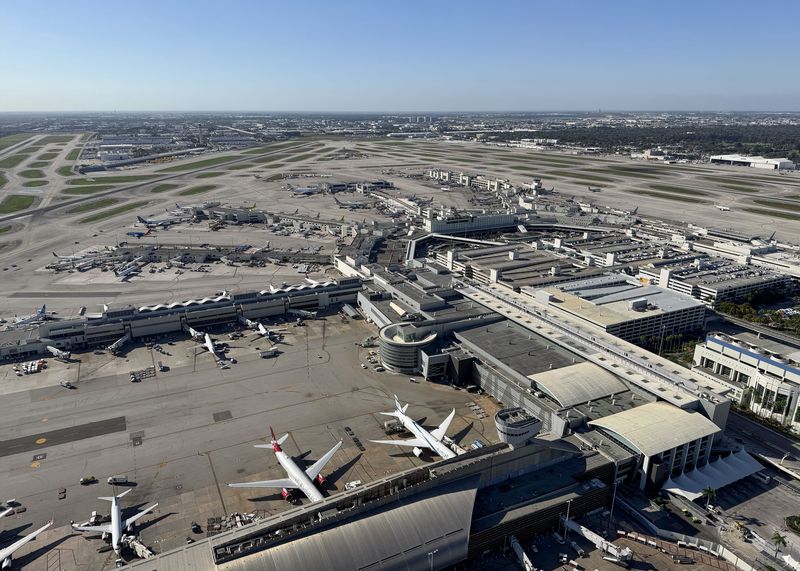
MIAMI, November 14, 2026 — A Miami airport plane collision between a UPS cargo jet and a Copa Airlines passenger jet closed out the hardest weekend in recent American aviation memory on Saturday night, when the wingtip of a Copa Airlines Boeing 737 struck the nose of a UPS Boeing 767 while both aircraft were taxiing at Miami International Airport. The Federal Aviation Administration, in a statement quoted by CNN, put the contact at about 9:15 p.m. Eastern Time at the intersection of two taxiways. Two people were treated at the scene for minor injuries, the airport later confirmed, and the FAA said it is investigating.
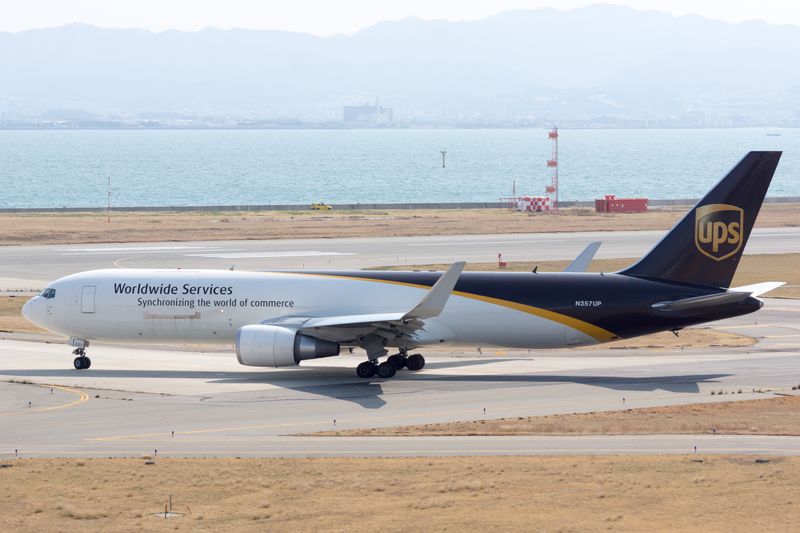
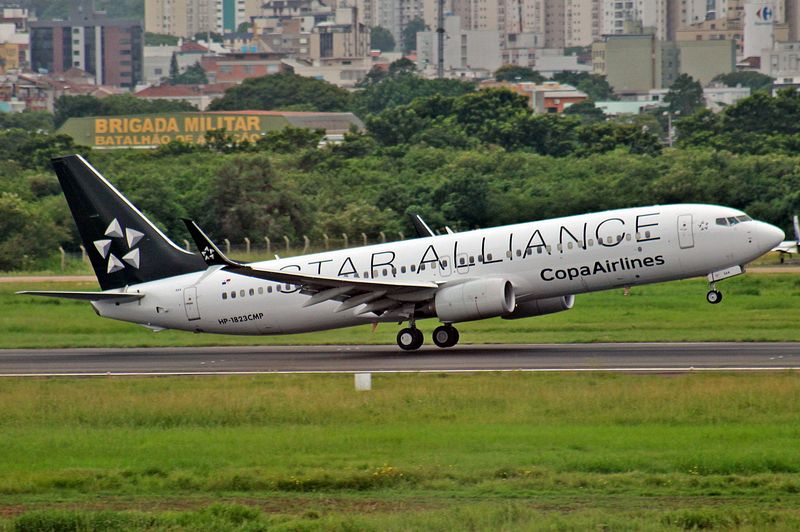
The Copa jet was flight 427, which had just landed from Panama City, Panama, and was taxiing after arrival. The UPS jet was flight 358, a freighter departing Miami for Bogotá, Colombia. According to the FAA, air traffic controllers had told the UPS crew to give way to the Copa flight. That single sentence — an instruction given, and a collision that happened anyway — is now the spine of a federal investigation. The cause of the collision has not been determined, and nothing in this article should be read as a settled finding of fault: what exists so far is an FAA summary, recordings of the radio exchanges as reported by CNN and other outlets, and statements from the airport and UPS, each of which answers a smaller question than the one investigators will spend months on.
What we know — and what we don't know
What we know
- At about 9:15 p.m. ET on Saturday, November 14, 2026, the wingtip of a Copa Airlines Boeing 737 struck the nose of a UPS Boeing 767 while both aircraft were taxiing at Miami International Airport, according to the FAA statement quoted by CNN. The contact happened at the intersection of two taxiways.
- Copa flight 427 had just landed from Panama City, Panama, with 166 passengers and 6 crew aboard. UPS flight 358 was departing for Bogotá, Colombia.
- The FAA said air traffic controllers had told the UPS crew to give way to the Copa flight, and the FAA is investigating the collision.
- Two passengers were treated at the scene by Miami-Dade Fire Rescue for minor injuries; neither needed hospitalisation, the Miami-Dade Aviation Department confirmed on November 15 (reported by ABC News and USA Today). Airport communications director Greg Chin gave the same update to CNN and the New York Post on Saturday evening.
- UPS said its crew was safe and that it is “committed to working with authorities to determine what happened.” CNN had sought comment from Copa.
- The airport's first statement, issued in the opening minutes, initially reported no injuries and no impact to operations, with flights directed to other taxiways — an initial account the airport itself then corrected the same evening: two passengers had been treated at the scene for minor injuries (see above).
What we don't know
- The cause of the collision. The FAA has not determined it, and the radio recordings reported so far are evidence to be examined, not a verdict.
- The full extent of the damage to either aircraft beyond the contact described — the Copa jet's left wingtip and the UPS jet's nose — and how long each aircraft will be out of service.
- The names of the two injured passengers, and which aircraft each was aboard; officials had not specified as of late Saturday night.
- Whether the National Transportation Safety Board will join or lead any part of the inquiry; the FAA investigation is the one officials have confirmed.
Timeline: Saturday night on the Miami taxiways
- Friday, November 13 — A nationwide FAA ground stop, caused by a communications and technology failure, halts departures across the United States. Officials report no evidence of a cyberattack. Passengers sleep in terminals as cancellations cascade.
- Saturday, November 14, daytime — Airlines and airports work through the recovery. FAA Administrator Bryan Bedford says the national schedule should return to normal by the end of Sunday, November 15.
- Saturday, about 9:15 p.m. ET — Copa flight 427, newly arrived from Panama City, and UPS flight 358, departing for Bogotá, make contact at the intersection of two taxiways at Miami International Airport: the Copa 737's wingtip strikes the UPS 767's nose.
- Saturday night — The airport's first statement initially reports no injuries and no impact to operations, with flights directed to other taxiways. The airport then corrects the injury account the same evening: communications director Greg Chin tells CNN and the New York Post that two passengers were treated at the scene by Miami-Dade Fire Rescue for minor injuries, and the Miami-Dade Aviation Department confirms on November 15 that neither needed hospitalisation.
- Saturday night — The FAA says controllers had told the UPS crew to give way to the Copa flight and that the agency is investigating. UPS says its crew is safe and that it will work with authorities to determine what happened.
“Somebody hit us”: the radio exchanges, as reported
The most vivid record of the collision's first seconds is not a press release but the ground-control frequency, where realisation arrived in fragments. The recordings, as reported by CNN and other outlets carrying the air traffic control audio, capture two flight crews working out in real time that their aircraft had touched — and how.
“Somebody hit us.”
That was the Copa pilot's first report, followed by the damage assessment no captain wants to make about his own aircraft:
“It seems that we are missing the left wingtip.”
From the UPS cockpit, the account was equally blunt:
“Yeah, we went too far, and then he, he clipped us with the wing.”
And the controller, in the exchange reported by CNN and others, reminded UPS 358 that it was supposed to give way to the Copa jet. Read those lines carefully, because investigators will: they are reported recordings — what people said on a radio frequency in the first confused minutes — not an official finding. A pilot's “we went too far” is a candid fragment, not a legal conclusion; it does not by itself establish where each aircraft had been cleared to, what each crew could see, or how the intersection was sequenced. The FAA's investigation exists precisely to test those fragments against the full recordings, the clearances as issued and read back, and the aircrafts' recorded positions. Signal Post News presents the audio as what it is: the earliest human account, attributed to the reporting that carried it.
Two injured: how the injury account evolved on Saturday night
The human cost of this collision was small, and for the first hours it appeared to be zero — a sequence worth recording exactly, because the gap between the two versions is where confusion, and then misinformation, usually breeds. Miami International Airport's first statement, given to the Daily Mail and CBS News Miami among others, said that at approximately 9:15 p.m. an arriving aircraft and a departing aircraft had made contact at the intersection of two taxiways, that there were no reported injuries, and that flights were being directed to other taxiways with no impact to airport operations at that time.
Later in the evening, the account was corrected by the airport itself. Greg Chin, the airport's communications director, told CNN and the New York Post that two passengers were injured — both with minor injuries, treated at the scene by Miami-Dade Fire Rescue — and on November 15 the Miami-Dade Aviation Department confirmed, in reporting carried by ABC News and USA Today, that the two were treated at the scene and neither needed hospitalisation. Neither version was a fabrication: the first reflected what had been reported in the opening minutes, the second what responders had established once they had assessed everyone involved. The honest summary is the one in this article's headline: two people were treated for minor injuries. UPS, for its part, said its crew was safe and that the company is “committed to working with authorities to determine what happened.” CNN had sought comment from Copa Airlines; no Copa statement had been published as of late Saturday night.
A day after the ground stop — and, officials stress, not because of it
Context matters here, and so does its limit. This collision did not happen on an ordinary Saturday. It happened roughly a day after Friday, November 13's nationwide FAA ground stop — a communications and technology failure that halted departures across the country, about which officials reported no evidence of a cyberattack — and while Saturday's operation was still a recovery operation: aircraft and crews out of position, schedules being rebuilt, and passengers who had slept in terminals waiting for rebooked flights. Signal Post News covered the nationwide ground stop as it lifted on Friday and the Saturday recovery, as cancellations climbed and airlines dug out. FAA Administrator Bryan Bedford said on Saturday that the national schedule should return to normal by the end of Sunday, November 15.
Now the limit, stated as plainly as the officials' record allows: no link between Friday's ground stop and this collision has been established or reported by officials. The ground stop was a network failure in communications and technology; Saturday night's collision was a physical contact between two aircraft on a taxiway, under local tower control, for reasons the FAA has not yet determined. The two events share a weekend, an industry under strain and a travelling public at the end of its patience. Sharing a weekend is not sharing a cause, and any account that welds them together is getting ahead of the evidence. The same discipline applies to the weekend's other collision story: when a tanker struck a docked riverboat in New Orleans, the lesson was identical — early fragments, carefully attributed, beat a fast narrative every time.
Why this matters: the most dangerous metres in aviation are on the ground
Analysis — separated from the confirmed facts above — begins with an uncomfortable truth the industry knows well: the flight deck's hardest problem is not always the sky. Taxiing is the phase where two aircraft, each tens of metres long, each with blind spots measured in metres, are threaded through a shared network of intersections at night, in weather, on frequencies where a single missed word can put two flight paths through the same point. Runway incursions get the headlines, but taxiway collisions — wingtip to nose, wingtip to tail — are the recurring, quieter failure mode, and they cluster exactly where Saturday night's contact happened: at intersections, where one aircraft's cleared route crosses another's, and where “give way” is an instruction that has to survive readback, workload and visibility to work.
The weekend's strain is context for that risk, framed carefully. A system repositioning aircraft and crews after a nationwide stop is a system running non-standard patterns: unusual routings, swapped aircraft, crews at the end of long recovery days, ramps and taxiways carrying movements that do not match the timetable anyone planned. None of that has been shown to have played any part in Miami — investigators have said nothing of the kind, and this article does not claim otherwise. What it does is raise the background rate of complexity in which every clearance is issued and executed, which is why investigators reconstruct nights like this one minute by minute rather than accepting the first plausible story.
Two pieces of background belong in the record, labelled as background. First, visibility: from a Boeing 767 cockpit, sitting high with a long nose ahead, the pavement immediately in front of and below the aircraft is simply not visible; crews judge nose clearance at intersections by reference points, markings and discipline, not by direct sight of the obstacle. Second, prevention: the National Transportation Safety Board has for years treated wingtip collisions during taxi as a known, preventable category, and the industry has trialled everything from wingtip cameras to ground-radar alerting to keep metal apart. Neither fact is a finding about UPS 358 or Copa 427. Both explain why a glancing contact at walking pace can still write off a wingtip, ground two aircraft and injure two people — and why the investigation will care as much about geometry and sightlines as about words on a frequency.
A missing wingtip is not a scratch: what happens to both jets now
Neither aircraft flies again on a captain's say-so. A wingtip on a modern 737 is not a decorative cap: the winglet and tip structure carry aerodynamic loads, house navigation lighting and, on many types, sit close to fuel venting and static systems. “Missing the left wingtip” means structural inspection before anything else — the wing's spar and skin around the impact, the winglet attachment, control surfaces and systems routed through the wing — because damage from a collision radiates inward from the visible break. The UPS 767's nose gets the same treatment from the other direction: the radome and the weather radar behind it, the nose structure and gear area, and any deformation along the forward fuselage. Both aircraft will be examined by their operators' maintenance organisations under the manufacturers' structural repair guidance, and both return to service only when inspectors — not schedules — say so. For UPS, that is a freighter out of a network heading into its busiest season; for Copa, a narrowbody out of a tightly utilised fleet. The repair bills and the downtime are the collision's second, quieter cost, and they begin accumulating on Saturday night whether or not anyone was badly hurt.
What happens next: a months-long investigation, reconstructed second by second
The FAA investigation now underway will examine, piece by piece, everything that converged at that intersection. Expect investigators to secure and transcribe the complete tower and ground-control recordings — not the excerpts circulating publicly, but the full exchanges, with timestamps. They will reconstruct the clearances as issued and as read back: what UPS 358 was told, what its crew acknowledged, and where the instruction to give way to the Copa flight sat in that sequence. Flight-data and ground-tracking records will fix each aircraft's position and speed on the taxiway system, second by second, against the airport diagram. Both crews will be interviewed, as will the controllers on duty. Airport surface-detection records, any available video, and the damage pattern on both aircraft — a wingtip's height against a nose's profile is itself evidence — will be fitted to the reconstruction.
That process takes months, not news cycles, and its product is a probable-cause account that can separate the possibilities Saturday night's fragments cannot: a clearance misunderstood, an instruction issued late or to the wrong aircraft, a crew taxiing beyond a holding point in the dark, a sightline that hid a 737's wing until it arrived. Until the FAA reports, the disciplined position is the one this article has held throughout: the FAA says controllers told the UPS crew to give way; the recordings, as reported, capture two surprised flight crews and a controller restating that instruction; and the cause has not been determined. Signal Post News will update this article when the FAA or the airport issues further findings, when Copa publishes its statement, and when either aircraft's return to service is confirmed.
Sources
- CNN, November 14, 2026, “Planes collide at Miami runway crossing a day after national grounding” — carries the FAA statement (“The wingtip of a Copa Airlines Boeing 737 struck the nose of a UPS Boeing 767 while the airplanes were taxiing”; controllers had told the UPS crew to give way; the FAA is investigating), Greg Chin's confirmation that two people were injured, the reported ATC audio, and UPS's statement that its crew was safe and that it is “committed to working with authorities to determine what happened”; CNN had sought comment from Copa.
- New York Post, November 14, 2026, “UPS cargo plane collides with commercial airliner at Miami airport” — Greg Chin's account to the Post that flights were directed to other taxiways and that two patients were treated on the scene by Miami-Dade Fire Rescue for minor injuries and did not require medical transport, and the reported ATC audio.
- USA Today, November 15, 2026 — carries the FAA's preliminary statement (the Copa 737's wingtip struck the UPS 767's nose while both aircraft were taxiing; controllers had instructed the UPS crew to give way), Reuters' airport reporting, and the Miami-Dade Aviation Department's confirmation, via ABC News, that two passengers were treated at the scene by Miami-Dade Fire Rescue for minor injuries and that neither needed hospitalisation; Copa flight 427 carried 166 passengers and 6 crew.
- Miami International Airport statement, as reported via the Daily Mail and CBS News Miami, November 14, 2026 — the airport spokesperson's statement that at approximately 9:15 p.m. an arriving aircraft and a departing aircraft made contact at the intersection of two taxiways, with no injuries reported in that initial account — an account the airport corrected the same evening (see the USA Today entry below) — and flights directed to other taxiways, with no impact to airport operations.
- FAA statements and reporting on Friday, November 13's nationwide ground stop and Saturday's recovery, including FAA Administrator Bryan Bedford's statement that the national schedule should return to normal by the end of Sunday, November 15 — context only; no official has established or reported any link between the ground stop and this collision.