US · Travel
Saturday brought no new ground stop — but 3,568 cancellations and 1,432 delays by mid-morning, as the US aviation system tried to recover from Friday's 9,159-cancellation halt, the longest since 9/11.
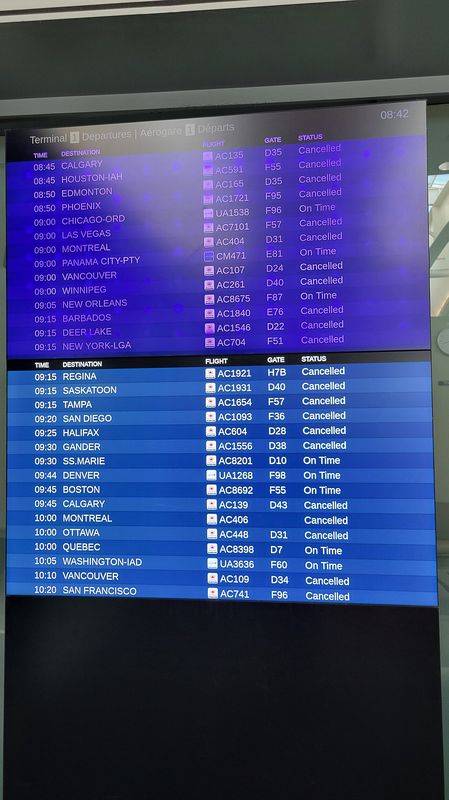
WASHINGTON, November 14, 2026 — The FAA ground stop Saturday cancellations tally kept climbing through Saturday morning even though the stop itself was history: by 8:17 a.m. ET, FlightAware counted 3,568 cancellations and 1,432 delays for Saturday, the residue of a Friday on which 9,159 flights were cancelled and 7,190 delayed during a nationwide ground stop that ran from 3:54 p.m. to 8:15 p.m. ET — the longest such halt since September 11, 2001. Transportation Secretary Sean Duffy attributed the stop to overloaded, aging routers and switches in the air-traffic system, and Senator Markwayne Mullin said there was no evidence of a cyberattack.
Friday by the numbers: a system that stopped
Cirium's data put Friday's damage at 8,267 of 26,284 scheduled flights cancelled or not flown — 31.45% of the national schedule — with 893 diversions. By Cirium's count, Saturday stood at 1,201 of 22,232 flights cancelled (5.40%) as schedules were rebuilt, a fraction of Friday's chaos but still roughly triple a normal bad-weather day.
Why a four-hour stop cancels a whole weekend
Airlines do not store spare aircraft and crews at every airport. When a ground stop strands planes and legally timed-out crews in the wrong cities, the cancellations cascade for 24 to 48 hours after the original fault clears — which is why Saturday's board was still filling with red ink on a day when the FAA imposed no new restrictions.
Why this matters
A ground stop caused not by weather, war or attack but by the traffic system's own aging network hardware is a different kind of warning. Duffy's description — overloaded routers and switches — points to infrastructure that the FAA has been funded to replace in stages for years. Friday demonstrated, at national scale and at the start of a weekend, that the failure mode of that infrastructure is not degraded service but a total halt.
For travellers, the practical lesson is about rights: US passengers on cancelled flights are entitled to a refund if they choose not to travel, regardless of the cause, while meals, hotels and rebooking priority depend on each airline's commitments. Saturday's recovery advice from carriers was uniform — rebook in the app before joining an airport queue, and check whether a later flight on the same ticket has been protected automatically.
What happens next
Airlines expected schedules to approach normal by Sunday, weather permitting. The FAA faces congressional questions about the router failure, and Friday's stop — the longest since 9/11 — will anchor the coming funding debate over air-traffic modernisation. Signal Post News covered Friday's stop as it lifted; this follow-up tracks the recovery.
Related coverage: FAA Nationwide Ground Stop Lifted
Sources
- Associated Press, November 13–14, 2026 — reporting of the ground stop, its duration and the official explanations.
- Reuters, November 13, 2026 — coverage of the FAA stop and airline disruption.
- FAA statement, November 13, 2026 — the agency's account of the stop and its lifting.
- Cirium data via Airways, November 2026 — cancellation percentages for Friday and Saturday; FlightAware counts via SourceFirst reporting.