U.S. News · Travel · Aviation
For more than four hours on Friday afternoon, the largest aviation system in the world simply stopped starting. A telecommunications failure inside the network that links America’s high-altitude control centers forced the Federal Aviation Administration to order every departing flight in the country to stay on the ground — only the second such nationwide halt since September 11, 2001. The order is now lifted. The disruption it set in motion is not.
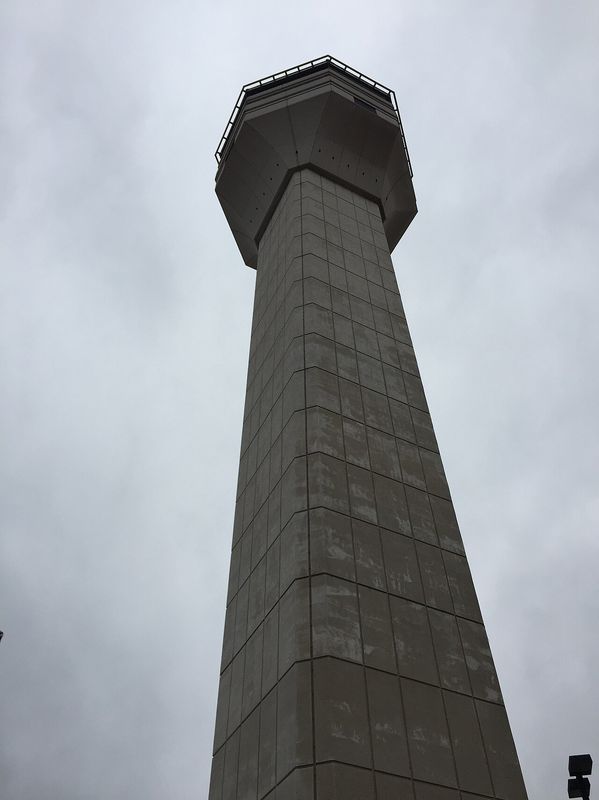
WASHINGTON, November 13, 2026 — The FAA nationwide ground stop that froze departures at every airport in the United States on Friday was lifted on Friday evening, more than four hours after it began, the Federal Aviation Administration announced — ending an extraordinary afternoon in which the agency ordered all departing traffic nationwide to remain on the ground “until further notice” because of a communications failure affecting its en-route control centers. By the time the FAA ground stop was lifted, the damage was still mounting. FlightAware’s evening totals for Friday, November 13 — the canonical count for flights within, into, or out of the United States — stood at 10,243 delays and 3,535 cancellations, and the totals kept climbing through the evening as airlines cancelled ahead to rebuild schedules they could actually fly. Officials warned that airline schedules would stay disrupted into Saturday, and through the weekend, as crews and aircraft remained out of position and airlines worked to recover. No deaths or injuries were reported, and Homeland Security Secretary Markwayne Mullin said every flight that had been airborne was accounted for.
The order itself, issued as Advisory 111 and effective at 3:54 p.m. ET, was as sweeping as anything in the FAA’s modern history. Citing “extraordinary circumstances and for reasons of safety,” it directed all departing traffic at every US airport to remain on the ground. Flights already airborne were permitted to continue and land; inbound international flights were handled case by case. For travelers asking why flights were grounded today, the short answer is that the system that moves aircraft between airports — the network of Air Route Traffic Control Centers that handle high-altitude, en-route traffic — suffered what the FAA described as a temporary telecommunications outage, and the agency chose the most conservative tool it has: stop everything from taking off until the picture cleared.
What happened
The sequence, as officials described it on Friday, began not with the ground stop itself but with something subtler: data the controllers could no longer fully trust.
The timeline of the FAA ground stop today
- About 3:36 p.m. ET — instability appears. At a White House briefing, Transportation Secretary Sean Duffy said controllers began seeing inconsistency in radar and communications data from about 3:36 p.m. ET — the first sign, in the official account, that something in the network was going wrong.
- 3:54 p.m. ET — Advisory 111. The FAA issued the nationwide ground stop, effective 3:54 p.m. ET, citing “extraordinary circumstances and for reasons of safety.” All departing traffic at every US airport was ordered to remain on the ground until further notice. Flights already airborne could land; inbound international flights were handled case by case.
- 4:16 p.m. ET — Duffy posts. Transportation Secretary Sean Duffy posted that the stop followed “a communication issue impacting all Air Route Traffic Control Centers” and that technicians were investigating. The FAA characterized the failure as a temporary telecommunications outage.
- Evening — the numbers climb. Through the late afternoon and evening, the FlightAware counts kept climbing, and the totals were still rising as the evening wore on. FlightAware’s evening totals for Friday stood at 10,243 delays and 3,535 cancellations for flights within, into, or out of the United States. The hardest-hit destination airports for cancellations, per USA Today and FlightAware, included Chicago O’Hare, New York LaGuardia, Dallas–Fort Worth, New York JFK and Boston Logan.
- About 8:30 p.m. ET — the FAA ground stop is lifted. The FAA announced the cancellation of the ground stop on its website around 8:30 p.m. ET, per USA Today — more than four hours after Advisory 111 took effect. Officials warned that disruption would continue through the weekend as airlines recovered.
Two points in that timeline deserve emphasis. The first is the gap between the 3:36 p.m. data inconsistency Duffy described and the 3:54 p.m. stop: eighteen minutes in which, on the official account, the system’s data degraded enough that the agency stopped trusting it for departures. The second is what did not happen. Mullin, the Homeland Security secretary, said there was no indication of a cyberattack or any nefarious attack — “just a telecommunication outage” — and that every airborne flight had been accounted for. Those are official statements, made within hours of the event; the underlying failure has not yet been independently examined, and the distinction between what is confirmed and what is so-far explanation matters to everything that follows.
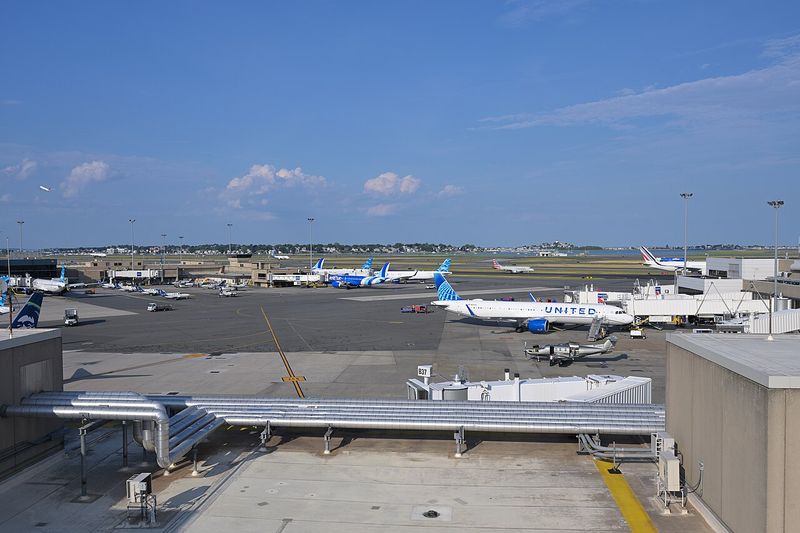
The official explanation: a legacy network, overloaded
Explaining the failure at the White House, Duffy said the problem lay in the switches and routers of a system built on decades-old technology — 1980s-era, analog in character — which became overloaded as the data inconsistency spread. He called it “a legacy network problem” and described the system, pointedly, as “an incredibly old air traffic control system,” and he used the moment to press Congress for major upgrade funding, reported at $50 billion. President Trump, Mullin added, has declared the air traffic control failures “a national emergency.” That account — overload in aging network hardware — is the administration’s explanation, offered the same evening. It has not yet been tested by any published investigation, and readers should hold it accordingly: plausible, official, and unverified in its particulars.
Europe held its US departures too: the Eurocontrol suspension
The halt did not stop at the water’s edge. Eurocontrol’s Network Manager Operations Centre (NMOC) in Brussels published an advisory headed “FAA COMMAND CENTER ADVISORY” on the Eurocontrol Network Operations Portal, timestamped 13 NOV 2026 23:03, stating that, on request of the FAA and due to technical issues, all traffic departing within the ECAC area between 2200 UTC on 13 November and 0500 UTC on 14 November 2026, bound for US airports, was suspended. In US time, that window ran from 5:00 p.m. Friday to midnight Saturday ET (2:00–9:00 p.m. PT on Friday).
The suspension covered Eurocontrol’s 42 member states, including the United Kingdom, France, Germany, Italy and Spain. Mexico’s AFAC issued a parallel notice asking Mexican aircraft scheduled to fly to the United States to remain on the ground. The effect was immediate and concrete: British Airways cancelled its 10:30 p.m. London Heathrow to New York JFK departure on Friday night.
Flights already airborne were not ordered to turn back or divert. Inbound international flights continued to be handled case by case, and whether any given flight operated or was cancelled remained an airline decision, taken flight by flight.
Eurocontrol issued no early-lift notice; the suspension ran to its scheduled end at 0500 UTC on Saturday 14 November (midnight ET). That scheduled end applied to the European departure suspension only — the US ground stop itself was lifted separately, earlier on Friday evening, at about 8:15 p.m. ET.
Why this matters
A ground stop at a single airport is routine; the FAA issues them for thunderstorms every week. A nationwide ground stop is something else entirely, and Friday’s was, as Reuters noted, only the second time since the September 11, 2001 attacks that the agency had halted all departures across the country. The first was in January 2023, when a failure in the NOTAM system — the notices that carry safety information to flight crews — grounded departures nationwide for a morning. Friday’s stop lasted longer, bit deeper, and failed in a more central place.
One network, one point of failure
The structural lesson is concentration. American aviation is famously decentralized at its edges — thousands of airports, competing airlines, private operators — but it runs on a single federal nervous system in the middle: the en-route centers and the telecommunications web that binds them. When a communications issue can impact all Air Route Traffic Control Centers at once, as Duffy’s 4:16 p.m. post put it, the decentralization at the edges stops mattering. There is no rival network to fail over to, no competing provider of en-route control. A legacy network problem in that layer is, by construction, a national problem — and on Friday it produced a national stop. That is the concentration risk at the heart of the air traffic control outage, and it does not go away because the stop has been lifted.
Flights cancelled today in the USA: what the rising curve really means
The cancellation numbers told their own story, and it is worth reading them correctly. The totals did not spike and settle; they kept climbing through the evening, reaching FlightAware’s evening totals of 10,243 delays and 3,535 cancellations for flights within, into, or out of the United States — even as the end of the stop came into view. That is not a measure of the outage getting worse. It is the arithmetic of displacement. A four-hour halt to departures does not delete four hours of flying; it strands every aircraft and every crew wherever they were when the music stopped, out of position for the flights they were supposed to operate next. Airlines then cancel proactively, hours ahead, to rebuild a schedule they can actually fly — which is why the count kept rising after the technical crisis peaked, and why officials warned the disruption would run through the weekend. A morning failure, as in January 2023, leaves a day to recover in. A Friday-afternoon failure lands on the busiest return travel of the week and pushes its wreckage into Saturday and Sunday. The precedent of 9/11, when the airspace was emptied for days, is not comparable in cause or scale — but it remains the reference point for how long a fully stopped system takes to become a normal one again, and it is not measured in hours.
An old system under new pressure
None of this arrived without warning signs. The air traffic control system’s age is not a secret and was not, before Friday, a partisan talking point: the network at the center of Friday’s failure is built substantially on technology Duffy himself dated to the 1980s, and the agency has been trying to modernize around a controller workforce that has run short for years, with repeated equipment failures through 2025 and 2026 keeping the fragility in the headlines. Signal Post News covered one such episode in September, when an FAA outage grounded flights across the Northeast — a regional rehearsal, in retrospect, for Friday’s national performance.
The modernization fight, and the awkward timing
The politics now sharpen. Just three days before the failure, on November 10, the FAA had announced the nationwide expansion of SMART, its new airspace planning system — the modernization program meant to drag en-route management into a newer era. The timing is context, not cause: officials blamed the legacy network, not the new system, and there is no evidence linking SMART to the outage. But the juxtaposition will define the funding debate Duffy opened on Friday evening. The administration’s ask, reported at $50 billion, now carries a demonstration no white paper could match: four hours in which the world’s largest aviation market could not launch an airplane. Who benefits and who loses from here is unusually legible. Airlines lose immediately — a weekend of recovery, reaccommodation and compensation costs on top of a lost Friday. Airports lose on concessions and chaos they did not cause. Passengers lose days, not hours. Congress, which has to find the money, loses its easiest excuse for delay — and gains, if it wants it, a genuine emergency to legislate against, one the president has already declared in those terms.
What travelers should do now
For anyone holding a ticket this weekend, the practical picture follows from the displacement problem above: the FAA ground stop is lifted, but flight delays today — November 13, 2026, running into the weekend — will not behave like ordinary weather delays, because the aircraft and crews are in the wrong cities.
- Check your airline’s app before you leave for the airport, and keep checking it. Schedules will be rebuilt repeatedly through the weekend; a flight that shows on time in the morning may be cancelled by afternoon as the airline’s recovery plan changes.
- Take the waiver if your trip is flexible. After system-wide events of this scale, airlines typically issue rebooking waivers letting passengers move flights without change fees or fare differences within a window. If your travel is not urgent, moving it off the weekend entirely is the single most effective step available.
- Know what you are owed — and what you are not. US rules treat an FAA ground stop differently from an airline-caused cancellation, and the distinction decides refunds and compensation. Signal Post News’ explainer on flight delay compensation under US rules and the FAA walks through what carriers must offer and what remains at their discretion.
- Expect the knock-on, especially through the hardest-hit hubs. Chicago O’Hare, LaGuardia, Dallas–Fort Worth, JFK and Boston Logan carried the heaviest cancellation loads on Friday; connections through them will be the last to normalize.
- Do not abandon a booking you still need. A delayed flight that eventually operates is worth more than a cancelled-and-rebooked itinerary competing with a weekend of displaced passengers for the same seats.
What happens next
Three tracks now run in parallel. The first is operational: the weekend recovery, in which airlines reposition aircraft and crews and the cancellation curve finally bends down. The second is investigative: the FAA will have to produce a post-incident account of what actually failed in the en-route telecommunications network — which switches, which routers, overloaded by what — and whether Duffy’s legacy-network explanation survives contact with the logs. Until that report exists, the cause of the nationwide ground stop of 2026 rests on official statements made within hours of the event. The third track is political, and it may move fastest: a $50 billion modernization fight in Congress, reframed overnight from a long-term capital request into the price of preventing a repeat. There are two honest scenarios. In one, Friday becomes the forcing event — the day the funding debate ended because the cost of the old system had been demonstrated, live, to every traveler in America. In the other, the system recovers by Monday, the outrage decays on the usual schedule, and the legacy network carries on carrying the country — until the next 3:36 p.m. Which scenario holds will say as much about Washington as Friday said about the network.
What do you think — was the nationwide stop the right call, and should Congress fund the overhaul now? Like, follow Signal Post News for the FAA’s post-incident findings and the weekend recovery, and share your thoughts in the comments below.
Sources
Sources: Reuters, “FAA issues national ground stop due to extraordinary circumstance, reasons of safety” (November 13, 2026); Associated Press via NPR/WCBE, “FAA lifts the nationwide ground stop for all U.S. airports” (November 13, 2026); USA Today, “FAA orders nationwide ground stop at US airports, citing safety” (November 13, 2026); Weather.com, coverage of the FAA nationwide ground stop and equipment outage (November 13, 2026). FlightAware delay and cancellation counts as reported by AP/NPR and USA Today. Photos: Wikimedia Commons, as credited in the captions.