War · Ukraine · Tatarstan · Taganrog
Ukraine strikes Nizhnekamsk refinery and petrochemical targets more than 1,000 kilometres inside Russia, its General Staff says — and on the same night, drones cut power to Taganrog’s railway and killed a substation engineer. What is claimed, what is confirmed, and why the target list is widening from fuel to feedstock.
Track it live: Ukraine war map
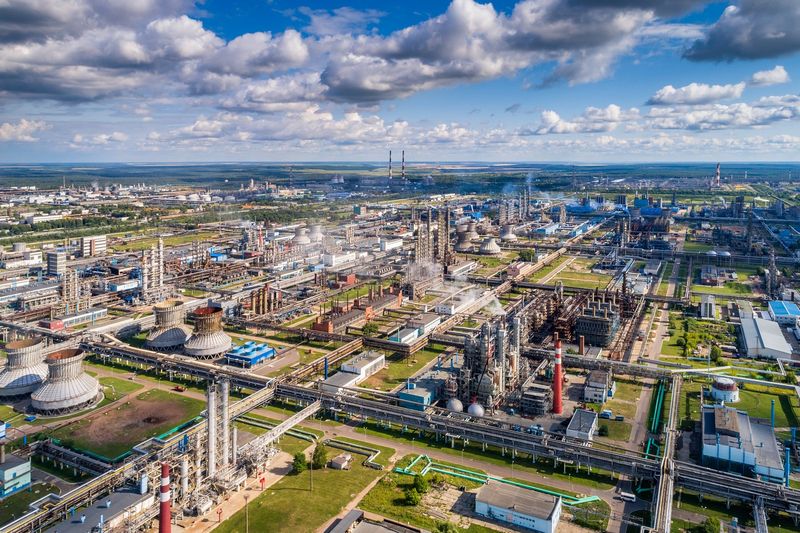
KYIV, Ukraine, November 15, 2026 — Ukraine strikes Nizhnekamsk refinery and petrochemical infrastructure deep inside Russia in one of the longest-range operations of its autumn campaign. Ukraine’s General Staff said on Sunday that Ukrainian forces struck two industrial sites in Nizhnekamsk, in the Russian republic of Tatarstan, more than 1,000 kilometres from the Ukrainian border: the Nizhnekamskneftekhim petrochemical complex, where explosions and a fire were reported, and the TAIF-NK oil refinery, where the General Staff said the strike hit the plant’s only primary crude-processing unit, known as ELOU-AVT-7, and a fire followed. The same operation, Kyiv said, also struck the Monolit plant in Trubchevsk, in Bryansk Oblast — a facility the General Staff described as an aviation and defence plant. In Taganrog, in Rostov Oblast, the human cost of the night was clearer and grimmer: the chief engineer of an electrical substation was killed and four other people were injured, according to Governor Yuri Slyusar, after strikes damaged two substations, including one that supplies the railway. The plant identifications in Nizhnekamsk are Ukrainian claims, attributed as such throughout this article; Russian authorities confirmed damage to industrial facilities in the city but released no plant-level damage assessment, and the effect on production at either site is unconfirmed.
What happened in Nizhnekamsk
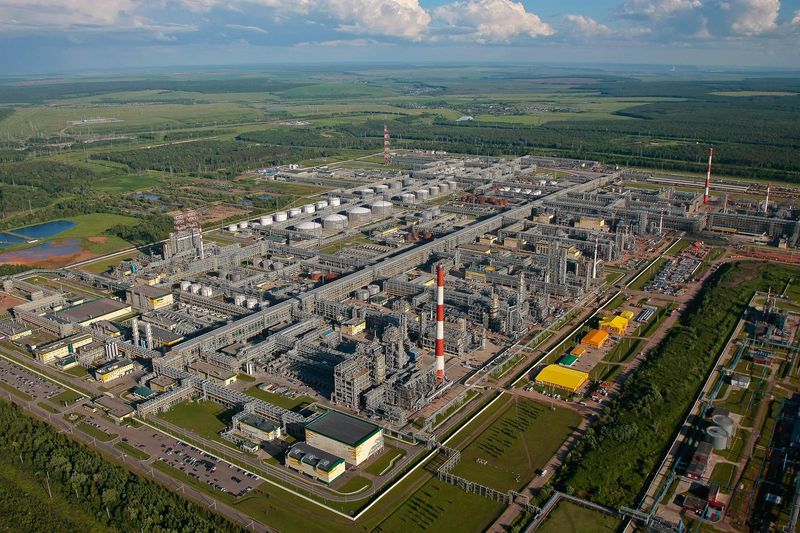
The Tatarstan strike unfolded overnight into Sunday, November 15, during what the city’s mayor, Radmir Belyaev, described as a prolonged drone attack. Belyaev said the attack damaged industrial facilities and an apartment building, that residents were evacuated, and that several people were injured. Notably, the mayor did not name the plants. The names came from Kyiv: the General Staff’s statement, reported by the Kyiv Independent and carried by AFP and The Moscow Times, identified Nizhnekamskneftekhim — the SIBUR-owned complex that ranks among Europe’s largest petrochemical producers, turning hydrocarbons into synthetic rubber, plastics and other industrial feedstocks — and the TAIF-NK refinery across the same industrial zone. Independent reporting that analysed images from the city supported the occurrence of a fire at the petrochemical complex. Some reports put the injured in Nizhnekamsk at three; the counts vary between sources, and this article attributes each figure to the official or outlet that gave it rather than merging them.
The most consequential single claim in the General Staff’s account concerns TAIF-NK. A modern refinery can survive damage to many of its units and keep running at reduced rates, but a primary crude distillation unit is different: it is the front door through which every barrel must pass before anything else in the plant can work on it. The General Staff said the strike hit ELOU-AVT-7, which it described as the refinery’s only primary crude-processing unit, and that a fire followed, with the damage still being assessed. If that claim is accurate, the significance is not the size of the fire but the position of the unit in the process flow — a refinery whose sole primary unit is offline is, for practical purposes, a refinery stopped, however intact its secondary units may be. The conditional is essential. Kyiv has made the claim; TAIF-NK and Russian officials have published no assessment of the unit’s condition, and no independent imagery confirming the hit on ELOU-AVT-7 had entered the public record at publication.
What happened in Taganrog
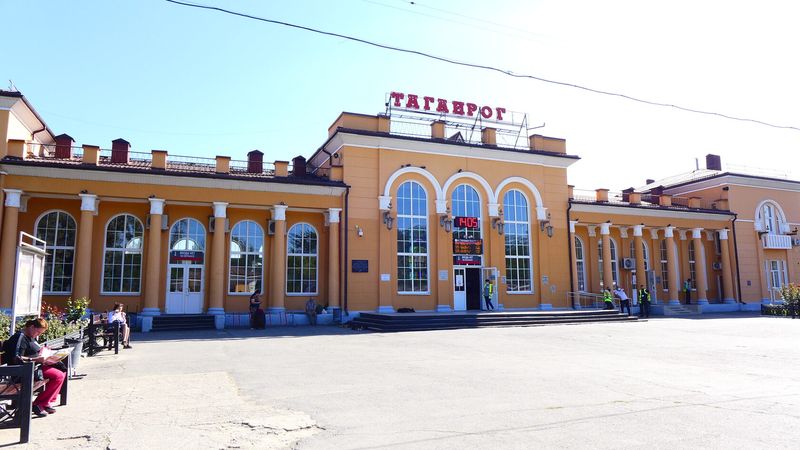
Taganrog, the port city on the Sea of Azov in Rostov Oblast, was struck the same night, and there the reporting rests on Russian official accounts rather than Ukrainian claims. Governor Yuri Slyusar said the chief engineer of an electrical substation was killed and four other people were injured — three men and a woman who were hospitalised after debris fell on a vehicle on a highway and at a petrol station, according to the governor’s account as reported by the Kyiv Independent. Two electrical substations were damaged, Slyusar said, including one that supplies railway infrastructure; a fire broke out at a substation in the city’s Shubin district, power lines between Taganrog’s passenger station and Mikhailovka were de-energised, and rail traffic was suspended. Russian reports also described damage to the roadway of the R-280 highway and its bridge. The governor said around 50 drones were destroyed across Taganrog, Rostov-on-Don and seven districts — an interception figure from a Russian official that has not been independently verified and is presented here as his claim.
The open-source intelligence channel ASTRA identified the likely target of the substation strikes as the 220 kV Taganrog-10 substation, which supplies the city’s industrial zone, including the TAGMET steel works. That identification is an OSINT assessment, not an official confirmation, but it fits the pattern of the night: the targets in Taganrog were not the city’s homes but the nodes that move its power — to its factories, and to the railway that runs west toward the occupied territories and the front. A substation chief engineer is dead, on the governor’s account, because the grid itself has become a target set in this war, worked by both sides with increasing precision.
The third target, and the numbers that must not be mixed up
The General Staff’s statement described a third strike the same night, far from Tatarstan: the Monolit plant in Trubchevsk, Bryansk Oblast, which Kyiv characterised as an aviation and defence facility. Bryansk borders Ukraine, and plants there have been struck repeatedly through the war; the Monolit claim is noted here for completeness, as part of the same announced operation, with the same caveat — it is a Ukrainian claim, and its effect has not been independently established.
Two drone figures circulated on Sunday, and they describe opposite directions of flight; keeping them apart matters. Russia’s Defence Ministry claimed that 533 Ukrainian drones were intercepted across Russia overnight — a Russian claim only, attributed to the ministry, and not a verified count. Separately, Ukraine’s Air Force said Russia launched 132 attack drones at Ukraine the same night — 78 of them jet-powered Shahed-type aircraft, alongside Gerbera and Parody decoys — flown from Bryansk, Oryol, Kursk, Millerovo and Primorsko-Akhtarsk in Russia, from occupied Donetsk, and from Hvardiiske in Crimea. The Air Force said air defences downed or jammed 106 of the 132 by 8 a.m., with hits recorded at 20 locations. The 533 and the 132 are not two estimates of one event; they are each side’s account of the other’s attack, and any report that blends them misleads its readers in both directions at once.
Why this matters
Analysis, labelled as such. The first reason Nizhnekamsk matters is the direction in which Ukraine’s deep-strike campaign is travelling. Through the summer and early autumn, the campaign concentrated on oil refining — the campaign Signal Post News tracked through the strike on the NORSI refinery at Kstovo and the repeated strikes on the Samara blending hub at Prosvet. Industry sources cited by Reuters in reporting between November 10 and 14 put Russian refining throughput down by roughly 30 percent from late October. A petrochemical complex is the next ring outward from refining: Nizhnekamskneftekhim does not make petrol, it makes the synthetic rubber and plastics that Russian industry — including its defence industry — consumes, and its feedstocks come from the same hydrocarbon system the refinery campaign has been squeezing. Striking it says the target list is no longer only about fuel for the front; it is about the industrial chemistry of the war economy itself.
Second, the geography is the message. Nizhnekamsk sits more than 1,000 kilometres from Ukrainian-controlled territory, deep in the Volga region that Moscow has treated as strategic rear area since 2022. Every successful strike at that range consumes Russian air-defence attention across an enormous arc, and demonstrates — to Russian planners, to Russian industrial managers, and to Ukraine’s partners — that distance alone no longer protects a plant. Taganrog, at the opposite end of the night’s map, shows the complementary logic: substations and rail power are the connective tissue of the occupation’s logistics in the south, and the R-280 corridor runs from Rostov toward the occupied coast. A campaign that can work a petrochemical giant on the Kama River and a rail substation on the Azov coast in the same night is not a raid; it is a system being applied on a schedule.
Third, the human ledger is changing character. The dead man in Taganrog was not a soldier and not, in the usual sense, a bystander: he was the chief engineer of a substation, killed at the infrastructure he ran, on the governor’s account. As both sides have moved from striking armies to striking the systems behind armies — refineries, blending hubs, substations, rail power — the people who operate those systems have become front-line workers in fact, whatever their contracts say. Four more people were injured in Taganrog, several were reported injured in Nizhnekamsk, and residents there were evacuated from a damaged apartment building. The industrial war is often described in percentages of throughput; its costs are also counted in control rooms and substation yards.
Context: Nizhnekamsk has been struck before
Sunday’s operation was not the city’s introduction to the war. Ukraine’s General Staff previously confirmed strikes on the TANECO refinery in Nizhnekamsk on September 13 and August 20, 2026, according to the Kyiv Independent — a cadence that mirrors the pattern seen at Prosvet, where return visits are timed against repair work. What is new in the November operation is the pairing: a refinery’s primary unit and a petrochemical complex claimed in the same statement, in the same city, on the same night as grid strikes hundreds of kilometres away in Taganrog and a defence-plant strike in Bryansk. Ukraine’s overnight waves against Russian depth — the subject of our reporting on the mass drone wave that hit Volgograd — have grown from single-target demonstrations into multi-axis operations, and November 14–15 is the clearest example yet of the mature form.
Russia’s own campaign ran in parallel, as it now does every night. The Air Force’s account of 132 Russian drones, most of them intercepted, with hits at 20 locations, describes a wave smaller than the largest of the autumn but built the same way: jet-powered Shaheds to stress the defences, cheap decoys to soak up attention, launch sites ringing Ukraine from Bryansk to Crimea. Ukrainian authorities’ running tallies of the war’s daily toll — compiled from regional administrations and reported by the Kyiv Independent — recorded further deaths and injuries across Ukraine over the same period, including in a massive strike on Odesa Oblast. The two campaigns are not symmetrical in their targets, but they share a clock and, increasingly, a logic: each side is trying to make the other’s rear areas unusable — one by emptying its fuel system, the other by darkening its cities as winter approaches.
The data in context
The verifiable skeleton of the night is short. Distance: Nizhnekamsk lies more than 1,000 kilometres from the Ukrainian border. Targets claimed by the General Staff: two in Nizhnekamsk, one in Trubchevsk. Casualties attributed to named officials: one killed and four injured in Taganrog, per Governor Slyusar; several injured in Nizhnekamsk, per Mayor Belyaev, with some reports specifying three. Drone counts: 533 Ukrainian drones claimed intercepted by Russia’s Defence Ministry (a claim); 132 Russian drones counted launched by Ukraine’s Air Force, 106 of them downed or jammed (a claim of the opposite kind). Refining context: throughput down roughly 30 percent from late October, per Reuters’ industry sources. Everything beyond that skeleton — the condition of ELOU-AVT-7, the production impact at Nizhnekamskneftekhim, the duration of Taganrog’s rail suspension — is, at publication, unknown, and this article has kept it labelled that way rather than borrowing certainty from either capital.
What happens next
Three things will settle the argument about November 14–15, and none of them is a press statement. The first is satellite imagery of the Nizhnekamsk industrial zone, which after earlier strikes has consistently shown what the announcements could not: which units burned, for how long, and whether the fire at TAIF-NK centred on the primary distillation train. The second is behaviour — whether TAIF-NK and Nizhnekamskneftekhim resume normal operations, quietly reroute feedstocks, or begin the visible, months-long work of rebuilding a crude unit, which cannot be hidden from the industry that buys their output. The third is repetition: if the campaign’s recent rhythm holds, Tatarstan will be visited again, and the question will shift from whether Ukraine can reach the Volga to how much of the Volga’s industry Russia can afford to defend. In Taganrog, the nearer test is simpler — how quickly rail power is restored on the line toward Mikhailovka, and whether the substations are repaired in place or bypassed. Signal Post News will update this article as imagery and official assessments appear.
Sources
- The Kyiv Independent, November 15, 2026 (Taradiuk / Nowakowsky) — Ukraine’s General Staff statement claiming the strikes on the Nizhnekamskneftekhim petrochemical complex and the TAIF-NK refinery’s ELOU-AVT-7 unit in Nizhnekamsk and on Monolit in Trubchevsk; the earlier confirmed TANECO strikes of August 20 and September 13, 2026; and the Rostov Oblast toll via Governor Slyusar.
- The Moscow Times, November 15, 2026, “At Least One Killed as Ukraine Strikes Industrial Sites Across Russia” — the cross-Russia picture of the night, including the death in Rostov Oblast.
- AFP, November 15, 2026 — wire reporting of the General Staff claims and the Nizhnekamsk fire.
- Mayor Radmir Belyaev of Nizhnekamsk, November 15, 2026 — the prolonged drone attack, damage to industrial facilities and an apartment building, evacuations and injuries, as reported; the mayor did not name the plants.
- Governor Yuri Slyusar of Rostov Oblast, via Telegram, November 15, 2026 — the substation chief engineer killed and four injured in Taganrog, the two damaged substations including the rail-supplying substation, the Shubin district fire, the de-energised Taganrog–Mikhailovka lines and the claim of around 50 drones destroyed; ASTRA’s identification of the likely 220 kV Taganrog-10 target, via the Kyiv Independent.
- Ukraine’s Air Force, November 15, 2026 — Russia’s overnight wave of 132 attack drones (78 jet-powered Shahed-type, plus Gerbera and Parody decoys), 106 downed or jammed by 8 a.m., hits at 20 locations; and Russia’s Defence Ministry claim of 533 Ukrainian drones intercepted, attributed in the text as a Russian claim only.
- Reuters, November 10–14, 2026 — industry-source reporting that Russian refining throughput was down roughly 30 percent from late October.
- Militarnyi and UNITED24 Media, November 15, 2026 — supporting reporting on the General Staff’s strike claims.
- Photos: the Nizhnekamskneftekhim complex via LiveJournal / zdorovs and ogsnc.com, and Taganrog railway station via Tilda CDN, as credited in the captions. No photograph of the November 14–15 strikes themselves is published, because none was licensable at publication.