War / Ukraine
Russia's governor confirms "significant damage" at a Kstovo industrial plant he would not name, while Ukrainian monitoring channels identify the target as Lukoil's NORSI refinery — Russia's fourth-largest — in the third refinery attack in three days.
Track it live: Ukraine war map — live updates
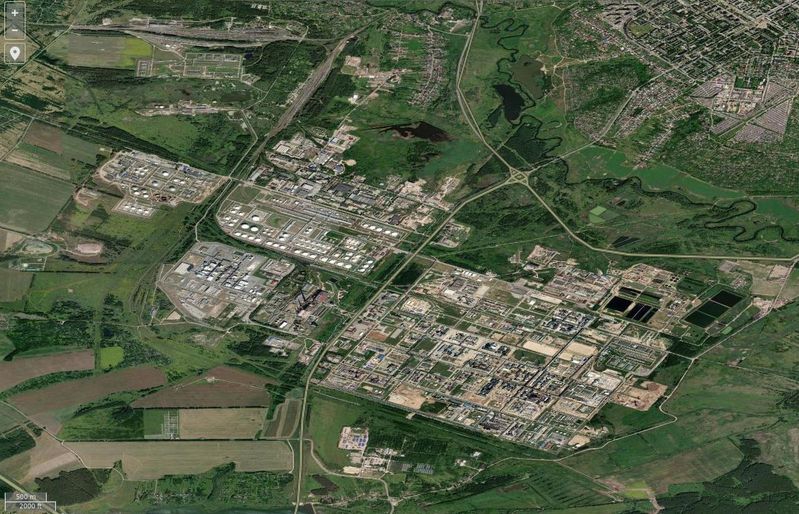
Russia says more than 100 Ukrainian drones were destroyed over the Nizhny Novgorod region overnight into Sunday, November 1, and that an industrial enterprise in the Kstovo district sustained "significant damage" — an attack Ukrainian monitoring channels say struck the NORSI oil refinery, one of the largest fuel plants in Russia, setting off fires visible across the complex. The reported strike is the third attack on a Russian refinery in three days and comes less than 24 hours after Kyiv publicly denied it had ever agreed to pause its refinery campaign.
What happened overnight in Kstovo
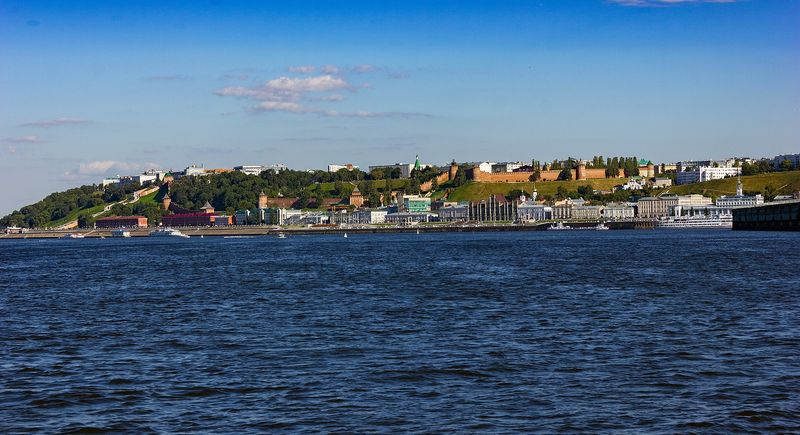
Gleb Nikitin, governor of Nizhny Novgorod Oblast, wrote on Telegram that a "massive UAV attack" took place overnight and into the morning: "More than one hundred drones were destroyed. An industrial enterprise in the Kstovsky district sustained significant damage. According to preliminary information, there are no casualties." He said damage assessments were under way and emergency services were working at the scene, and warned residents that restoration work could bring temporary power cuts and reduced hot-water and heating supplies in parts of the local utility networks.
Nikitin did not name the facility. Ukrainian monitoring channels Exilenova+ and Supernova+ published footage they said showed the Lukoil-Nizhegorodnefteorgsintez refinery — known as NORSI — burning, and observers counting the fire points in the footage put the number at seven or eight separate seats of fire. The Kyiv Independent, which first reported the refinery identification in English, noted that the claim could not be immediately independently verified, and Ukraine's military had not issued a detailed official statement on the strike at the time of first reporting. Signal Post News is treating the refinery identification as reported by Ukrainian channels and consistent with the governor's confirmed location — the Kstovo district hosts the NORSI complex — while the precise units hit remain unconfirmed.
NORSI by the numbers: why this plant matters
NORSI is Russia's fourth-largest oil refinery and its second-largest gasoline producer, processing roughly 15–17 million metric tons of crude a year — on the order of 340,000 barrels a day. It produces gasoline, diesel and aviation fuel, including fuel used by Russian forces, plus bitumen. It sits at Kstovo, about 800 km (500 miles) from the Ukrainian border — deep inside Russia, far beyond the range of anything Ukraine could field in the war's first two years. The plant has operated since 1958, has belonged to Lukoil since 2001, employs roughly 2,400 people, and received a $975 million investment in 2010 for a complex that lifted output sharply; a further deep-processing complex followed in the 2020s.
A refinery that keeps getting hit
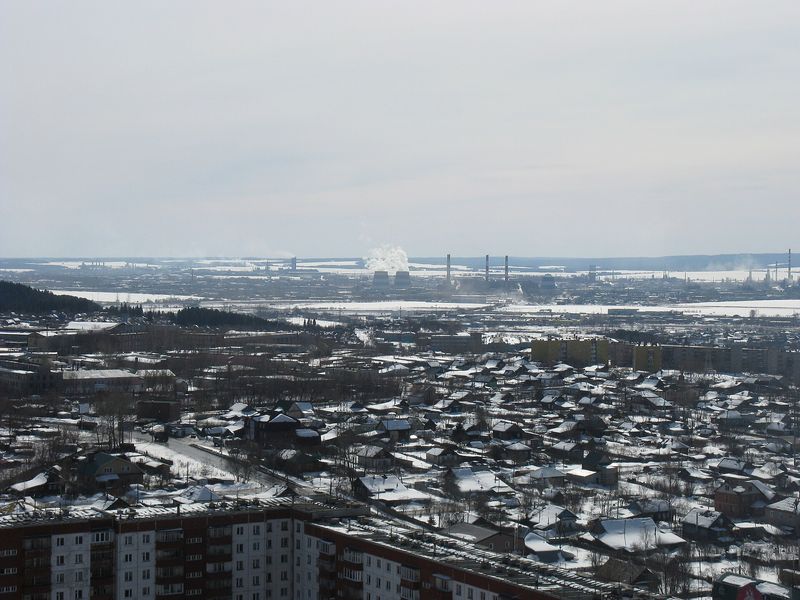
This is not NORSI's first night of fires. Ukrainian drones struck the Kstovo complex on January 29, 2025, igniting blazes that burned for two days at the adjacent petrochemical facilities and forced a temporary shutdown. Drones returned in October 2025, again in May 2026 — when a fire hit the plant's ELOU AVT-6 primary processing unit — and on August 26, 2026, when a confirmed strike sparked a large fire and the refinery suspended operations. Each return visit carries a message about repair cycles: a refinery can patch a processing unit in weeks to months, but a campaign that re-hits the same complex forces Russia to choose between spending scarce air-defense systems on rear-area industry and accepting rolling fuel disruption.
Why this matters
The Kstovo attack is the third refinery strike in three days: Ukrainian forces hit two oil refineries in Ufa, Bashkortostan, and a defense-industrial facility in Rostov Oblast on October 31 and overnight into November 1, according to the Institute for the Study of War's October 31 assessment, days after the Novokuibyshevsk refinery in Samara Oblast was struck. On Friday, Russian Deputy Prime Minister Alexander Novak said Ukraine had resumed attacks on Russian oil facilities — hitting three refineries and a gas-chemical complex on October 30 alone — after what Moscow described as a pause of several days.
That "pause" is now the subject of an open dispute. The Wall Street Journal reported on October 29 that Ukraine had agreed to suspend refinery strikes until after the U.S. midterm elections. Ukrainian officials told the Kyiv Independent that U.S. envoy Jared Kushner had suggested a 30-day pause but that Kyiv never accepted it: "Jared suggested that we not hit refineries for 30 days. Nobody had given such an order." President Volodymyr Zelenskyy made the same point publicly on October 27 and, after a Russian strike on a Dnipro railway station killed 15 people, wrote on October 30 that "every Russian strike on our cities and communities always gets our fully justified response."
The strategic logic cuts both ways. For Kyiv, refineries are the highest-value targets its long-range drones can reliably reach: they convert directly into gasoline and diesel shortages, export losses and repair bills inside Russia, and they answer Russia's own winter campaign against Ukrainian power in kind. For Moscow, each successful deep strike is evidence it presents to Washington that Kyiv is the obstacle to negotiations — the Kremlin has argued exactly that this week, according to ISW — while for Washington, Ukrainian strikes that lift global diesel prices have repeatedly drawn public criticism from President Donald Trump, who has previously called the refinery campaign a problem for peace efforts.
Two energy wars, one winter
The refinery campaign is running in parallel with Russia's escalating strikes on Ukraine's grid. A Russian missile and drone barrage this week knocked out power for more than 350,000 people in Dnipropetrovsk Oblast, cut water pressure in Kyiv, and brought scheduled blackouts across several regions; more than 800 Ukrainian energy assets have been damaged since September, according to figures cited by the Kyiv Independent. Zelenskyy warned this week that Russia fired 17 ballistic missiles in a single night and was taking no steps toward de-escalation in the energy sector. On Saturday he met Turkish President Recep Tayyip Erdoğan in Istanbul, where the two discussed Black Sea security and Turkish supplies of generators and energy equipment expected as early as next week. The strike on Kstovo landed while a rare localized ceasefire around Oleshky in Kherson Oblast — brokered to let civilians return to Ukrainian-controlled territory — was in its final hours, due to expire at 10:59 p.m. local time on November 1.
What the numbers imply
Scale the claim: a single night's attack wave of more than 100 drones against one region is among the largest reported against a single Russian oblast in the war, and saturation is the point — even a high interception rate leaks enough aircraft to start fires at a complex that cannot be hidden or moved. Put NORSI's capacity against the campaign: at 15–17 million tons a year, one full month of NORSI output is roughly 1.3 million tons of crude processing. Ukraine cannot shut Russia's refining system down outright — Russia's total capacity is an order of magnitude larger — but it does not need to: gasoline is a politically sensitive, regionally distributed product, and repeated outages at a handful of giant plants are what turn a military campaign into queues, price spikes and export bans that ordinary Russians notice. The pattern is the same one Kyiv applied in the earlier Lukoil strike at Ukhta, deep in the Komi Republic.
What happens next
Three things to watch in the coming days. First, satellite imagery and any Lukoil or regional statement on whether NORSI has suspended operations, as it did after the August strike — that, more than the fire footage, determines the economic damage. Second, whether the refinery campaign continues through the November 3 U.S. midterms despite Washington's reported request for a pause; Kyiv's position, stated on the record, is that no pause was ever agreed. Third, Russia's answer: Moscow has paired previous refinery losses with heavier strikes on Ukrainian energy, and with Ukraine's grid already shedding load ahead of winter, the exchange rate of this energy war — refineries for power stations — is likely to be tested again within days.
Sources
- The Kyiv Independent — "Russian oil refinery in Kstovo ablaze after reported overnight drone strike" (Nov. 1, 2026) — the refinery identification via Ukrainian monitoring channels, the governor's statement and the note that the claim could not be immediately independently verified.
- Arab News / AFP wire — "Russia says drone hit 'industrial enterprise' near Moscow, Kyiv claims hit major refinery" (Nov. 1, 2026) — wire reporting of the governor's confirmed damage and drone count.
- LaPresse (ANSAmed wire) — "Russia, industrial facility hit east of Moscow" (Nov. 1, 2026) — the Kstovo district industrial facility and the Ukrainian claim it was an oil refinery.
- EA WorldView — "Ukraine War, Day 1,711: Zelensky Meets Erdoğan in Türkiye" (Nov. 1, 2026) — the Istanbul meeting, Black Sea security and Turkish energy equipment, and the wider war context.
- Institute for the Study of War — Russian Offensive Campaign Assessment, October 31, 2026 — the Ufa refinery strikes, the Rostov Oblast defense-industrial facility and the Kremlin's framing of the refinery campaign.
- Wikipedia — "Kstovo refinery" — plant history, capacity and prior attacks.