Russia Ukraine overnight drone strikes
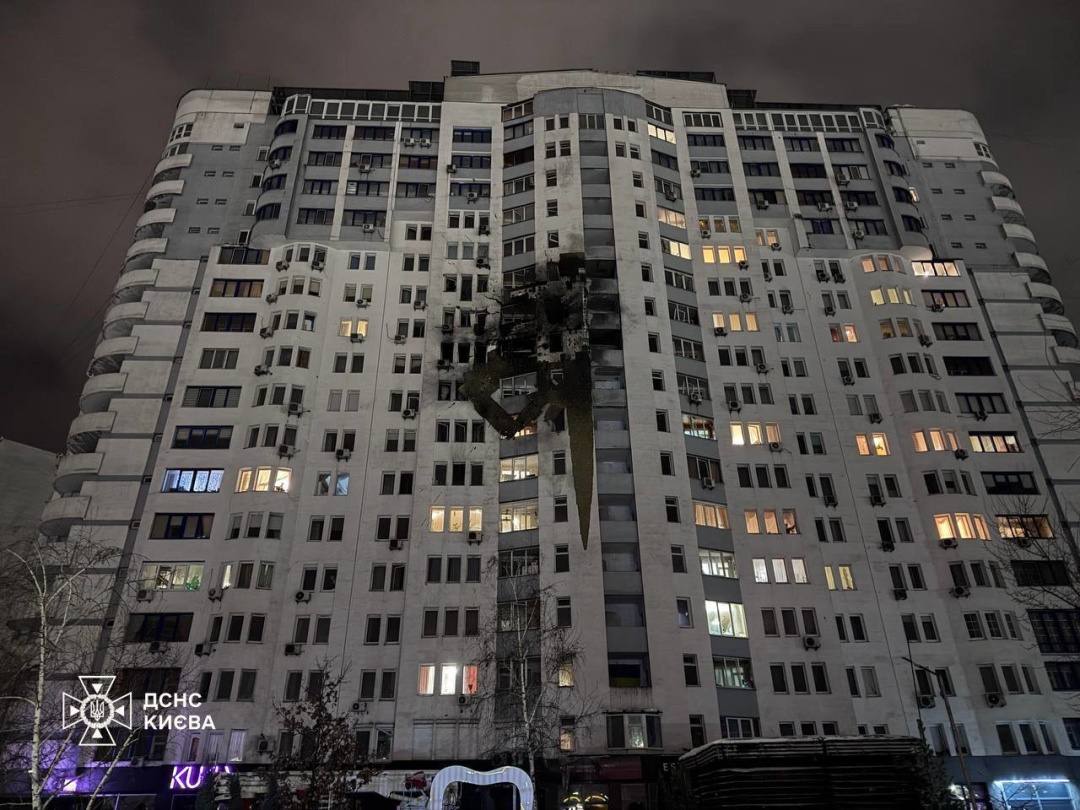
KYIV — The latest Russia Ukraine overnight drone strikes combined a mass Russian salvo against Ukrainian cities with Ukrainian attacks on southern Russia, producing civilian casualties on both sides and renewed pressure on already stretched air defenses. Ukraine’s Air Force said Russia launched 173 drones from about 6 p.m. on September 25 into the morning of September 26, including more than 50 jet-powered Shahed-type aircraft as well as Gerbera attack drones and Parody decoys. By 7:30 a.m., it said 134 had been shot down or suppressed. Ukrainian authorities reported at least six people killed and 45 injured across multiple regions during the past day. Russian regional officials reported five injured in Rostov and casualties in Krasnodar’s Seversky district.
The overnight tally
Ukraine’s Air Force said its defenses neutralized 134 of 173 drones. It reported impacts at 19 locations and falling debris at eight more. Those categories matter: a drone can be jammed and crash without reaching its intended target, while debris from an interception can still damage buildings or injure people. The figures are preliminary military reporting and could change as local authorities inspect sites.
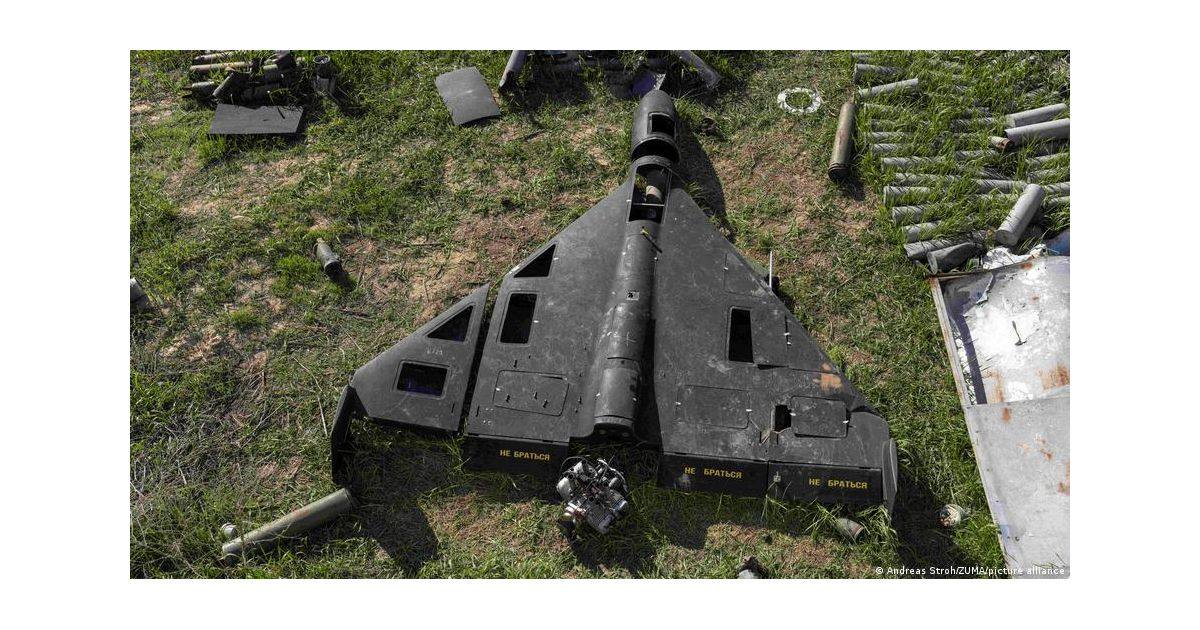
The salvo included a mix of systems. Shahed-type attack drones carry explosive payloads; Gerbera platforms can be used for attack or reconnaissance; Parody decoys seek to consume radar attention and interceptors. More than 50 were described as jet-powered Shaheds, a faster variant that compresses warning time and complicates engagement by mobile teams designed around slower propeller-driven threats.
Casualties across Ukraine
Authorities reported at least six people killed and 45 injured across Donetsk, Zaporizhzhia, Sumy, Kherson, Kharkiv, Kyiv and Boryspil during the past day. The geographic spread is as important as the aggregate. It requires warnings, interceptors, ambulances, fire crews and repair teams across a national network rather than at a single front.
Casualty totals in an active attack are assembled from municipal, regional, police and emergency-service reports. They can overlap or rise after publication. Signal Post News treats the six-dead, 45-injured figure as the supplied past-day tally and does not add every local number independently.
Kyiv hit for a second consecutive day
Kyiv endured a second consecutive day of attacks and had recorded six air alerts by 10 a.m. Officials reported damage to an office building, a preschool, a school, a production facility, homes, a warehouse and vehicles. The pattern illustrates how a drone campaign can disrupt a city even when most incoming aircraft are intercepted.
Schools and preschools are not only buildings. Damage can close classrooms, move children, burden parents and divert municipal resources from routine services. Office and production sites carry economic costs that continue after windows are boarded and fires are extinguished. These secondary effects are part of the strategic pressure of repeated attacks.
Avoiding a misleading Kyiv double count
Municipal statements described a combined September 25–26 Kyiv toll of seven dead and 59 injured. That figure includes fatalities and injuries already reported from the September 25 daytime strike, including the 14-year-old boy killed in Pechersk. Adding it to the past-day national tally would count some victims twice.
The distinction is essential when attacks occur in waves and authorities publish rolling totals. A cumulative city figure answers a different question from a new overnight toll. This report therefore keeps the combined Kyiv number separate and links to the earlier coverage rather than presenting every update as an additional casualty.
Ukraine’s counterstrikes in Rostov
Russian officials said Ukrainian drones injured five people in the Rostov region. The statements did not provide an independently verified full account of targets, damage or the number of drones that reached the area. Ukraine has expanded long-range attacks on military logistics and energy infrastructure, arguing that facilities supporting Russia’s war are legitimate targets.
Civilian harm remains relevant regardless of which side launches the drone. Regional Russian statements should be evaluated with the same caution applied to Ukrainian official claims: identify the speaker, separate confirmed casualties from claimed interceptions and avoid treating the absence of photographs or independent access as proof that nothing occurred.
Krasnodar, Nevinnomyssk and Sevastopol
Authorities in Krasnodar’s Seversky district reported casualties, including one person seriously injured. In Nevinnomyssk, officials said an attempted attack was intercepted without casualties. Sevastopol’s Russian-installed governor said five unmanned aircraft were destroyed without damage. Those statements describe separate local episodes and should not be merged into a single verified battlefield total.
Air-defense claims often arrive rapidly because governments want to reassure residents and demonstrate control. They may later be revised after debris is found or infrastructure operators assess damage. The prudent reading is that Ukrainian drones reached or approached several southern Russian regions, while the full operational results were not independently established by the reporting cutoff.
Russia’s claim of 645 drones
Russia’s Defense Ministry claimed that 645 Ukrainian drones had been downed and also asserted that Russian strikes targeted a Kyiv data center. Those claims could not be independently verified. The scale is unusually large and requires corroboration, especially because defense ministries may count detections, attempted attacks, interceptions and events across different time windows in ways that are not comparable.
A precise number can look authoritative while concealing methodology. Readers need to know the time period, geographic scope and whether multiple agencies counted the same aircraft. Until those details and independent evidence are available, the figure should remain a claim, not a settled fact.
Jet-powered Shaheds change the engagement problem
Reported jet-powered launches increased from about 350 in June to 2,850 in August, according to the supplied reporting. Speeds of roughly 400 to 600 kilometers per hour shorten the period between detection and impact. Faster drones also reduce the time mobile gun teams have to move into position.
Speed does not make a drone invulnerable. Radar-guided systems, electronic warfare and fighter aircraft can still engage it. The challenge is cost and allocation: a defender must decide when to spend an expensive interceptor on a relatively cheap threat, when to rely on guns or jamming, and which sites receive priority during a mixed salvo.
Why decoys matter
A decoy that carries little or no explosive still imposes cost. It occupies radar tracks, triggers alerts and may draw fire. When decoys are mixed with attack drones, defenders must classify targets under time pressure. A mistake in either direction is costly: ignoring a weapon risks impact; engaging a decoy wastes scarce ammunition.
The launch mix is designed to create uncertainty rather than simply overwhelm by numbers. That is why the count of 173 cannot be evaluated only against the count of 134 neutralized. The relevant questions include which drones penetrated, what they struck, how many interceptors were used and whether defenses were displaced from more valuable targets.
Air-defense math
An apparent neutralization rate of roughly three quarters is substantial, but the remaining fraction can still cause severe harm. Nineteen reported impact locations show that a high interception percentage does not equal protection from damage. Even successful interceptions can scatter dangerous fragments over dense neighborhoods.
Defenders also face an unfavorable economic exchange. Long-range missiles are not a sustainable answer to every drone. Ukraine relies on layered defenses—electronic warfare, mobile guns, short-range missiles, aircraft and Patriot systems reserved for the most dangerous ballistic or aerodynamic threats. Each layer has limits, and attackers probe for seams.
Patriot relevance and limits
Patriot batteries are central to Ukraine’s defense against ballistic missiles and certain aircraft threats, but they are not a universal solution to mass drone attacks. Using high-value interceptors against every Shahed would rapidly exhaust stocks. The system matters because drone salvos can be paired with missiles that require a more capable interceptor.
Zelenskyy has said Trump made a final decision related to Patriot manufacturing licenses, but no full U.S. framework or production timetable had been publicly announced in the related reporting. Licensed production would strengthen long-term supply; it would not immediately solve the coming winter’s inventory pressure.
The winter infrastructure risk
Ukrainian Defense Minister Denys Shmyhal has said intelligence obtained detailed Russian planning documents for attacks on power, heating, water and wastewater systems. Signal Post News has not independently verified those documents. The warning is consistent with the strategic vulnerability of civilian energy networks as temperatures fall.
Repeated drones can force grid operators to disperse repair crews and stock replacement equipment. Damage to a substation can cascade even when generation remains available. Water and wastewater systems depend on electricity, so a nominally energy-focused campaign can create public-health effects. Resilience therefore requires redundancy and rapid repair, not only interception.
The $2.1 billion Energy Ramstein pledge
The Energy Ramstein process has mobilized a reported $2.1 billion for equipment and support. The figure signals substantial commitment, but money becomes resilience only when transformers, generators, protection systems and spare parts reach the right sites before they are needed.
Procurement lead times matter. Large transformers are specialized, heavy and slow to replace. Distributed generation can reduce single points of failure, yet it requires fuel and secure connections. The most useful measure of the pledge will be restored capacity and reduced outage time, not the headline total alone.
Deep strikes and escalation
Ukraine’s attacks on Russian territory aim to disrupt launch sites, fuel, logistics and defense production. They can force Russia to move air defenses away from the front and raise the domestic cost of war. They also create escalation risk, particularly when debris or targeting errors harm civilians.
Russia uses Ukrainian long-range strikes to justify retaliation, while Kyiv argues that it is responding to an invasion and targeting war-supporting infrastructure. International law turns on the nature of the target, proportionality and precautions—not on which side labels an operation defensive. Public evidence about individual targets is often incomplete in the first hours.
Diplomacy under fire
The barrage occurred while Washington was proposing technical-level talks among Ukraine, Russia and the United States in the UAE. The coexistence of negotiation and attack is not contradictory; belligerents often seek leverage while testing diplomacy. But continuing civilian casualties make political compromise harder and reduce public trust in promises of de-escalation.
A narrow energy ceasefire could be one early test. It would need reciprocal definitions, monitoring and an agreed investigation process. Without those mechanisms, each side could accuse the other of violating the arrangement after any explosion near a dual-use facility.
Who gains and who loses
Russia can use mass salvos to strain Ukraine’s defenses and impose economic costs even when most drones are stopped. Ukraine can use deep strikes to force Russian regions to share some of the war’s operational burden. Neither advantage is cost-free, and civilians on both sides bear risk from impacts and debris.
Air-defense suppliers gain strategic importance, while cities with weaker coverage lose relative protection. Energy companies and local governments face recurring repair costs. Diplomats lose room to argue that de-escalation is taking hold when each morning brings new casualty reports.
What the numbers mean
The 173 launched and 134 neutralized figures describe the Ukrainian military’s operational picture, not an independently audited inventory. The 19 impact sites and eight debris sites show why defense success and civilian safety are not interchangeable. More than 50 jet-powered drones indicate a growing share of faster threats.
The six killed and 45 injured figure is a past-day national tally; the seven dead and 59 injured Kyiv figure covers two days and overlaps with already reported victims. Russia’s 645-drone claim uses a different scope and remains unverified. Keeping these categories separate prevents arithmetic from creating a false picture.
What happens next
Investigators will identify debris, map impact sites and revise casualty reports. Ukraine will assess which defensive layers succeeded and where jet-powered drones penetrated. Russia will evaluate whether Ukrainian strikes forced operational changes in Rostov, Krasnodar, Stavropol or occupied Crimea.
The policy decisions are equally important: whether more short-range interceptors arrive, whether Patriot production steps become concrete, whether Energy Ramstein equipment is deployed before winter, and whether UAE diplomacy produces a verifiable discussion of attacks on infrastructure.
Verification priorities after the barrage
Independent assessment should focus on geolocated damage, official casualty revisions, satellite imagery where relevant and physical evidence identifying drone types. It should also compare the time windows used by Ukrainian and Russian military statements. A photograph of debris can identify a platform but does not by itself prove the intended target, launch location or whether an interceptor changed the impact point.
Operational claims deserve a second look after the first news cycle. Authorities often correct numbers once radar tracks are reconciled with local reports. Hospitals may revise injury totals, and infrastructure operators may disclose effects later for security reasons. Keeping the reporting cutoff visible protects against treating a preliminary snapshot as the final record. It also lets later accountability work distinguish an early error from a deliberate misrepresentation in the public record.
The bottom line
This was not one attack but a connected night of long-range pressure. Ukraine reported a large Russian mixed-drone salvo, widespread impacts and civilian casualties; Russian officials reported injuries from Ukrainian counterstrikes. Many operational details remain claims from governments at war.
The clearest conclusion is strategic rather than numerical. Faster drones, decoys and repeated waves are raising the cost of defense, while Ukraine’s deep strikes widen the geography of risk. The next measure of advantage will be whether either side can convert those attacks into durable military effect without further expanding civilian harm.
Related coverage
- Russian drone kills a 14-year-old boy in Kyiv
- Ukraine’s deep strikes hit Perm and Ulyanovsk
- Shmyhal warns of a Russian winter energy-strike plan
Sources
- Europe Says: Ukrainian Air Force account of the 173-drone overnight salvo.
- Europe Says: damage and casualty reporting from Ukraine.
- Europe Says: Russian regional reporting on Ukrainian drone attacks.
- LaPresse, September 26, 2026: five reported injuries in Rostov.
- Particle News: summary of Ukraine’s air-defense report.
- Particle News: reported damage in Kyiv.
- Reuters, September 25, 2026: prior Kyiv strike and the 14-year-old victim, used to prevent double counting.
Reporting cutoff: September 26, 2026. Claims are attributed to the people, governments and organizations that made them. Where the underlying evidence or operational picture was not independently available, this article says so. Analysis is by Signal Post News.