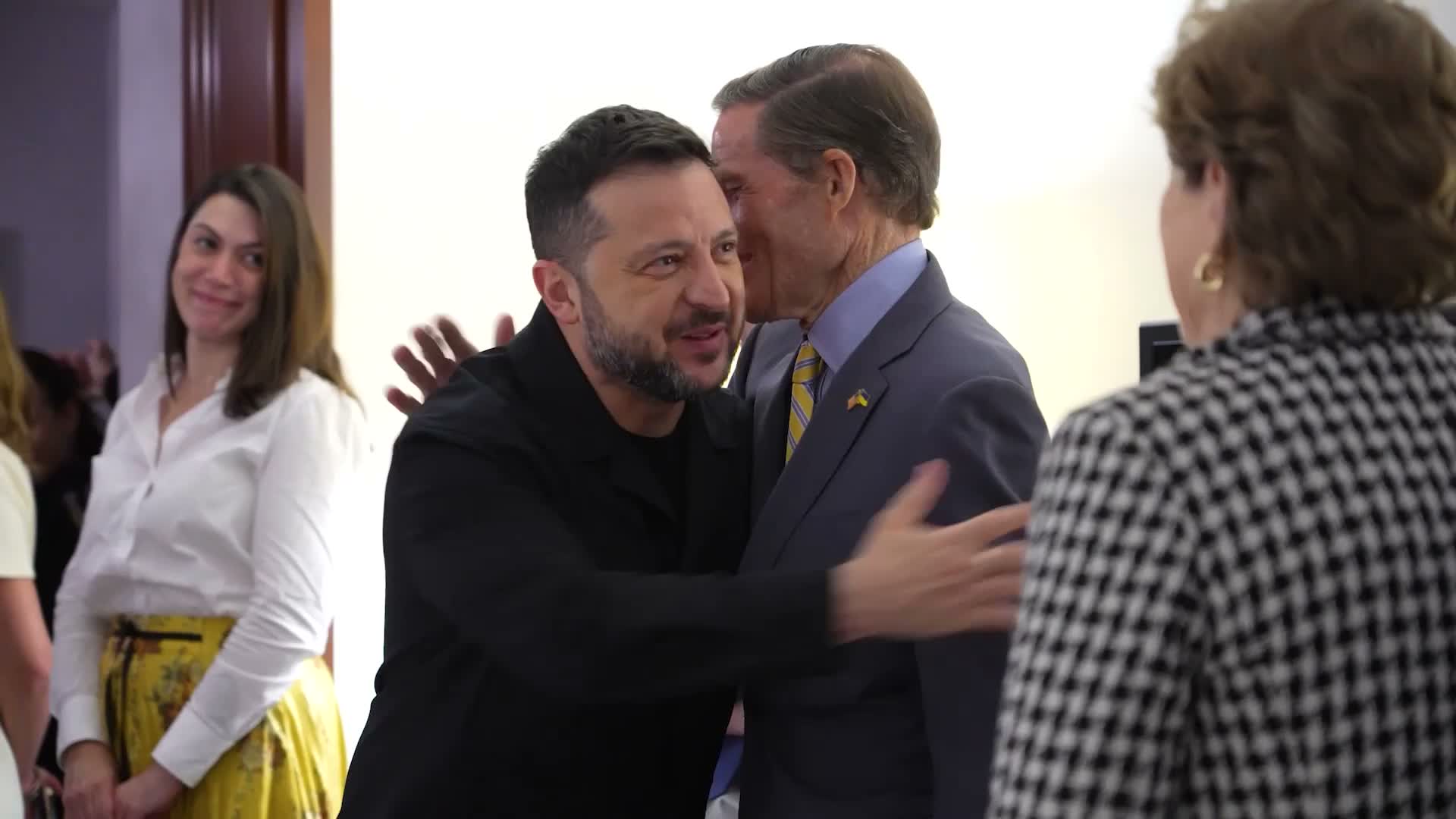
Ukrainian President Volodymyr Zelenskyy announced on September 21 that Ukraine is ready to stop striking Russian energy facilities — if Moscow halts its attacks on Ukraine's energy sector, critical infrastructure and food exports. The offer, published on X alongside official video footage of his meeting with US officials, could open the door to the war's first partial truce, and will be on the table when Zelenskyy meets US President Donald Trump in New York on Tuesday.
What happened
Zelenskyy posted the statement on Monday, September 21, in a lengthy X post that paired a written appeal with video footage. Its core passage read: “Ukraine's energy sector, critical infrastructure, and our food exports must stop being targets for Russia, and this will lead to matching de-escalation steps on our part.” He added: “Solutions are possible. We are ready to work on this, and we will discuss it with our partners on the sidelines of the UN General Assembly in New York.” The post opened with a broader appeal — “Indeed, this Russian war against Ukraine and against common sense must be ended. From the first year of the full-scale invasion, its consequences have been far-reaching: the loss of many lives, the destruction of cities and villages, food security, energy challenges…” — and included a warning that the balance of the war has shifted: “It will no longer be the case that only the country that was attacked suffers. The nature of the war now is such that the aggressor also incurs losses.” Zelenskyy also confirmed that “dialogue with President Trump and the US is currently ongoing” and that “ideas for bringing peace closer are also under consideration, starting with decisive de-escalation steps.”
Why it matters
The timing is everything. The offer landed hours after Russia unleashed one of its heaviest overnight barrages of the war on Ukraine's industrial belt — 3 people killed and 6 injured in Dnipro, 212 drones and missiles fired across the country, and nearly 100,000 consumers in the Chernihiv region left without power (reported earlier by Signal Post News). Zelenskyy is not offering de-escalation from weakness: the post pointedly frames Ukraine's long-range drone campaign against Russian refineries as the leverage that makes reciprocity possible. Energy has now become the diplomatic centerpiece of the war — the subject of Sunday's Trump–Zelenskyy phone call, of Tuesday's New York meeting, and, via Russian Foreign Minister Sergei Lavrov's expected talks with US Secretary of State Marco Rubio on Wednesday, of Moscow's first official response.
Background: the energy war
This is not the first attempt at an energy truce. On September 15, Trump announced that Ukraine and Russia had agreed not to strike each other's energy infrastructure. The Kremlin publicly welcomed the idea — and within a day the supposed truce was dead: Russia hit petrol stations in Kyiv, and Ukraine bombed a Russian oil refinery. The deeper driver is the damage Ukrainian drones have inflicted on Russian refineries. Trump has repeatedly pressed Zelenskyy to stop those strikes, telling him they are disrupting fuel supplies and driving up diesel prices; according to Axios, “the word diesel came up many times” during their September 20 call. Reuters reports Trump's approval has slumped to a record low amid high gas prices ahead of November's US midterm elections, while the Iran conflict has pushed global energy prices higher still — giving Washington a powerful domestic incentive to calm the energy front of the Ukraine war.
What the numbers mean
212 drones and missiles in a single night marks one of the largest combined barrages of the war, evidence that the air campaign is escalating on both sides even as diplomats talk de-escalation. Nearly 100,000 people blacked out in Chernihiv is a preview of the winter energy war Ukrainians fear: Reuters reports Kyiv expects Russia to gear up to pound heating and power facilities as cold weather approaches. The asymmetry is stark — Russia retains far more missile firepower and has shown no signal it wants to pause the air war — but Ukraine's drone reach has imposed a new cost inside Russia itself, which is precisely the leverage Zelenskyy's offer converts into diplomacy.
Winners and losers
If a partial truce holds, the winners are Ukrainian civilians facing a winter under bombardment, global energy and diesel markets, Black Sea food exporters, and a White House desperate to bring fuel prices down before the midterms. The losers would be hardliners on both sides: Ukraine would surrender its most effective economic weapon against Russia's war machine, while Russia would give up one of its main tools of coercion against the Ukrainian grid. The cautionary precedent is September 15, when a handshake on energy restraint collapsed within hours — verification, not declarations, is where such deals live or die.
What happens next
Tuesday, September 22: Zelenskyy meets Trump on the UN General Assembly sidelines in New York, with the energy truce at the top of the agenda — a meeting Zelenskyy says “could change a lot.” Wednesday: Lavrov meets Rubio, where Moscow's answer will first surface. If Russia agrees, the result would be a sectoral ceasefire covering energy and food exports — the first partial truce since the full-scale invasion began. If it refuses or cheats as before, the air war escalates into winter, and both grids become battlefields again.
Conclusion
Zelenskyy has taken Trump's pressure over diesel prices and turned it into a conditional offer that puts the decision squarely in Moscow's court: stop hitting Ukraine's power plants, infrastructure and grain exports, and Kyiv will stop hitting Russia's refineries. It is the most concrete de-escalation proposal of the war — and also the most fragile, given how fast the last one died. Everything now depends on two meetings in New York.
Sources
- Reuters — “Zelenskiy to meet Trump at UN in push for energy truce with Russia”
- AnewZ live blog quoting Anadolu — “Zelenskyy names conditions for halting strikes”
- Azernews — “Zelenskyy says Ukraine ready for de-escalation if Russia stops energy and food strikes”
- Original statement and official video posted by @ZelenskyyUa on X
- Signal Post News — prior coverage of the overnight industrial strikes and Chernihiv blackout
Reporting date: September 21, 2026. The proposal is conditional and had not produced a verified agreement at publication.