Lead
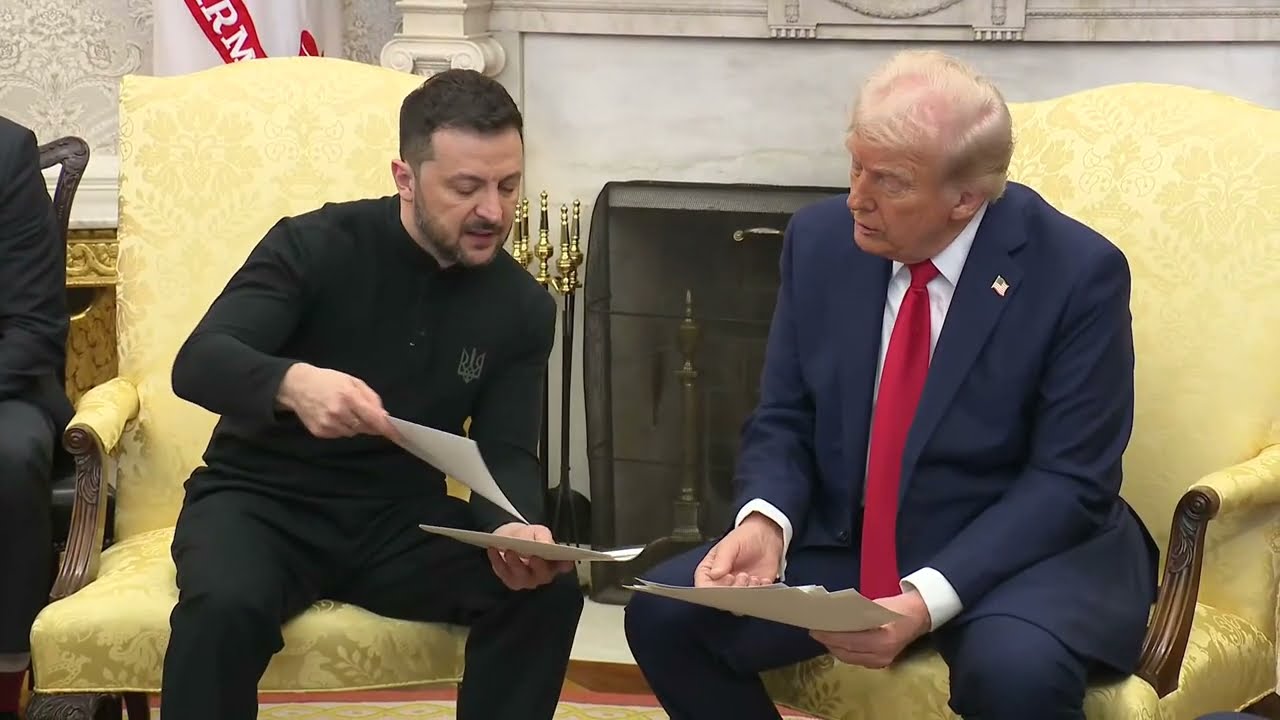
Hours before President Donald Trump was due to meet Ukrainian President Volodymyr Zelenskyy on Tuesday on the sidelines of the U.N. General Assembly in New York, details emerged of a pointed phone call in which the U.S. president pressed his Ukrainian counterpart to stop Ukraine's strikes on Russian oil refineries. According to a senior Ukrainian official quoted by the Financial Times, Trump's main message in the call was simply: "diesel, diesel … diesel."
What happened
Trump told Zelenskyy that Kyiv's relentless strikes on refineries — which a Ukrainian official said stretched from St. Petersburg to Siberia — were driving up prices and worsening global fuel shortages, The Times reported, citing the FT. Reuters separately reported that the two leaders spoke by phone on Sunday, and that a person familiar with the matter said Trump had asked Zelenskyy to stop attacks on Russian oil refineries as part of a broader de-escalation effort.
Speaking ahead of Tuesday's meeting, U.S. Secretary of State Marco Rubio backed the idea of an "energy infrastructure ceasefire." In a Fox News interview, Rubio said: "We think that would be a great idea — an energy infrastructure ceasefire in which … Ukraine's infrastructure is not being targeted, Russian energy supplies are not being targeted as well. It's an ideal outcome."
Trump himself has been escalating the pressure for weeks. On September 13 he publicly called on Zelenskyy to call off the strikes, saying they were "hurting the world." Last week he claimed Ukraine and Russia had agreed to a truce on strikes against each other's energy facilities — though no such deal was announced by either country, and it remains unclear why the U.S. leader made the announcement. On Monday he wrote on Truth Social: "Russia has unfortunately lost control of its Diesel Oil industry due to its War with Ukraine. A large number of their Diesel refineries have been blown up and are, at least temporarily, out of commission. This ridiculous and never ending War with Ukraine must be ended."
Zelenskyy responded on Monday with a conditional offer, writing on X that if Russia halted attacks on Ukraine's energy sector, critical infrastructure and Black Sea shipping, Ukraine would take matching de-escalation steps. There was no public response from Moscow.
The overnight strikes
The diplomacy is unfolding against some of the war's heaviest recent exchanges. Overnight, Ukrainian drones struck Russia's Samara region on the Volga River, which hosts critical oil refineries, the regional governor, Vyacheslav Fedorishchev, said Tuesday, claiming civilian targets including houses and cars were hit. Russia's defense ministry said it carried out a massive strike on Ukrainian targets, hitting industrial and military facilities, the fuel and energy sector, port infrastructure and sea vessels operating for the Ukrainian military. Russian strikes in Dnipro killed at least two people, local Ukrainian authorities said Tuesday.
Reuters reported that a Ukrainian drone attack on Sunday killed three people and pounded a Moscow oil refinery during a tightly controlled Russian election — the strike that The Times said preceded Trump's phone call. And in an announcement made as Trump delivered his U.N. address Tuesday, Zelenskyy said Ukraine had hit two Russian oil refineries in the previous 24 hours. "We are taking the war back to where it came from," he said. "We are bringing peace closer for Ukraine."
The numbers behind the fight over fuel
Both sides present the energy campaign as leverage, and the data cited in recent reporting is stark. According to the International Energy Agency, a Russian refinery was hit by Ukraine on average once every three days in the first eight months of 2026, helping drive Russian oil refining production to its lowest level in more than 20 years. Estimates cited by The Times put Russian diesel production down nearly 30 percent over the past year and petrol output down 20 percent. Some refineries near Ukraine have been attacked more than a dozen times.
Diesel costs have soared to record levels in the United States as November's midterm elections approach, and Reuters noted that Trump's approval ratings have slumped to a record low amid high gas prices — a political backdrop that helps explain the White House's urgency. Analysts at Ukraine's KSE Institute have argued, however, that the U.S.–Iran war has done far more damage to global oil and petrol supplies than Ukrainian drone attacks, according to The Times.
Kyiv, for its part, sees the strikes as its strongest card: Reuters reported that Ukrainian officials view the damage inflicted on Russia's oil industry as their best way of forcing Moscow to the negotiating table — and are loath to give it up unilaterally.
What happens next
Tuesday's New York meeting was expected to test whether the two leaders can narrow a substantial gap: Ukraine wants protection for its power and heating systems ahead of winter, while Washington is pressing for restraint that would ease economic disruption. Reuters reported that Zelenskyy also planned to raise sourcing U.S.-made Patriot air defense missiles for the winter, amid a Russian air campaign that in July fired the largest number of ballistic missiles at Ukraine in a single month since the war began.
Diplomacy continues beyond Tuesday: Russian Foreign Minister Sergey Lavrov is also in New York and is due to meet Rubio on Wednesday. For now, the divide remains wide. Russia, which retains greater missile firepower, has given no public signal it seeks to pause the air war — and Ukraine has made clear any energy ceasefire must be reciprocal and enforceable.
Sources and reporting notes
- The Times, Sept 22 2026: the "diesel, diesel … diesel" phone call via the Financial Times, Rubio's "energy infrastructure ceasefire" remarks on Fox News, the overnight Samara and Dnipro strikes, and IEA figures on Russian refining.
- Reuters, Sept 22 2026: the Tuesday UNGA meeting, Sunday's phone call, Trump's refinery ask, Zelenskyy's conditional de-escalation offer, the Sunday Moscow refinery strike, and the Patriot missile agenda.
- USA Today, Sept 22 2026: Trump's U.N. speech, Zelenskyy's announcement of two Russian refineries hit in 24 hours, and Trump's "stop knocking out diesel fuel" remarks.
Reporting cutoff: September 22, 2026. The content of the Trump–Zelenskyy phone call is reported via officials speaking to the Financial Times and was not confirmed on the record by the White House. Casualty figures are from local authorities and are unverified.