War · Ukraine · Nuclear Safety
Nuclear safety regulators from 38 countries warned on Monday that the Ukraine nuclear accident risk winter now brings — sub-zero cold, peak demand and a power grid under the heaviest attack of the war — is the highest it has been since Russia’s full-scale invasion began. Their worst case is not a strike on a reactor. It is a nationwide blackout that reaches all nine of Ukraine’s operating reactors at the same time, and strips every one of them of the grid power that keeps nuclear fuel cool.
Track it live: https://signalpostnews.com/tracker/ukraine-war-map
KYIV, November 16, 2026 — The warning came in the flat, careful language regulators use when they want to be impossible to misunderstand. In a joint statement seen by Reuters and issued on Monday, nuclear safety regulators representing 38 countries — acting through HERCA, the Heads of the European Radiological Protection Competent Authorities; WENRA, the Western European Nuclear Regulators Association; and NORA, the Heads of the Nordic Radiation Safety Authorities — expressed deep concern about increasing risks to nuclear safety from Russia’s war against Ukraine and its continued attacks on Ukraine’s energy infrastructure, and urged Russia to stop attacking power infrastructure. The signatories span every European Union member state, joined by the United States, Britain, Canada and Japan. It is the regulators’ position, stated as plainly as their profession allows: the danger this winter is not hypothetical, and it is rising.
Per Strand, who heads both HERCA and NORA, put the point without varnish in comments to Reuters. Attacks in recent weeks had become deadlier, he said, carried out with drones bearing bigger payloads and more precise targeting. “Clearly the highest risk will be this winter for a nuclear accident,” Strand said — and, in the same breath, insisted the trajectory is a choice rather than a fate: it is “possible to stop this situation if we act.” The scenario he described at the far end of that trajectory is the one that frames everything else in this article: a nationwide blackout of Ukraine’s grid that affects its nine producing nuclear reactors simultaneously.
How a grid war becomes a nuclear accident risk
The mechanism the regulators are pointing at is indirect, and that is precisely what makes it dangerous. A nuclear power plant is not made safe by its concrete and steel alone; it is made safe, hour after hour, by electricity. Pumps must keep water moving over reactor cores and spent fuel, because nuclear material continues to generate heat long after a reactor stops producing power. In normal times that electricity comes from the grid the plant itself feeds. When the grid fails, on-site emergency diesel generators take over — a robust backup, but a finite one, dependent on fuel deliveries, maintenance and machines that were designed as a bridge, not as a way of life. Without stable grid electricity, the regulators warn, it becomes harder for plants to keep nuclear material cool and avoid a meltdown, with the possibility of a radioactive release beyond the site fence.
Reuters’ report carried the historical context that explains why 38 regulators chose to speak together rather than separately. The 1986 Chornobyl disaster spread iodine-131, caesium-134 and caesium-137 across parts of Ukraine, Belarus and Russia and into northern and central Europe. The reactors at risk in Ukraine today are different machines in a different situation, and no one in Monday’s statement predicted a repetition of 1986. The parallel the regulators are drawing is narrower and harder to dismiss: radioactive material does not respect front lines, borders or the intentions of the people who released it, and the countries that would live downwind of a Ukrainian nuclear accident are, in large part, the countries whose regulators just signed their names.
The IAEA’s own log points the same way
The regulators did not issue their warning into a vacuum. Two days earlier, on Saturday, November 14, the International Atomic Energy Agency published Update 375, Director General Rafael Mariano Grossi’s latest statement on the situation in Ukraine, and its week-by-week log reads like the evidence annex to Monday’s statement. Grid instability caused by military activity forced several power reductions at some operating units of Ukraine’s nuclear plants during the week, the IAEA reported. At the Chornobyl site, fluctuations in the grid automatically activated emergency diesel generators — the backup behaving as designed, at a site where the world least needs reminders of what is at stake. The pattern held across the fleet: the threat the regulators describe is not confined to one occupied plant on the front line, but follows the grid wherever the grid is struck.
At Zaporizhzhia, the IAEA’s log is starkest. On November 8, the plant lost all off-site power for more than 12 hours after damage to the Ferosplavna-1 330 kV line — its last remaining connection to the grid. It was the plant’s 27th complete loss of off-site power since the conflict began. Since late March, Zaporizhzhia has relied on that single off-site line, and the agency said it is working with both sides to restore the Dniprovska substation and its 750 kV line, which would give the plant a second lifeline. Signal Post News covered the November blackout as it unfolded in its report on how the Zaporizhzhia nuclear plant lost external power and ran on diesel generators. The agency also reported being informed that one Zaporizhzhia employee was killed in a drone attack on November 9 and another in an explosion on November 10 — alleged incidents affecting plant personnel that the IAEA recorded as reported to it. Around Ukraine’s other sites, IAEA teams at Khmelnytskyy and Rivne sheltered amid air-raid alarms, and at the South Ukraine plant, 27 drones were detected, one of them about 350 metres from the site.
Why this matters
The reactors are also the heating system
Start with the arithmetic of dependence. Ukraine has four nuclear power plants; three are in operation, and together they provide some 80% of the power the country will use this winter, according to Reuters. That figure reframes the regulators’ warning from a safety story into a story about the whole of civilian life under cold weather. The same reactors whose cooling depends on the grid are the machines keeping Ukrainian homes heated, hospitals lit and water systems pressurised through the darkest months. An attack campaign against the grid therefore presses on both sides of the equation at once: it degrades the electricity the plants need for their own safety while increasing the country’s reliance on every megawatt those plants produce. Winter is when demand peaks, when repair crews work in the worst conditions, and when a blackout stops being an inconvenience and becomes a threat to life in unheated apartment blocks. That convergence — maximum dependence, maximum stress, minimum slack — is the substance behind Strand’s judgment that the risk this winter is the highest of the war.
The margin is a single wire
Then consider the arithmetic of redundancy, because nuclear safety is, at bottom, the discipline of never depending on one thing. Zaporizhzhia enters this winter dependent on exactly one thing: a single 330 kV line, Ferosplavna-1, after its other connections were lost and never restored. The plant has now crossed into complete blackout 27 times since the conflict began — 27 occasions on which Europe’s largest nuclear station ran on emergency diesels, including more than 12 hours on November 8. Each episode ended without a reported release, and each is properly described as the safety systems working. But a system that must work perfectly every time, under wartime conditions, maintained by staff who themselves work within range of drones — the IAEA recorded 27 drones near the South Ukraine plant in a single week, one about 350 metres away — is a system consuming its own margin. The regulators’ statement is best read as an attempt to restore that margin politically before physics is asked to supply it.
Context: how the grid war reached the reactors
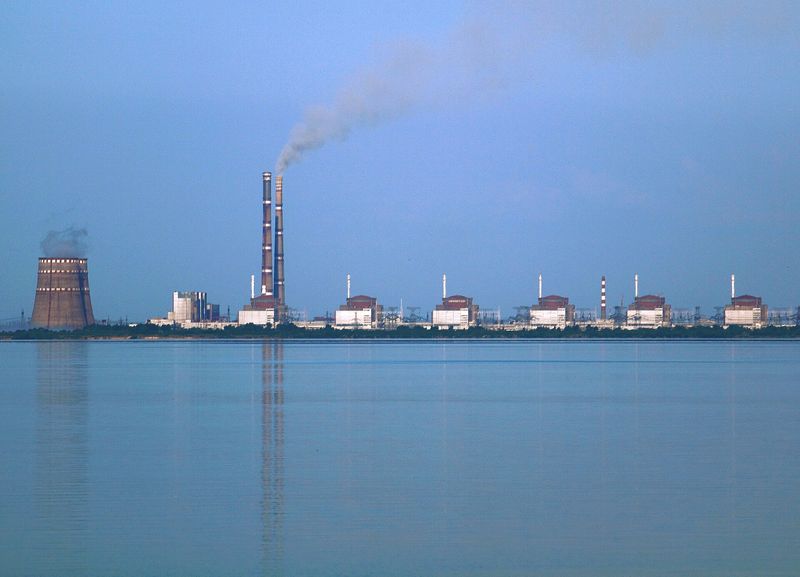
Zaporizhzhia has been the war’s nuclear fault line since 2022, when Russian forces seized Europe’s largest nuclear plant and turned a generating station into a front-line position. Its six reactors no longer produce power for the grid; what they produce, relentlessly, is heat that must be removed, and a standing requirement for electricity the plant can no longer generate for itself. Around that fixed fact, the wider energy war has escalated winter by winter: waves of strikes against substations, transformers and transmission lines, each campaign answered by repair, improvisation and a thinner reserve. The scale of the aerial war feeding that pressure was on display again this month in the barrage Signal Post News covered as Ukraine launched its biggest drone attack of the war and the Crimea Bridge was struck — a reminder that the long-range strike war now runs in both directions, as Ukraine’s own campaign against Russian oil infrastructure, which Kyiv says has disabled 51% of Russia’s refining capacity, also attests. It is inside that two-way escalation that the regulators have intervened, and their target is specific: not the war in general, but the attacks on the power infrastructure that nuclear safety silently depends on.
Responsibility for Zaporizhzhia’s condition is contested in the most literal sense. Russia and Ukraine accuse each other of striking the plant and severing its power lines; each side’s account of any given incident is the mirror image of the other’s. This article does not adjudicate those accusations, and readers should treat claims about individual strikes with the caution that wartime attribution demands. What is not contested — because the IAEA logs it, week after week, from its own presence on the ground — is the cumulative result: 27 complete losses of off-site power, a single surviving line since late March, staff killed in reported attacks, and a grid whose instability now reaches from the occupied plant in the south to Chornobyl in the north, where diesel generators started automatically this month at the site of the 1986 disaster. The Chornobyl parallel deserves care. The destroyed reactor there is entombed, the operating plants of today are of different design, and nothing in the record suggests a 1986-scale event is the expected case. But the isotopes Reuters listed — iodine-131, caesium-134, caesium-137 — are named in the regulators’ context for a reason: they are the vocabulary of a release that crossed borders and entered food chains across a continent, and they are why a grid failure in Ukraine is a European story and not only a Ukrainian one.
Kyiv, Moscow and the neighbours who live downwind
For Kyiv, Monday’s statement is external validation of the argument Ukraine’s energy leadership has pressed through successive winters: that the grid and the reactors are a single system, and that striking one endangers the other. Ukraine enters the season with three of its four plants operating and nuclear generation carrying some 80% of winter consumption — a dependence that leaves no version of the coming months in which grid defence is separable from nuclear safety. For Moscow, the statement is an accusation it rejects in kind: Russia, which controls Zaporizhzhia, accuses Ukraine of striking the plant and cutting its power lines, and the two governments’ competing claims over the plant’s 27 blackouts remain unresolved and, on the public record, unresolvable by outsiders. The regulators, notably, did not litigate the plant’s incidents one by one. Their statement addressed the campaign against energy infrastructure as a whole, and named the direction from which they say it comes — which is why it will be read in Moscow as a political act and in Kyiv as a technical one, and why both readings miss the document’s actual character: it is a safety case, made by the officials who would own the consequences of being right too late.
The third audience is the one with no seat at any negotiating table: the European neighbours who would receive whatever a Ukrainian nuclear accident released. Prevailing winds do not consult diplomats. The 1986 precedent — fallout measured in Belarus and Russia as well as Ukraine, and detected across northern and central Europe — is the reason radiological regulators, rather than foreign ministries, fronted Monday’s intervention, and the reason its signatory list matters: all EU states, plus the United States, Britain, Canada and Japan, speaking through HERCA, WENRA and NORA in a single text. When the officials charged with protecting populations from radiation speak in unison, they are describing the geography of their own responsibility. A meltdown averted is a Ukrainian success; a meltdown not averted is a European emergency, and the regulators have now said, on the record and in advance, that the risk of the second is at its wartime peak.
What happens next: three paths into winter
Restore the second line
The most concrete near-term step is already on the IAEA’s work plan: restoring the Dniprovska substation and the 750 kV line to Zaporizhzhia, which the agency says it is pursuing with both sides. A second off-site line would not make the plant safe in any final sense — it would remain an occupied station beside a front line — but it would restore the single most basic principle of nuclear defence in depth: that no one failure, one damaged line, one bad night, stands between a reactor and a blackout. Every day of the 27 blackouts so far has been survived on diesel; redundancy is what turns survival from an achievement into an expectation.
Stop striking the grid
The regulators’ own ask is broader: an end to attacks on power infrastructure. Strand’s formulation — that it is “possible to stop this situation if we act” — frames the risk as a policy output rather than a weather event. A verified pause in strikes on substations and transmission would do more for nuclear safety this winter than any equipment that could be delivered in the time available, because it would stabilise not one plant’s supply but the grid stability whose fluctuations, the IAEA logged this week, are already forcing power reductions and starting diesels across the fleet. Whether any party accepts that logic is a diplomatic question; that the safety logic itself is sound is what 38 regulators just put their names to.
More of the same
The third path is the current one, extended: heavier drones, more precise targeting, a grid repaired at the edge of exhaustion, and nine operating reactors riding through a winter in which a nationwide blackout is, in the regulators’ stated worst case, a simultaneous event rather than a local one. On that path, the relevant question is not whether Ukraine’s operators and diesel generators can cope — 27 times at Zaporizhzhia, they have — but how many times a wartime system can be asked to perform flawlessly before probability collects its debt. Regulators are paid to ask that question early. On Monday, they asked it about as loudly as their profession permits.
What would change the picture fastest is visible in the IAEA’s own log: a restored 750 kV line at Zaporizhzhia, a grid stable enough that Chornobyl’s diesels stay silent, and a winter in which air-raid alarms at Khmelnytskyy, Rivne and South Ukraine are not accompanied by drones counted in the dozens within hundreds of metres of reactor sites. None of that requires the war to end. All of it requires the war to be fought, this winter, at a deliberate distance from the wires that keep nine reactors cool — which is, in the end, the whole of what the regulators asked. The statement of November 16 will be filed, cited and argued over. Its test is simpler, and it runs on a thermometer: the colder Ukraine gets, the more its people depend on nuclear power, and the less margin anyone — in Kyiv, in Moscow, or downwind in Europe — has left to spend.
Sources
Reuters, November 16, 2026, “Risk of nuclear accident in Ukraine increasing this winter, atomic safety regulators warn”: joint statement by regulators representing 38 countries through HERCA, WENRA and NORA, including all EU countries plus the US, Britain, Canada and Japan, expressing deep concern at increasing risks to nuclear safety from Russia’s war and its attacks on Ukraine’s energy infrastructure and urging Russia to stop attacks on power infrastructure; Per Strand, head of HERCA and NORA, on deadlier attacks using drones with bigger payloads and more precise targeting, “clearly the highest risk will be this winter for a nuclear accident,” “possible to stop this situation if we act,” and the worst case of a nationwide blackout affecting nine producing reactors simultaneously; the cooling mechanism and meltdown risk without stable grid power; Chornobyl 1986 context (iodine-131, caesium-134, caesium-137 across parts of Ukraine, Belarus, Russia and northern/central Europe); Ukraine’s four nuclear plants, three in operation, providing some 80% of power used this winter; Zaporizhzhia under Russian control near the front line; mutual Russian and Ukrainian accusations over strikes on the plant and severed power lines. Full report: https://www.reuters.com/business/energy/risk-nuclear-accident-ukraine-increasing-this-winter-atomic-safety-regulators-2026-11-16/
International Atomic Energy Agency, Update 375 — IAEA Director General Statement on Situation in Ukraine, November 14, 2026 (Director General Rafael Mariano Grossi): grid instability from military activity causing several power reductions at some operating units that week; Chornobyl site grid fluctuations automatically activating emergency diesel generators; Zaporizhzhia’s loss of all off-site power for more than 12 hours on November 8 after damage to the Ferosplavna-1 330 kV line, its 27th complete loss of off-site power since the conflict began; reliance on the single Ferosplavna-1 line since late March; IAEA work with both sides to restore the Dniprovska substation / 750 kV line; IAEA informed of one Zaporizhzhia employee killed in a drone attack on November 9 and one in an explosion on November 10; IAEA teams at Khmelnytskyy and Rivne sheltering amid air-raid alarms; 27 drones detected at South Ukraine, one about 350 metres from the site. Full statement: https://www.iaea.org/newscenter/pressreleases/update-375-iaea-director-general-statement-on-situation-in-ukraine
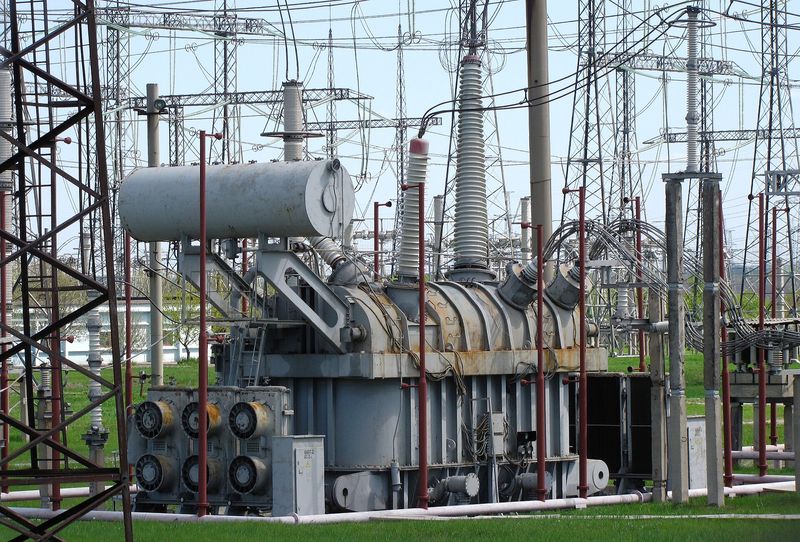
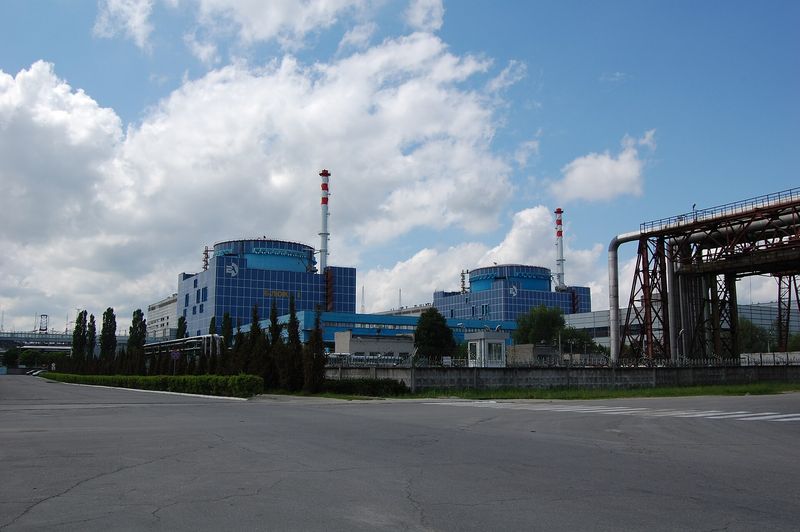
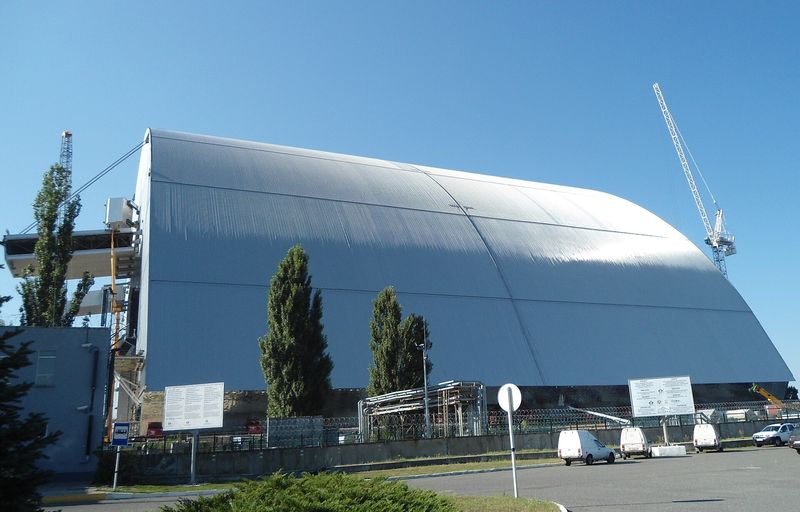
Photographs are file photos from Wikimedia Commons and do not depict this week’s events: Zaporizhzhia Nuclear Power Plant (Ralf1969, CC BY-SA 3.0); 750 kV transformer in Ukraine (Novoklimov, CC BY-SA 4.0); Khmelnytskyi Nuclear Power Plant (alexndm, CC BY-SA 3.0); Chornobyl New Safe Confinement (Cls14, CC BY-SA 4.0).