War · Ukraine · Nuclear Safety
At 02:36 on Sunday, Europe’s largest nuclear power plant lost its last operating connection to the grid when the 330 kV Ferosplavna-1 line tripped on damage. It is the 16th complete loss of external power at Zaporizhzhia in 2026. Backup diesel generators are carrying the systems that keep six shut-down reactors and their spent fuel cool, and neither side has reported any radiation release.
Track it live: Live war tracker · Live Ukraine war map
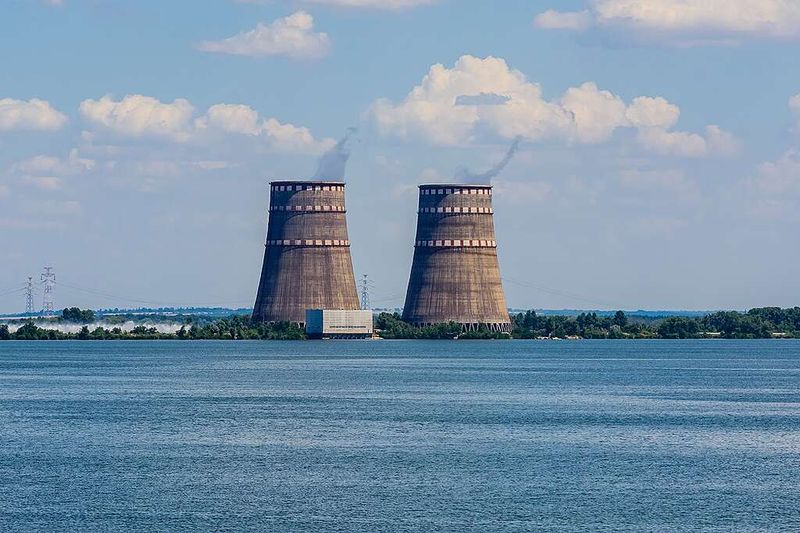
ENERHODAR, November 8, 2026 — The Zaporizhzhia nuclear plant loses power from the outside grid in a way that has become grimly routine: at 02:36 local time on Sunday, its last operating external power line — the 330 kV Ferosplavna-1 line, also transliterated Ferrosplavna-1 — was disconnected by automatic protection after it was damaged, according to Ukraine’s nuclear operator Energoatom, whose account was carried in Ukrainian reporting by Agroreview and other outlets. An automatic attempt to reconnect the line failed. The Russian-installed management running the plant, in a statement posted on the MAX platform and reported by Reuters on November 8, confirmed the same sequence from its side of the fence: the line was shut down by automatic protection because of damage, backup diesel generators are supplying the equipment required for safe operation, radiation levels at the site and in the surrounding surveillance zone are normal, and staff are monitoring all parameters. No radiation release has been reported by either side, and neither account establishes what damaged the line or how badly.
What happened at 02:36
The sequence both accounts agree on is short and stark. A nuclear plant in normal operation generates its own electricity and exports the surplus; a shut-down plant does the opposite — it imports power from the grid to run cooling pumps, ventilation, monitoring and life-support systems. By Sunday morning, Zaporizhzhia was down to a single external lifeline, the Ferosplavna-1 power line, after a second external line was cut in March and never restored to service. When Ferosplavna-1 tripped at 02:36, the plant crossed the threshold nuclear engineers call a complete loss of off-site power: the ukraine nuclear plant power outage became total, and the site’s emergency diesel generators started automatically to pick up the safety load, as they are designed to do.
That the generators started is the reassuring part of the story, and it is also the whole of the reassurance available so far. The two public accounts diverge on emphasis rather than on the core facts, and they are worth keeping separate, because each comes from a party to the war.
What Energoatom said
Energoatom, Ukraine’s state nuclear operator and the plant’s legal owner-operator, said the disconnection was the 16th complete loss of external power at Zaporizhzhia since the beginning of 2026 — the energoatom zaporizhzhia 16th blackout, in the company’s own count. It warned that a blackout creates a critical risk to nuclear and radiation safety if the diesel generators fail or their fuel runs out, because the cooling and life-support systems that keep reactor fuel and spent-fuel pools safe depend entirely on that power. Ukrainian reporting of Energoatom’s statement, via Agroreview, Particle and h.ua, added the operational detail: the trip happened at 02:36, the damage triggered the automatic protection, and the automatic reconnection attempt did not succeed.
What the plant management said
The Russian-installed management that has run the site under occupation gave its account in a statement on MAX, reported by Reuters on November 8 and carried in Russian state media including TASS and RIA. It said the Ferosplavna-1 line was shut down by automatic protection because of damage; that backup diesel generators are supplying the equipment required for the plant’s safe operation; that zaporizhzhia radiation levels normal readings were being recorded both on site and in the surveillance zone around it; and that personnel were monitoring all parameters. The statement, as reported, did not specify what caused the damage.
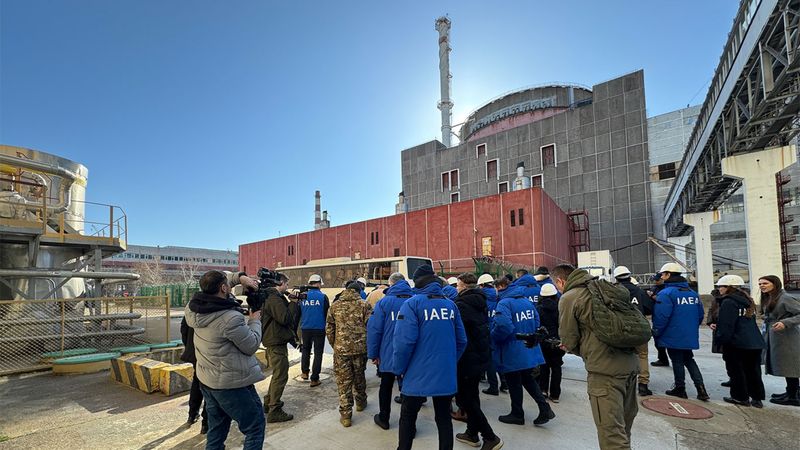
Two precision points matter before anything else is built on these accounts. First, the cause and extent of the damage to the line are not established in any of the sources cited here, and this report does not assign blame to either side. The blackout was reported on the same night as another heavy Russian strike wave across Ukraine — 164 drones and three missiles, with one person killed in Odesa, as Signal Post News reported in our report on Russia’s overnight barrage — but no source cited here attributes the Ferosplavna-1 damage to that wave, and timing is not evidence of cause. Second, the International Atomic Energy Agency (IAEA), which keeps a team at the plant, had not reported this specific power loss in the earliest reports checked for this article; readers should not treat silence as confirmation or contradiction, and this report does not put words in the agency’s mouth.
Why external power matters at a plant that makes none
Six reactors, all shut down — but never switched off
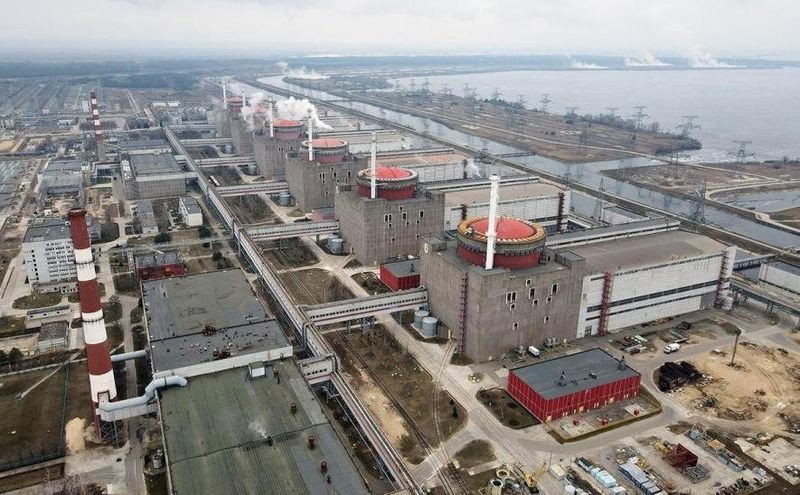
Zaporizhzhia is Europe’s largest nuclear power station: six Soviet-designed VVER-1000 reactors on the Dnipro reservoir near Enerhodar, seized by Russian forces in the opening weeks of the full-scale invasion in 2022 and shut down later that year. A shut-down reactor is safer than an operating one by orders of magnitude — the chain reaction is stopped and heat output falls steadily — but it is never inert. Fuel that has fissioned keeps producing decay heat for years, and the spent fuel stored in pools at each unit must be actively cooled and circulated. Stop the cooling for long enough and water boils away, fuel cladding degrades, and the accident sequences that safety systems exist to prevent move from theoretical to timed. That is why iaea zaporizhzhia nuclear safety assessments have treated reliable off-site power as one of the plant’s foundational pillars since the occupation began: the grid is not a convenience for a shut-down plant, it is the normal source of the power that keeps shutdown safe.
One line, then none
In healthier times the plant was fed by multiple high-voltage lines from different directions, with diesel generators as the last resort behind them. War has stripped that redundancy layer by layer. With the second external line cut in March and Ferosplavna-1 the only connection left in service, Sunday’s trip removed the final layer: the zaporizhzhia nuclear plant blackout today is a single-point failure made visible. Every hour the plant now runs, it runs on the zaporizhzhia diesel generators — machines built and fuelled as a bridge measured in days, not as a power supply measured in months.
Why this matters
Analysis. Sixteen complete losses of external power in a single year changes the category of the problem. An isolated blackout is an incident; a blackout every few weeks is a condition — the normal operating state of Europe’s largest nuclear plant is now, periodically, life on emergency generators at the edge of an active front line. Three consequences follow. First, probability compounds: diesel generators are reliable machines, but each blackout is another roll of the dice on start failures, mechanical faults and fuel logistics, and safety margins are consumed by repetition as much as by severity. Second, repair itself has become a negotiation: fixing a line that crosses a war zone requires pauses in fighting and access agreements, which is why earlier restorations at the plant have depended on locally brokered ceasefires of exactly the kind Signal Post News covered in our report on drone attacks at the plant and the IAEA ceasefire effort. Third, normalisation is its own risk: the longer repeated blackouts pass without a radiological event, the easier it becomes for every capital to file them as background noise — right up until the one that does not pass quietly.
Sixteen blackouts: the pattern in the data
Energoatom’s count — 16 complete losses of external power since January 1, 2026 — implies an average of roughly one total blackout every three weeks across the year, a tempo far above the plant’s earlier wartime experience, when losses of off-site power were counted in single digits across whole years of occupation and each one drew emergency statements from Vienna. The trend line matters more than any single event: lines have been lost to damage again and again, a second feed cut in March was still unrestored eight months later, and the plant entered November one trip away from exactly the state it is now in. Analysts who track the site note the asymmetry this creates. Restoring redundancy takes weeks of safe access and engineering work; losing it takes one damaged span of wire.
Diesel generators: a bridge, not a destination
The engineering reality underneath the statements is finite fuel and finite machines. A large nuclear site’s emergency diesels are sized to run safety systems, not the whole station, and their on-site fuel is measured in days of continuous operation before resupply is needed — resupply that, at an occupied plant on a front line, is itself a logistical operation. The IAEA has warned repeatedly, in its general assessments of the plant, that diesel generation is a short-term backup with finite fuel, not a substitute for off-site power. None of the sources for Sunday’s event states how much fuel the plant currently holds or how long the generators can run, and any specific number circulating without a named source should be treated as unverified. What can be said is structural: the clock that started at 02:36 is real, it runs on diesel, and it stops either when the Ferosplavna-1 line is repaired and re-energised or when another feed is restored.
Who gains, who loses — and what each side’s critics say
No one gains electricity from a disconnected nuclear plant, but the blackout still lands differently on each actor. Ukraine loses twice over: its largest power station, a national asset it still claims and staffs in part, sits beyond its control consuming emergency fuel, and each blackout hands Kyiv a fresh safety emergency it can warn about but cannot physically fix. The occupation authorities lose the appearance of normal, competent administration that running the plant smoothly is meant to project, and inherit the immediate operational risk: if cooling were ever lost on their watch, the radiological and political consequences would be theirs. The IAEA loses room to manoeuvre with every repetition, because its model — presence, monitoring and public warning — can document a deteriorating margin but cannot restore a power line.
The argument around the plant follows familiar grooves, and both deserve a hearing. Critics of Ukraine’s position note that Energoatom’s blackout count and its warnings come from a party to the war with every incentive to internationalise the plant’s plight, and that the management on site — the people actually watching the instruments — reported a controlled situation with normal radiation. Critics of Russia’s position answer that the emergency exists only because the plant is occupied and its grid feeds run through a war Russia is waging; that a welder was killed in a drone attack at the plant only last month, as Signal Post News reported in our report on the IAEA welder killed at Zaporizhzhia, and that “radiation is normal” is a statement about the present hour, not about the wisdom of running a nuclear station on diesels. What the verified record supports is narrower than either brief: the line is down, the diesels are running, radiation is reported normal by the side operating the plant, the cause of the damage is unestablished, and the count of these events in 2026 now stands at 16 by the count of the plant’s owner.
What happens next
The practical question for the coming hours is repair. Reconnecting Ferosplavna-1 means locating the damage, getting crews to it safely, and re-energising a line that automatic protection has already rejected once — the failed automatic reconnection at 02:36 suggests the fault is physical, not a transient trip, though no source has yet described the damage itself. If the fault is a broken span or a damaged substation element, timelines in past incidents have run from many hours to several days, often gated on local ceasefire arrangements so engineers can work. Watch for four things: any IAEA statement confirming the loss of power and the state of the generators, which would give the event its first neutral-party account; the first word on fuel reserves or resupply at the site; whether the second line, cut in March, is mentioned in any restoration plan, since a single restored feed leaves the plant exactly as exposed as it was on Saturday; and whether either side proposes — or refuses — a repair ceasefire, which has become the reliable tell of how long a Zaporizhzhia blackout will last.
The failure scenario that safety warnings point to is not subtle, and it should be described plainly rather than dramatised. If diesel generators failed without replacement power — through mechanical breakdown, exhausted fuel or damage — cooling of the reactors and spent-fuel pools would eventually be lost, water would boil off over a period measured in days rather than minutes for a plant shut down since 2022, and the risk would shift from an electricity story to a radiological one. That is a conditional chain, not a prediction: the generators are reported running, radiation is reported normal, and every previous blackout at the plant has ended with a reconnection. But the chain is precisely why a 16th blackout is news. Safety systems are built in layers so that no single failure matters. At Zaporizhzhia on Sunday morning, one more layer went quiet at 02:36, and what remains between a shut-down plant and a serious accident is a row of diesel engines and the fuel in their tanks.
How many times can a nuclear plant lose all outside power in a year before the world stops treating each blackout as an emergency and starts treating it as a countdown? Follow Signal Post News for continuing coverage of the war in Ukraine and nuclear safety at Zaporizhzhia.
Sources
- Reuters, November 8, 2026 — reporting the Zaporizhzhia plant management statement posted on MAX: the Ferosplavna-1 line shut down by automatic protection because of damage, backup diesel generators supplying equipment required for safe operation, radiation levels normal on site and in the surveillance zone, staff monitoring all parameters
- Energoatom (Ukraine’s state nuclear operator) — the 02:36 disconnection of the 330 kV Ferosplavna-1 line, the failed automatic reconnection, the count of 16 complete losses of external power since the beginning of 2026, and the warning on cooling, diesel failure and fuel risk
- TASS / RIA — carrying the Russian-installed plant management’s statement on the shutdown and generator operation
- Agroreview and Ukrainian reporting (including Particle and h.ua) of Energoatom’s statement — the 02:36 timing and automatic-protection detail