Ukraine Russian refinery strikes
Ukraine said on October 4 that its long-range strikes had disabled more than half of Russia's oil-refining capacity. Defence Minister Yevhenii Khmara attributed the assessment to Ukrainian intelligence, the General Staff and the Defence Ministry — three institutions with direct knowledge of Kyiv's targeting campaign, but also a clear wartime interest in presenting it as effective.
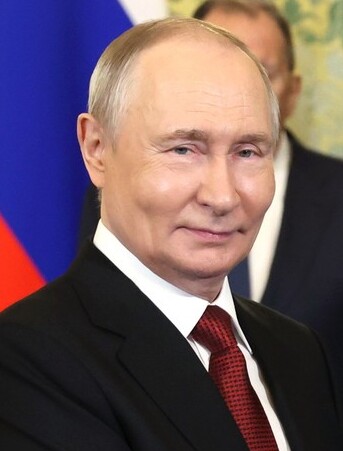
Days earlier, Vladimir Putin gave the claim unusual weight without endorsing its scale. Speaking at the Valdai Club forum, the Russian president said the attacks had cost Russia roughly 1% of gross domestic product. “They started attacking oil refineries and openly declared the goal of damaging our economy,” Putin said. “Did they achieve their goal? Partially.”
Those two statements do not establish that 51% of Russia's total refining system is offline. They do establish that the refinery campaign has moved beyond sporadic sabotage into a central front of the war: one side says it is disabling industrial capacity at national scale; the other acknowledges a measurable macroeconomic loss. The gap between those claims is where the most important questions sit.
The 51% claim: what Kyiv says
Khmara defence ministry assessment and the Russian refinery damage list
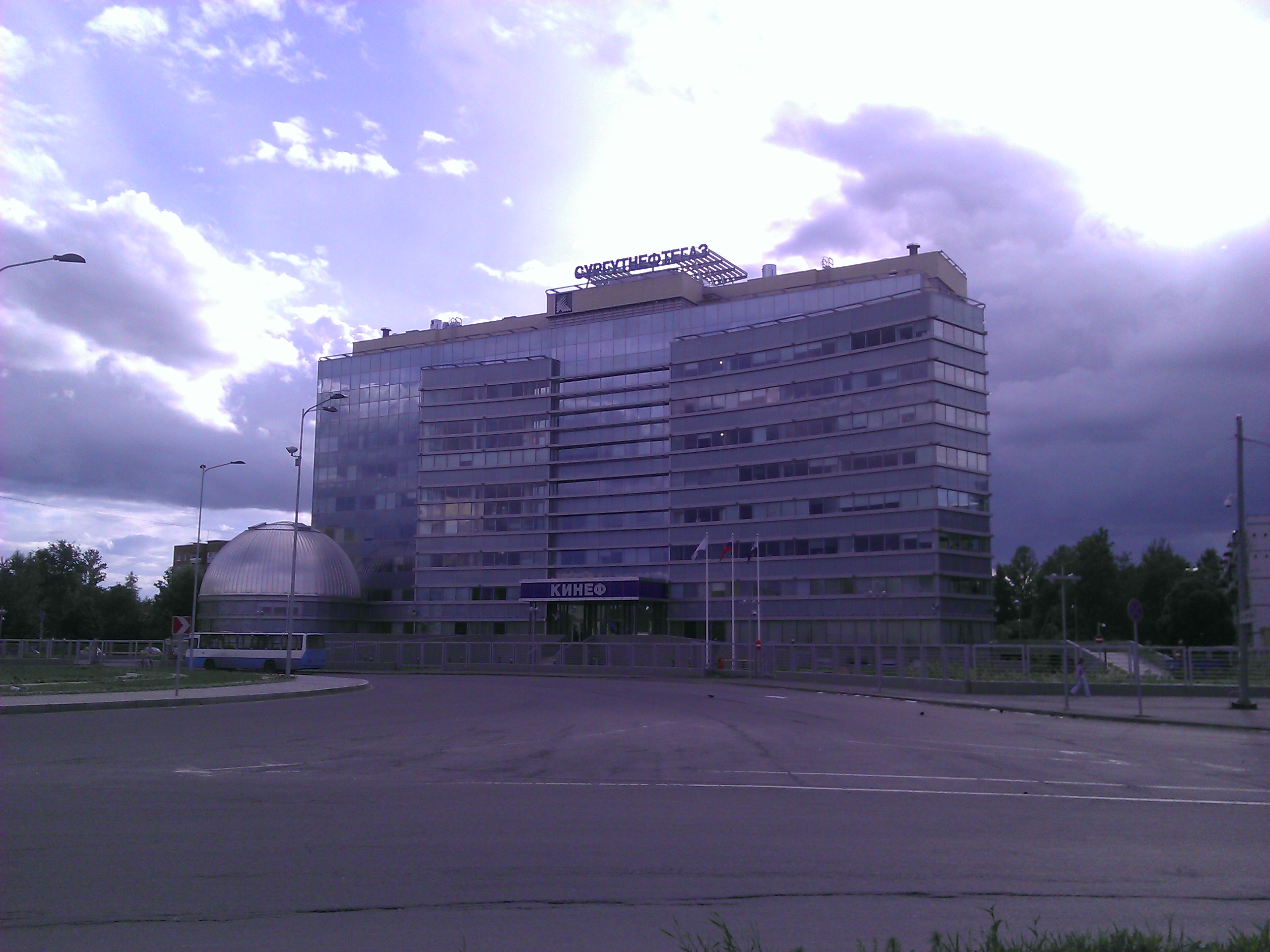
In a Defence Ministry statement posted on Facebook and carried by Ukrinform, Khmara pointed to recent strikes on refineries in Moscow, Yaroslavl, Perm, Ilsk, Saratov and Syzran, as well as Kirishinefteorgsintez — better known as KINEF — and the Ust-Luga export complex. The geography is deliberate. It stretches from Russia's central industrial core to its Baltic export infrastructure and southern refining belt, complicating any simple transfer of spare parts, air defences or repair crews.
“Fifty-one percent of struck refining capacity is a significant blow to the enemy's economy, to its ability to carry out aggression and supply its troop groupings,” Khmara said. “Our deep strikes continue to bring the war to Russian territory.”
The wording matters. “Struck refining capacity” may not mean 51% of Russia's entire nameplate capacity is simultaneously offline. It can also describe the capacity represented by facilities hit, the capacity of damaged units within those sites, or an intelligence assessment of production disrupted at different times. Ukraine has not published the underlying methodology, plant-by-plant outage durations or engineering evidence needed to reconcile those possibilities.
Kyiv says it tripled production and procurement of long-range drones this year and has made deep strikes a Defence Ministry priority. That industrial scaling helps explain why the campaign can revisit repaired facilities rather than treating each target as a one-off. Still, the Ukraine 51 percent refining claim could not be independently verified.
Putin's rare admission
Putin 1% GDP admission at Valdai breaks the usual silence
At the Valdai Club forum on Thursday, October 1, Putin did something the Kremlin usually avoids: he attached a top-line economic cost to a specific Ukrainian military campaign. Russian officials have released no comparable public ledger of refinery damage, repair time, lost production or regional fuel shortages. In that context, “partially” is not a dismissal. It is an admission that the strategy has worked to a degree large enough to reach national output.
The qualification is equally important. Putin did not say refinery output fell by 51%, nor that the loss was permanent. A 1% GDP cost can capture far more than barrels not processed: emergency repairs, disrupted logistics, export discounts, idle labor, insurance, air defence redeployment and the higher cost of moving fuel from intact plants to regions suddenly short of supply.
Kremlin opacity on war spending makes the figure more politically revealing than statistically complete. A leader who routinely separates military operations from domestic economic pain chose to acknowledge a nationwide cost. That suggests the refinery campaign is difficult to hide from businesses, motorists and regional officials even if precise outage data remain classified.
Why this matters
Ukraine economic warfare targets systems, not just buildings
Refineries are continuous-process systems. They do not lose output in neat increments matching the visible size of a fire. A strike that disables a crude-distillation unit, hydrocracker, power supply or control system can remove a large block of production while leaving most of the complex physically standing. Repairs may restore partial operations quickly, but a missing specialist component can keep higher-value output constrained long after flames disappear.
That is why the reported move from an earlier Ukrainian estimate of 45% to 51% deserves attention even if both figures remain unverified. It signals an accelerating campaign aimed at repeatedly crossing the threshold between local damage and network disruption. Once outages overlap, Russia must decide which regions, military formations and export customers get priority.
Refining is also a sharper pressure point than crude production. Russia can redirect some crude abroad, but soldiers, aircraft, farms, freight networks and civilian motorists need finished fuels. Energy revenue funds the war; refined products keep it moving. Ukraine's strategy attempts to squeeze both functions at once while avoiding the even larger global shock that a wholesale attack on crude production could cause.
The campaign by the numbers
Russian oil refining capacity disabled: from 45% to 51%
The headline trajectory is six percentage points: Kyiv's estimate rose from 45% to 51%. The named targets include some of Russia's most consequential plants. Moscow serves the capital region; Yaroslavl anchors supplies northwest of the capital; KINEF is one of the country's largest refineries and connects to the Baltic export system. Perm, Ilsk, Saratov and Syzran broaden the pressure across multiple fuel markets, while Ust-Luga links refinery disruption to seaborne trade.
Earlier in 2026, fuel shortages forced Russian authorities and retailers to restrict petrol sales in some areas. Moscow then extended a diesel export ban through the end of October. For a country traditionally ranked as the world's second-largest diesel exporter, restricting overseas sales is both a defensive move and a warning signal: domestic continuity is taking precedence over hard-currency revenue.
Putin's 1% figure should be treated as an order of magnitude, not an audited loss statement. The arithmetic is simple but the baseline is not. For every $1 trillion of annual GDP, one percentage point equals $10 billion; using a round baseline near $2 trillion would imply a cost near $20 billion. Exchange rates, inflation and the distinction between lost output and redirected spending can move that estimate substantially. The responsible conclusion is not a single dollar total, but that Putin described a cost measured in tens of billions of dollars rather than millions.
Background: how the refinery war escalated
Ukraine deep strikes Russia energy after Moscow's “new doctrine”
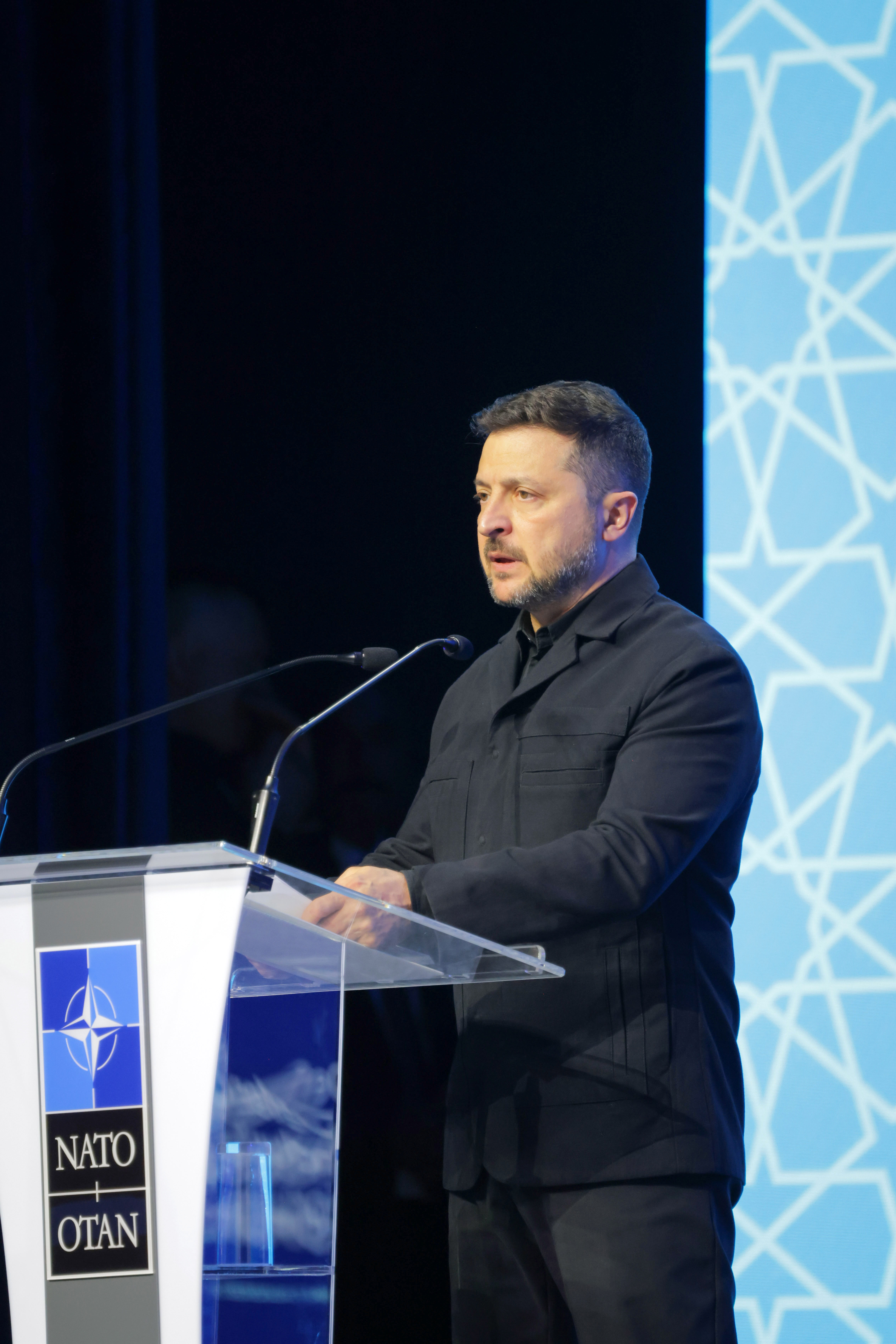
In an October 2 Reuters interview, President Volodymyr Zelenskyy vowed to intensify refinery strikes in response to what he called Russia's “new doctrine” of broader attacks on Ukrainian civilian infrastructure. Signal Post News examined that warning in our report on Zelenskyy's refinery-strike doctrine.
The logic is retaliatory and coercive. Russia attacks Ukraine's power grid, bridges and urban infrastructure to raise the economic and social cost of resistance. Ukraine, lacking the same missile volume, reaches deep into Russia with drones and concentrates on a smaller set of high-value industrial nodes. The campaign described in Zelenskyy's account of the Samara refinery and Black Sea strikes fits that pattern.
The strategy also runs into allied politics. Donald Trump privately urged Zelenskyy to ease refinery strikes as diesel prices rose and a global shortage deepened. Analysts have cautioned that Russia is not the only cause: the Iran war and wider oil-market disruption are also tightening supply. That distinction matters because pressure on Kyiv may not deliver the price relief Washington wants if other disruptions persist.
Who benefits, who loses
Russian diesel crisis 2026 meets a global diesel shortage
Ukraine gains leverage in three ways. It imposes repair costs far from the front, forces Russia to spread scarce air defences across industrial sites and gives Kyiv a bargaining chip that affects consumers and export revenue. Each interceptor stationed near a refinery is one not protecting another military or logistics target.
Russia bears the direct strain: queues and rationing where distribution tightens, lower product exports, emergency movements of fuel by rail and an expanding bill for repairs and protection. Yet Moscow retains considerable redundancy and can prioritize military needs. Civilian inconvenience does not automatically translate into operational collapse.
The spillover reaches well beyond both countries. Global diesel markets tighten ahead of winter when heating and freight demand rise. Trump faces domestic political pressure from record U.S. diesel prices before the midterm elections. European buyers that once depended on Russian product must compete harder for replacement cargoes. Import-dependent countries with weaker currencies feel the shock most quickly.
Ukraine also carries serious downside risk. Critics warn that a deeper refinery campaign gives Russia a rationale — however disputed — for heavier retaliation against Ukraine's energy grid. That retaliation is not hypothetical. Kyiv's bridges and power infrastructure have already been hit, while the country's fiscal resilience is weakening under the pressure described in our analysis of Ukraine's war-economy and budget crisis.
What we don't know
Confirmed fires are not the same as confirmed capacity loss
The 51% figure is a Ukrainian government claim. Its methodology has not been disclosed, and Signal Post News could not independently verify it. Russia publishes no comprehensive damage data that would allow an outside comparison. Wartime secrecy on both sides leaves open basic questions about whether “disabled” means fully offline, partially degraded or temporarily interrupted.
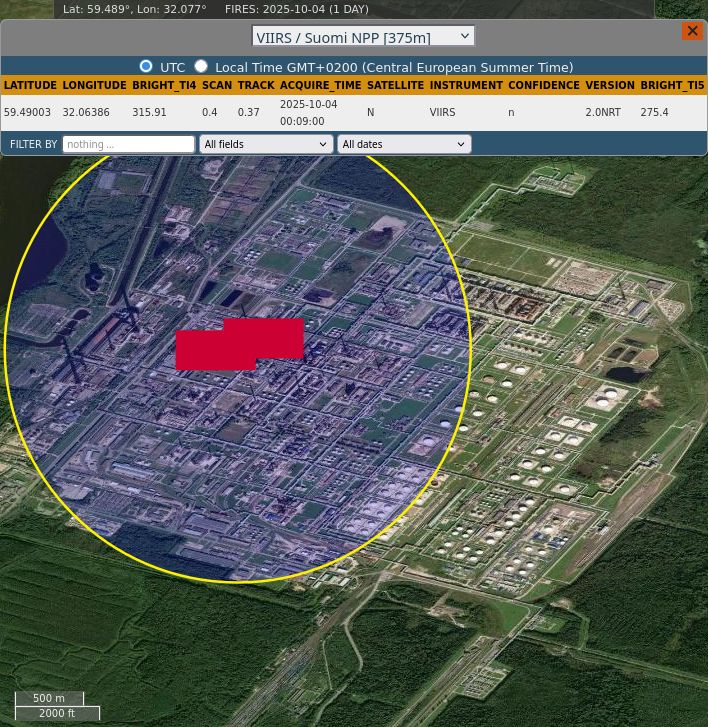
Satellite fire detections such as NASA FIRMS can confirm thermal anomalies at a facility. They cannot by themselves show which processing unit burned, whether redundancy exists, how much output stopped or how quickly repairs restored production. Commercial satellite images may reveal scorched structures; they still do not provide the flow data needed to calculate national capacity loss.
The most defensible distinction is therefore between strikes and damage assessments. Multiple refinery strikes are confirmed or publicly acknowledged. Fires and visible damage can be independently observed at some locations. The nationwide 51% capacity figure remains an assessment by the Ukrainian state.
What happens next
Four paths for the refinery campaign and diplomacy
First, sustained pressure through winter. Ukraine could maintain or increase its launch tempo, revisit repaired plants and push toward broader disruption of European Russia's refining network. Success would depend not only on drones getting through, but on repeatedly hitting hard-to-replace process units.
Second, Russian adaptation and retaliation. Moscow can harden sites, disperse air defences, add electronic warfare and accelerate repairs. It can also intensify attacks on Ukraine's grid, attempting to make each refinery strike more costly for Kyiv's civilians and economy than for Russia's fuel system.
Third, a mediated energy truce. If diesel prices remain politically dangerous, Washington may press both sides toward limits on strikes against refineries and power infrastructure. Such an arrangement would be difficult to monitor and even harder to separate from attacks on dual-use energy assets.
Fourth, the “new doctrine” spiral. Both sides could widen their target sets — Russia deeper into civilian and economic infrastructure, Ukraine deeper into Russian industry. That path increases bargaining leverage but also raises the probability of miscalculation and a broader global energy shock.
The diplomatic track to watch is the push for trilateral talks at the end of October. A meeting would not erase the refinery war, but it could reveal whether energy infrastructure is becoming a negotiable category or a permanent instrument of coercion. Until then, the war's economic front is likely to remain measured in damaged processing units, restricted exports and competing percentages that neither side fully opens to scrutiny.
Sources
- Pink'un / PA Media — Ukraine's 51% claim and Putin's Valdai remarks.
- Hillingdon Times / PA Media — syndicated account of the Defence Ministry assessment.
- Ukrinform via EUROPESAYS — the Ukrainian ministry statement and refinery list.
Reporting note: The national capacity figure is attributed to Ukrainian officials and has not been independently verified. Russian authorities have not published a comparable plant-by-plant damage assessment.