War · Ukraine · Baltic
A Ukraine drone strike on a Russian warship was, until this week, a Black Sea story. Ukraine’s SBU says its drones hit the Baltic Fleet missile corvette Naro-Fominsk near Gogland island in the Gulf of Finland — and this time the corroboration comes not from Kyiv but from two NATO militaries watching the same water: Finland detected and monitored the strike, and Estonia says the corvette took at least four hits, was badly damaged and had to be helped toward St Petersburg.
Track it live: Ukraine war map — Live Global Trackers
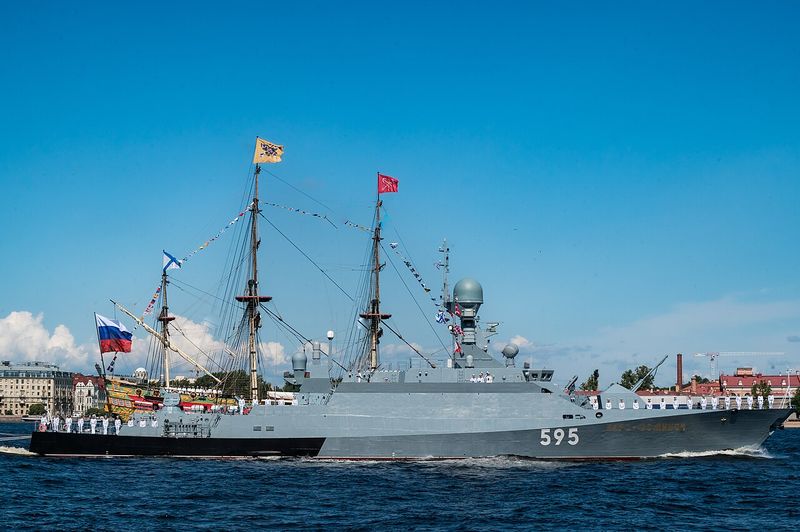
GULF OF FINLAND, November 13, 2026 — In the night of November 11–12, Ukrainian drones struck the Russian Baltic Fleet corvette Naro-Fominsk near Gogland island in the Gulf of Finland, according to Ukraine’s Security Service (SBU), which said it carried out the operation — the first Ukrainian attack on a Russian warship in the Baltic Sea, far from the Black Sea theatre where Kyiv’s naval drone campaign has until now been fought. Estonia’s military, briefing reporters on Friday, November 13, gave the fullest independent account: the corvette took at least four drone hits, was badly damaged, suffered multiple casualties, faltered as she made her way toward St Petersburg and needed assistance. Finland’s Defence Forces said they had detected a strike on a Russian warship and monitored it, and that there was no threat to Finland and the Baltic remained stable. Russia has not publicly confirmed the warship strike, and the ship did not sink. Each element of that paragraph belongs to a different source, and the distinctions between them — claim, detection, briefing, silence — are the story as much as the explosion is.
What is confirmed, what is claimed
Start with the hardest evidence, which is not Ukrainian. The Finnish Defence Forces — the military of a NATO member whose coastline runs along the northern shore of the Gulf of Finland — detected a strike on a Russian warship, monitored the incident, and said publicly, via the Finnish broadcaster Yle, that there was no threat to Finland and that the situation in the Baltic remained stable. A detection is not an endorsement of Kyiv’s account of who fired or what was hit; it is something narrower and, for that reason, stronger: independent confirmation by a neighbouring military that a Russian warship was struck in the Gulf of Finland that night.
Estonia went further. Defence Minister Martin Herem told the broadcaster ERR that an explosion had occurred at about 05:30 aboard a Baltic Fleet vessel. On Friday, November 13, Colonel Aron Kalmus, deputy commander of the Estonian Defence Forces, briefed the detail that turned an explosion into an assessment: the corvette had taken at least four drone hits, was badly damaged, had suffered multiple casualties, and had faltered on the way toward St Petersburg, requiring assistance — an account reported by Maritime Executive the same day. Estonia’s is still an official account rather than a published forensic record: Tallinn has not released imagery or a damage survey, and its casualty figure is a number without a breakdown. But it is an account given on the record, by name, by the deputy commander of a NATO military with its own sensors on that sea.
Ukraine’s claim sits on top of that foundation rather than beneath it. The SBU said it struck the Naro-Fominsk — a claim of responsibility for an operation, of the kind the service has made, and had verified, throughout its Black Sea campaign. Ukraine’s General Staff separately reported the operation’s other half, the strike on the port of Ust-Luga, addressed below. Russia’s position, at publish time, is an asymmetry worth stating precisely: Moscow confirmed attacks on Ust-Luga, but has not publicly confirmed the strike on the warship at all. Silence is not denial, and it is not admission; in this war it has most often been the interval before a managed acknowledgment or a quiet repair. What remains genuinely unknown should be listed with the same care: the number of casualties, the extent and location of the damage below the level of “badly damaged,” the type of drones used, and where they were launched from — the last of these being, operationally, the most interesting question of all.
The ship: a Kalibr shooter the size of a patrol boat
The Naro-Fominsk is a Project 21631 Buyan-M-class corvette of the Baltic Fleet — a small missile ship, 74.1 metres long and displacing about 949 tonnes, commissioned on December 23, 2023. Her size is the point of her design. The Buyan-M class packs a vertical launch system for Kalibr land-attack cruise missiles and Oniks anti-ship missiles into a hull small enough to work the Baltic’s confined waters and even, in the class’s earlier career, inland waterways. Ships of this class have launched Kalibr strikes in Russia’s campaigns before, and their military value is entirely disproportionate to their tonnage: each one is a mobile, concealable battery of precision missiles that Ukraine must otherwise hunt in fixed launchers and large combatants.
That is why the choice of target matters as much as the location. A corvette is not a prestige flagship; she is a working missile platform, less than two years in service, whose loss or long disablement subtracts real strike capacity from the Baltic Fleet’s order of battle. Badly damaged is not sunk — the Naro-Fominsk survived, and a ship that reaches port can, given months and a yard, be repaired. But a missile corvette under repair is not launching Kalibrs, and a fleet that must now defend every anchorage and transit in its home sea against drones is a fleet spending its readiness on survival instead of operations.
Forty kilometres from Kotka
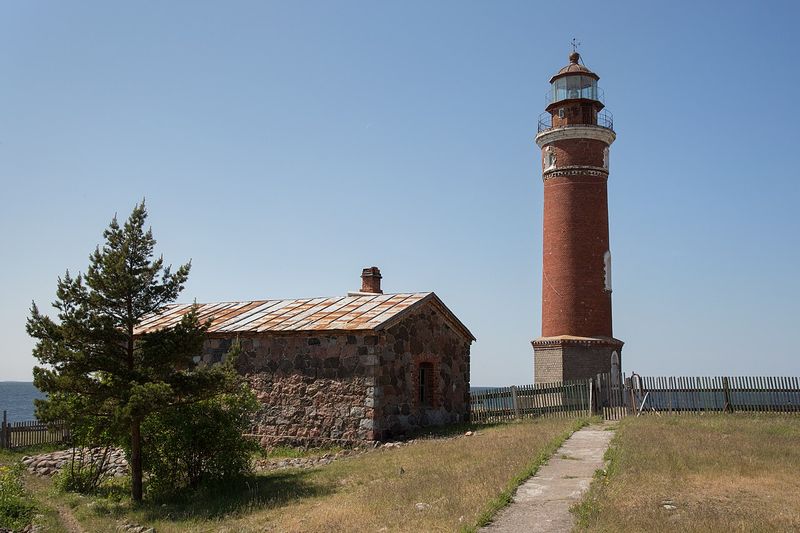
Gogland — Suursaari to Finns, Hogland to Swedes — is a Russian island sitting in the middle of the Gulf of Finland, astride the sea lane every ship bound for St Petersburg, Primorsk and Ust-Luga must use. It lies roughly 40 kilometres south of Kotka, on Finland’s southern coast: close enough that a burning warship is, in practical terms, a neighbourhood event for two NATO states. Since Finland and Sweden joined the alliance, the Baltic has been routinely described as a NATO lake with a Russian coastline — a description Friday’s events complicate in an interesting direction. The gulf is now a sea in which a Ukrainian strike on a Russian warship is watched, in real time, by Finnish and Estonian sensors, and described to the press by Finnish and Estonian officers before Moscow has said a word.
That surveillance density cuts both ways, and both ways are visible in this story. It gave the strike instant, credible third-party witnesses — a luxury no Black Sea claim has ever had. It also means the Baltic Fleet now operates, in its home waters, inside a sensor web it does not control, at a moment when the drones have arrived. The measured tone from Helsinki and Tallinn — no threat to Finland, the Baltic stable — was itself a signal: two frontline states declining, carefully and publicly, to treat a burning Russian corvette 40 kilometres from a Finnish port as an escalation emergency.
The same operation: Ust-Luga
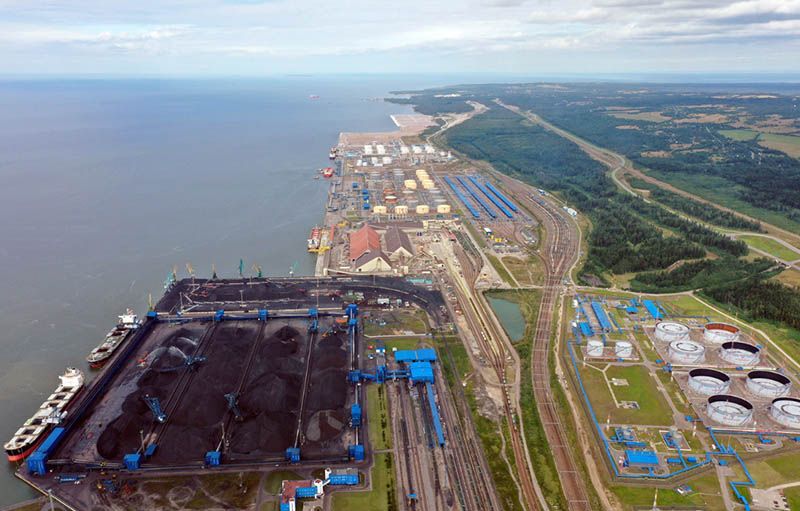
The corvette was not the night’s only target. Ukraine’s General Staff said the same operation struck the port of Ust-Luga, on the southern shore of the gulf in Russia’s Leningrad region, damaging five oil tanks and starting a large fire. Russia confirmed that Ust-Luga was attacked — the one element of the night Moscow has acknowledged. Ust-Luga is among Russia’s most important Baltic export terminals, handling crude oil, products and coal, and its traffic has only grown in strategic weight as Baltic routes carry the exports that sanctions push out of other channels. Five damaged tanks and a large fire, on the Ukrainian account, will not close a port of that scale; but the pairing is the operational signature to notice. In one night, one operation reached for both halves of Russia’s Baltic position: the fleet that guards the sea lane, and the terminal that gives the sea lane its economic purpose.
A new sea for the drone war
Context explains why navies are reading this story twice. Ukraine, a state effectively without a conventional navy, spent 2022–2024 using missiles and explosive uncrewed boats to sink or disable a significant share of Russia’s Black Sea Fleet and drive the rest from Sevastopol eastward — the most consequential naval campaign of the drone age, and the standing refutation of the idea that sea control requires ships. That campaign, however, enjoyed home-water advantages: short distances, familiar coasts, launch sites on Ukraine’s own shoreline. The Baltic offers none of them. The Gulf of Finland is more than a thousand kilometres from Ukrainian territory, ringed by NATO states whose territory and airspace Kyiv cannot use, and the drones that hit the Naro-Fominsk — at least four of them, arriving accurately enough to cripple a moving warship at night — got there somehow. Neither the SBU nor Estonia’s briefing, as reported, explained the launch method, and this report does not guess one. But the range problem is now an open question in every Baltic staff college, because its answer determines whether Friday was a one-off feat of improvisation or the opening of a second naval front.
The timing links the sea story to the week’s larger one. The strike came in the same days as Ukraine’s record drone wave against Russian industry — the barrage Signal Post News covered in the Ukraine drone wave that killed four workers in Volgograd — and at the tempo of a campaign Kyiv has sustained all autumn, including the week of 115 missiles and 3,000 drones it counted against it in return. The Baltic strike reads, in that company, less like a stunt than like a doctrine announcing its range: there is no longer a Russian fleet anchorage, in any sea, that the war cannot reach.
Why this matters
The significance of a Ukraine drone strike Russian warship in the Baltic is geographic before it is material. One corvette, damaged but afloat, does not change the naval balance; a precedent does. Every Russian warship in the Baltic — Kalibr shooters above all — must now be defended against a threat that has demonstrated reach into the fleet’s home gulf, which means air-defence assets, patrol patterns and readiness states reorganised around survival. Kaliningrad and the St Petersburg approaches, the two poles of Russia’s Baltic position, are both inside the demonstrated envelope.
For NATO’s Baltic states, the matter is double-edged in a way their calm statements were designed to manage. A Ukraine that can strike Russian warships off their coasts is a Ukraine imposing costs their own deterrence strategy benefits from — and simultaneously a source of incidents 40 kilometres from Kotka that they do not control and must be seen to monitor. Finland’s formulation deserves the attention it was crafted to earn: detected, monitored, no threat to Finland, the Baltic stable. That is what alliance confidence sounds like when it is working. And for the shipping that makes the gulf matter — the tankers loading at Ust-Luga and Primorsk, including the shadow-fleet traffic Western governments track — Friday repriced the water: the sea lane now has a demonstrated drone threat at its midpoint, with consequences for insurance, crewing and the already-thin legality of the trade that will unfold over weeks, not days.
What happens next
The first test is Moscow’s voice. Russia confirmed Ust-Luga and not the warship; whether the Naro-Fominsk is acknowledged, minimised or carried in silence will be readable in the fleet’s behaviour — a move into Kronstadt’s yards, heightened air defence around Baltic Fleet anchorages, and curtailed corvette transits would each confirm the Estonian assessment more eloquently than a communiqué. The second test is repetition: a second Baltic strike, on any timeline, converts a precedent into a campaign and forces the launch-method question from staff colleges into public view. The third runs through the export terminals, where Ust-Luga’s damage will show up, if it matters, in loadings data rather than statements. Signal Post News will follow all three on the wars tracker and in the continuing Ukraine coverage below — attributing each new claim, as here, to the capital that made it.
What do you think — does a damaged corvette in the Gulf of Finland change the Baltic balance, or is its value purely as a signal? Like, follow Signal Post News for Russia’s response, the repair watch at Kronstadt and the next round of the drone war, and share your thoughts in the comments below.
Related coverage: Ukraine Drone Wave Kills Four in Volgograd as Russia Claims 1,198 Downed · Russia Missiles Drones Ukraine Week: 115 Missiles, 1,900 Guided Bombs and 3,000 Drones in Seven Days, Kyiv Says · More Than 100 Drones Over Nizhny Novgorod: Ukraine Strikes Russia’s Giant NORSI Refinery at Kstovo Again
Sources
Sources: BBC News reporting on the strike on the Naro-Fominsk (November 2026); Maritime Executive, November 13, 2026 (Estonian Defence Forces briefing: at least four drone hits, badly damaged, multiple casualties, assistance toward St Petersburg); Yle reporting of the Finnish Defence Forces statement (strike on a Russian warship detected and monitored; no threat to Finland; Baltic stable); ERR reporting of Estonian Defence Minister Martin Herem (explosion at about 05:30 aboard a Baltic Fleet vessel) and the November 13 briefing by Col. Aron Kalmus, deputy commander of the Estonian Defence Forces; Security Service of Ukraine (SBU) claim of responsibility for the strike on the Naro-Fominsk, and Ukrainian General Staff reporting on the Ust-Luga strike (five oil tanks damaged, large fire) — attributed as claims; Russian official confirmation of the attacks on Ust-Luga. Russia has not publicly confirmed the warship strike; the ship did not sink. Ship data: Project 21631 Buyan-M class, Baltic Fleet, Kalibr/Oniks armament, commissioned December 23, 2023, 74.1 m, about 949 tonnes. Photos: Wikimedia Commons; Andrey Strelnyikov / Russian Geographical Society via Wikimedia Commons; SeaNews — file photos, as credited in the captions.