The Turkey Saudi Arabia defence pact will not be a license for Turkish offensive operations, Foreign Minister Hakan Fidan said Thursday, October 8, while Ankara studies what military support Riyadh needs after a new run of Houthi missile attacks. Speaking at a joint press conference in Ankara with Hungarian Foreign Minister Anita Orban, Fidan said Turkey could contribute to Saudi defence but would not send troops into another country's territory to launch an attack. His on-record statement supplies the clearest public limit yet on a deployment that officials had described a day earlier largely through anonymous briefings.
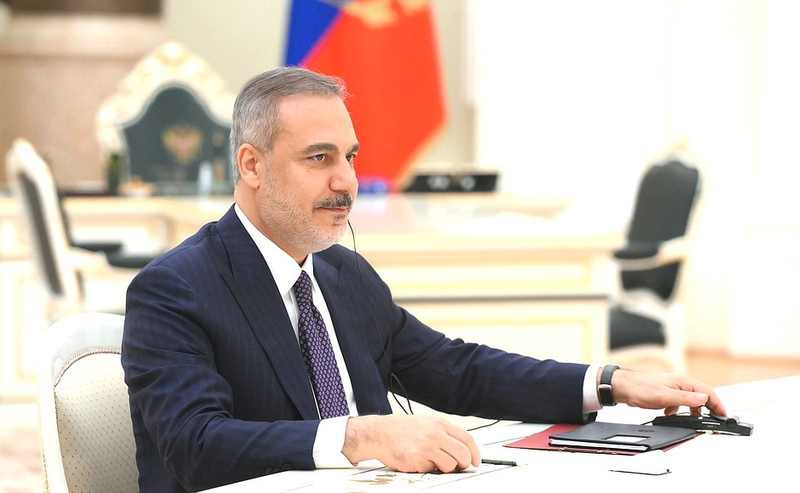
Fidan rules out offensive operations
Fidan framed the distinction in direct terms: “This is a defense agreement... Turkey will not send its troops to another country's territory to launch an attack.” He then explained what Ankara believes the commitment does require: “But this is a defensive agreement. When a country party to the pact comes under attack, you stand by it in its defence.”
That language matters because it separates two very different missions. One would help intercept missiles, secure Saudi facilities and improve warning systems. The other could involve strikes against Houthi launch sites or a broader entry into the Yemen war. Fidan endorsed the first and rejected the second. The statement does not foreclose every contested operational question — defensive missions can still involve deployed personnel, sensors and aircraft — but it narrows the announced purpose of Turkey's role.
Military officials from the two countries are now assessing possible contributions in air defence, electronic warfare and technical support. Fidan said military delegations would determine Saudi Arabia's operational defence requirements. The exact Turkish assets, number of personnel, deployment locations and timetable have not been disclosed, and it remains uncertain which options will be selected.
What Turkey defensive support Saudi Arabia could include
Two officials briefed on planning told Reuters on Wednesday that the initial package was expected to be mainly defensive and technical. The areas under discussion included drone operators, strategic planning, logistics, intelligence, surveillance and reconnaissance — often shortened to ISR — and assistance fine-tuning Saudi defensive measures. Those functions can materially change a campaign even without Turkish forces firing across a border.
Air defence and early warning
Air defence is not only the interceptor that destroys an incoming missile. It is a chain: detecting a launch, identifying the track, deciding whether the object threatens a protected site, assigning the right weapon and coordinating the response before impact. Turkish personnel could help Saudi commanders integrate sensors and prioritize threats, increasing the value of systems Riyadh already operates. That is the practical meaning of the phrase Saudi air defence Turkey officials are now defining.
Electronic warfare and ISR
Electronic warfare can disrupt hostile communications, navigation or control links, while ISR can provide commanders with a clearer operating picture. Applied defensively, those capabilities could improve warning around airports, air bases and densely populated areas. They may also be politically sensitive because surveillance collected for defence can inform later targeting. Fidan's restriction therefore makes mission rules, data-sharing controls and command authority as important as the hardware itself.
Drone operators, logistics and planning
Turkish drone operators could support reconnaissance, perimeter monitoring or damage assessment rather than attack missions. Logistics specialists can keep radar, aircraft and communications equipment operating under sustained pressure. Strategic planners can help Saudi Arabia decide which sites receive the most protection when missiles arrive from multiple directions. None of those roles requires a ground offensive, yet together they can raise the cost and reduce the effectiveness of repeated attacks.
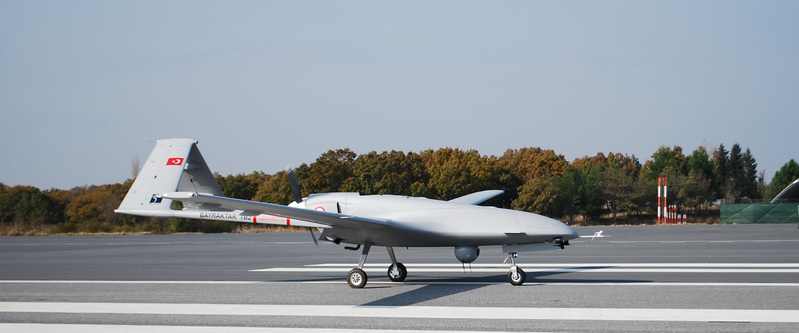
Why this matters: protection without a ground war
Analysis: For Riyadh, Fidan's line offers a way to obtain advanced help from a NATO member without automatically turning the arrangement into a Turkish ground-war commitment. Saudi Arabia gains access to Turkey's experience operating layered air defence, drones, electronic warfare and command networks. The political benefit is just as important: visible allied support can signal that attacks on airports and civilian infrastructure will meet a coordinated response.
For the Houthis, better-integrated Saudi defences could make the same missile salvos less effective. Harder targets may force the movement to spend more weapons, change routes or tactics, or widen its effort to overwhelm the defensive network. That does not guarantee deterrence. It could reduce successful impacts, or it could encourage an adaptation cycle in which each side searches for the other's vulnerabilities.
For Turkey, the defensive-only formula is a hedge. It allows Ankara to support a strategic partner and demonstrate the value of its defence industry while limiting exposure to direct retaliation and domestic opposition. It also preserves diplomatic room: Turkey can say it is helping a pact member defend its territory, not choosing to enter the Yemen conflict as a belligerent.
The Mecca Joint Defence Agreement and its first invocation
Turkey, Pakistan and Saudi Arabia signed the Mecca Joint Defence Agreement in August 2026. Its central collective-defence principle treats an attack on one member as an attack on all. On Monday, October 5, the three governments agreed to implement the pact's collective-defence and rapid-deployment commitments, the first time the new arrangement had been invoked.
The activation placed the Turkey Pakistan Saudi Arabia pact under an immediate real-world test. Pakistan's prospective role has centered on troop deployment and protection of Saudi territory, while Turkey's emerging contribution is described more heavily in technical and air-defence terms. Read Signal Post News's companion reports on Turkey's initial military-support plan and Pakistan's Saudi deployment.
Mecca pact parliament ratification remains unfinished
Turkey's parliament has not ratified the pact. That means current Turkish support is being organized bilaterally rather than through a fully ratified treaty mechanism. The distinction creates a legal and political tension: Ankara can cooperate with Riyadh now, but a broader or longer mission may draw sharper questions about parliamentary authority, oversight and the limits of executive action.
Critics are likely to focus on two risks. The first is pact creep — a narrowly defined defensive mission expanding as attacks continue or as partner requests grow. The second is parliament bypass, especially if operational commitments deepen before lawmakers vote. Supporters can counter that urgent bilateral assistance is necessary while civilian sites are under attack and that ratification can provide a stronger framework for any later expansion.
Houthi missile attacks Saudi Arabia raise the stakes
Fidan spoke after a third consecutive day of Houthi missile attacks on Saudi Arabia. The latest wave targeted King Khalid International Airport in Riyadh, Najran Airport and King Khalid Air Base. Saudi authorities said they intercepted two ballistic missiles headed toward Riyadh and another toward Khamis Mushait. Debris damaged a kindergarten and a medical complex in the capital, with no casualties reported in those incidents.
The escalation followed attacks on October 6 and 7 that killed three people and wounded 36, according to the official accounts cited in the reports. Airlines suspended some Riyadh flights as the security disruption spread beyond military targets to commercial travel. The Houthis have also warned of a long conflict; our separate analysis explains what that warning means for Riyadh and the region.

A NATO member at the edge of the Yemen war
The phrase NATO member Yemen war captures the strategic sensitivity but can also mislead if treated as an automatic alliance commitment. Turkey's status as a NATO member does not turn the Mecca pact into a NATO operation, and Fidan did not announce alliance involvement. The support under discussion is Turkish, requested in a Saudi defence context and shaped by a separate trilateral agreement that still awaits Turkish ratification.
The Houthis may nevertheless portray Turkish assistance as foreign intervention, while Ankara will emphasize territorial defence and civilian protection. Those competing narratives matter because escalation is driven not only by capability but by how actions are interpreted. A radar team deployed to protect an airport can be viewed by one side as defensive and by another as part of an enemy military network.
What happens next
Military teams define the package
The immediate test is whether Turkish and Saudi delegations settle on a limited package that matches Fidan's public boundary. Watch for announcements involving radar integration, electronic-warfare support, drone crews, ISR coordination, training or logistics. The absence of disclosed asset details means early claims about the scale of the mission should be treated cautiously.
Parliament decides whether the framework expands
A ratification vote would place Turkey's role on a firmer treaty footing and could make it easier to scale personnel, equipment or duration. Rejection or delay would leave cooperation more dependent on bilateral arrangements and case-by-case political authorization. Lawmakers will be judging not only Saudi security needs but also the risk that an open-ended collective-defence clause draws Turkey deeper into regional conflict.
Three Yemen-war scenarios
In the most contained scenario, Turkish technical aid improves interception rates and the missile campaign loses leverage, opening space for diplomacy. In a second, attacks continue but the mission remains defensive, producing a prolonged contest between Houthi salvos and a better-integrated Saudi network. In the most dangerous scenario, a strike causes mass casualties or hits Turkish personnel, creating pressure for retaliation that tests Fidan's stated prohibition on offensive operations.
For now, the clearest fact is the boundary Ankara has put on the record: Turkey intends to stand by Saudi Arabia in defence, while refusing an offensive role. Whether that line holds will depend on the military package, parliament's decision and the trajectory of the Houthi campaign.
Sources and methodology
This report distinguishes confirmed statements and disclosed planning from Signal Post News analysis. Operational details that governments have not released are identified as unknown.
- Reuters — “Turkey's foreign minister says Ankara weighing Saudi defence support, rules out offensive role,” October 8, 2026
- Reuters — “Turkey sending technical, defensive support to Saudi Arabia,” October 7, 2026
- The Hindu BusinessLine / PTI — Pakistan and Türkiye agree to deploy forces under trilateral pact, October 2026