A NATO army is now backing Riyadh's war against the Houthis. Saudi Arabia confirmed three dead and 36 wounded at two airports — and Syria is weighing whether to join.
RIYADH / ANKARA — Turkey military support Saudi Arabia is moving from a diplomatic pledge to hardware and personnel. Two officials told Reuters on Wednesday that Ankara is sending mainly defensive and technical assistance after Yemen's Iran-aligned Houthis struck Saudi airports, killing three people and injuring 36. The package includes drone operators, air-defence systems, other military equipment and intelligence sharing — a limited mission for now, but the first military involvement by a NATO member in the renewed Yemen war.
Reuters' sources described a practical package rather than a Turkish combat formation: drone crews, specialists to fine-tune Saudi defensive measures, intelligence sharing, military equipment and weapons systems that include air defences. A Turkish official said there had been no other deployment under the alliance so far. The emphasis is therefore on detecting, tracking and intercepting missiles and drones, and on improving the performance of Saudi systems already in place.
Mecca defence pact activated — but support is bilateral for now
The distinction matters. The Mecca Joint Defence Agreement, signed by Turkey, Pakistan and Saudi Arabia on August 7, says an armed attack on one member is an attack on all. Defence and foreign ministers meeting in an emergency session in Riyadh on Monday agreed to implement that commitment immediately and rapidly deploy forces and capabilities to the kingdom. It was the pact's first activation.
Yet Turkey's parliament has not ratified the agreement. Officials said the present support is largely bilateral, leaving Ankara room to assist Saudi Arabia without pretending every legal and political step of collective defence is complete. If parliament ratifies, the scale and character of the mission could grow. Pakistan's Defence Minister Khawaja Asif said Turkish and Pakistani forces would play a supportive role while Saudi forces conduct combat operations, with reconstruction also on the agenda.
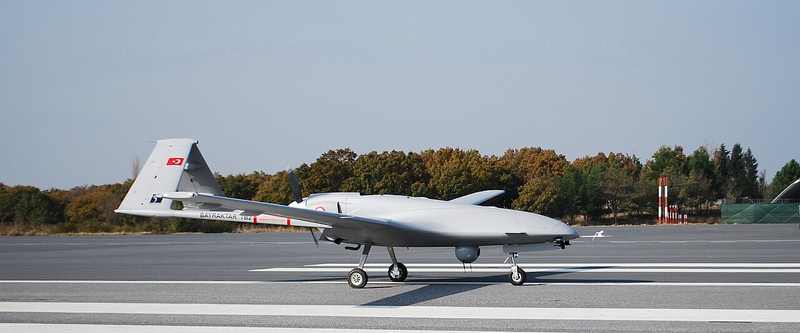
Turkey brings NATO's second-largest army and a defence industry known for Bayraktar drones. Ankara condemned the Houthi attacks and also agreed to join a Saudi-led coalition intended to protect navigation in the Red Sea. That gives the mission a dual purpose: shield Saudi territory and help secure a commercial waterway whose disruption is felt far beyond the Gulf.
The attacks that triggered it
Houthi airport attacks Saudi Arabia: the human toll
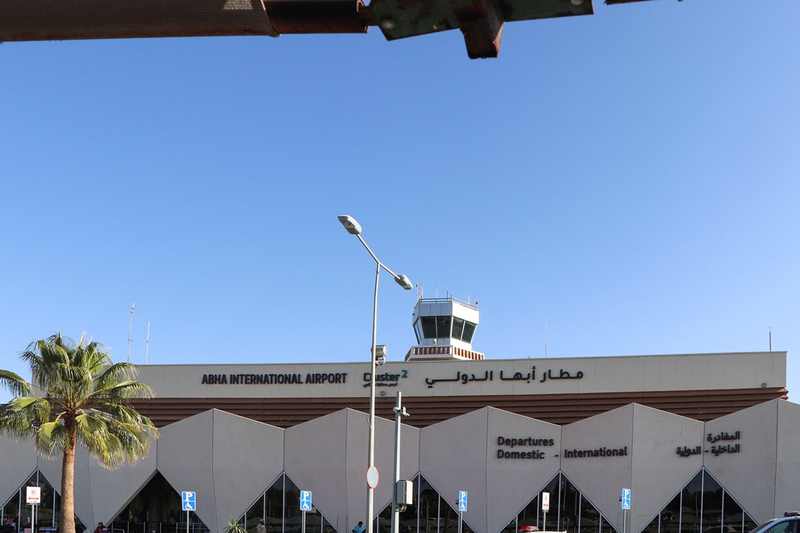
Saudi Arabia's General Authority of Civil Aviation said Abha International Airport near the Yemeni border and King Khalid International Airport in Riyadh came under attack across October 6 and 7. At Abha on Tuesday, two women residents were killed and 28 people were wounded, including Saudi, Bangladeshi and Filipino nationals. Reporting differs on one victim's nationality: CNN described her as Moroccan, while another outlet reported Egyptian. Those nationalities should be read as attributed accounts, not settled official fact.
At Riyadh's King Khalid International Airport on Wednesday, GACA said one Sudanese resident was killed and eight people were wounded, including Saudi, Egyptian and Pakistani nationals. The two-airport total was three dead and 36 wounded. The Houthis claimed both attacks, saying a ballistic missile and drones were used against Riyadh. They warned airlines that Saudi airspace had become a “theater of military operations,” while excluding the airspace over Mecca and Medina.
US embassy Saudi Arabia security alert and the risk to aviation
The U.S. Mission in Saudi Arabia issued a security alert Wednesday warning of possible drone or missile attacks, further escalation, flight cancellations and airspace closures. The notice does not prove any individual Houthi claim, but it shows how rapidly the operational risk has spread from border areas to the country's aviation network.
In Yemen on Wednesday, two Houthi missiles targeted Aden International Airport, the main air gateway for areas outside Houthi control. No casualties were reported. The Saudi-led coalition said it destroyed in Sanaa the ballistic-missile launch platform used in the Riyadh attack. The competing accounts do not remove either side's obligation to distinguish military targets from civilians.
Syria weighs joining in
Syria military aid Saudi Arabia remains under consideration
Damascus has not made a deployment decision. Reuters cited a U.S. official and a Syrian military official as saying Syria is carefully considering defensive assistance or an offensive role alongside Saudi-backed Yemeni troops after a request from Riyadh. President Ahmed al-Sharaa visited Riyadh on Tuesday and met Crown Prince Mohammed bin Salman. A Syrian diplomat stressed that domestic recovery remains the priority and that any military cooperation would proceed through official bilateral channels.
The deliberation is notable because reports in September said Damascus had declined an earlier Saudi request to organize and deploy fighters. The potential shift after al-Sharaa's visit is the news; it is not evidence that Syrian forces are committed. Reuters' sources described Saudi Arabia as seeking help broadly from the United States, Europe and the Middle East.
Why this matters
Turkey's move is the first military involvement by a NATO member in this phase of the Yemen war. It coincides with the first activation of the Mecca pact and the first Saudi-confirmed death at Riyadh's main airport in this escalation. It also moves the Gulf's new collective-defence architecture from paper to hardware outside the traditional U.S. security umbrella. The Turkey Pakistan Saudi alliance is not replacing Washington, but it demonstrates that Riyadh has partners able to contribute people, intelligence and systems.
For Ankara, the mission is a tightrope. Turkey is a NATO ally with strong defence ties to the Gulf, but it also maintains working relationships with Russia and Iran and has cultivated a reputation as a mediator. Defensive support lets it answer Saudi requests while trying to limit the appearance of entering a direct contest with Tehran. Even so, every added interceptor and drone specialist sends Iran a signal that pressure through the Houthis can produce a wider coalition.
How we got here
Yemen war escalation 2026 and the Bab el-Mandeb offensive
The conflict flared again in July after the U.S.-Iran ceasefire unraveled. Houthi missiles targeted Saudi oil facilities and tankers; Riyadh answered with airstrikes supporting Yemen's internationally recognized government. On Monday, a Saudi-backed counteroffensive retook ground around Mokha and the Bab el-Mandeb approach with air cover from roughly 100 coalition fighter jets, although the territorial advances remained limited and contested.
The renewed fighting has killed nearly 1,000 people and displaced more than 180,000, according to the United Nations. Cholera and malnutrition are rising as supply routes and health services buckle. Those figures make the Saudi Arabia Houthi war October 2026 more than a contest over missiles and alliances: civilians on both sides of the border are absorbing the cost.

The Houthis frame their attacks as resistance to Saudi air operations and foreign intervention, and as a way to impose costs on the coalition. Riyadh says its strikes and ground support defend Saudi civilians, restore Yemen's recognized government and secure Red Sea navigation. Each side therefore describes escalation as a response to the other's prior escalation — the familiar mechanism by which a limited exchange becomes a regional war.
Who gains, who loses, what the critics say
Saudi Arabia gains more layers of air defence and operators familiar with drone warfare. Turkey gains a high-profile proving ground for its defence industry and deeper strategic influence in the Gulf. Pakistan strengthens the alliance while keeping its described role supportive rather than leading the combat. The Houthis face harder targets, and Iran's regional partner comes under pressure from a wider group of states.
The losses are less abstract. Yemeni civilians face more airstrikes and ground fighting; Saudi residents and foreign workers now face attacks at airports. Airlines, shippers and energy traders must price a conflict touching both civil aviation and the Red Sea.
Critics point to three risks. First, Saudi-led air campaigns from 2015 through 2022 failed to break the Houthis, so more capable hardware does not guarantee political success. Second, Turkey's unresolved parliamentary ratification leaves a legal and democratic gap between a bilateral deployment and full pact obligations. Third, a wider foreign presence adds another rung to an escalation ladder that could lead toward a direct Saudi-Iran confrontation even if none of the governments says it wants one.
What the numbers say
The airport toll — three killed and 36 wounded — is smaller than the nearly 1,000 deaths reported in Yemen's renewed fighting, but its political effect is outsized because the victims were in civilian transport hubs inside Saudi Arabia. More than 180,000 people have been displaced in the recent fighting, according to the United Nations. The comparison shows how a relatively small number of airport casualties can reshape diplomacy even as the far larger humanitarian burden remains inside Yemen.
Gulf stock markets were subdued Wednesday as investors weighed that escalation. The conflict has also produced its highest tanker-attack week since the July flare-up. The combination of oil infrastructure, airports and a Bab el-Mandeb offensive creates exposure at three points of the same economic system: production, passenger movement and shipping. Perceived risk alone can lift insurance costs and redirect traffic before physical damage becomes extensive.
What happens next
Ratification, Iran's response and the possible off-ramp
The first decision point is Ankara. Parliamentary ratification could convert a limited bilateral package into a larger deployment under the pact. The second is Islamabad: Pakistan's contribution may remain technical and defensive, or broaden if attacks continue. The third is Tehran's response through the Houthis, who can test the coalition's new shield with more missiles and drones without Iran openly entering the fight.
Washington's posture also matters. The United States can supply intelligence, interceptors and diplomatic leverage without leading the new arrangement, but sustained attacks on civil aviation or oil facilities would increase pressure for a more visible role.
The off-ramp is the same difficult bundle that stalled earlier deals: Houthi disarmament, withdrawal and security guarantees; Saudi limits on air operations; power-sharing for Yemen's rival authorities; and credible reconstruction financing. Turkey and Pakistan could eventually help broker or support that settlement. For now, their first task is military, not diplomatic — and every successful interception may buy time, while every missed missile narrows it.