Pakistan troops Saudi Arabia
Pakistan troops Saudi ArabiaPakistan deploys troops Saudi ArabiaMecca defence pact activatedHouthi missile Riyadh airportKing Khalid airport missile attackHouthi attacks Saudi airports October 2026Saudi Arabia Pakistan defense pactAhmed Sharif Chaudhry Pakistan troopsYemen war escalationBab el-Mandeb offensive
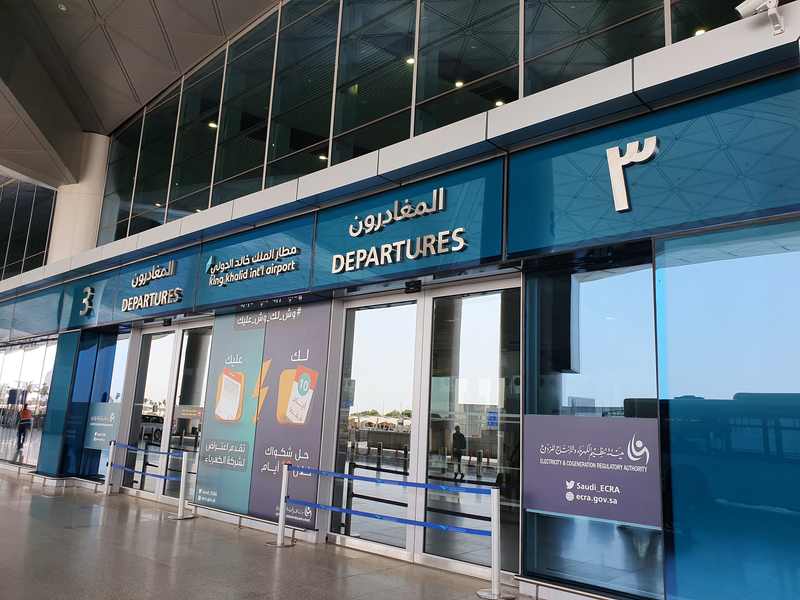
RIYADH — Pakistan has publicly confirmed that its troops are already stationed in Saudi Arabia, the first such admission since Riyadh, Ankara and Islamabad activated their new mutual-defense treaty this week. The disclosure, made by Pakistan's top military spokesman in an exclusive interview on Wednesday, landed within hours of the Houthis claiming a fresh ballistic-missile strike on Riyadh's King Khalid International Airport — a claim Saudi Arabia has not confirmed. Taken together, the two developments mark the sharpest turn yet in a Yemen conflict that has spilled decisively onto Saudi soil: three civilians are dead in this week's airport attacks, a nuclear-armed state has put boots on Saudi ground, and Washington has warned its citizens the conflict "has the potential to escalate."
The confirmation: "The forces of Pakistan are already there"
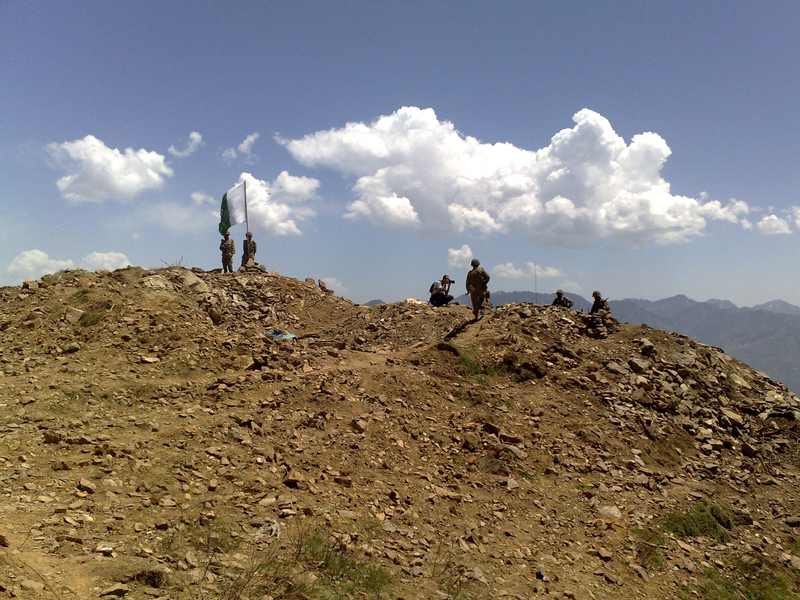
The news came from Lt. Gen. Ahmed Sharif Chaudhry, Pakistan's Director General of Inter-Services Public Relations, in an exclusive interview with CNN on Wednesday, October 7. Asked about the deployment, Chaudhry said: "The forces of Pakistan are already there. That I can share with you." He declined to specify how many troops or what capabilities they bring, saying those details were classified.
The confirmation arrived just days after Saudi Arabia, Turkey and Pakistan agreed at an emergency meeting in Riyadh on Monday to rapidly deploy military forces under the Mecca defence pact, the trilateral treaty signed on August 7 that treats an armed attack on any member as an attack on all. Chaudhry described Pakistan's commitment to Saudi security as "absolute" and framed the alliance as a deterrent: "Anyone having some funny ideas against another will hopefully think twice, thrice, or multiple times before doing that. That stops something terrible from happening."
What Islamabad will — and won't — say
Chaudhry would not be drawn on whether Pakistani troops could take part in operations across the border in Yemen. "Whenever there is a military conflict, no participating country starts disclosing how and where it is going to employ its forces," he said, adding that any involvement would be "defensive in nature." He also stressed that the alliance was not about naming enemies: "The objective of this alliance is not to start labelling enemies, enemies, enemies, friends, friends, friends. The objective is the defense of the Kingdom of Saudi Arabia… That will be done."
At the same time, Chaudhry kept Pakistan's diplomatic lane open. Islamabad has been mediating between Iran — its neighbor and the Houthis' backer — and the United States since the US–Israel war with Iran began, and he said Pakistan is still pushing for a deal to end that wider war: "We have done, are doing, and will continue to do whatever is possible and necessary so that the differences and the gaps narrow down and there is a negotiated, peaceful outcome. We want this conflict not to expand."
That dual posture — troops on Saudi ground, mediation with Tehran — is the tightrope Islamabad is now walking. It is also a striking reversal: in 2015, Pakistan's parliament voted against sending troops to assist Saudi Arabia in an earlier round of fighting against the Houthis. Eleven years later, the threat picture has changed enough for Islamabad to say the opposite in public.
A fresh claim on Riyadh's airport — what is verified and what is not
On Thursday, the Houthis said they had attacked King Khalid International Airport in the Saudi capital with a ballistic missile, Reuters reported. The statement came hours after Saudi Arabia confirmed that a midweek attack on the same airport had killed one person — a Sudanese resident — and wounded eight others. Crucially, Reuters noted there was "no immediate confirmation from Saudi Arabia of the latest attack claim."
That distinction is the whole story of this claim. The Houthis have a long record of announcing strikes that Riyadh never acknowledges, and Saudi authorities this week publicly warned that filming or sharing images of drone and missile attacks could bring legal charges. So the Thursday claim should be read as a claim: significant as a signal of Houthi intent to keep striking the Saudi capital, unverified as an event. Readers should treat it accordingly — and so should the markets and ministries watching this space.
This week's attacks, verified attack by attack
What is verified, across multiple reputable outlets, is a deadly week for civilian airports:
Tuesday — Abha International Airport. Saudi Arabia's civil aviation authority said an attack killed two female residents, one Moroccan and one Algerian national, and wounded 28 others. The Houthis claimed responsibility.
Wednesday — King Khalid International Airport, Riyadh. The Houthis said they fired a ballistic missile at the airport; Saudi authorities said the attack killed a Sudanese resident and wounded eight. Coalition spokesman Maj. Gen. Turki al-Maliki said Saudi forces had destroyed the ballistic missile launcher used in the attack and warned that preparations were underway for "another imminent attack."
Wednesday — Aden International Airport. Two Houthi missiles targeted the airport serving Yemen's internationally recognized government; one landed near the runway shortly before a Yemenia Airways flight from Cairo was due to land, forcing the aircraft to divert to Jeddah. No casualties were reported, according to Yemen's Transport Ministry.
The toll — three dead, 36 wounded, per the Wall Street Journal's accounting — prompted the US Mission in Saudi Arabia to update its security alert, warning American citizens that the conflict "has the potential to escalate."
Why this matters
Start with the precedent. This is the first time in the current phase of the Yemen war that a nuclear-armed state has publicly confirmed putting forces on Saudi ground under a collective-defense treaty. The Mecca pact's attack-on-one-is-an-attack-on-all clause has gone from paper to personnel in a matter of days — the treaty's first-ever invocation, according to Al Jazeera's reporting on Monday's emergency meeting. What was a Saudi–Houthi fight is now a three-country military commitment, and the escalation ladder has more rungs than it did a week ago.
Then consider what the airport strikes pierce. A core bargain of Saudi Arabia's modernization story is that its cities and infrastructure are insulated from the wars on its periphery. Riyadh's international airport is not a border outpost; it is the capital's front door. Three dead civilians in two days at civilian airports changes the conflict's political geometry — it internationalizes the war legally (the pact's invocation), militarily (Pakistani and Turkish deployments), and diplomatically (the American security alert).
And consider Islamabad's bind, which is the most strategically interesting part of this story. Pakistan is simultaneously deploying forces against an Iranian-backed group and trying to broker peace between Iran and the United States. If the deployment deters further Houthi strikes, Pakistan looks like the indispensable power broker of the Gulf. If the deployment drags Islamabad into Yemen's grinding war, it replays the quagmire its own parliament voted to avoid in 2015 — with a nuclear-armed state now in the theater.
How we got here
The Yemen war began in 2015, pitting the Iran-aligned Houthis — who control much of northern Yemen including Sanaa — against the internationally recognized government and a Saudi-led coalition. The current phase flared in July 2026, shortly after the US–Iran ceasefire unravelled, when Houthi missile attacks on Saudi oil facilities and tankers expanded the Middle East war and Riyadh answered with airstrikes in support of Yemeni government forces.
On August 7, Saudi Arabia, Turkey and Pakistan signed the Mecca Alliance for Defence, a pact with NATO-style collective-defense provisions. Its activation had been delayed while Ankara and Islamabad played mediator in the wider regional war — until this week's airport attacks forced the issue. On Monday, October 5, the three countries' defense and foreign ministers held an emergency meeting in Riyadh and agreed to activate collective deterrence measures and rapidly deploy forces to the kingdom. Saudi Defense Minister Khalid bin Salman said the move would demonstrate unity in confronting attacks on the kingdom. In early September, Pakistan's defense minister had already warned that any spillover from Yemen into Saudi Arabia would set the Mecca agreement in motion. The trigger has now been pulled.
The Bab el-Mandeb prize
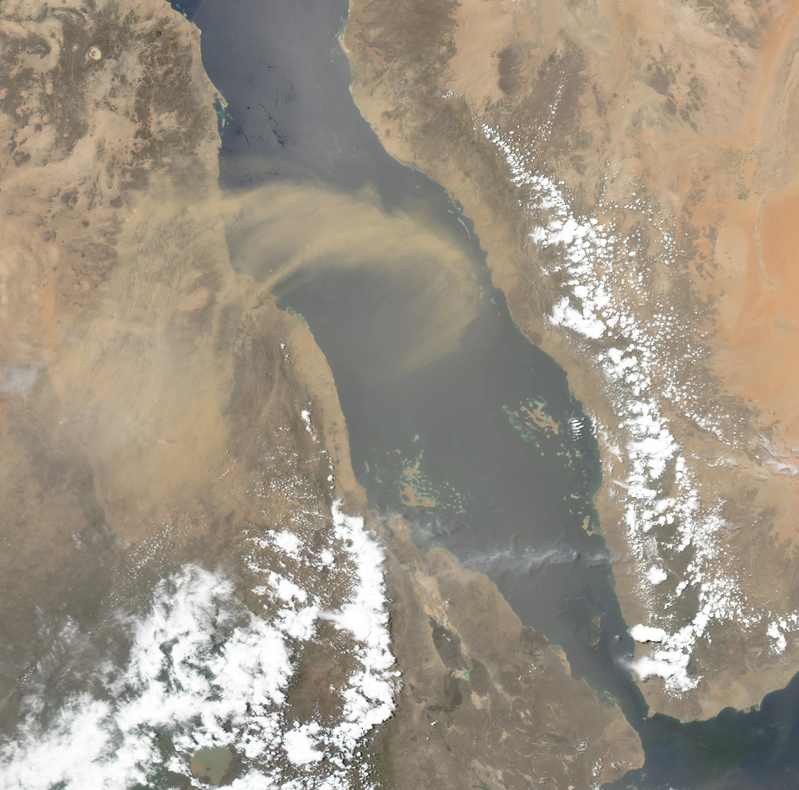
Underneath the airport strikes sits a territorial fight with global stakes. Last month, the Houthis seized effective control of the Bab el-Mandeb strait — the narrow waterway linking the Red Sea to the Gulf of Aden, through which a significant share of the world's oil and container trade flows. In recent days, Saudi-backed Yemeni government forces, pressing an offensive dubbed Operation "Dawn of Yemen," have claimed to retake some of those positions, including ground around the port town of Mocha. The Houthis have answered with the missile and drone campaign against targets inside Saudi Arabia. Each side is trying to shape the other's cost calculus: the government forces by threatening Houthi-held coastline, the Houthis by threatening Saudi cities.
Who benefits, who loses — and what the critics say
The view from Riyadh
Saudi Arabia gains deterrence, manpower, and a powerful signal: an attack on the kingdom now activates a treaty response. The risk is entrapment in reverse — foreign troops on Saudi soil are politically sensitive, and every Houthi strike that lands despite the pact invites questions about what the alliance actually deters.
The view from Islamabad
Pakistan gains strategic depth with Riyadh, leverage with Washington, and a demonstration that its military is the Gulf's ultimate insurance policy. The risks are commensurate: antagonizing Iran, its neighbor and the Houthis' patron, at the exact moment it is mediating between Tehran and Washington; domestic blowback given the 2015 parliamentary precedent; and mission creep into Yemen itself. Chaudhry's careful phrasing — defensive in nature, no labelling of enemies — is the tell: Islamabad wants the deterrent without the war.
The view from Tehran and Sanaa
For the Houthis, the airport campaign is leverage made visible: each strike, claimed or confirmed, pressures Riyadh and tests the new pact's credibility, while the warning to international airlines using Saudi airspace raises the economic stakes. The cost was illustrated this week when the coalition destroyed the launcher used in the Riyadh attack. For Iran, a Pakistani deployment against its Yemeni ally — by a country simultaneously offering to mediate — complicates every calculation about escalation and negotiation.
The critics' case, stated fairly
Supporters of the pact argue that only a credible collective threat stops a missile campaign — and that Monday's activation, followed by Wednesday's confirmation, is exactly the resolve the Houthis understand. Critics argue the opposite: that attack-on-one-means-attack-on-all clauses are how local wars become regional ones, and that each new flag in the theater raises the odds of miscalculation. Both readings are live. The test is what happens in the next two weeks — whether the airport strikes stop or continue will tell us which theory the Houthis believe.
What the numbers say
The verified arithmetic of the week is stark: three civilians killed and 36 wounded across the Riyadh and Abha airport attacks — a casualty count at civilian aviation infrastructure that would have been unthinkable in this conflict two years ago. Beyond the airports, the International Organization for Migration said Wednesday that more than 200,000 people have been displaced since the latest round of fighting began, with IOM Director General Amy Pope warning that "people are running for their lives and finding nowhere safe to go." The UN reports that three in four families are going hungry in parts of Yemen.
Put the Pakistan data point in sequence: a parliament that voted no to troop deployment in 2015, a defense minister warning in September 2026 that spillover would trigger the pact, and a military spokesman confirming boots on the ground in October. The distance between the first and last of those points measures how much the threat picture has changed for Islamabad — and how fast. On the energy side, attacks and harassment of tankers around the Strait of Hormuz have reached their highest weekly level since the US–Iran war began, a reminder that this escalation sits atop the world's most important oil artery.
What happens next
Three scenarios, in rough order of likelihood. First, deterrence holds: the pact's activation, the destroyed launcher, and Pakistani boots on Saudi ground persuade the Houthis to pause the airport campaign; the fighting stays inside Yemen; Pakistan's mediation channel gets room to work. Second, the ladder climbs: the unverified Thursday claim proves real or is followed by a confirmed strike; Saudi, Turkish and Pakistani involvement deepens; the Houthis widen targeting to airlines and energy infrastructure; the Yemen front and the US–Iran war's front merge further. Third, the grinding middle: neither deterrence nor full escalation — periodic missile and drone exchanges, civilian airports intermittently disrupted, Bab el-Mandeb contested, and the humanitarian toll climbing. Historically, this is where Yemen wars live.
The two variables to watch: whether Riyadh confirms or denies the Thursday airport claim — silence or confirmation will each send a signal — and what Pakistan's forces actually do in the kingdom over the next 72 hours. The announcement is made. The deployment's meaning is still being written.
Sources
- CNN — Oct. 7, 2026 exclusive interview with Lt. Gen. Ahmed Sharif Chaudhry confirming Pakistani forces are already in Saudi Arabia.
- Reuters — Oct. 8, 2026 reporting on the Houthis' claim of a fresh ballistic-missile attack on Riyadh's King Khalid International Airport, unconfirmed by Saudi Arabia.
- The Wall Street Journal — Oct. 7, 2026 reporting on the Houthi airport attacks: three killed, 36 wounded.
- TBS News — Oct. 6, 2026 reporting on the activation of the Mecca defence pact, citing Al Jazeera.
- The Hindu BusinessLine (PTI) — Oct. 6, 2026 reporting on the Monday emergency meeting agreeing to rapid force deployment.
- The News (Pakistan) — Oct. 7, 2026 reporting on the airport attacks and the Yemen ground fighting.
- IBTimes Singapore — Oct. 7, 2026 reporting on Houthi attacks at Aden and the surge in tanker incidents near Hormuz.