Mecca defence pact Riyadh meeting

RIYADH — Turkey, Saudi Arabia and Pakistan are due to hold a Mecca defence pact Riyadh meeting on Monday, October 5, their most consequential committee session since the three governments signed the agreement two months ago. Turkey's foreign ministry announced the gathering on Sunday, Reuters reported.
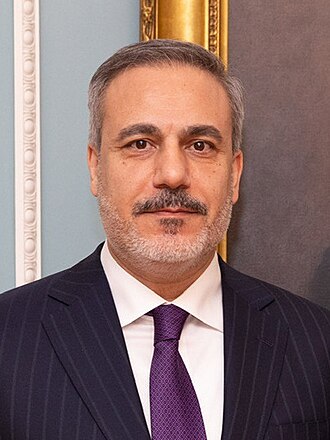
The Turkish delegation is expected to include Foreign Minister Hakan Fidan, Defence Minister Yasar Guler and chief of the general staff Gen. Selcuk Bayraktaroglu, alongside Saudi and Pakistani officials. The agenda reaches beyond ceremony: regional developments, the alliance's “institutionalisation,” Iran's proposal to engage Yemen's Houthis politically and a Saudi-backed Yemeni counteroffensive announced on October 4.
The meeting is announced, but its decisions are not yet public. Claims about specific operations, force deployments or strike damage remain attributed to the officials and outlets that reported them. The central question is therefore not whether the pact sounds forceful; it is whether three governments with different risk tolerances can agree on what the words require.
Why this matters
The pact was designed to signal that an attack on one member would be treated as an attack on all three. In theory, that joins Saudi financial and air-defence capacity, Pakistan's large military establishment and Turkey's NATO-honed command experience and defence industry. In practice, collective defence only deters when an adversary can predict what support will arrive, who will authorize it and how quickly.
Yemen is the alliance's first hard case. The Houthis have maintained a naval blockade against the Kingdom since July, according to the reporting underpinning the meeting, and have renewed missile and drone attacks on Saudi targets. At the same time, Yemen's internationally recognized leadership has announced a counteroffensive. A mechanism created for defence now has to draw a line between protecting Saudi territory, supporting operations across the border and backing a political track with the Houthis.
That distinction matters globally. UN trade analysis has estimated that the Suez route carries roughly 10% of seaborne trade by volume and about 22% of containerized flows. Any escalation around Yemen and Bab al-Mandeb can move beyond a regional security dispute into longer voyages, higher insurance costs and delayed cargo.
What the Riyadh committee must decide
From political clause to operating procedure
“Institutionalisation” is dry language for decisions that determine whether an alliance works: a permanent secretariat, secure communications, intelligence-sharing rules, liaison teams, joint planning and an escalation ladder. The committee's first meeting, held in Istanbul on August 31, established a forum. Riyadh must show whether that forum can produce repeatable procedures.
A credible defensive model could include early warning on missile and drone launches, shared air-picture data, logistics planning and coordinated public messaging. More ambitious options—joint patrols, basing arrangements or participation in Yemen operations—would raise political and legal risks, especially for Ankara.
Political engagement or battlefield pressure
Iran's proposal for political engagement with the Houthis gives the three states a second track. Saudi Arabia may seek military pressure strong enough to protect its territory and improve bargaining leverage without reopening an unlimited war. Pakistan can support Saudi defence while emphasizing the pact's declared defensive purpose. Turkey can advocate diplomacy while providing technical assistance that stops short of direct combat.
Those positions are not necessarily incompatible. The committee could frame defensive cooperation as protection for negotiations rather than a substitute for them. But the formula will be tested if Houthi strikes continue during Yemen's offensive or if either side claims major battlefield gains.
How the alliance reached this point
President Recep Tayyip Erdogan, Crown Prince Mohammed bin Salman and Prime Minister Shehbaz Sharif signed the pact in Mecca on August 7, 2026. Its attack-on-one provision elevated long-standing bilateral defence ties into a trilateral promise. The first committee session followed in Istanbul on August 31.
The alliance combines familiar relationships rather than creating them from nothing. Pakistan and Saudi Arabia have decades of military cooperation. Turkey and Pakistan maintain close political and defence-industrial ties. Ankara and Riyadh have rebuilt relations after years of rivalry. What is new is the claim that these connections now form a standing collective-defence structure.
That structure is entering a crowded security environment. The Houthis' blockade and attacks, Iran's diplomatic proposal and Yemen's renewed campaign all pull members toward different instruments at once. The pact will need a way to decide when to use air defence, intelligence, training, logistics, diplomacy or—in the most dangerous case—force.
Three members, three strategic calculations
Saudi Arabia: security without another open-ended war
Riyadh needs visible protection for cities, oil infrastructure and Red Sea traffic. It also carries the memory of a long Yemen intervention that was costly and inconclusive. The best outcome for Saudi leaders is an alliance that raises the price of attacks and strengthens bargaining power without making the Kingdom solely responsible for every escalation.
Pakistan: the strongest public pledge
Pakistan has said it would use “whatever means are available” to defend Saudi Arabia. That language gives the pact weight, but it also raises questions about scope. Islamabad must reconcile the pledge with its own security commitments, domestic politics and a desire not to be pulled into every phase of Yemen's war.
The imbalance in resources clarifies the bargain. SIPRI's 2025 estimates put Saudi military spending at about $83.2 billion, Turkey's at $30 billion and Pakistan's at $11.9 billion. Spending does not translate directly into usable joint capability, but it shows why integration matters: the members bring very different financial scale, force structure and operational experience.
Turkey: useful technology, careful exposure
Turkey has so far been the most cautious about direct action, signalling technical help rather than an open combat commitment. That can still be significant. Air-defence integration, drones, electronic warfare, training and command-and-control expertise may offer more durable value than a symbolic deployment.
Ankara also has reasons to preserve diplomatic room with Iran and avoid adding another expeditionary burden. Fidan's presence alongside the defence minister and military chief suggests that Turkey wants political control and military planning considered together.

Who gains—and who faces new risks
The potential winners
Saudi Arabia gains strategic depth if Turkish and Pakistani support becomes predictable. Pakistan can strengthen its central role in Gulf security and secure defence-industrial opportunities. Turkey can expand influence in the Gulf while positioning its defence technology inside a new institutional framework. Commercial shipping benefits if cooperation reduces the probability of successful attacks around the Red Sea.
Yemen's Saudi-backed government may gain intelligence, logistics and political backing. The alliance could also create leverage for talks if its members pair defence measures with a clear diplomatic offer.
The potential losers
The Houthis would face a broader defensive network, while Iran could see less freedom to use pressure on Saudi Arabia through an allied Yemeni movement. But escalation can impose costs on every member. A retaliatory cycle could expose Saudi infrastructure, stretch Pakistani forces and complicate Turkey's relations across the region.
The alliance also faces the classic credibility trap: vague commitments can invite testing, while overly automatic commitments can drag members into conflicts they did not choose. The Riyadh committee's job is to reduce both risks at once.
Civilians and the limits of alliance arithmetic
Any strategy that treats Yemen only as a map of missile ranges and maritime routes misses the central human cost. A September 2026 humanitarian statement said 22.3 million people needed assistance and protection, while a partial food-security analysis projected 5.4 million people in government-controlled areas would face crisis-level hunger or worse from June through September. The statement cautioned that current data for northern Yemen were not directly comparable.
Those figures argue for constraints: civilian-protection rules, protected access for aid, deconfliction channels and public accounting for strikes. They also weaken the case for expansive claims based on unverified casualty or damage figures. A defence pact that stabilizes Saudi territory while worsening conditions in Yemen would solve only one part of the security problem.
What happens next: four scenarios
1. Defensive integration without direct intervention
The most workable near-term outcome is a package of intelligence sharing, missile and drone warning, training and logistics. Turkey supplies technical expertise, Pakistan reinforces Saudi defence and all three preserve political control over any wider action. This would make the pact visible without immediately transforming it into a Yemen combat coalition.
2. Limited support for Yemen's counteroffensive
The committee could authorize more assistance to Saudi-backed Yemeni forces while keeping member troops out of offensive operations. That might include surveillance, maintenance and planning. The line between defensive and offensive help would remain contested, particularly if it enables attacks on Houthi-held territory.
3. A political channel gains priority
If Iran's proposal produces verifiable restraint, the members could use the alliance as negotiating leverage. A pause in Houthi missile and drone launches, access for humanitarian monitors and safer Red Sea passage would be measurable signs. Statements alone would not be enough.
4. Retaliation forces the pact to choose
A confirmed strike causing major damage in Saudi Arabia would create the hardest test. Pakistan's broad pledge and Turkey's narrower language would meet in a real decision about activation. Watch for joint attribution, emergency consultations, deployment notices and changes in Saudi airspace or energy operations.
The evidence to watch after Riyadh
Communiqués should be judged for mechanisms, not adjectives. The strongest evidence of institutionalisation would be a named secretariat, a schedule of exercises, agreed intelligence protocols or a defined command structure. Repetition of solidarity language would show political unity but not operational readiness.
On Yemen, the useful indicators are similarly concrete: independently verified changes in territory, official air-defence alerts, shipping advisories, humanitarian access and a clearly described diplomatic process. The latest related coverage includes Al-Alimi's offensive announcement, the reported government advance around Dhubab, the pact's earlier discussions of Iran and the Houthis and the previous cycle of Houthi–Saudi tensions.
The bottom line
The Mecca pact's promise is simple; Monday's choices are not. Saudi Arabia wants protection and leverage. Pakistan has offered strong solidarity. Turkey brings capabilities but has drawn a more cautious boundary around direct action. Yemen now forces those positions into the same room.
If Riyadh produces procedures, the alliance will begin to look like an institution. If it produces only declarations, adversaries will keep testing where the collective-defence clause ends. The committee's most important achievement would be to make that boundary clearer without closing the door to a political settlement.
Sources and reporting notes
- Reuters, October 4, 2026 — Turkish foreign ministry announcement and meeting agenda
- Turkish Minute, October 4, 2026 — Turkish delegation and committee context
- The News International — Pakistani reporting on the Riyadh session
- The Business Standard — Reuters report on the October 5 meeting
- SIPRI 2025 military-expenditure figures summarized by Politics Today
- UN Trade and Development — Suez Canal exposure in global seaborne trade
- ReliefWeb, September 2026 — Yemen humanitarian and food-security indicators
Verification note: The meeting announcement comes from Turkey's foreign ministry via Reuters. Operational claims about Yemen and attacks on Saudi targets are attributed to the reporting and officials that made them; no unverified casualty or strike-damage figure is presented here as established fact.