Houthi missile strike Aden airport
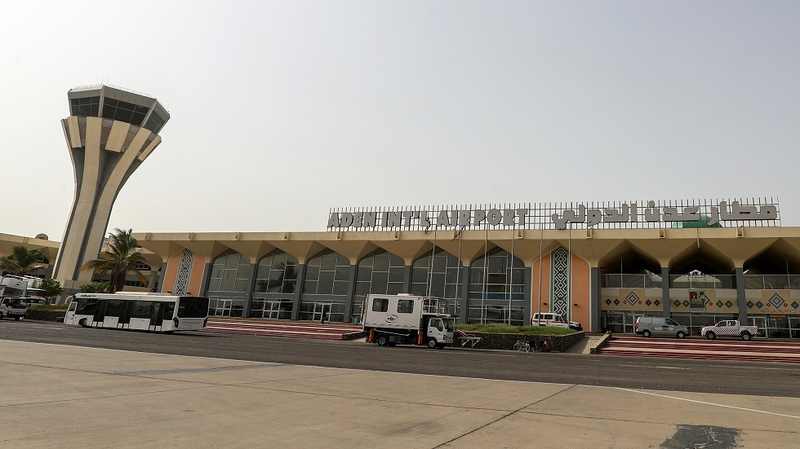
Two missiles targeted Aden airport on October 7, 2026, in a Houthi missile strike that marks one of the boldest attacks yet on the seat of Yemen's internationally recognized government. Reuters reported that the Aden airport missile attack caused no casualties, but the symbolism was unmistakable: the Houthis can now reach the very runways the Yemeni government depends on. The strike did not come alone — The Wall Street Journal independently confirmed simultaneous Houthi attacks on Saudi airports in Jazan and Najran that wounded three people, turning a single incident into a coordinated regional escalation.
Why this matters
Aden is not just another Yemeni city. Since the Houthis seized Sanaa in 2014, Aden has served as the de facto capital of Yemen's internationally recognized government — home to its ministries, its central bank operations, and the airport that connects it to the outside world. A Houthi missile strike on Aden airport is therefore an attack on the government's lifeline and legitimacy in a single blow.
That the Houthis paired it with strikes on Saudi airports in Jazan and Najran signals something larger than retaliation: it is a demonstration that the group's missile arsenal can pressure two adversaries at once, on two fronts, in a single day. For Saudi Arabia, which has spent years trying to wind down its military entanglement in Yemen, the message is that disengagement does not mean immunity. For the Yemeni government, the message is that no part of its territory is beyond reach. And for the wider region — already on edge over Red Sea shipping attacks — it is a reminder that Yemen's war retains the capacity to spill across borders with little warning.
What happened on October 7
According to Reuters, two missiles were fired at Aden airport on October 7, 2026. No casualties were reported, and the extent of damage to airport infrastructure was not immediately clear. The Wall Street Journal's independent confirmation added a critical second dimension: at roughly the same time, Houthi forces struck airports in Saudi Arabia's Jazan and Najran regions, wounding three people.
The simultaneity strongly suggests central coordination rather than coincidence — a multi-axis operation planned to maximize political shock. As of publication, the Houthis had not issued a detailed claim of responsibility through their usual channels, though the group has historically framed such strikes as responses to what it calls aggression by the Saudi-led coalition and its Yemeni government allies. Saudi and Yemeni government officials had not released full damage assessments at the time of writing.
Background — Yemen's war and the Houthi missile arsenal
Yemen's conflict began in 2014 when Houthi rebels, formally known as Ansar Allah, seized the capital Sanaa and forced the internationally recognized government into exile — first to Riyadh, then to Aden. A Saudi-led coalition intervened militarily in 2015, and what followed has been described by the United Nations as one of the world's worst humanitarian crises.
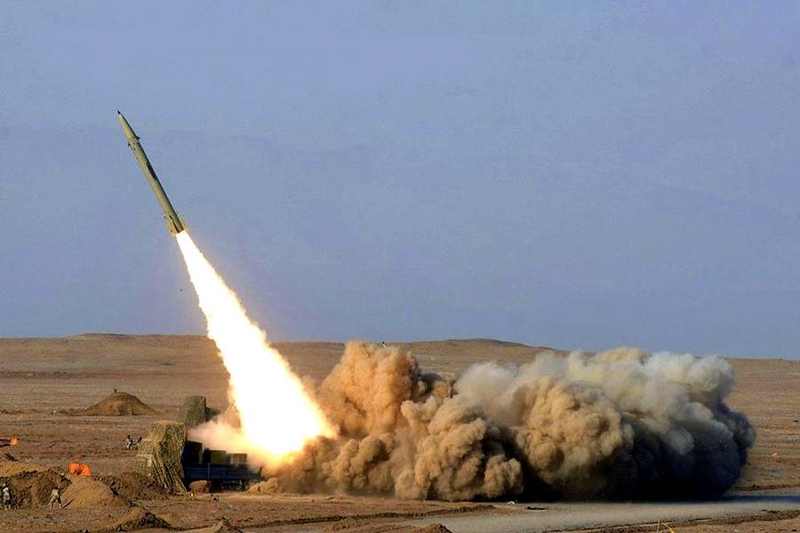
Over the years, the Houthis have steadily upgraded their missile and drone capabilities, progressing from short-range rockets to ballistic missiles and long-range drones capable of reaching deep into Saudi Arabia and the UAE. Previous Houthi strikes on airports — including the deadly December 2020 attack on Aden airport itself, which killed at least 22 people as government officials arrived — established aviation infrastructure as a recurring target. The October 7, 2026 strikes fit a pattern of escalating ambition: from harassing Red Sea shipping to striking the airports of two countries in one day.
The Saudi airport strikes — Jazan and Najran
The Wall Street Journal's confirmation that Houthi missiles also hit Saudi airports in Jazan and Najran, wounding three people, is arguably the more strategically significant half of the story. Jazan and Najran sit in Saudi Arabia's southwest, near the Yemeni border — within comfortable range of Houthi launch sites, but striking them simultaneously with Aden required planning and confidence.
Riyadh has spent the last two years pursuing de-escalation with the Houthis, including direct talks aimed at a permanent ceasefire. These strikes test whether that diplomatic track can survive military provocation. Saudi officials face an uncomfortable choice: retaliate and risk collapsing the talks, or absorb the blow and risk looking permissive. The three wounded — the first reported casualties — also change the political calculus in Riyadh, where public tolerance for cross-border attacks is thin.

Who benefits, who loses
The Houthis benefit in the short term: the strikes project strength, rally domestic supporters, and remind both Riyadh and Aden that the group negotiates from a position of military capability, not weakness. They also complicate the Yemeni government's efforts to present Aden as a stable, functioning capital — investors, diplomats, and airlines all watch airport security closely.
The losers include ordinary Yemenis, who bear the cost of every escalation cycle through disrupted aid flows and economic damage; Saudi border communities in Jazan and Najran, now back in the line of fire; and the fragile diplomacy aimed at ending the war, which becomes harder with each missile. International shipping through the Red Sea — already battered by Houthi attacks on vessels — faces renewed risk premiums if the group signals a broader offensive posture.
What the numbers say
Two missiles at Aden, zero casualties. Multiple missiles at Jazan and Najran, three wounded. The contrast is worth examining. The Aden strike caused no reported casualties — which could mean the missiles missed critical infrastructure, were intercepted, or were deliberately aimed to send a message rather than inflict mass harm. Houthi targeting has often balanced lethality with signaling; a strike that closes an airport without killing anyone still achieves disruption and headlines.
The Saudi strikes, by contrast, drew blood — three wounded — which may reflect different targeting, different air defenses, or simply different luck. What the numbers do not tell us is intent, and both sides will spin them: the Houthis may claim precision and restraint, while Saudi and Yemeni officials may emphasize the aggression regardless of casualty counts.
What happens next
Three scenarios present themselves. First, contained escalation: the strikes prove to be a one-day show of force, and back-channel diplomacy resumes — the pattern of several previous Houthi provocations. Second, retaliation spiral: Saudi Arabia answers with airstrikes on Houthi launch sites, the Houthis respond in kind, and the southwest border becomes a hot front again. Third, and most consequentially, the strikes could presage a broader Houthi offensive — possibly coordinated with the group's Red Sea campaign — aimed at extracting concessions at the negotiating table.
Watch for: Saudi Arabia's official response in the next 48 hours, whether Aden airport suspends operations, any Houthi statement claiming the attacks, and movement in the parallel diplomatic track. The Red Sea shipping lanes, already a barometer of Houthi intentions, will be the other place to look.
Sources
- Reuters, October 7, 2026 — two missiles at Aden airport and no reported casualties
- The Wall Street Journal, October 7, 2026 — Aden attack and simultaneous strikes on Saudi airports in Jazan and Najran, with three people wounded
Reporting note: Damage assessments and official statements were incomplete at publication. Claims about motive and responsibility are attributed where possible; casualty figures may be revised.
Image sources: Aden airport photograph from Aden24; missile launch file photograph from Independent Press; Port of Aden photograph from Wikimedia Commons.