Trump Syracuse rally
The Trump Syracuse rally is scheduled for Friday evening at the Nicholas J. Pirro Convention Center, 800 S. State St. Doors are set to open at 3 p.m. Eastern, the program is due to begin at 5:30 p.m., and Trump's remarks are expected at about 7 p.m. Free tickets are offered through the Republican event page, with registration limited to four tickets per signup and phone verification required.
Republican gubernatorial candidate Bruce Blakeman, the Nassau County executive challenging Democratic Gov. Kathy Hochul, is expected to attend. His appearance makes the rally more than a presidential road show: it is a visible bet that Trump's ability to command attention and mobilize Republican voters can help Blakeman in the final 25 days before the November 3 midterms.
Trump Syracuse rally today: the essential details
Trump Syracuse rally time, venue and program
The rally is being held at the Nicholas J. Pirro Convention Center, part of Syracuse's Oncenter complex. The sequence matters for attendees: doors at 3 p.m. Eastern, the formal program at 5:30 p.m., and the president expected at roughly 7 p.m. Reporting from USA Today Network outlets and CNY Central/WUTV29 has consistently identified the same venue and evening schedule.
Blakeman advertised a “Pre-Game the Trump Rally Celebration” at a Syracuse-area sports bar for an hour before the convention-center doors open. The event is a small but telling piece of the campaign's strategy: build an afternoon of organizing and supporter energy around the president's appearance, rather than treating his speech as an isolated stop.
Trump Syracuse rally tickets are free, but registration is required
The GOP event page lists tickets at no charge. A signup can request up to four, and phone verification is part of the registration process. A ticket request does not by itself establish how many people will attend, so crowd size should be judged from verifiable venue and organizer information after the event rather than from advance claims.
Why this matters
The Blakeman-Hochul governor race is testing an endorsement in a blue state
A presidential endorsement can deliver several things immediately: attention that a state candidate could not easily buy, a concentrated pool of volunteers, a national donor audience and a news cycle organized around party enthusiasm. For Blakeman, those benefits arrive at the moment they are most useful. Election Day is close enough that a surge in organizing or small-dollar giving could still shape turnout operations.
But New York is also a hard test of the endorsement's ceiling. A statewide Republican nominee has to hold the party's voters while reaching independents and some Democrats. Trump's presence can make that first task easier and the second more complicated. Syracuse therefore offers a live demonstration of the central strategic question in the race: does the president bring Blakeman more intensity than he costs him in persuasion?
Twenty-five days leaves little room to reset
With the November 3 election 25 days away, the campaigns are entering a period when every major event competes with early-vote planning, advertising decisions and final voter contact. If the rally gives Blakeman a sustained burst of attention, his team can try to convert it into volunteer shifts, donations and repeat appearances. If the event instead reinforces Hochul's critique that he is too closely tied to Trump, there is little time to change the subject.
How the race reached this point
Bruce Blakeman's move from Nassau County to a statewide contest
Blakeman enters the race with an executive record in Nassau County and the task of translating a suburban political base into a statewide campaign. Aligning publicly with Trump gives him a recognizable national frame and a direct route to Republican voters who may be less engaged by a conventional governor's race.
Hochul's campaign has taken the opposite view of that relationship. It has described Blakeman's Trump ties as an “obsession” and “a problem for this state,” language designed to make the Republican nominee answer for the president rather than define himself solely through county governance or New York issues. The attack also seeks to turn each Trump appearance into material for the Democratic closing argument.
The Trump midterm rally Syracuse stop follows Nebraska
The visit fits a broader 2026 rally circuit. On Monday, October 5, Trump appeared in Grand Island, Nebraska, for Sen. Pete Ricketts and Gov. Jim Pillen. Four days later, the Syracuse stop shifts the focus from a reliably Republican state to a much more difficult statewide environment.
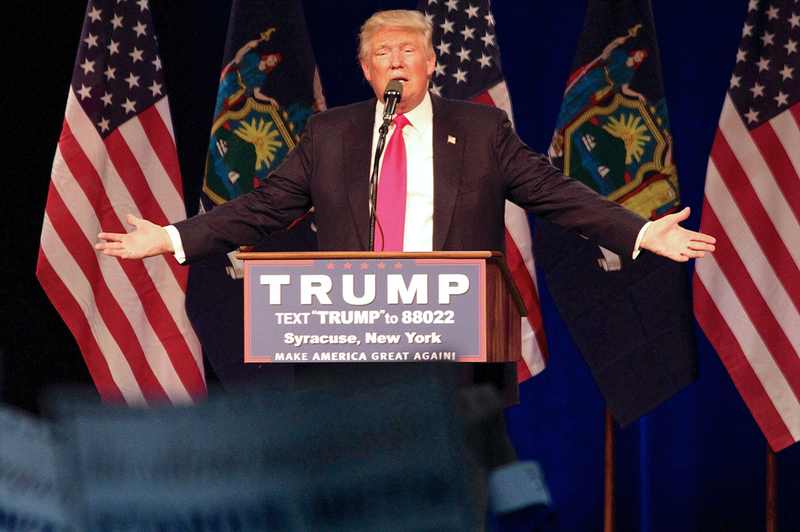
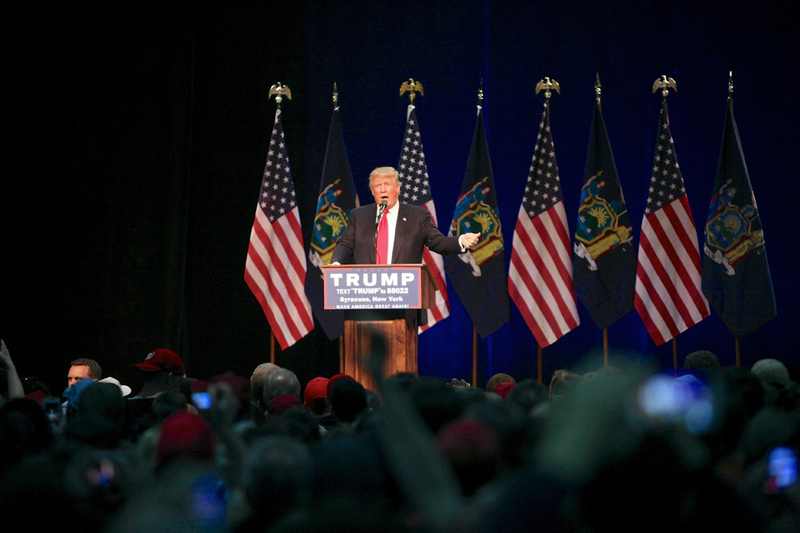
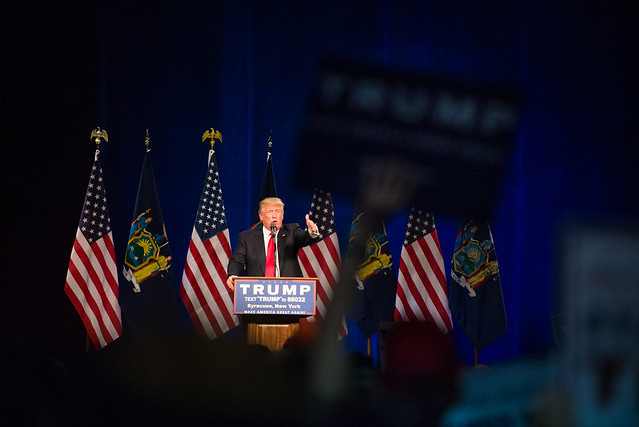
There is also a local echo. Trump last campaigned in Syracuse in April 2016, when thousands packed the Oncenter during his first presidential run. That history gives Friday's event a ready-made comparison, but it should not be overread: a presidential primary rally and a midterm event for a governor's race test different electorates and different forms of enthusiasm.
Who benefits—and who carries the risk
What the Bruce Blakeman Trump rally can deliver
For Blakeman, the benefits are concrete even without predicting a polling bounce. The rally places him in a national spotlight, creates fresh footage and campaign content, and gives supporters a shared event around which organizers can recruit. It can also help fundraising by introducing the candidate to donors who follow Trump more closely than New York state politics.
Republicans can reasonably argue that winning begins with turnout: a candidate who cannot excite the party's own voters will struggle to close any statewide gap. From that perspective, the rally is a rational use of the president's strongest political asset—his ability to draw attention and motivate a loyal base.
What Hochul can use against him
Democrats see the same event as evidence for their case. Hochul's campaign can use Trump's appearance to keep the race focused on a national figure who remains polarizing in New York, while asking swing voters whether Blakeman would govern independently. The more closely Blakeman identifies himself with Trump on stage, the easier it becomes for Hochul to connect the two in closing advertisements and speeches.
That does not mean the event is automatically a net loss for Blakeman. It means the value depends on the composition of the voters moved by it: how many previously unenthusiastic Republicans become likely voters, and how many persuadable voters react negatively. The rally's strategic payoff will not be measured only by attendance.
Trump endorsement Blakeman poll: the 51–30 split in context
A 21-point net negative is a warning, not a vote forecast
A September Siena Research Institute poll found that 51% of New York likely voters believed Trump's endorsement would negatively affect Blakeman's campaign, while 30% said it would have a positive effect. The difference is 21 percentage points.
That gap is politically significant because it suggests the endorsement carries broader perceived risk than benefit across the statewide electorate. But the finding is not the same as a head-to-head vote result, and it does not show that every respondent will vote primarily on the endorsement. It measures how likely voters assess one factor in the campaign.
The strategic challenge is therefore asymmetric. Blakeman needs the endorsement's positive effect to be concentrated among voters whose turnout or giving can change, while limiting damage among voters still open to persuasion. Hochul needs to turn a general negative perception into a specific reason to support her. Both campaigns still have to make that conversion.
What to watch tonight
Blakeman's role on stage
The first signal is how prominently Blakeman appears and how he uses the time. A speech centered on New York taxes, public services and executive competence would suggest an effort to borrow Trump's turnout power while retaining a state-focused identity. A speech built mostly around loyalty to the president would make the national alignment the campaign's defining choice.
How Trump frames the governor's race
The second signal is whether Trump gives voters a detailed case for Blakeman or places the candidate inside a broader national argument about the midterms. The distinction matters. A New York-specific endorsement may help Blakeman establish stakes in the governor's race; a largely national speech may energize the room without answering undecided voters' questions about Albany.
Crowd and messaging signals after 7 p.m.
Attendance claims should be treated carefully until supported by venue information or independent reporting. More revealing than a single crowd estimate may be the campaign's follow-through: whether it collects volunteer commitments, raises money, schedules Blakeman for additional central and upstate New York appearances, and keeps the rally's message in paid media.
Three scenarios for the final stretch
Scenario one: base energy becomes organization
If the rally produces volunteers, donations and repeatable local events, Blakeman may gain the operational lift Republicans want from Trump. That would not erase the state's partisan terrain, but it could improve the campaign's ability to identify and turn out supporters.
Scenario two: the endorsement defines the race
If coverage focuses primarily on the Trump-Blakeman alliance, Hochul will likely intensify her argument that the Republican's national ties are the central choice. Blakeman would then have to decide whether to lean further into the contrast or pivot quickly back to state issues.
Scenario three: a one-night surge fades
Large political events can dominate a news cycle without changing a race. If neither side converts Friday's imagery into a stronger organizing or persuasion campaign, the Trump New York rally October 2026 may become a vivid moment rather than a turning point. The evidence will come in the days after the speeches, not in the volume inside the hall.
Sources and reporting notes
- USA Today Network / lohud — rally schedule, venue, tickets and political context
- USA Today Network / lohud — governor's race context and campaign responses
- Democrat and Chronicle — Syracuse rally details and Blakeman appearance
- CNY Central / WUTV29 — GOP announcement and event timing
Reporting note: Schedule and attendance details may change. Crowd size and post-rally campaign effects are not stated as facts in advance. All photographs are file images from Trump's April 2016 Syracuse visit and do not depict the October 9, 2026 event.