Trump rejects Iran ceasefire
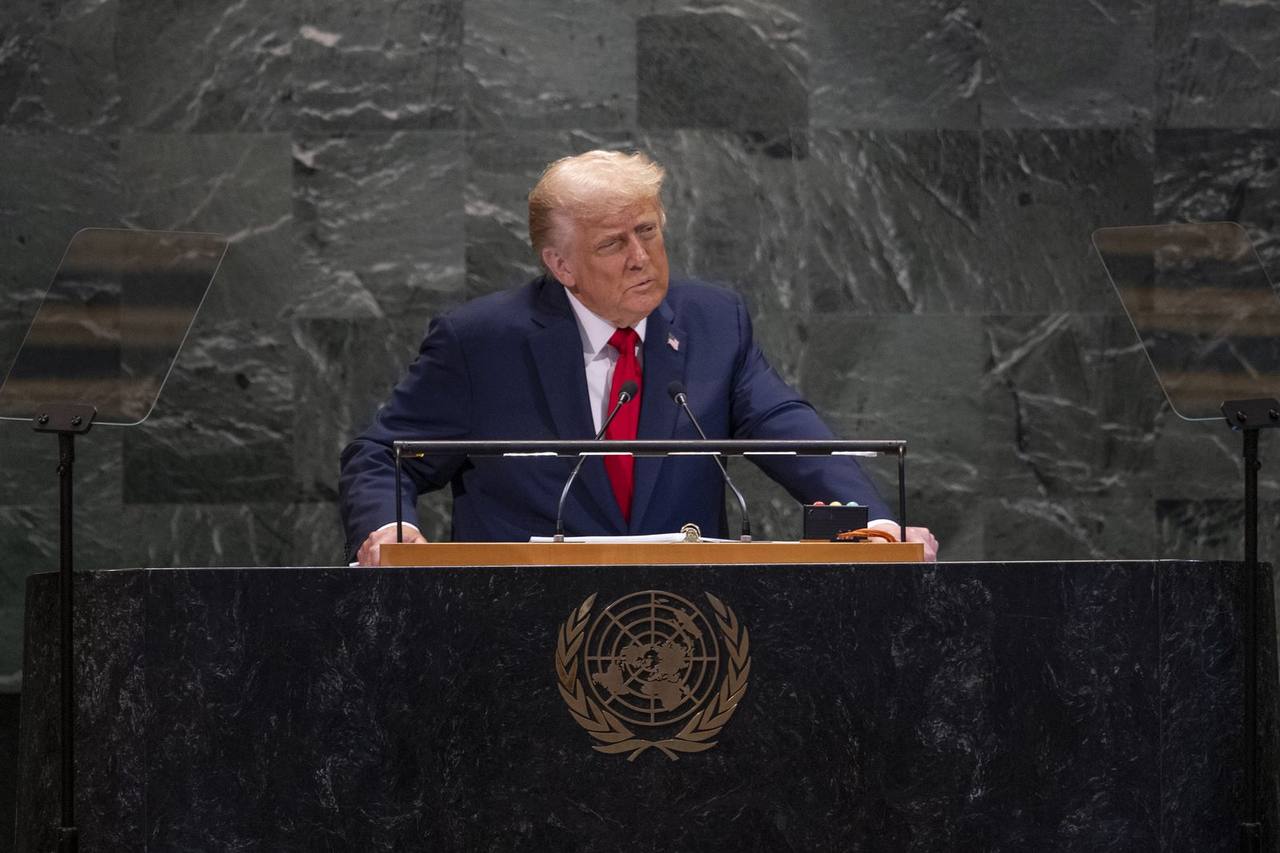
Trump rejects Iran ceasefire — and with it the most concrete off-ramp of the seven-month US–Iran war is gone. The Wall Street Journal reported Friday that President Donald Trump has rejected Tehran's proposal for a seven-day ceasefire, under which Iran would reopen the Strait of Hormuz and resume nuclear negotiations in exchange for an end to the American naval blockade of Iranian ports. Trump, the Journal reports citing US officials, is skeptical Iran would ever meet his demands and has told aides he expects the bombing campaign to resume after November's midterm elections.
The rejection lands one day after Iran's foreign minister publicly detailed the offer in New York — and it converts a week-long diplomatic timetable into an open-ended countdown. Where Tehran proposed sequencing, Washington now proposes pressure: no blockade lifted, no sanctions eased, no timeline accepted. The war, the Journal's account suggests, is settling into what it calls a liminal space between war and peace — and tilting back toward hostilities.
Why this matters
The Trump rejects Iran ceasefire decision matters most for what it does to the calendar. Diplomacy had a clock: seven days, with Hormuz reopening on day six and nuclear talks beginning on day seven. Now the only clock is electoral. By pushing any resumption of strikes past November's midterms, Trump has fused the war's tempo to the domestic political cycle — the exact thing he told the United Nations this week he does not do. The Journal quotes him insisting politics "don't enter his mind" in the Iran campaign. The timing he described to his own aides says otherwise, and the contradiction is the story: a president who declared victory in the war's earliest days, who negotiates in public and bombs in bursts, now scheduling the next burst for after Americans vote.
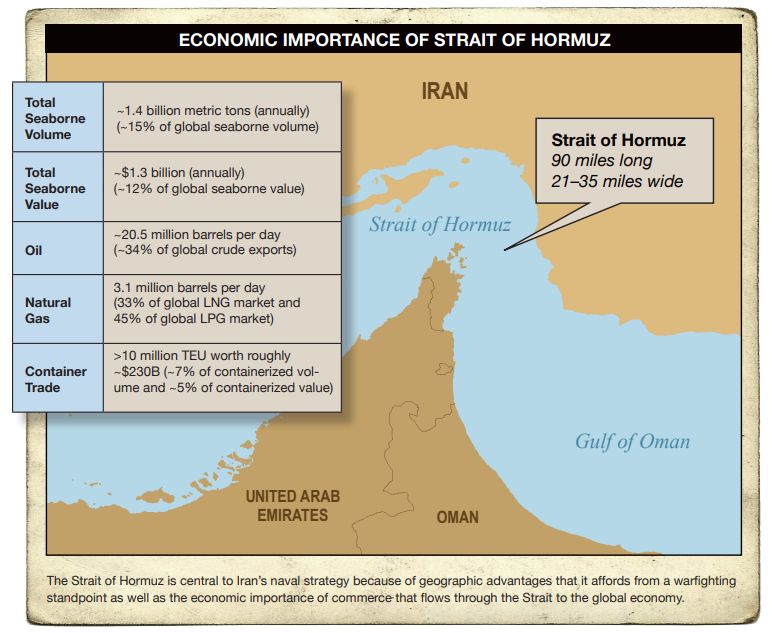
It matters for energy, too. The Strait of Hormuz normally carries about 20 million barrels of oil and petroleum products a day — roughly a quarter of seaborne oil trade and, by the US Office of Naval Intelligence's accounting, about a third of global crude exports. Talk of a deal had helped push Brent crude below $106 a barrel. A rejected deal reprices the risk premium in the other direction: traders must now price not only a still-closed waterway but a US president openly contemplating its violent reopening.
What the Wall Street Journal reported
The Journal's account, attributed to US officials, is precise about the decision and deliberately vague about what follows. Trump rejected the seven-day proposal outright. He told aides a renewed bombing campaign is "likely" after the November contests. But the officials could not say what scale of strikes he is contemplating — and they stressed he is reluctant to resume major combat operations, partly because the United States wants to conserve dwindling munitions for other contingencies. That reluctance is doing quiet work in the story: it suggests the "likely" bombing may mean limited strikes rather than the campaign of destruction Trump periodically threatens.
Two other details carry weight. First, US officials told Tehran and its mediators that Trump has "no intention" of lifting the naval blockade — the single concession Iran wanted most. Second, US-led efforts to escort tankers through the strait despite Iranian threats have reduced Washington's urgency to reach any agreement at all. Reuters, meanwhile, said it could not immediately independently verify the Journal's account, and the White House did not respond to requests for comment. The rejection is reported, not announced — which leaves room for it to be walked back, and room for it to harden.
The "Trump Strait" post
Hours before the Journal's report circulated, Trump did his own communicating. On Friday night he posted a graphic to Truth Social showing a map of the Persian Gulf with the Strait of Hormuz circled under a banner reading "NEW U.S. Territory" — the strait itself labeled in the image, which the New York Post characterized as Trump branding the waterway the "Trump Strait."
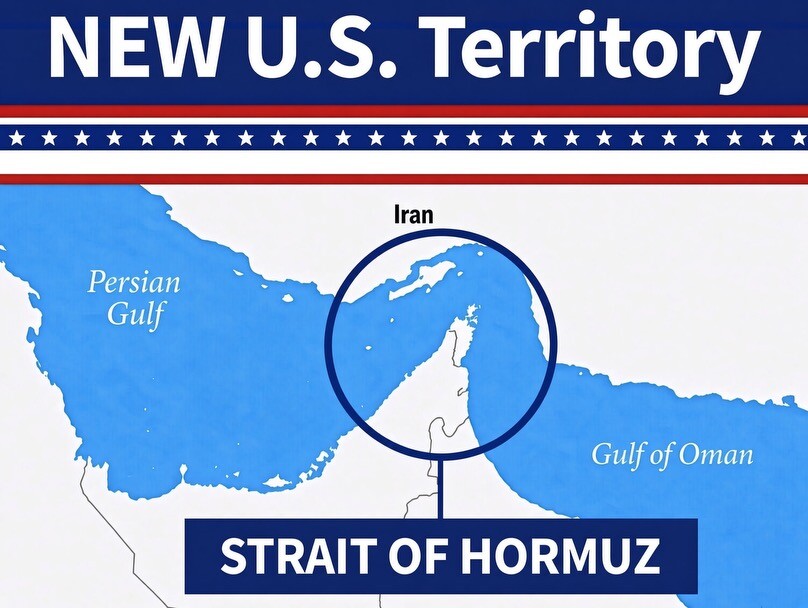
Dismiss it as trolling and you miss the signal. This is how Trump has run the Iran file for seven months: maximalist public theater — threats to "annihilate" Iran at the UN General Assembly this week, earlier vows to destroy Iranian "civilization" — layered over a private posture that alternates between deal-seeking and strike-planning. The map post does two things at once: it tells Tehran the strait is, in Trump's telling, already under American dominion, and it tells his domestic audience the blockade is working. Both claims are political before they are legal. The Strait of Hormuz is not US territory under any law Trump can post into existence. But as a negotiating signal, the meaning is plain: Washington intends to dictate the terms on which the waterway reopens, if it reopens at all.
What Tehran put on the table
Iran's offer, conveyed through Qatar and confirmed by Foreign Minister Abbas Araghchi to reporters in New York on Friday, was the most structured de-escalation proposal of the war. The mechanics: four to five days of initial steps, the strait reopening on day six, formal nuclear negotiations beginning on day seven. Iran's conditions: an end to the US naval blockade — in place since April 13, according to prior Signal Post News reporting — waived oil sanctions, release of frozen Iranian assets estimated in reporting at no less than $12 billion, and a ceasefire extending to Lebanon.
"The choice now rests with the United States," Araghchi said. "Iran does not accept coercion, threats, or intimidation, and Iran will not surrender its sovereign rights under pressure." Washington's answer, delivered through the Journal's sourcing rather than a podium, is that the choice has been made: no. A White House official told Reuters this week that "crushing sanctions" and "one of the most successful blockades in history" have crippled Iran's economy and left the country broke — and that Trump is content to let the "inevitable Iranian collapse" play out rather than be "played" by the regime.
Who wins and who loses
Tehran keeps its leverage — and its bleeding
Iran retains the one card that has always mattered: physical control of the strait's northern shore and the ability to harass shipping. But every week the blockade holds, the economic vise tightens. Airlines grounded, oil exports strangled, $12 billion frozen. The seven-day plan was Tehran's attempt to convert maritime leverage into economic oxygen before the oxygen runs out. Its rejection leaves Iran with leverage it cannot spend and an economy it cannot sustain — the worst of both positions.
Washington bets the blockade will do the bombing's work
The administration's theory is legible: sanctions plus blockade equals collapse, and collapse equals a better deal than any ceasefire could produce. The Senate's 50–49 rejection of the Iran war-powers resolution this month gives Trump a free operational hand, and escorted tanker transits reduce the cost of waiting. The risk is the one the Journal's officials name themselves: "dwindling munitions." A strategy that depends on a credible threat of renewed bombing needs the munitions to make the threat real — and a president reluctant to spend them.
Oil markets and Asian importers pay the uncertainty tax
Every party that buys Gulf crude — Japan, South Korea, India, China — now faces a winter of repriced risk. The brief Brent dip below $106 on deal hopes shows how much of the current price is a diplomacy discount. Remove the diplomacy and the discount evaporates. Refiners, shippers and insurers must plan around a strait that could reopen by negotiation, be forced open by escorts, or become a shooting gallery again — three futures with wildly different cost structures.
The mediators lose altitude
Qatar's channel carried the proposal; its failure to land weakens the intermediary without killing the channel. Mediators survive failed offers — but each failed round narrows what they can credibly promise both sides. Expect Doha to keep working the margins: smaller, technical arrangements on shipping safety rather than grand seven-day bargains.
What the numbers actually mean
Seven days was the length of Iran's proposed implementation window — not a ceasefire in force. November is when the midterms happen, and therefore when the bombing is "likely" to resume: the war's next phase is dated to an election, whatever Trump says about politics not entering his mind. April 13 is when the blockade began — five months of strangulation that Washington calls one of the most successful blockades in history. $12 billion is the reported floor for frozen Iranian assets Tehran wants released. 20 million barrels a day is the normal flow through Hormuz — the volume at stake in every paragraph of this negotiation. And 50–49 is the Senate vote that left the president's war authority untouched, which is why none of this requires Congress's permission.
The midterm clock is now the strategy
Step back and the pattern is unmistakable. Trump threatened Iran with "annihilation" at the UN on Tuesday. He rejected its ceasefire on Friday. He told aides the bombs can wait until after November. This is coercive diplomacy scheduled around a domestic election — pressure maximized when voters are watching, violence deferred until they have voted. It is also, paradoxically, a form of restraint: a president who wanted war without limit would not be husbanding munitions or waiting on midterms.
The honest reading is that both things are true. The blockade is the strategy — slow, deniable, cumulative. The bombing threat is the accelerant — timed for maximum political utility. And the "Trump Strait" map is the brand. Whether the combination produces Iranian capitulation or Iranian defiance is the question the next six weeks will answer. Tehran's hard-liners, who never wanted the seven-day plan, will read the rejection as vindication. The moderates around President Masoud Pezeshkian, who staked credibility on diplomacy, have been left with nothing to show for it. That internal Iranian shift — from the men who offered a deal to the men who warned against offering one — may be the rejection's most consequential effect.
What happens next
Three scenarios, in descending order of likelihood. First, the pressure play: the blockade grinds on, escorted tankers keep a thin flow moving, and both sides return to the Qatar channel with smaller asks — shipping-safety arrangements, not grand bargains. Second, the post-midterm strike: Trump follows through on the "likely" bombing with limited strikes designed to reset the negotiation rather than to destroy — the pattern of his earlier bursts. Third, the miscalculation: a blockade incident or a Hormuz harassment gone wrong triggers the major combat operation everyone claims to want to avoid. Watch the munitions math, the Brent price, and whether Steve Witkoff's channel stays warm. If the channel goes quiet and the escorts thicken, the countdown has started.
Sources
- The Wall Street Journal — Trump rejects Iran's seven-day ceasefire proposal; renewed bombing "likely" after midterms, per US officials.
- New York Post — account of the WSJ report, the Truth Social "Trump Strait" map post, and the UNGA "annihilation" warning.
- IANS — Araghchi's on-record seven-day timeline via Qatar; US officials on munitions conservation and the blockade.
- Wikimedia Commons file page for the Truth Social "NEW U.S. Territory" Strait of Hormuz graphic.
- The White House — official gallery of Trump's September 23, 2026 UN General Assembly address.
Internal links
- Iran's seven-day Hormuz plan: Araghchi's offer explained
- Trump's "annihilation" warning to Iran at the UN General Assembly
- Senate rejects the Iran war-powers resolution 50–49
Reporting cutoff: September 25, 2026. The rejection is reported by the Wall Street Journal citing US officials — not formally announced — and Reuters said it could not immediately independently verify the Journal's account. Quoted statements are attributed to their speakers.