Trump Ohio rally October 2026
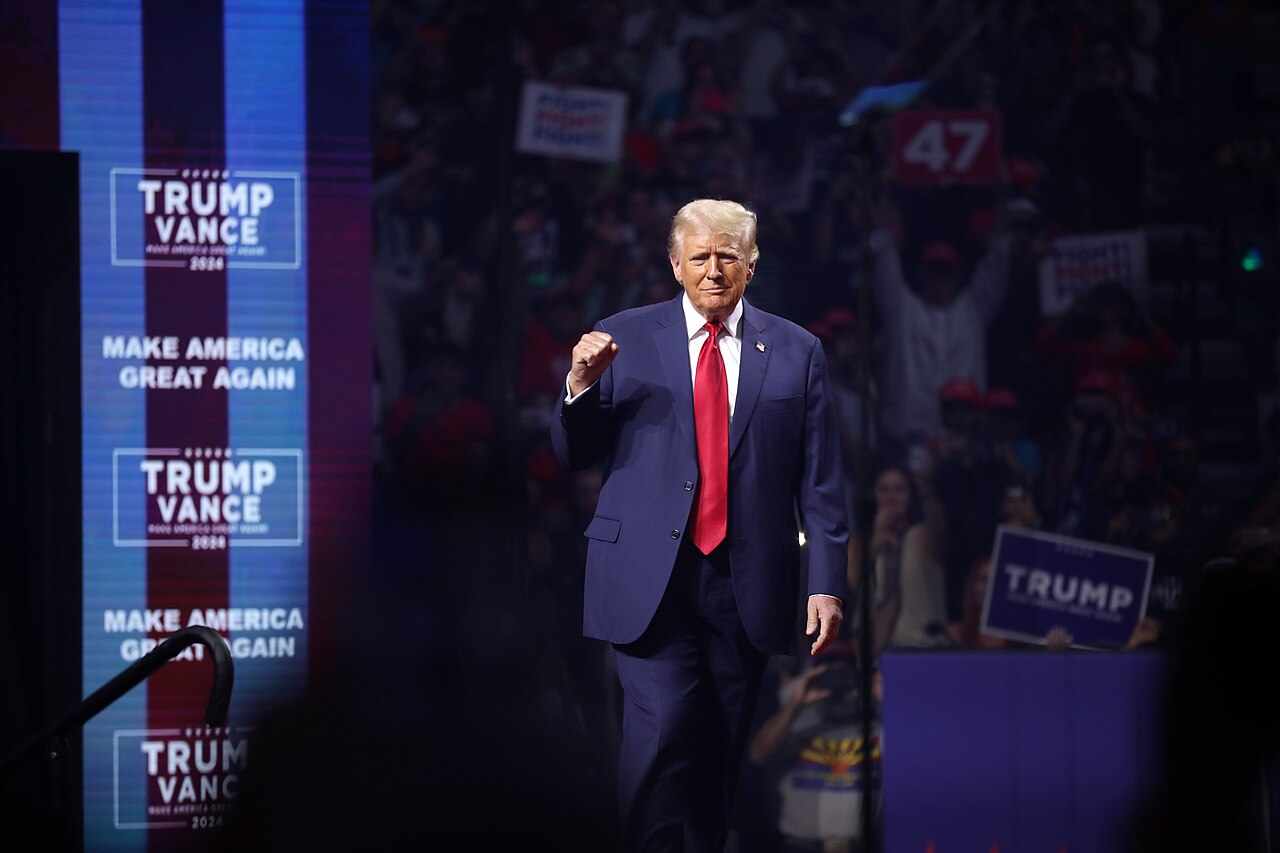
VANDALIA, Ohio — The Trump Ohio rally October 2026 brings President Donald Trump to Butler High School in this Dayton suburb on Saturday, exactly one month before voters decide two races with national consequences. The Republican National Committee says the event begins at 5:30 p.m. Eastern and Trump is scheduled to take the stage at 7 p.m. He will appear with Republican Sen. Jon Husted and other GOP politicians.
The visit lands at an uncomfortable moment for a party that has treated Ohio as a dependable red state. A new Suffolk University/USA TODAY Ohio Network survey of likely voters puts the Trump approval rating in Ohio at 35%. The Cincinnati Enquirer reports that high gas prices and broader economic anxiety are weighing on voters even though Trump decisively carried Ohio in all three elections in which he appeared on the ballot.
Ohio's ballot pairs an appointed Republican senator, Husted, against former Democratic Sen. Sherrod Brown and Republican Vivek Ramaswamy against Democrat Dr. Amy Acton for governor. Both contests are described as close. That turns the Vandalia Ohio rally into more than a turnout event: it is a real-time test of whether Trump can still transfer his own durable Ohio coalition to candidates when his name is not on the ballot.
Trump Ohio rally October 2026: schedule and stakes
The Republican event page lists the Butler-Vandalia Student Activity Center as the venue. News reports list the program at 5:30 p.m. and Trump's scheduled appearance at 7 p.m. The Columbus Dispatch first reported the stop on September 27 and framed it around the state's heated Senate and governor contests.
Those two races give Trump different assignments. Husted needs the president to energize Republican voters in a Senate election with implications far beyond Ohio. Ramaswamy needs help consolidating a coalition after first running against Trump for president and then spending two months in Trump's Department of Government Efficiency. The president must promote both men without making their races solely a referendum on his own standing.
That balance is especially difficult when voters are focused on household costs. Recent Reuters and USA Today reporting has connected Trump's broader approval weakness to cost-of-living anxiety and to economic fallout from the U.S.-Israeli war on Iran, which has driven oil and gasoline prices higher. A rally can sharpen partisan contrast and increase enthusiasm. It cannot lower a family's fuel bill before Election Day.
Why this matters: a red-state warning for Trump's second term
Ohio matters because it is not supposed to be the difficult state in the Republican map. Trump transformed what political professionals long called the quintessential battleground into one of the clearest demonstrations of his appeal to working-class and small-city voters. Statewide contests followed the movement toward Republicans. If the GOP must spend heavily and deploy a sitting president to defend both a Senate seat and the governorship here, strategists in more evenly divided states will see a warning.
The 35% approval figure is not a forecast of either race. Approval surveys measure a president; ballots compare named candidates, campaigns and local records. Yet 35% creates a severe conversion problem. Husted and Ramaswamy cannot win only with voters who currently approve of Trump. They need some voters who disapprove of him, remain undecided about him or intend to separate their judgment of state candidates from Washington.
That makes Ohio an early measure of Trump's second-term mandate. A strong Republican performance would suggest that discontent with prices can coexist with continued loyalty to GOP candidates. A Democratic breakthrough would suggest that economic dissatisfaction is starting to overpower the cultural and partisan realignment that Trump built. The symbolism extends beyond two offices: a stronghold that begins behaving like a battleground forces the president's party to spend time and money where it expected security.
University of Dayton political scientist Christopher Devine captured that symbolic pressure in comments to the Enquirer. Trump, he said, takes pride in having shifted Ohio, “the quintessential battleground state,” and would be “especially sensitive to seeing this state, which is really a symbol of his political success, moving the opposite direction.”
Ohio's journey from battleground to Trump stronghold
Trump's three decisive Ohio victories created a simple political story: the old swing state had become reliably Republican. The appeal was not merely partisan. Trump made Ohio evidence for a national argument that industrial communities, nonmetropolitan voters and working-class constituencies had moved away from Democrats. Republican statewide gains reinforced that conclusion.
But political realignments are not permanent contracts. The same voters who rewarded a promise of economic disruption can punish its costs. Gasoline is especially potent because its price is posted publicly, encountered repeatedly and easily connected to national leadership. Broader worries about employment, borrowing and everyday expenses can turn a national approval problem into down-ballot drag even when voters remain culturally aligned with the GOP.
The critical comparison is therefore not with an invented polling average but with Ohio's recent identity. Trump won when he was personally on the ballot; the 2026 question is whether the coalition appears for Husted and Ramaswamy while evaluating an administration already in power. Midterms often test intensity more than identity. If disappointed Republicans stay home while motivated Democrats vote, a red-leaning electorate can produce a close result without undergoing a permanent ideological conversion.
Ohio Senate race 2026: Husted, Brown and the chamber math
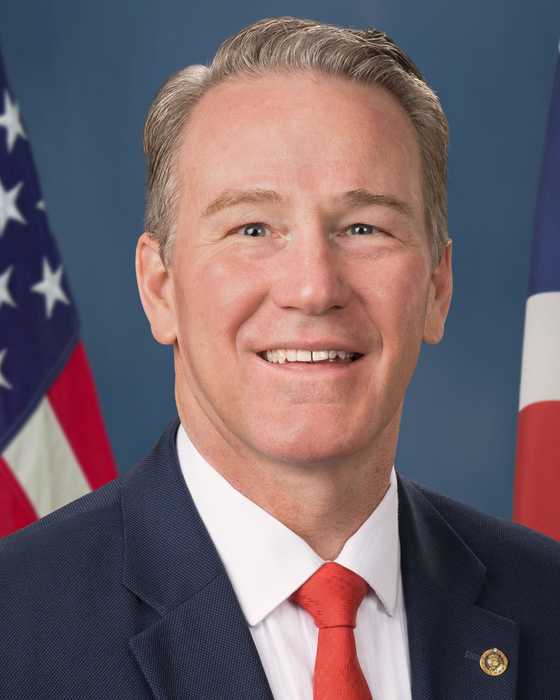
The Ohio Senate race 2026 carries unusual weight because it is both a special election and a contest over national power. Gov. Mike DeWine appointed Husted after JD Vance became vice president in 2025. The November 3 winner serves the final two years of Vance's term rather than beginning a full six-year term.
The Jon Husted Sherrod Brown polls are described as close, and both parties are flooding the state with advertising money. That spending is itself information. Parties concentrate late resources where persuasion or turnout can still change the outcome. Ohio's cost is not only the money spent there; it is the money unavailable for another competitive race.
For voters asking which party controls the Senate in 2026, Ohio belongs near the center of the answer. Republicans hold narrow congressional majorities. If Husted keeps the seat, the GOP preserves an important part of its firewall for the remainder of Trump's term. If Brown wins, Democrats gain both a seat and a proven statewide figure, tightening the arithmetic in every other contest. In a closely divided chamber, one race can alter which party sets the agenda, confirms nominees and controls committee leadership.
Husted's advantage is alignment with a Republican trend and the mobilizing power of a presidential visit. His vulnerability is that an appointee must build the independent bond with voters that an elected incumbent normally develops over years. Brown's advantage is familiarity and the ability to frame himself around Ohio rather than the national Democratic brand. His vulnerability is the same redward movement that displaced the state's old battleground reputation.
Republicans can argue that one approval survey should not be confused with a head-to-head election and that Trump remains uniquely effective at turning out voters who distrust conventional polling and institutions. Democrats can argue that the need for a rescue rally and heavy ad spending shows the Republican firewall is already under stress. Both claims will be tested not by the crowd in the gym but by whether each campaign can convert attention into ballots.
Vivek Ramaswamy Ohio governor bid meets the Amy Acton race
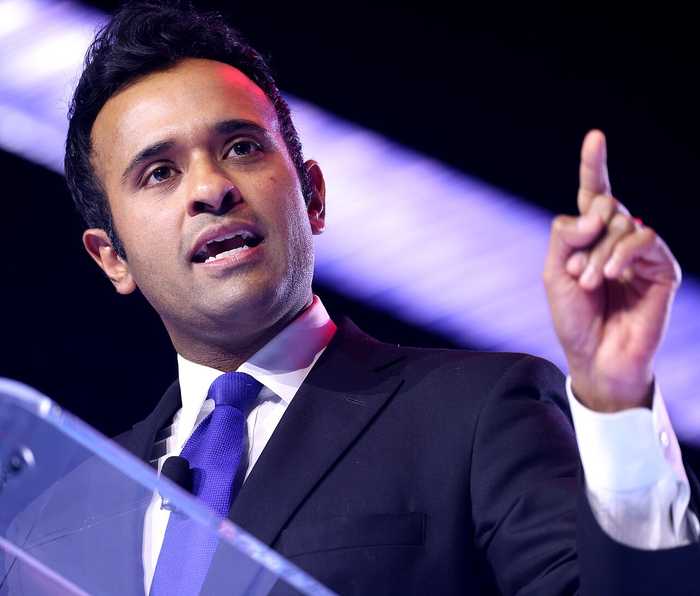
The Vivek Ramaswamy Ohio governor campaign presents a different version of the same transfer problem. Ramaswamy has national recognition, ran against Trump for president and later worked for two months in the administration's Department of Government Efficiency. That biography gives him access to Trump's movement but also ties him closely to the administration's record.
The Amy Acton governor race gives Democrats a chance to make the contest about state competence, economic pressure and an alternative governing style rather than solely about the president. Acton's path benefits if dissatisfaction with Trump becomes a broad judgment about Republican control. Ramaswamy benefits if voters separate frustration over prices from their preference for Republican leadership or see his outsider profile as a reason to stay with the party.
A Trump appearance can help Ramaswamy by unifying Republicans and reminding primary-era skeptics that the two men are now allies. It can hurt if the event crowds out the candidate's own case for governing Ohio. The strategic objective is endorsement without eclipse: Ramaswamy needs the president's voters, but he also needs voters who want to hear what the next governor would do beyond defending Trump's record.
Who benefits and who loses if Ohio is tightening
Brown benefits first from a nationalized economic debate. A low presidential approval figure allows him to ask voters to treat the Senate race as a check on the administration. The closer the contest, the more valuable his previous statewide profile becomes because Democrats need fewer voters to learn a new candidate from scratch.
Acton benefits from shared turnout. Senate and governor campaigns can reinforce each other when the same voters are motivated by prices and a desire for balance. A strong Brown operation can help the gubernatorial ticket, and a competitive governor's race can prevent Democratic voters from treating the Senate election as the only reason to participate.
Husted faces the clearest structural risk. His seat affects the Senate's balance, and his route to office began with appointment rather than a statewide election to the chamber. He needs Trump's turnout organization while avoiding total ownership of every unpopular national condition.
Ramaswamy risks losing control of his own narrative. The more the contest is cast as a verdict on Trump, the less space remains for his state-focused agenda. Yet distancing himself would risk alienating the voters most likely to respond to Saturday's rally. That is the central dilemma for a Trump-aligned candidate in a close race.
The Republican Senate firewall loses flexibility. Every additional dollar and presidential visit needed in Ohio reduces resources available elsewhere. Democrats gain options if Ohio stays close; Republicans regain them if the rally and subsequent advertising reopen a clear lead.
Trump himself has the most symbolic exposure. A victory would let him argue that Ohio remains proof of his movement's durability. A loss would not erase three presidential wins, but it would give critics a powerful counterexample: the state that best represented his rise had become competitive under the weight of his governing record.
What 35% can and cannot tell us
The Suffolk/USA TODAY Ohio Network result is a warning light, not an election result. Approval is different from vote choice. Some likely voters who dislike the president may still support Husted or Ramaswamy because of taxes, judges, abortion, public safety or party identity. Others may approve of Trump yet prefer Brown or Acton for state-specific reasons. Survey timing, question wording and the composition of likely-voter models can also affect the number.
Even with those cautions, 35% is politically consequential because it changes the candidates' required coalition. A politician linked closely to a president at that level cannot rely on presidential approval alone. The campaign must persuade cross-pressured voters, make the opponent unacceptable, or produce a turnout advantage large enough to offset defections. That is why the ads and the rally matter: they are tools for rebuilding the missing bridge between Trump's base and a winning statewide majority.
The spending surge also reveals how both parties read the uncertainty. If either side believed the result was settled, the marginal value of another advertisement would fall. Continued investment means each sees a plausible route. The proper conclusion is not that Democrats have already reclaimed Ohio or that Republicans are certain to hold it. It is that the price of treating Ohio as safe has risen sharply.
What happens next in the final month
Scenario one: the rally consolidates the GOP. Trump gives Husted and Ramaswamy a turnout jolt, Republican voters who were disengaged return, and the campaigns shift the closing argument toward party control. In that case, Saturday becomes the point when a scare hardened into a defense.
Scenario two: the visit changes attention but not economics. The crowd is large and the coverage dominant, yet voters keep returning to gasoline and household costs. Brown and Acton then spend the final month linking Republican candidates to the administration while presenting themselves as Ohio-focused alternatives.
Scenario three: the races split. Ohio voters could choose different parties for Senate and governor, judging Husted's appointment, Brown's history, Ramaswamy's national profile and Acton's state appeal separately. A split decision would complicate sweeping claims that the state either rejected or reaffirmed Trumpism.
Scenario four: Ohio pulls more presidential time. If private polling remains close, Trump may return or deploy surrogates while Republicans add advertising. That can protect Ohio, but it carries an opportunity cost across a national map where narrow congressional majorities are also at stake.
The next reliable indicators will be post-rally polling, changes in advertising strategy, candidate travel and whether national groups keep treating Ohio as a must-defend state. Crowd size will show enthusiasm among attendees. It will not answer how many skeptical voters moved.
The bottom line for the Ohio midterm elections 2026
The Ohio midterm elections 2026 have turned a familiar Trump strength into a measure of vulnerability. The president arrives with a proven record of winning the state, but he is campaigning for other names under different conditions. Husted and Ramaswamy need his coalition at the same moment that a prominent survey says many Ohio voters disapprove of his performance or remain outside his approval base.
For Democrats, competitiveness creates an opening, not a guarantee. Brown and Acton still have to convert dissatisfaction into trust and turnout. For Republicans, a red trend remains an asset, not an automatic result. They must persuade voters that frustration with costs is not a reason to hand power to the other party.
That is why Vandalia matters. The rally is a stress test for Trump's ability to turn personal loyalty into a governing mandate one month before Election Day. If his candidates stabilize, Ohio remains the stronghold he built. If they do not, the state will send a message much larger than its two races: the political realignment of the last decade can move in both directions.
Sources
- Cincinnati Enquirer / USA TODAY Ohio Network — rally participants, schedule, 35% approval survey and Christopher Devine interview.
- Columbus Dispatch — rally announcement, Senate appointment background, close races and advertising context.
- Republican National Committee event page — official Vandalia rally listing and venue.
Reporting cutoff: October 3, 2026 at 2:14 a.m. PDT. The event was scheduled for later Saturday; this analysis does not describe remarks or attendance that had not yet occurred.