Trump Nobel Peace Prize snub
The president amplified an attack branding the South African jurist an enemy of America and Israel, while Israel delivered its own blistering condemnation. Behind the rhetoric is a deeper collision over international courts, Gaza and the limits of power.
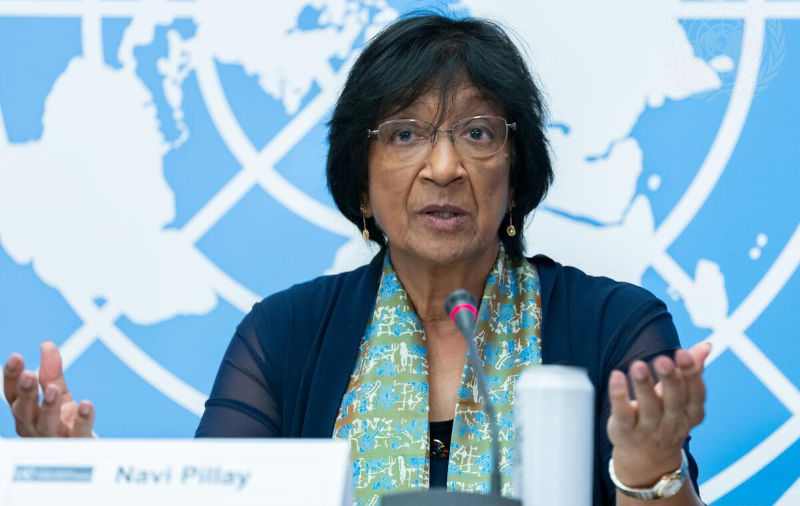
WASHINGTON — The Trump Nobel Peace Prize snub became an international political fight Friday after President Donald Trump reposted a statement denouncing 2026 winner Navi Pillay and Israel's foreign ministry issued an extraordinary attack on the Norwegian Nobel Committee's choice. Trump had not commented in his own words as of Friday morning. Instead, he amplified a statement from the Alabama- and Georgia-based Schoen Law Firm calling Pillay an “unabashed hater of America and Israel” and accusing her of celebrating terrorists, rewarding Hamas and leading a “phony ‘investigation’” that concluded Israel committed genocide in Gaza.
Israel's foreign ministry went further, saying Nazi propaganda chief Joseph Goebbels was “certainly applauding from hell.” Pillay, told of her victory while attending a human-rights lawyers' conference in Nuremberg, Germany, received a long ovation and answered the political tension with a joke: “If you clap a little bit more, I may share this prize with Trump.” The line referred to Pakistani Prime Minister Shehbaz Sharif's nomination of the U.S. president.
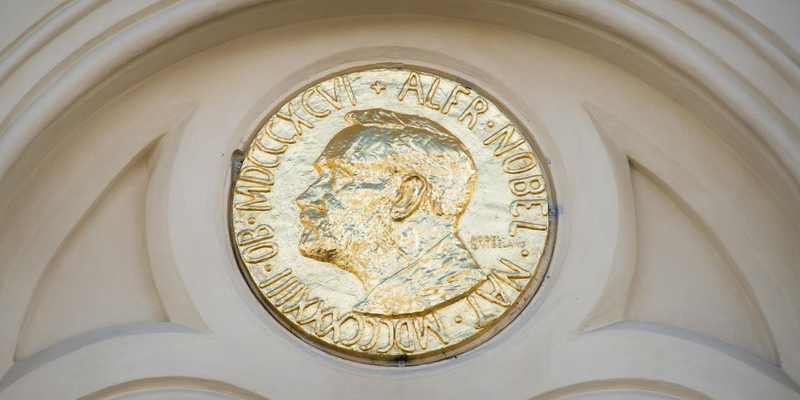
The Norwegian Nobel Committee said the prize recognized Pillay, 85, for advancing peace through international law. Chair Jørgen Watne Frydnes warned that “the system of international law is under tremendous pressure and its institutions are under attack,” describing “a shift towards power politics at the expense of legal frameworks.” The committee selected her from 287 candidates. The ceremony is scheduled for December 10 in Oslo.
What happened after the Nobel Peace Prize 2026 winner was announced
Trump reposts Pillay statement but does not yet speak in his own words
The distinction between a repost and a personal statement matters. By amplifying the law firm's message, Trump placed its claims before his audience and made them part of the political response. But as of Friday morning, he had not attached his own words to the verdict or said what action, if any, he wanted the United States to take because of it.
The Schoen statement argued that the committee had chosen someone hostile to the United States and Israel. It linked Pillay's work on Gaza to a broader indictment of the Nobel institution, including the committee's 1994 award to Yasser Arafat alongside Israeli leaders Yitzhak Rabin and Shimon Peres. Supporters of that criticism see Pillay's record as evidence that the committee elevated a deeply contested legal judgment while rejecting a president who says his diplomacy ended wars.
Pillay's supporters draw the opposite conclusion. They say the award honors a jurist who spent nearly six decades applying law to apartheid, genocide, sexual violence and state power — precisely when governments are attacking the legitimacy of the courts and commissions charged with investigating them. The committee's language made that institutional argument explicit without naming Trump.
Israel reaction to the Nobel Peace Prize centers on Gaza
Israel's response cannot be separated from Pillay's 2021–2025 leadership of the UN Independent International Commission of Inquiry on the Occupied Palestinian Territory. In September 2025, that commission assessed that Israel had committed genocide in Gaza. Israel rejects the assessment and has long argued that UN bodies apply a discriminatory standard to the country, minimize Hamas's conduct and turn disputed legal claims into political weapons.
Supporters of the commission answer that allegations against any state must be tested against evidence and law, and that dismissing investigators because their findings are politically unwelcome undermines the purpose of independent institutions. The Nobel decision did not legally validate every conclusion Pillay has reached. It rewarded a career built around the proposition that international rules should constrain all states, including powerful ones.
Who is Navi Pillay, and why did the Nobel Committee choose her?
Navi Pillay Nobel Peace Prize 2026: a career from apartheid to The Hague
Navanethem “Navi” Pillay was born into a family of Indian Tamil origin in Durban during apartheid. She became a lawyer in 1967, represented people targeted by the apartheid system and later became the first Black woman appointed to South Africa's High Court. Her career then moved into the international judiciary.
At the International Criminal Tribunal for Rwanda, Pillay helped establish that rape and sexual violence can constitute acts of genocide — a landmark in the prosecution of mass atrocity. She later served as an International Criminal Court judge and as UN High Commissioner for Human Rights from 2008 to 2014. She co-founded Equality Now and subsequently led the UN inquiry on the occupied Palestinian territory.
Pillay now serves as a judge in the International Court of Justice case alleging genocide by Myanmar. That sequence explains the Nobel Committee's choice: civil-rights advocacy under apartheid, criminal accountability after Rwanda, human-rights leadership at the United Nations and adjudication at the world's principal court. Her supporters see continuity. Her critics see an international legal establishment that has accumulated power without sufficient democratic accountability.
Trump's campaign for the prize
The “great discredit” warning and eight-conflict claim
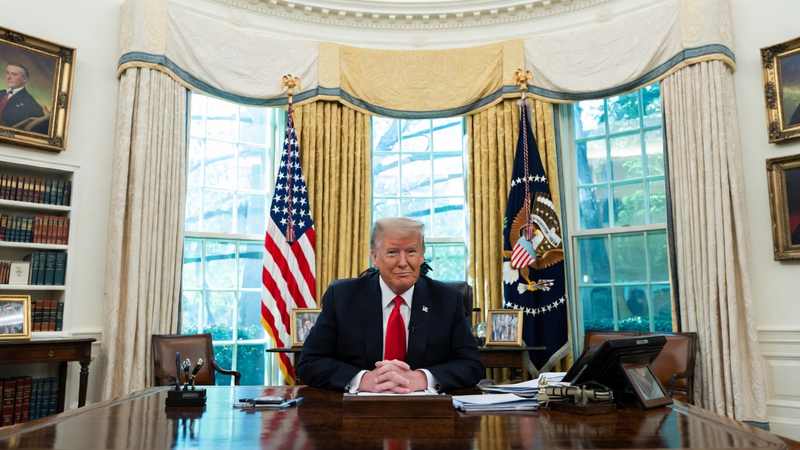
Trump did not conceal his interest in the award. In the Oval Office on October 7, he said it would be “a great discredit” to the committee if it passed him over. Representative Anna Paulina Luna was among the allies who formally nominated him, and Sharif's nomination gave the campaign an endorsement from a foreign head of government.
The president says he helped resolve eight conflicts after returning to office in January 2025. He has pointed to the Israel–Hamas war, the Iran–Israel confrontation over Tehran's nuclear program and negotiations over Russia's war in Ukraine, among other cases. Supporters argue that a peace prize should reward political leverage that halts fighting, even when agreements are imperfect, and they say Trump's willingness to pressure allies and adversaries produced openings conventional diplomacy did not.
Critics challenge both the count and the word “resolved.” Several conflicts Trump cites still involve active fighting, fragile ceasefires, incomplete settlements or negotiations that have not produced durable peace. A useful test is not whether an announcement was made, but whether violence stopped, parties complied, civilians were safer and a political settlement endured. By that measure, the scale of Trump's claim remains contested.
The long shadow of Barack Obama's 2009 Nobel
Trump's Nobel pursuit has always carried the comparison with Barack Obama, who received the prize in 2009 less than a year into his presidency. Critics of Obama's award said it rewarded aspiration before accomplishment. Trump and his allies have repeatedly invoked that decision as evidence that the committee applies a political double standard.
The comparison cuts in two directions. It helps explain why Trump's supporters view rejection as institutional hostility rather than a routine choice among hundreds of nominees. It also warns against treating the prize as a scorecard for one president. The committee often uses the award to endorse a principle, movement or institution it believes is in danger. In 2026, it chose international law.
Why this matters
This is more than a celebrity contest between a president and a jurist. The award and the backlash expose two competing ideas of how peace is made. One emphasizes executive power, pressure, dealmaking and the capacity of a dominant state to force movement. The other emphasizes law, courts, evidence and rules designed to bind strong and weak states alike.
Those approaches can complement each other: agreements need political power, and lasting peace usually needs rules. Friday's response showed how far apart their advocates have moved. The Nobel Committee described legal institutions as being under attack. Trump's repost and Israel's statement treated one of international law's most prominent figures as proof those institutions are biased and hostile.
The decision is also widely read as a rebuke to the Trump administration's campaign against the ICC after the court issued an arrest warrant for Israeli Prime Minister Benjamin Netanyahu. The United States and Israel are not ICC members and reject the court's jurisdiction in the matter. The court's supporters say member states created it precisely so grave allegations could be investigated even when powerful governments object. Read our separate analysis of the U.S.–ICC sanctions confrontation after Pillay's win.
Who the choice rewards — and who it rebuffs
International-law institutions gain a symbolic shield
Pillay's award gives courts, investigators and human-rights lawyers a globally recognized defender at a moment when they face sanctions, funding pressure and accusations of politicization. A Nobel medal does not protect an institution's bank account or compel a government to cooperate. It can, however, raise the reputational cost of dismantling or isolating it.
The choice also rewards a particular path to peace: accountability after atrocities, legal recognition of sexual violence and the insistence that governments answer allegations with evidence rather than immunity. That is why Pillay's Rwanda work may prove more enduring in the Nobel record than the immediate dispute over Gaza.
Trump's candidacy and the U.S. right take the public rebuff
For Trump and his allies, the decision delivers the opposite message. Their case focused on results attributed to presidential leverage; the committee instead honored a figure associated with institutions the administration regards as overreaching. Even without an explicit anti-Trump statement, the symbolism is difficult to miss.
That does not prove the committee chose Pillay merely to reject Trump. With 287 candidates, it had many alternatives, and Pillay's career predates Trump's current presidency by decades. Still, the chair's warning about power politics placed the award squarely inside the debate Trump represents. Intent and interpretation are not the same, but both shape the fallout.
What supporters and critics each say
Supporters of Pillay argue that her record joins courtroom innovation with long public service, from challenging apartheid to building the law of genocide and defending human rights institutions. They see the award as a warning that attacks on courts can leave victims without recourse.
Critics of Pillay focus on the Gaza commission and say her work reflects a one-sided UN system that prejudges Israel while failing to give sufficient weight to terrorism and self-defense. They see the prize as political validation of contested accusations rather than neutral recognition of law.
Supporters of Trump say a leader who brought adversaries to negotiations and claims eight conflict breakthroughs deserves recognition more than career officials. Critics of Trump answer that diplomacy should be measured by durable outcomes, not the number of disputes attached to a presidential claim, and that sanctions on courts undermine the legal order the Nobel Committee chose to defend.
What the numbers say
287 candidates, one 85-year-old winner and eight disputed peace claims
- 287 candidates were considered by the Norwegian Nobel Committee, underscoring that the choice was not a two-person ballot between Trump and Pillay.
- 85 years old: Pillay receives the award after a legal career that began in 1967, giving the committee nearly six decades of work to assess.
- One historic judicial first: she became the first Black woman appointed to South Africa's High Court.
- Eight conflicts claimed: Trump uses that figure to present a results-based case for the prize, but the status and durability of several claimed resolutions remain disputed.
- December 10: the award ceremony in Oslo creates a second focal point for political reaction and diplomatic signaling.
The comparison is not a mathematical score. Candidate counts say nothing about merit, and career length does not automatically outweigh recent diplomacy. The figures do show why the committee's choice cannot be reduced to a personal insult: it evaluated a broad field and selected a lifetime institutional record. They also show why Trump's camp sees an omission: his claim is built around a concentrated burst of presidential action, not decades on a bench.
The Pillay “share prize with Trump” joke
Pillay's Nuremberg remark was light, but it acknowledged the political reality instantly. “If you clap a little bit more, I may share this prize with Trump,” she told the applauding conference. The joke did not settle the dispute; it made clear that Trump's campaign had become inseparable from public understanding of her win.
It also created a contrast in tone. Pillay used humor while the president's repost and Israel's foreign ministry used denunciation. Tone is not evidence of who is right, but it will shape how the first hours of the award are remembered — especially if Trump later delivers a direct response.
What happens next
December 10 ceremony and possible U.S.–Norway friction
The next formal milestone is the December 10 ceremony in Oslo. Watch whether the Trump administration sends a representative, whether Pillay uses her Nobel lecture to defend the ICC and Gaza inquiry, and whether Israel escalates its diplomatic campaign against the award. Norway's government does not choose the winner, but that separation may not prevent bilateral friction if Washington treats the committee's action as a national slight.
Some Norwegian voices had already worried about backlash; one academic even floated suspending the prize for three years until Trump leaves office. That proposal illustrates the pressure surrounding the institution, not a policy the committee adopted. Suspending the award to avoid retaliation would itself concede that political power can determine whether the prize is given.
Can pressure change future Nobel committees?
Trump's public campaign may encourage future nominees to mobilize governments, lawmakers and media before the announcement. It may also harden the committee's instinct to demonstrate independence. Because deliberations remain secret for 50 years, outsiders will not soon know how much Trump's lobbying helped, hurt or simply failed to matter.
The more immediate question is whether Friday's rhetoric becomes policy. A repost can remain symbolic, or it can precede new pressure on international courts, UN mechanisms or Norway. Likewise, Israel can limit its response to condemnation or seek diplomatic consequences. The gap between words and action is the most important uncertainty in the days ahead.
Related coverage
- Who won the Nobel Peace Prize 2026: Navi Pillay's record and the committee's reasoning
- Inside Trump's Nobel Peace Prize push before the Oslo announcement
- How U.S. sanctions on the ICC sharpen the meaning of Pillay's prize
Sources
- USA Today — Trump's Nobel campaign, repost and reaction to Pillay's selection
- New York Post — the Schoen Law Firm statement amplified by Trump and Israel's response
- USA Today — Nobel announcement, committee rationale and Pillay biography
Statements by Trump, his allies, Israel, the Schoen Law Firm, Pillay and the Nobel Committee are attributed to their speakers. Israel rejects the UN commission's genocide assessment, and Trump's conflict-resolution claims remain disputed. Analysis is identified as such.
Politics Desk analysis · Published October 9, 2026