Nobel Peace Prize 2026 winner
Navanethem “Navi” Pillay is the Nobel Peace Prize 2026 winner, the Norwegian Nobel Committee announced Friday at the Norwegian Nobel Institute in Oslo. Committee chair Jørgen Watne Frydnes presented the award for her work promoting peace and upholding the international rule of law, elevating a career built on the proposition that peace depends not only on negotiations between governments but also on rules that protect people when power is abused.
The selection places a South African human-rights campaigner, former United Nations human-rights chief and international judge at the center of the world’s most closely watched peace award. It also answers the heavily searched question of who won Nobel Peace Prize 2026 after months in which President Donald Trump repeatedly argued that his record of settling what he called eight international conflicts deserved recognition.
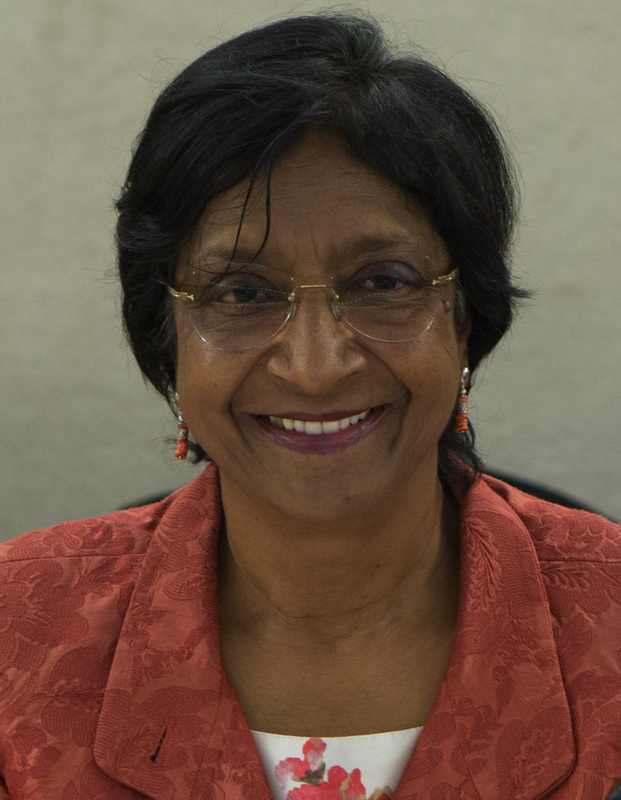
The Nobel Peace Prize announcement in October 2026
What the Nobel committee said Pillay represents
The committee’s citation links peace to the international legal order. That is a consequential framing. It says that treaties, courts, investigations and human-rights standards are not procedural accessories to peace; they are part of the machinery that makes peace durable by setting limits on violence and creating avenues for accountability.
For supporters of the decision, Pillay embodies that approach across several institutions rather than through one headline diplomatic breakthrough. Her work has moved between national law, international criminal justice, the United Nations system and current disputes before the world’s highest court. The through-line is the protection of rights through enforceable norms.
A field of 287 nominees reduced to one institutional message
This year’s list contained 287 candidates—208 individuals and 79 organizations. Individuals therefore made up about 72 percent of the field, with organizations accounting for roughly 28 percent. The raw size of the list shows the breadth of causes that can fit within the Peace Prize’s mandate; it does not reveal the committee’s private shortlist or imply that all nominees had equal support.
The monetary award is 12 million Swedish crowns, roughly $1.2 million. That amount is substantial for a person or institution, but the larger asset is attention: the laureate gains a global platform that can redirect diplomatic and media focus for months. Pillay is scheduled to receive the prize at the December 10 ceremony in Oslo, the date marking Alfred Nobel’s death.
Navanethem Pillay biography: a career across law’s hardest cases
From South African rights advocacy to the Rwanda tribunal
Pillay’s public life has been shaped by the idea that law must be available to people who are politically weak, not merely to those who control institutions. Her international profile expanded when she served as a judge on the International Criminal Tribunal for Rwanda, a court created to prosecute responsibility for genocide and other grave crimes.
That experience is central to understanding the committee’s choice. International criminal justice is slow, expensive and frequently criticized as selective. Yet its defenders argue that even imperfect prosecutions can establish a record, identify individual responsibility and reject the idea that mass violence is beyond legal judgment. Pillay’s judicial work placed her inside that difficult balance between principle and enforcement.
Six years as UN High Commissioner for Human Rights
From 2008 to 2014, Pillay served as the UN High Commissioner for Human Rights. The role is inherently exposed: the office must document abuses and press governments while depending on those same governments for access, cooperation and political space. Praise for independence can quickly turn into accusations of bias when findings cut against national interests.
Her tenure reinforced the model the Nobel Committee has now rewarded—human rights as an early-warning system for conflict and law as a restraint on state conduct. Critics of UN human-rights mechanisms often question their consistency, enforcement power and political composition. Supporters answer that the absence of perfect enforcement is not a reason to abandon common standards, especially when domestic remedies have failed.
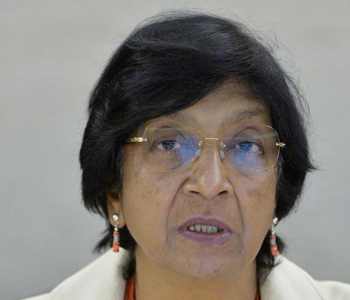
The work she continues to carry
Pillay is currently an ad hoc judge at the International Court of Justice in The Gambia v. Myanmar. She also chairs the UN Independent International Commission of Inquiry on the Occupied Palestinian Territory. Those responsibilities place her in legal and political disputes where the parties sharply contest facts, jurisdiction, language and legitimacy.
Her other positions extend the same theme. She is president of the Madrid-based International Commission Against the Death Penalty, president of the Advisory Council of the International Nuremberg Principles Academy, and chair of a quasi-judicial inquiry into detention in North Korea. Taken together, the portfolio shows why the committee could describe her contribution as sustained work for peace through law rather than a single episode.
Nobel Peace Prize 2026 and Trump: the prize he campaigned to win
Trump made the case in unusually public terms
Trump repeatedly said he had settled eight international conflicts and treated the prize as recognition due for that record. Days before the announcement, he said it was “about that time” for him to receive it and suggested the committee had a reputation for not honoring “people like me.” He also argued that denying him would discredit the committee.
His case deserves to be separated into two questions. The first is factual and diplomatic: which conflicts changed, what role did the United States play, and how durable are those outcomes? The second is institutional: whether a Nobel committee should reward a leader’s claimed settlements, a long human-rights career, a civic movement or an organization. The committee answered the second question by choosing Pillay, but its secret deliberations do not disclose a head-to-head ranking.
The Obama comparison and the meaning of a snub
Trump attacked Barack Obama’s 2009 award before Friday’s announcement, saying his predecessor had done nothing and did not know why he received it. That contrast has long served Trump’s argument that his own record should be judged by concrete deals rather than elite approval. Supporters can point to his willingness to use presidential leverage; critics can point to continuing conflicts and to the gap between a claimed settlement and a stable peace.
Pillay’s victory will inevitably be described as a Trump loss because he made his candidacy part of the public story. But “snub” can overstate what is known. Nominations remain confidential, the committee evaluates a large field, and the final citation explains why the laureate was chosen—not why every other candidate was rejected.
Machado’s medal could be given away; her Nobel could not
Last year’s laureate, María Corina Machado, handed Trump her physical Nobel medal during a White House meeting in January. The gesture carried political symbolism, but the Nobel Committee clarified that the award itself cannot be transferred. A medal can change hands; the laureate designation, historical record and institutional honor do not.
The distinction matters because it captures the boundary between personal recognition and political signaling. Trump could display or accept a medal given by a laureate, but only the committee could name him a winner. Friday’s announcement instead fixed Pillay’s name in the official record for 2026.
Why this matters
The Nobel committee’s Pillay international law message
The choice lands during a period when major powers increasingly argue that security requires freedom of action, while international institutions insist that durable peace requires common limits. By rewarding Pillay, the committee has placed its prestige behind the second proposition. That does not settle any live case or make a court order self-enforcing. It does make international law harder to dismiss as an abstract concern detached from peace.
Historian Øivind Stenersen argued before the announcement that the 2026 prize should act as a counterweight to U.S. foreign policy and an indirect criticism of the White House. He also said a human-rights figure would align with the Nobel’s core principles: liberal democracy, international law and human rights. The committee’s citation is consistent with that institutional tradition, though the award should not be reduced to a message aimed at one president.
Who benefits from the Navi Pillay Nobel Prize
Human-rights organizations and international legal institutions gain the clearest symbolic benefit. They can point to the award as evidence that investigations, judicial records and standards matter even when enforcement is contested. Lawyers and advocates working on detention, capital punishment, genocide and occupied territories gain a more visible spokesperson.
South Africa also gains recognition through the selection of a jurist whose career began in its struggle over rights and law. The prize can strengthen the country’s association with legal and moral leadership, even as no laureate can stand in for a government or erase debate about current policy.
Who loses—and what critics can fairly challenge
Trump loses the public contest he chose to wage. His supporters may view that outcome as proof that the Nobel institution prefers multilateral legalism to deal-making by an unconventional president. The committee, in turn, risks having the substance of Pillay’s record obscured by a personality-driven reaction centered on Trump.
Critics of Pillay are likely to focus on the UN system’s political selectivity, her work involving Israel and the occupied Palestinian territory, and the limited power of international law when states refuse cooperation. Those are legitimate subjects for scrutiny. The strongest version of the committee’s case is not that international institutions are neutral by definition or effective in every instance. It is that peace without legal restraint leaves vulnerable populations dependent on political discretion alone.
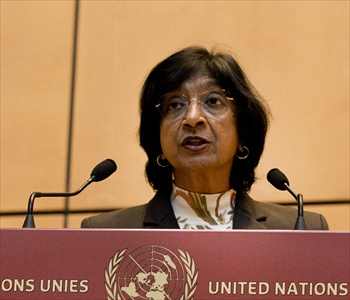
Foreign-policy consequences beyond Oslo
Greenland, Norway and the danger of treating the award as leverage
Trump has linked his push involving Greenland to the Nobel dispute and told Norway’s prime minister in January that he no longer felt obliged to think purely about peace. The European Union has separately weighed retaliatory measures connected to the Greenland pressure. Those disputes have their own strategic and legal stakes, and the Nobel Committee is formally independent of Norway’s government.
That separation is crucial. Holding Norway responsible for the committee’s choice would blur an independent prize process with state-to-state diplomacy. Yet political perception can matter even when formal responsibility is clear. European governments will watch whether Friday’s result becomes a rhetorical grievance, a bargaining theme or merely a passing line in Trump’s speeches.
A prize cannot enforce a judgment—but it can change the audience
The award gives Pillay a larger platform ahead of the December ceremony and beyond. It may draw fresh attention to the institutions she serves, but it does not confer new legal authority. Courts, commissions and advocacy groups still depend on evidence, due process, cooperation and political follow-through.
That gap between visibility and enforcement is where Nobel prizes are often misunderstood. They can protect a cause by making it harder to ignore and can raise the reputational cost of attacking an advocate. They cannot substitute for diplomacy, legislation, judicial compliance or resources.
What happens next
Scenario one: Pillay uses the platform to defend institutions broadly
The most institutionally durable path would be a Nobel lecture that connects her varied work—Rwanda, UN human rights, international courts, detention and the death penalty—into a broad case for law as conflict prevention. That approach could preserve the prize’s reach across regions rather than allowing one controversy to define it.
Scenario two: current cases dominate the debate
Because Pillay holds active roles in highly contested proceedings, every public statement will be examined for implications about those cases. The benefit is immediate relevance. The risk is that opponents portray the prize as endorsement of particular findings before legal processes are complete. Careful separation between the honor and pending work will matter.
Scenario three: Trump keeps the Nobel fight alive
Trump could continue arguing that the committee overlooked a record of conflict settlement, turning the result into a broader critique of international institutions. That would keep the Nobel Peace Prize 2026 Trump story alive, but it would also continue to frame Pillay’s selection through the president’s disappointment. Whether that reaction has policy consequences will depend on actions involving Norway, Greenland and European partners—not on rhetoric alone.
December 10 becomes the next defining moment
The Oslo ceremony will move the story from selection to argument. Pillay’s lecture will show how she interprets the mandate: as recognition of past service, a defense of institutions under pressure, or a call to action on current crises. The committee has chosen its messenger. The next question is how she uses the microphone.
Sources and reporting notes
- Reuters — winner, announcement, citation, candidate totals and Trump context
- UNILAD — announcement and public reaction context
- Nobel Peace Prize — official 2026 announcement
- Le Monde — pre-announcement analysis of the committee’s institutional choices
Reporting note: The committee’s deliberations and shortlists remain confidential. Analysis of political beneficiaries, critics and future scenarios is clearly separated from the announced facts.