World · Africa · Migration
A wooden pirogue that set out for Spain’s Canary Islands went down off the dunes of Loumpoul, on Senegal’s north-western coast. By Sunday evening, firefighters were telling AFP that at least 35 people were dead and one person had survived — and every official describing the toll used the same word for it: provisional.
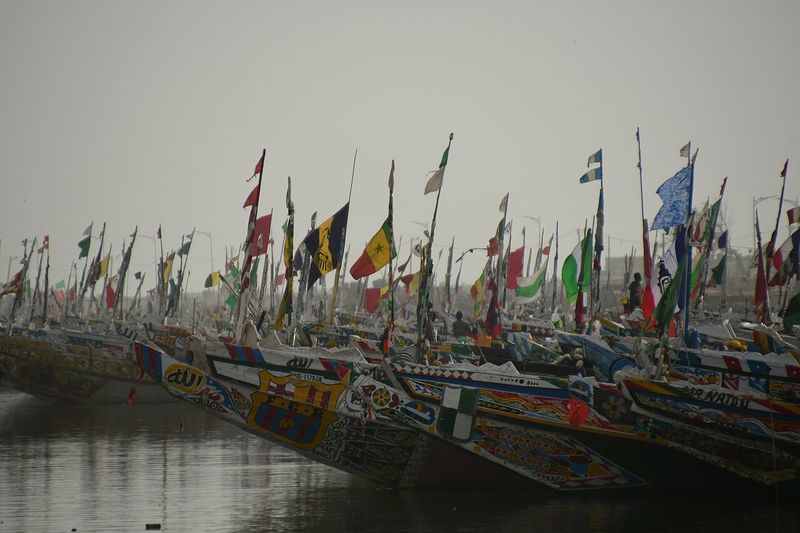
KÉBÉMER, Senegal, November 8, 2026 — A Senegal migrant boat sinks into the Atlantic off the Kébémer department and, in the space of a single weekend, becomes one of the deadliest disasters of the year on the route to Spain’s Canary Islands. The wooden pirogue, carrying people attempting irregular migration, sank off Kébémer in the Louga region of north-western Senegal, near the dunes of Loumpoul, about 180 kilometres north of Dakar on the coast road between the capital and Saint-Louis. Firefighters told Agence France-Presse on Sunday evening that at least 35 people were dead and one person had survived. That figure — at least 35 dead, one survivor — is the latest count, not a final one. Officials describe the toll as provisional and expected to rise, the search was still continuing as it was announced, and the most basic fact of the disaster remains unknown: nobody has established how many people were aboard.
What is established is narrow, and it is worth stating plainly before the analysis begins. A pirogue sank off Loumpoul. Bodies have been recovered in numbers that grew through the weekend. One person survived. The identities and nationalities of everyone aboard are not established, and no authority has published a passenger total, because on this route there is no manifest to publish. Everything else — the exact day the boat went down, the size of the loss still hidden in the water, the sequence that put a fishing vessel into the Atlantic swell with far more people than it was built to carry — is reconstruction, attribution and uncertainty, and this article will keep those labels attached.
The search, and a toll that kept moving
The rescue and recovery operation ran through the weekend off the Loumpoul shoreline, a stretch of dunes and fishing villages on Senegal’s Grande Côte where the Atlantic meets the sand with very little shelter in between. Search teams worked the water and the shore while the count of the recovered rose in steps, each step announced by a different authority at a different hour — which is why the weekend produced three tolls, not one, and why reporting them in sequence matters more than picking the largest number and repeating it.
- The ministry’s statement — 21 recovered. In its statement of Sunday, November 8, Senegal’s Ministry of Interior and Public Security reported that 21 bodies had been recovered and one survivor found, as of Saturday evening, November 7. That statement remains the ministry’s published position: 21. It is a snapshot of the recovery as it stood on Saturday evening, not a claim about the final toll.
- The APS count, Sunday morning — 34 dead. On Sunday morning, November 8, the Senegalese Press Agency (APS) reported 34 dead and one survivor, citing an official source. The human-rights organisation ADHA confirmed that figure to AFP. By Sunday morning, in other words, the recovery on the ground had already moved well past the number in the ministry’s published statement.
- The firefighters’ count, Sunday evening — at least 35 dead. On Sunday evening, firefighters told AFP that at least 35 people were dead, with one survivor. That is the figure in this article’s headline, and it is carried with its qualifiers intact: at least 35, on the word of the firefighters conducting the recovery, with the search continuing and the toll provisional and expected to rise.
Read in sequence, the three numbers are not contradictions to be resolved but a recovery operation being counted in real time. A ministry statement drafted from Saturday evening’s position; a press-agency count the next morning; a firefighters’ count by Sunday evening as more of the shoreline and the surf zone were worked. The gap between 21 and 35 is not evidence that anyone lied. It is evidence that the count was unfinished at every point it was published — and it was still unfinished on Sunday night, when no authority would say how many people the sea had not yet given back, because no authority knows how many people were in the boat.
A disputed day: Friday or Saturday?
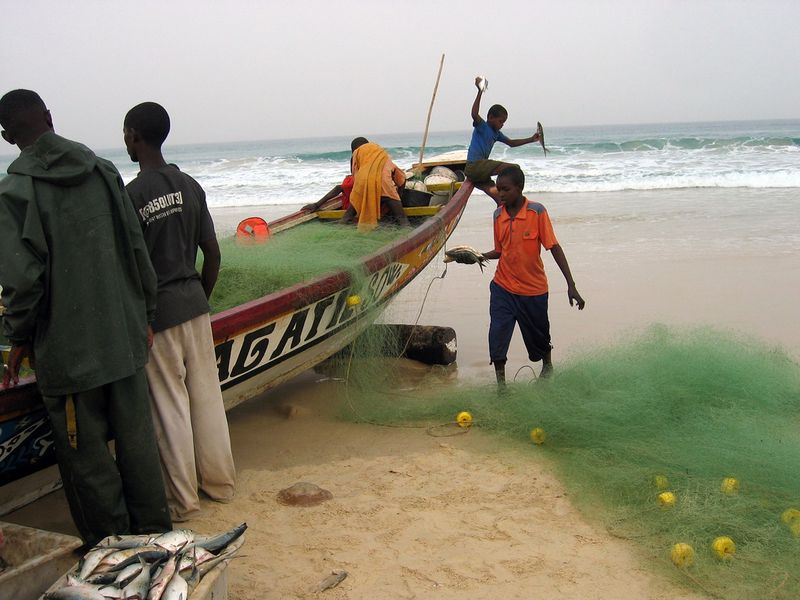
Even the date of the sinking is not settled, and the disagreement is in the sources themselves. Most reports say the boat capsized on Saturday, November 7, off Loumpoul. But Saliou Diouf, founder of Boza Fii, an organisation that supports migrants and their families, told AFP that the sinking occurred on Friday, November 6. Signal Post News presents both accounts because the record, as published, contains both — and because the difference is not trivial. A boat that goes down on Friday and is counted from Saturday is a boat whose loss went uncounted for a day; a boat that capsizes on Saturday fits the ministry’s Saturday-evening recovery figure more neatly. Which is correct bears on how long people were in the water, how the single survivor was found, and how the first hours of the response should be judged.
There are ordinary reasons such a discrepancy arises, and none of them can be confirmed from the published record. Departures on this route typically happen at night, from beaches rather than ports, without notice to any authority. A vessel can be lost hours before anyone on shore knows it left. A founder of a migrants’ association may be relaying what families reported — the day their relatives embarked, or the day word reached the villages — while official accounts date the capsizing from the recovery. It is also possible that one of the two accounts is simply wrong. What cannot responsibly be done is to choose one, silently, and build the story on it. The sinking happened off Loumpoul on Friday, November 6, or Saturday, November 7. On the published evidence, that is as far as the date goes, and families waiting for news are living inside exactly that uncertainty.
The other boat: 142 people intercepted on Friday
The pirogue that sank was not the only vessel that attempted the crossing from this coast that weekend. Senegalese authorities also intercepted 142 migrants on Friday aboard a similar boat aiming to reach Spain. Those 142 people arrived, instead, at an interception — alive, counted, and named in an official operation rather than in a recovery toll. The juxtaposition is the weekend in miniature: two wooden boats, the same route, the same ambition, and outcomes separated by nothing more systematic than fortune. One boat’s passengers became a statistic of prevention that authorities can point to as enforcement working. The other boat’s passengers became a provisional death toll that nobody can yet complete. Any honest account of migration policy on this coast has to hold both boats in view at once, because the people who organise these departures, and the people who board them, are responding to both outcomes simultaneously — the interceptions they know about, and the sinkings they board anyway.
Why this matters
First, because of the scale concentrated in a single vessel. At least 35 dead from one pirogue — with the toll provisional, the search continuing and the total aboard unknown — places this sinking among the deadliest single-boat disasters on the Atlantic route this year, and it happened in a weekend when the same route was simultaneously producing mass rescues further north, as our reporting on the Canary Islands migrant surge that overwhelmed El Hierro documented just two days earlier. Departures, rescues and sinkings on this route are not separate stories; they are the same system at different points of luck.
Second, because of what the disaster reveals about counting itself. A route on which a boat can sink with no manifest, no confirmed departure time, no established passenger list and no settled date does not merely produce tragedies — it produces tragedies that cannot be fully enumerated, and therefore cannot be fully answered for. Third, because of where it happened: not from a remote smuggling hub, but from Senegal’s Grande Côte, the fishing coast between the capital and Saint-Louis, within a state that is a formal migration partner of the European Union and Spain. The politics of this route run through Dakar and Brussels as surely as the currents run past Loumpoul.
Background: the Atlantic route to the Canary Islands
The crossing the pirogue attempted is among the longest and most dangerous irregular sea journeys in the world. From the Senegalese coast, boats aim north-west across well over a thousand kilometres of open Atlantic toward Spain’s Canary Islands — European territory off the African coast, and therefore a doorway into the European Union. The vessels are overwhelmingly wooden pirogues and cayucos: long, open fishing boats built for coastal waters, for day trips after fish within sight of the shore. Loaded instead with dozens of people, fuel drums and provisions for a week or more at sea, they ride low, ship water easily, and have no margin for the Atlantic swell, engine failure or a navigational error that carries them past the islands into open ocean. Autumn, when the seas calm, is the departure season — the same weather window behind this month’s surge of arrivals in the Canaries.
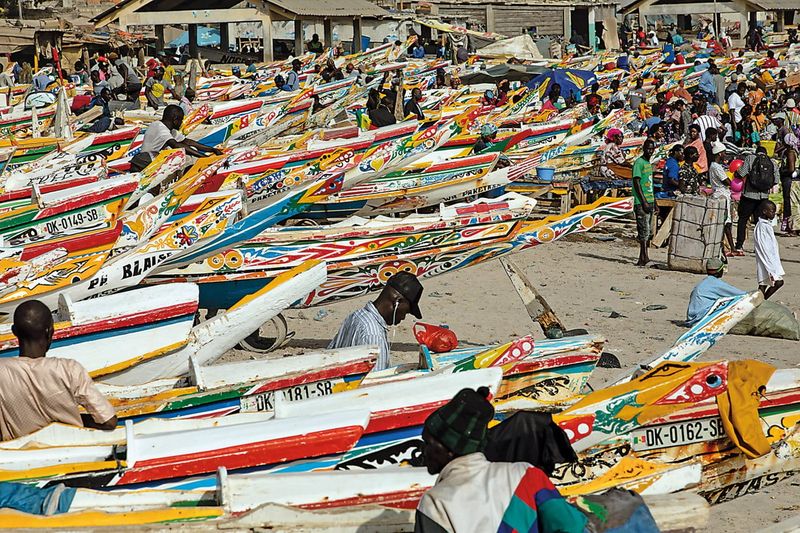
The route’s lethality is documented most persistently not by governments but by the organisations that count the missing. The Walking Borders organisation counted 635 deaths on the route in the first five months of 2026 alone. That figure is one cited count, offered here with its attribution attached: it is Walking Borders’ count, compiled by an organisation that tracks the route’s disasters and advocates for the families of the missing, and other counts differ in method and total. But no serious count makes the route look survivable in aggregate, and the structure of the undercount is always the same — it can only include boats whose loss somebody noticed. The 635, like the 35 off Kébémer, is a floor built from recoveries and reports, not a ceiling on the dead.
Who benefits, who loses, and what critics say
The clearest beneficiaries of a weekend like this one are the smuggling networks that sell the crossings. Their business model prices risk onto the passenger: fees are collected before departure, boats and engines are expendable, and a sinking — even a catastrophic one — does not close the market, because the demand that fills the next boat is produced by everything that makes staying feel impossible. Enforcement that raises the price of a crossing without reducing the desire to cross can enrich the organisers it targets, a criticism made of interdiction-led policy on this route for years, and one that Friday’s interception of 142 people illustrates from the other side: the intercepted boat is a cost of doing business, absorbed and replaced.
The losers are concentrated on the coast itself. Coastal communities lose twice over — they lose their young people to the boats, and they lose the boats themselves, along with the fishing livelihoods built around them, in a region where artisanal fishing is already squeezed by industrial fleets and thinning catches. Senegal’s wider economic strain is part of the backdrop to every departure, as our coverage of Senegal’s budget crisis and its disputed IMF programme has shown: a state carrying debt above 130 percent of GDP, fighting over an austerity budget, is a state with limited means to build the coastal alternatives its own officials invoke after every disaster.
The politics run in both directions, and critics occupy both. The European Union and Spain have built their approach on partnership with Senegal — funding, patrol cooperation and development money in exchange for departures prevented — and defenders of that approach point to interceptions like Friday’s 142 as the system functioning. Critics answer that a system which counts interceptions as success while pirogues sink uncounted off Loumpoul is measuring what is visible from Brussels, not what is happening in the water; that externalising the border to the Senegalese coast exports the danger rather than reducing it; and that legal pathways, whose absence is the smugglers’ entire market, remain the unpriced alternative. Senegal’s government, for its part, is pressed from both sides — by European partners to stop the boats, and by its own citizens to answer for the dead. None of those positions was changed by this weekend. All of them will be argued again, with these 35 names — most of them still unknown — as the evidence.
Counting the dead when nobody knows how many sailed
It is worth pausing on the arithmetic, because the arithmetic is the story’s hardest fact. In a ferry disaster, the toll converges: there is a manifest, a ticket count, a known denominator, and the number of the dead is a fraction waiting to be completed. A pirogue disaster has no denominator. The total aboard the Loumpoul boat is unknown — not undisclosed, not delayed, but unknown, because the boat left a beach at night with whoever the organisers put in it, and the only complete witness list went down with the vessel. The single survivor is therefore not only a rescue; he is, potentially, the only person alive who can say how many people he boarded with, and even a survivor’s count, given in shock and grief, is testimony rather than a manifest.
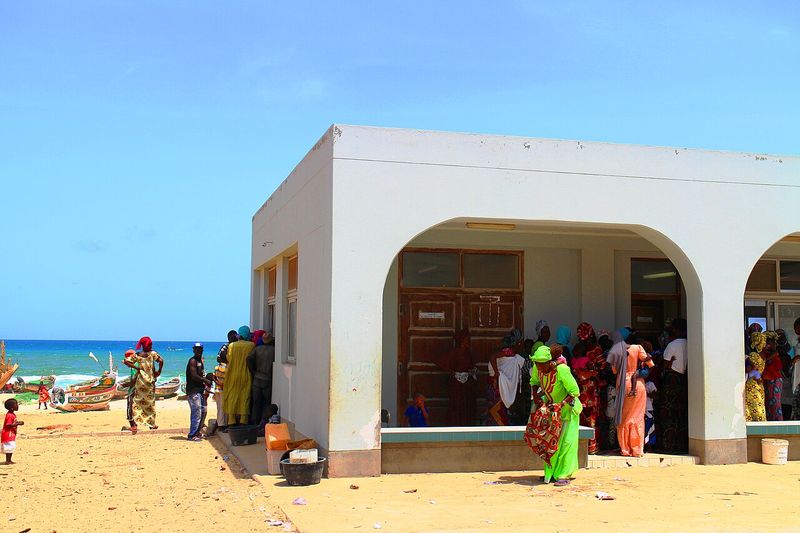
That is what “provisional” means in practice, and why this article has refused to print 35 without its qualifiers. Provisional counts in pirogue disasters move in one direction — upward, as bodies are recovered — and they can stall below the truth indefinitely, because the missing who are never recovered cannot be added by any count that waits for proof. The comparison with other routes is structural, not competitive: when a migrant boat capsized off Djibouti in October, killing 139 people with 84 more missing, the toll likewise rested on an estimated passenger total that no manifest could confirm. On every one of these routes, the published toll is the verified minimum. Treating it as the total is a category error that flattens every disaster into a smaller one than it was — and it is why the ministry’s 21, APS’s 34 and the firefighters’ 35 should be read as a rising floor, with an unknown distance still above it.
What happens next
The immediate work is the search. Recovery operations off Loumpoul were continuing on Sunday evening, and the first question of the coming days is whether the toll rises again — and by how much. Behind it comes the slower work of identification: matching the recovered to the missing whom families are reporting, a process on this coast that can take weeks and may never complete for everyone, and on which the published record so far establishes nothing about who the dead were. The identities and nationalities of everyone aboard are not established, and until identification work produces names, every account of who these people were — their towns, their trades, their reasons — is speculation that this article will not dress as reporting.
Then comes the policy response, whose choreography is familiar and whose results are the contested part. Expect Senegalese officials to pair condolences with enforcement — investigations into the organisers of this departure, further patrols and interceptions along the Grande Côte — and expect the European conversation to resume where it left off: partnership funding, departure prevention, and the unresolved argument about legal routes. The survivor’s account, if and when authorities share it, may settle the disputed date and give the first real estimate of how many people were aboard. Until then, the honest summary of the Kébémer sinking is the one the officials themselves have supplied, word by word: at least 35 dead, one survivor, a toll that is provisional and expected to rise, and a search that had not finished when the counting stopped for the night. Signal Post News will update this story as the search, the identification process and the official response are confirmed.
Sources
Sources: Senegal Ministry of Interior and Public Security, statement of November 8, 2026 (21 bodies recovered and one survivor as of Saturday evening, November 7), as reported by Reuters; Agence France-Presse reporting of November 8, 2026, including the firefighters’ toll of at least 35 dead and one survivor given on Sunday evening, the ADHA confirmation of the APS figure, and Boza Fii founder Saliou Diouf’s account of a Friday, November 6 sinking, as carried by TV5MONDE and other outlets; Senegalese Press Agency (APS), November 8, 2026 (34 dead and one survivor, citing an official source); Deutsche Welle, November 8, 2026. Walking Borders route-death count (635 deaths in the first five months of 2026) as cited to that organisation. Photos: Wikimedia Commons, as credited in the captions.