The Senegal Pastef budget rejection is not an opposition ambush — it is the governing movement voting against itself. Pastef, the party that holds 130 of the National Assembly's 165 seats and controls the chamber's presidency, said it will not pass the government's revised 2026 budget, the document on which a $2.2 billion International Monetary Fund programme and Senegal's entire debt-restructuring strategy depend. Public debt stood at 132 percent of gross domestic product at the end of 2024, the amended bill itself cuts the growth forecast nearly in half, and the full Assembly is due to vote on Tuesday. A government that cannot pass its own budget through its own overwhelming majority has a problem no IMF mission can fix for it.
Track it live: live market and bond data on the Signal Post News markets tracker.
What Pastef actually said
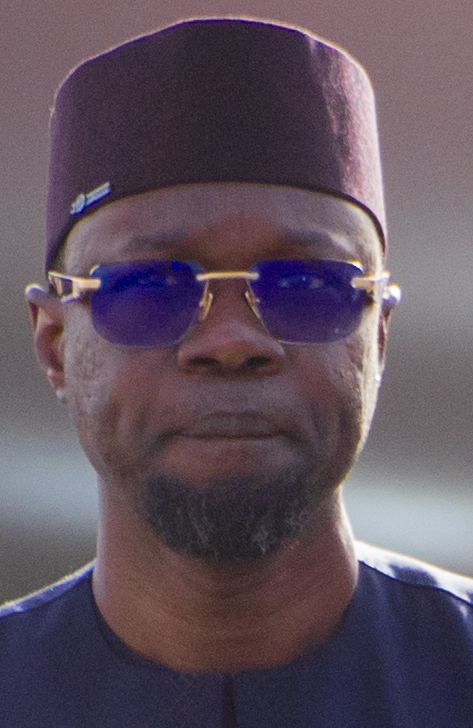
In a statement reported by Reuters on Sunday, the Pastef parliamentary party said it would not pass the government's revised budget, citing "disagreements over certain budgetary decisions, the chosen financing arrangements and the insufficient guarantees provided to parliament." The party added that it remains open to engaging with the government on getting a new budget in place — a rejection of this text, in other words, not yet a refusal to govern. But the sequence leaves little room for a quiet fix: News Central reported on Saturday that Pastef had already rejected the 2026 revised budget bill in parliamentary committee, and that party leader Ousmane Sonko had declared his party would accept neither the supplementary finance bill nor a 2027 draft budget in their current forms. With 130 of 165 seats, Pastef's position is effectively the Assembly's position; Tuesday's floor vote is now a test of whether the executive can renegotiate its own majority in roughly 48 hours.
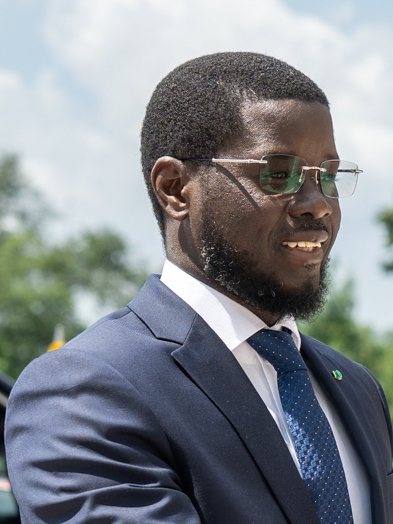
The government is answering in public. Prime Minister Ahmadou Al Aminou Lo planned a press conference on Sunday to discuss the revised budget, which his office describes as intended to implement "a revised framework aimed at improving the quality of life of Senegalese people." Lo heads a government that Pastef — the movement that won power in 2024 — has pointedly declined to join, after President Bassirou Diomaye Faye dismissed Sonko as prime minister in May and Sonko returned days later as president of the National Assembly, elected with 132 of 133 votes cast.
How Senegal got a 132-percent debt problem
The numbers underneath the standoff are severe, and unusually, they are the government's own. Senegal's debt burden had reached 132 percent of GDP by the end of 2024, according to IMF figures cited by Reuters, after the incoming administration uncovered billions of dollars in misreported borrowing by the previous government of Macky Sall. That discovery — announced by Sonko himself as prime minister in 2024 — froze Senegal's standing with creditors and made an IMF programme the anchor of any credible path back. In early September the government reached a staff-level agreement with the Fund on a $2.2 billion, 36-month Extended Credit Facility to support its reform programme. Reuters' formulation is blunt: the IMF programme "underpins its entire debt restructuring strategy," and without parliamentary approval of the revised budget, the government risks delaying it.
The amended budget bill shows why the politics are so hard. It cuts real GDP growth to 2.7 percent, from roughly 5 percent in the original budget, and widens the deficit to 7.6 percent of GDP from 5.4 percent — driven largely, Reuters reports, by a tripling of energy subsidies to 790.3 billion CFA francs (about $1.36 billion) from 250 billion. Read that again: the consolidation budget spends three times more on energy subsidies. That single line explains both sides of the fight. For the government, subsidised fuel and electricity are the social peace it cannot afford to lose. For Sonko — who told a news conference earlier in the week, as Senegal's bonds fell, that the country faces a cash-flow problem rather than a need to reduce its overall debt burden — the bill concedes the wrong things in the wrong order, and he has criticised the decision to seek debt treatment under the G20 Common Framework at all.
Why this matters
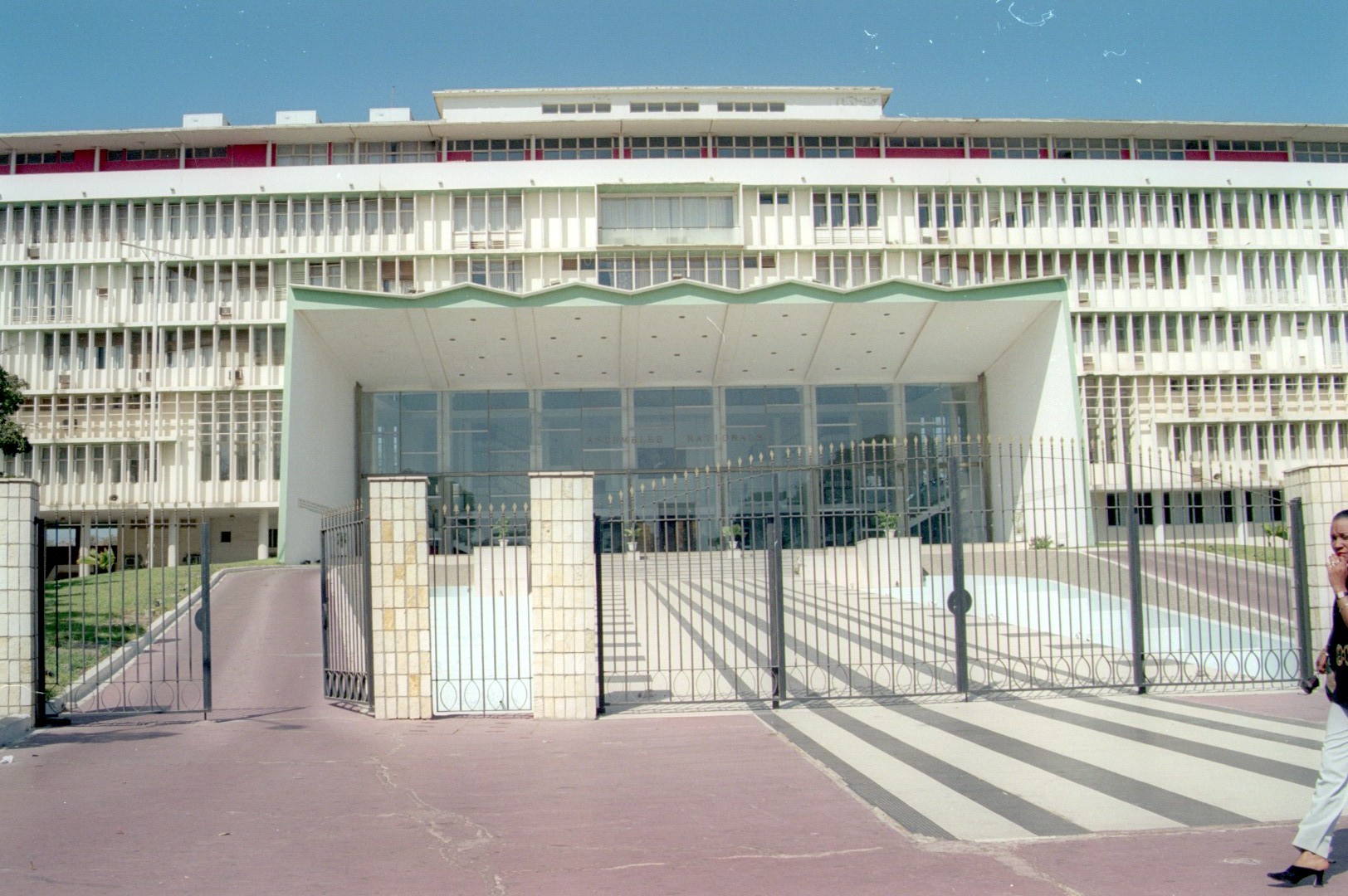
Senegal was supposed to be West Africa's stabilising success story: a peaceful transfer of power in 2024, new oil and gas production, a young reformist government and an IMF programme agreed within eighteen months of taking office. The Pastef budget rejection matters because it breaks that story at its weakest joint — not the economics, which were always going to be brutal, but the coalition. The movement that exposed the hidden debt now contains both the president trying to restructure it and the Assembly president arguing the restructuring itself is misconceived. Bond investors noticed before anyone else: when Sonko first signalled his opposition earlier in the week, all of Senegal's euro- and dollar-denominated bond maturities fell more than a cent, with the 2037 bond dropping 2.166 cents to a bid of 48.931 cents on the euro, according to Tradeweb data reported by Reuters — distressed territory, priced by traders who have concluded that the political path to a deal is no longer clear.
There is also a regional stake. Senegal's handling of its misreported-debt reckoning is a test case watched across a continent where several governments are negotiating with creditors at once: if a popular movement government cannot hold its own majority together behind an IMF programme, the lesson other finance ministries draw is that disclosure itself is politically fatal. The opposite lesson — that parliament forced a better, more honest budget — is available, but only if Tuesday produces an amended text rather than a vacuum.
Who wins, who loses
Sonko wins the immediate argument about relevance: five months after being dismissed as prime minister, he has demonstrated that no major economic decision in Senegal passes without him, and his "not a rubber stamp" framing casts the Assembly as a check on the executive rather than an obstacle to recovery. Faye and Lo lose room to manoeuvre with the IMF, whose programme timetable now depends on a negotiation inside their own movement. Creditors lose certainty — every week of delay is a week in which a 132-percent debt stock is refinanced at distressed prices. Senegalese households sit on both sides of the ledger: they gain if the blockage protects fuel and electricity subsidies and social spending, and they lose, heavily, if it tips the country from an orderly restructuring into a disorderly one. The IMF loses least and waits — but its September staff-level agreement was written for a government that could deliver its parliament.
What happens next
Three dates decide this. Sunday brings Prime Minister Lo's press conference — the first chance to see whether the government offers amendments or dares its own party to vote the budget down in public. Tuesday, October 27, brings the floor vote on the revised bill (draft law no. 40/2026), where Pastef's committee rejection points to failure unless a new text emerges. And behind both sits the IMF: a delayed budget delays the programme, and a delayed programme delays the restructuring that a 132-percent debt ratio makes unavoidable. Watch whether the renegotiated text moves the energy-subsidy line — the 790.3 billion CFA francs at the heart of the deficit — because that is where Sonko's cash-flow argument, the government's social-peace argument and the Fund's consolidation argument all collide. Pastef says it is open to engaging. The next 48 hours will show what engagement costs.
Related reading: The IMF's global economy warning on energy, debt and AI, Nigeria's first Ebola case in Abuja and Ethiopia's accusation against Eritrea at the UN Security Council.
Sources
Reuters, "Senegal party that controls parliament comes out against revised budget bill," October 25, 2026 (Pastef statement and its three cited disagreements; debt at 132% of GDP at end-2024 per IMF; misreported borrowing; $2.2 billion 36-month Extended Credit Facility staff-level agreement in early September; amended bill's growth cut to 2.7% from about 5%, deficit widened to 7.6% from 5.4%, energy subsidies tripled to 790.3 billion CFA francs / $1.36 billion from 250 billion; Prime Minister Lo's planned Sunday press conference); News Central TV, "Senegal Ruling Party Rejects Revised Budget," October 24, 2026 (committee-stage rejection; Pastef's 130 of 165 seats; the measure's expected failure at Tuesday's full-legislature vote; Sonko's rejection of the supplementary bill and 2027 draft in current forms and of the proposed debt resolution mechanism; the Faye–Sonko rift and Sonko's May dismissal); Reuters reporting carried by DevDiscourse, "Senegal bonds fall after Sonko opposes budget bills," October 2026 (all euro- and dollar-denominated maturities down more than a cent; 2037 bond down 2.166 cents to bid 48.931 cents on the euro, Tradeweb; Sonko's news-conference argument that Senegal faces a cash-flow problem rather than a need to reduce its overall debt, his criticism of G20 Common Framework treatment, and his opposition to lowering fuel subsidies); Al Jazeera, June 2, 2026, and Reuters, May 26, 2026 (background: Sonko's dismissal as prime minister on May 22, his election as National Assembly president on May 26 with 132 of 133 votes, and Pastef's decision not to join the Lo government).