War · Ukraine · Zaporizhzhia
The Zaporizhzhia apartment strike hit five-storey residential buildings in the city’s Kosmichnyi district on Friday morning. By the end of the day more than 50 people were injured, 17 residents had been pulled from flats they could not leave, and the rescue itself had claimed a life: a Cobra emergency-service worker killed by a falling concrete slab as he cleared the debris.
Track it live: Ukraine war map
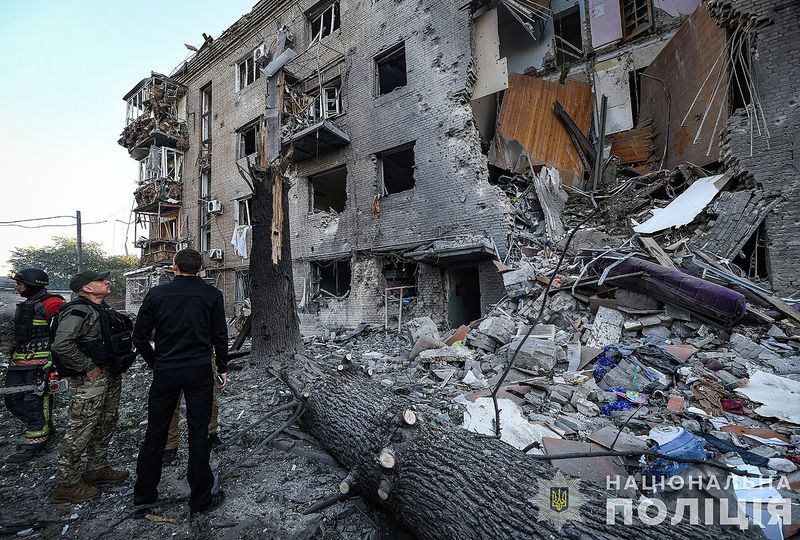
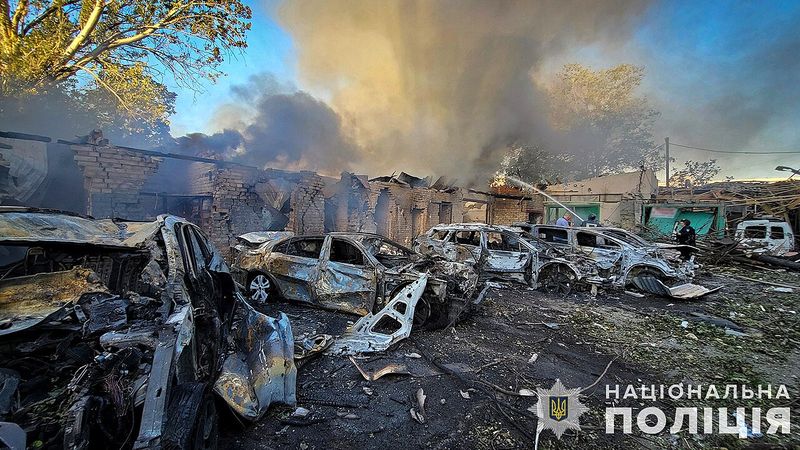
ZAPORIZHZHIA, Ukraine, November 13, 2026 — A Russian attack on Friday morning struck residential apartment buildings in the Kosmichnyi district of Zaporizhzhia, in southeastern Ukraine, injuring more than 50 people including children and killing a rescue worker who was clearing rubble from one of the damaged buildings, Ukrainian officials said. The five-storey building at the centre of the strike was seriously damaged, with apartments across three floors hit, fires on the second and third floors, cars burned out in the courtyard and the facade of a second five-storey building damaged, according to Ivan Fedorov, co-chair of the Zaporizhzhia Oblast Defense Council, as reported by the Kyiv Independent, and to the State Emergency Service of Ukraine (DSNS).
The attack came hours after an overnight drone exchange between Russia and Ukraine and in the middle of a renewed diplomatic push — a juxtaposition that has become one of the war’s defining rhythms, and one this article will keep in view. But the centre of Friday’s story is a residential district on a weekday morning: who was hurt, what is known and what is not, and the unusually specific record left by the rescuers who worked the building. Where accounts differ, they are reported separately and attributed, because on a day like this the differences are part of the record too.
What happened in the Kosmichnyi district
The strike hit on Friday morning, November 13, in the Kosmichnyi district, a residential area of Zaporizhzhia. The Kyiv Independent, reporting Fedorov’s account and DSNS statements, described a five-storey apartment building seriously damaged, with flats across three floors affected and fires burning on the second and third floors. Cars parked in the courtyard burned, and a second five-storey building nearby had its facade damaged. Photographs and statements from the emergency services described the familiar anatomy of a heavy strike on a Soviet-era residential block: blown-out stairwells, apartments opened to the sky, and debris fanned across the ground where residents park and children play.
As to the weapon, the reporting is specific and should be attributed as reported: the Kyiv Independent, in coverage carried by DW, reported that the damage was done by two projectiles from a Tornado-S multiple-launch rocket system. The Tornado-S is a long-range, guided rocket artillery system — a weapon class designed for precision strikes at distance, which is part of why its reported use against a residential block drew immediate attention. That attribution rests on Ukrainian official reporting as relayed by those outlets; no independent forensic account of the munitions had been published at the time of writing, and Russia’s Defence Ministry had issued no specific comment on this strike in the available reporting.
The toll: how 4 became more than 50 — and the children count that differs
Casualty figures in the first hours of a strike are a floor, not a total, and Friday’s reporting followed that pattern exactly. The injured count rose through the day from 4, to 13 — including 5 children, in the Ukrinform reporting based on DSNS statements — and then past 50, as residents were treated, brought in from the buildings and counted. The figure to carry is the end-of-day one, stated with its sourcing: more than 50 people injured, per Ukrainian officials and the emergency services as reported by Reuters, the Kyiv Independent and Ukrinform.
One element of the toll is reported differently by reputable sources, and it is reported here both ways rather than averaged into a number nobody actually gave. Reuters, citing acting governor Mykhailo Semikin, put the number of injured children at 6. Ukrinform and the Kyiv Independent put the number of injured children at 8. Both figures come from Ukrainian official channels speaking at different points in a fast-moving rescue, and the gap may reflect nothing more than the hour at which each count was taken — but that explanation is an inference, not a reported fact, and the honest presentation is the one that keeps the two numbers attached to the two sources that published them: 6 children, per Reuters via Semikin; 8 children, per Ukrinform and the Kyiv Independent.
The rescue numbers, by contrast, are consistent across the reporting, and they describe work that was still under way at last report. DSNS said its rescuers freed 17 people who had been trapped in their apartments. Emergency psychologists assisted 31 residents, including 2 children — a detail that says something plain about the population of a five-storey residential block on a Friday morning, and about what the hours after a strike actually contain for the people who lived in it. Search and rescue operations were ongoing at the time of the last reports on Friday.
The rescuer who was killed
The Zaporizhzhia apartment strike’s only confirmed death at the time of publishing was not a resident. A rescue worker with the Cobra emergency service was killed when a concrete slab fell on him while he was clearing debris from a damaged building, according to Semikin, as reported by Reuters, with the account corroborated by the Kyiv Independent. He died, in other words, inside the second phase of the disaster — the phase in which damaged structures keep moving, slabs that held through the blast give way under the work of clearing them, and the people doing that work absorb risks the original strike created.
His death deserves its own paragraph because it changes what the strike’s toll means. A count of “one killed, more than 50 injured” can read, at a distance, as a survivable morning. It is not how the day presented itself in Kosmichnyi: a building with flats damaged across three floors, fires on two of them, 17 people who could not get out of their own homes, and a rescuer dead under a slab. Emergency work in struck buildings is mining under time pressure, and Ukraine’s rescuers have performed it, city after city, for nearly four years of full-scale war. Friday’s reporting does not name the Cobra rescuer in the accounts available here, and this article will not guess at it. What the record supports is the fact itself: he was killed clearing the rubble of an apartment building, so that the people inside it could be reached.
A separate death in the region — and two killed in Odesa
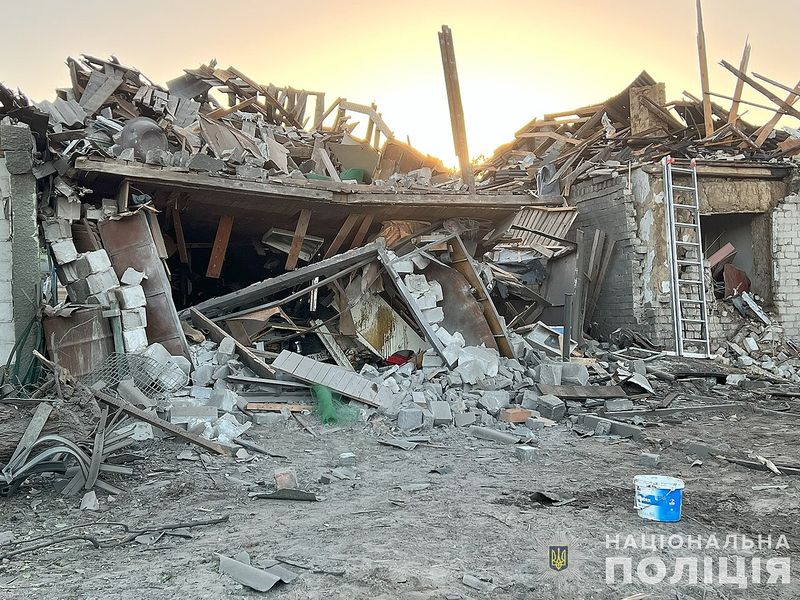
Precision about geography matters on days with multiple attacks, and Friday had several. A separate attack elsewhere in the Zaporizhzhia region on the same day killed a 17-year-old boy and injured at least 4 other people, Ukrainian officials reported. That toll is distinct from the Kosmichnyi apartment strike — a different location, a different incident — and it is kept separate here deliberately, because merged regional numbers are how distinct attacks blur into a single statistic and how the dead of one place get silently reassigned to another.
In Odesa, on the Black Sea coast, two people were killed on Friday in an attack on a private residence, and five people were injured, including two in serious condition, according to Serhiy Lysak, head of the Odesa city military administration, as reported by Reuters. Both Ukraine and Russia deny targeting civilians, Reuters noted — a standing position on each side that the available reporting on Friday did nothing to move in either direction. Russia’s Defence Ministry issued no specific comment on the Zaporizhzhia strike in the reporting available at publication, and Reuters said it could not independently confirm the local accounts of the day’s attacks. Readers should hold the details in this article at exactly that strength: multiply reported by reputable outlets from named Ukrainian officials and emergency services, not independently verified on the ground by the agencies reporting them.
The day around the strike: drones by night, diplomacy in parallel
Friday’s strike did not arrive in isolation. It came hours after the overnight drone exchange that Signal Post News covered in our report on the Ukraine drone wave and the attack on Volgograd — a night in which Russia claimed to have downed 1,198 Ukrainian drones, Russia launched 117 drones at Ukraine, and a medical facility in Kyiv caught fire. The Zaporizhzhia strike is a separate event from that exchange, reported separately here; what connects them is tempo. The war’s air campaign now runs in layers — mass drone nights, then daylight strikes on cities near the front — and Zaporizhzhia, a major city within range of the southern front, sits inside the second layer permanently.
The diplomacy ran in parallel, as it has all month. The strike landed amid the Witkoff–Kushner shuttle diplomacy touching Abu Dhabi, Moscow and Dublin, assessed in the Institute for the Study of War’s November 13 Russian Offensive Campaign Assessment — envoys in motion, terms under discussion, and no ceasefire in force over the Kosmichnyi district on Friday morning. The same day, President Volodymyr Zelenskyy said that Starshield speed restrictions remain in place across the front line, Reuters reported — the subject of our coverage of the Ukraine Starshield contract and the restrictions debate. And Zaporizhzhia region carries its own recent ledger: earlier in November, the death toll from the bombing of an aid point in Komyshuvakha, in the same region, reached 53, as we reported in the Komyshuvakha aid-point toll update. Friday’s apartment strike is a distinct incident from that one too. The pattern they form together is the context, not a combined toll.
Why this matters
Analysis, labeled as such. The first reason this strike matters is the ordinariness of its target. A five-storey apartment block in a named residential district is not dual-use infrastructure argued over in the language of military necessity; it is where a city sleeps. When a reported pair of guided rockets — Tornado-S, as reported — lands in such a district on a weekday morning, the resulting argument is not really about aim points. It is about a method of war in which the residential fabric of frontline-adjacent cities is struck often enough that the emergency services have standing procedures, named rescue units like Cobra, and psychologists assigned to the courtyard as a matter of routine. The DSNS numbers from Friday — 17 freed, 31 assisted, a rescuer killed by a slab — are the administrative footprint of that normalisation, and they are worth reading as such.
Second, the day illustrates the verification problem that now surrounds every such strike, and why this article has attributed so carefully. The children’s count differs between Semikin via Reuters (6) and Ukrinform and the Kyiv Independent (8); the munitions attribution is Ukrainian-official in origin; the Russian Defence Ministry offered no specific comment; Reuters could not independently confirm local accounts; and both belligerents deny targeting civilians as a standing position. None of that makes the strike doubtful — the physical facts are multiply reported by independent outlets from named officials — but it defines the corridor within which honest reporting has to move, and it is why tolls here are attached to their sources rather than blended into false precision.
Third, the timing is the context diplomats will have to carry. A strike that injures more than 50 civilians and kills a rescuer, landing hours after a record-claimed drone night and during an active Witkoff–Kushner diplomatic circuit, tests what such diplomacy is for. If talks proceed on a track sealed off from the air war’s daily results, Friday changes nothing in them. If the talks are meant to produce, first, a reduction in exactly this — strikes on the cities within range — then Kosmichnyi is the kind of morning by which the process will be judged, in Ukraine and beyond it. ISW’s November 13 assessment places the diplomacy and the battlefield in one frame for a reason: in this war, they have never yet moved independently for long.
What happens next
The immediate work is in the building. Search and rescue was ongoing at last report on Friday, and the injured toll — already revised upward three times in a day, from 4 to 13 to more than 50 — may move again as the buildings are fully cleared and hospitals complete their counts. The children’s figure should also resolve toward a single verified number as DSNS and regional officials reconcile their counts; until it does, the two attributed figures stand. Expect Ukrainian investigators to document the Kosmichnyi site, as they have at strikes before it, and the munitions attribution — two Tornado-S projectiles, as reported — to be tested against whatever fragments the documentation produces.
Beyond the district, watch three things. The first is any specific Russian Defence Ministry comment on the strike, absent at publication, and any statement attached to the day’s Odesa attack, in which two people were killed in a private residence. The second is the diplomatic track: whether the Abu Dhabi–Moscow–Dublin circuit produces language about strikes on cities, and whether the tempo of the overnight drone exchanges changes in any way that can be measured rather than announced. The third is Zaporizhzhia itself — a city that has now absorbed, within a single month, an aid-point bombing whose toll reached 53 and an apartment strike whose injured passed 50, with a rescuer among the dead. What do you think — can diplomacy that does not reach the air war still change mornings like this one? Follow Signal Post News and the Ukraine war map tracker for the rescue’s final toll and the week’s developments, and share your thoughts in the comments below.
Sources
Sources: Reuters, “Russian strikes kill one in Zaporizhzhia, two in Odesa” (November 13, 2026) — Semikin on the rescuer’s death and the count of 6 injured children; Lysak on the Odesa private-residence attack (2 killed, 5 injured, 2 serious); both sides’ denials of targeting civilians; Reuters unable to independently confirm local accounts. Kyiv Independent, November 13, 2026 key developments — Fedorov on the Kosmichnyi damage (three floors, fires on the 2nd and 3rd, courtyard cars burned, second building’s facade), DSNS on 17 residents freed and 31 assisted by psychologists, the Cobra rescuer’s death, and the count of 8 injured children; the Tornado-S attribution in Kyiv Independent reporting carried by DW. Ukrinform, via DSNS reporting, November 13, 2026 — the injured toll’s progression (4, then 13 including 5 children, then more than 50). Institute for the Study of War, Russian Offensive Campaign Assessment, November 13, 2026 — diplomacy context. Photos: file photos from September 2024, National Police of Ukraine via Wikimedia Commons, as credited in the captions.