War / Ukraine
Ukraine’s contract for access to SpaceX’s Starshield military satellite network runs out in the middle of next year, Kyiv’s envoy in Washington said on Thursday — and a month after unexplained speed limits disrupted front-line drone operations, Ukraine says it has still received no explanation from Washington or from SpaceX.
Track it live: Ukraine war map — follow the front lines and strike reports on our live tracker
WASHINGTON, November 5, 2026 — The Ukraine Starshield contract expires in the middle of next year, and Kyiv wants negotiations on its replacement to begin now. Denys Sienik, the chargé d’affaires at Ukraine’s embassy in Washington, told the Defense Writers Group on Thursday that Ukraine urgently needs clarity on whether it can continue using Starshield — SpaceX’s military satellite service, provided through the US government — and on what terms. His message carried a second, unresolved charge: a month after speed limitations were suddenly imposed on the network in the middle of front-line operations, Kyiv says nobody in Washington or at SpaceX has explained what happened.
What Sienik actually said
Sienik’s remarks, reported by Reuters from the Defense Writers Group breakfast on Thursday, were precise about the problem and deliberately imprecise about the date. “The contract expires next year for Starshield. And we understand that it requires time to negotiate a new one... now is actually the time,” he said. He gave no exact month, saying only that the contract runs out in the middle of next year — the basis for the Starshield contract mid 2027 framing in Breaking Defense’s reporting of the same briefing. What Kyiv wants first is not a signature but a framework: “We want to have a clarity, basically, if we can proceed and what the terms of reference will be.”
“In the process of starting” — and looking at stopgaps
Breaking Defense, reporting independently from the same session, adds the operational detail. Sienik said Ukraine is “in the process of starting” negotiations with Washington — specifically with Pentagon leaders — and that Kyiv is also examining possible stopgap measures in case a successor agreement is not ready when the current one lapses. His summary of the outcome Kyiv needs was unadorned: “I hope that the contract will be signed, and terms of reference will be negotiated, we will have funding, and we’ll be able to defend ourselves.” Each clause in that sentence is a variable — signature, terms, funding — and none of them is yet in hand.
One structural fact shapes everything that follows. Starshield is SpaceX’s military service, built on the same low-Earth-orbit architecture as its commercial sibling, Starlink, but provided to the US government. Ukraine’s access does not run through a contract with Elon Musk’s company directly; it runs through the SpaceX Ukraine Pentagon contract held by Washington. That is why the Ukraine satellite contract renewal talks are government-to-government, why the Pentagon is Kyiv’s counterpart at the table, and why the dispute October threw open — who actually controls the service — matters as much as the expiry date.
The October shutdown nobody has explained
The contract story cannot be separated from what happened last month. According to Reuters, Ukrainian battlefield commanders reported in October that speed limitations had suddenly been imposed on Starshield — the Starshield speed limit Ukraine drones problem, as front-line units experienced it. The effects, as Kyiv describes them, were immediate: the restrictions hampered efforts to intercept Russian attack drones and forced the cancellation of some operations. A network commanders treated as infrastructure turned out, without warning, to have conditions attached that they could neither see nor appeal.
“Nobody provided answers”
Kyiv went looking for an explanation through every channel available to it. Sienik said Ukraine sought answers at the Pentagon, at the White House and at SpaceX — and, in his words, “Nobody provided answers.” As of Thursday, that remains Kyiv’s position: it has never received an explanation from Washington or from SpaceX for what changed in October, who changed it, or why. Breaking Defense reported that Ukrainian officials have attributed failed drones and defences — which they say led to military and civilian deaths — to the sudden network change. That attribution is Kyiv’s claim, reported as such; it has not been independently established, and no party has publicly accepted responsibility for the change itself.
What is on the record from the other side is narrower. Musk posted on X on October 24 that Starshield was controlled by the US government, defended SpaceX’s role in helping defend Ukraine, and condemned what he called “virtue-signaling evil warmongers.” That locates control in Washington rather than at SpaceX, but it does not explain the October limitations — and neither the Pentagon nor the White House has publicly done so. Who imposed the speed limits, and on whose authority, remains unresolved. President Volodymyr Zelenskyy, speaking to Germany’s ZDF on Wednesday, held both halves of Kyiv’s position in one answer: grateful to SpaceX for connectivity that “was very helpful at the beginning of the war,” but, speaking of Musk, “we certainly do not like his position on this war.” Prominent congressional Democrats wrote to Musk last month about the incident, and senior lawmakers have promised to investigate US aid to Ukraine more broadly. Sienik confirmed the immediate crisis is over — the problem is resolved, the service is “working now” — before adding: “Do we want another situation like that? Definitely no.” For readers following the dispute: Ukrainian sources said in October that the White House ordered the Starshield limit, the administration denied it, and Kyiv later announced that full speed had been restored — without the underlying question ever being answered.
Why this matters
A front-line army’s nervous system runs on a contract with an expiry date
Strip away the diplomacy and the central fact is stark: the communications nervous system of an army fighting a major war runs on a commercial satellite constellation, accessed through another government’s contract, and that contract has an expiry date roughly a year and a half away. Starshield and Starlink connectivity carry the traffic modern Ukrainian operations are built from — drone video feeds, targeting data, artillery coordination, command and control. October demonstrated the dependency in the worst way: not by the network disappearing, but by it degrading suddenly, for reasons the army depending on it could not discover. The Starlink Ukraine war contract question is therefore not really about procurement. It is about whether a capability Ukraine treats as sovereign infrastructure is, in practice, a service that can be conditioned, throttled or allowed to lapse by decisions taken outside Ukraine.
Single-vendor dependency as a strategy risk
That is the deeper exposure the mid-2027 date lays bare. Kyiv’s position, stated plainly by its own envoy, is the Ukraine Starshield no effective alternative problem: no other low-Earth-orbit system available today replicates what the SpaceX network provides at the scale the war consumes it. The dependency cuts in two directions. It gives the supplier — and the government holding the contract — leverage no treaty language fully neutralises, as October showed. And it gives Kyiv an argument of its own: letting the service lapse would degrade a partner capability the United States has spent years and tens of billions of dollars building, a cost Washington would own politically as surely as Kyiv would pay militarily. Both sides need the renewal. What they are negotiating is the terms — and, implicitly, guarantees that the next October cannot happen silently.
The alternatives are years away
If the renewal talks are urgent, it is because the substitutes are not close. Sienik acknowledged that Ukraine is working on domestic capabilities and that European partners are developing their own system, while framing both as insurance rather than replacement: “Everyone understands that it’s always good to have a backup.” The numbers behind the most concrete domestic project show why. According to Data Centre Dynamics reporting this week, Ukrainian firm Stetman is building a sovereign constellation through UASAT, a joint venture with Denmark’s GomSpace: 360 low-Earth-orbit satellites are planned, at an altitude of roughly 550 km, with the first 120 launches planned for 2027 and a cost above €1 billion. Set that timeline against the contract cliff and the conclusion is arithmetic, not pessimism: even on schedule, a sovereign Ukrainian network begins launching in the same year the Starshield arrangement runs out, and a 360-satellite constellation is a multi-year build after the first launch, not a switch that can be flipped at expiry.
European systems are on a similar horizon — programmes exist and funding is moving, but nothing Europe can field offers a like-for-like substitute before the contract lapses. Which leaves the menu exactly where Sienik left it: a negotiated renewal as the main plan, stopgaps as the bridge if talks slip, and domestic and European constellations as the long-term answer. Ukraine intends, over time, to own more of its sky. The problem is the gap between that intention and the middle of next year.
Washington politics now runs through this contract
The negotiation will not happen in a vacuum, because US politics around Ukraine has just changed hands. Reuters situates Sienik’s appeal inside a wider strain: Ukraine has reported recent gaps in US intelligence on Russian missile attacks; Zelenskyy has complained of US delays in resupplying Patriot and NASAMS air defences and criticised President Donald Trump’s diesel deal with Russia; Trump has criticised Zelenskyy over Ukraine’s refinery strikes on Russia, while high energy prices weighed on Republicans ahead of midterms they lost. Each capital arrives at the Starshield table with grievances about the other — and a fresh electoral fact in the room.
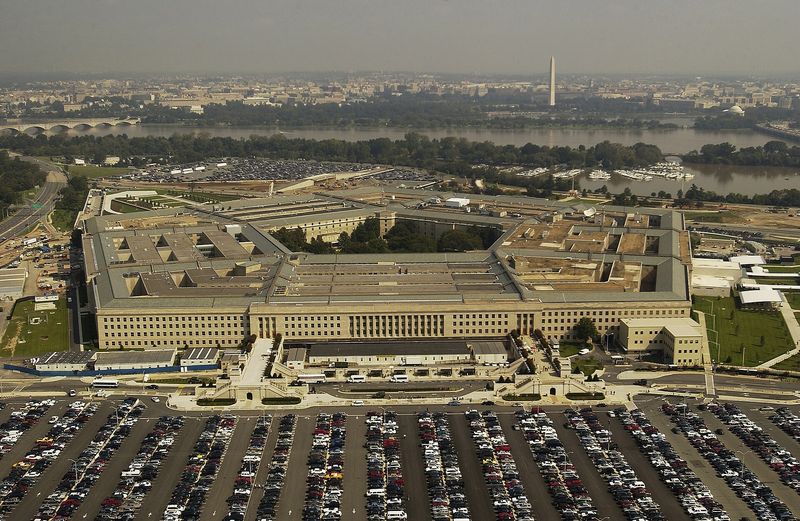
Breaking Defense reports that Democrats, having reclaimed the Senate and the House, are expected to open oversight hearings on defence topics that include Starshield and the slow-rolling of $400 million in military aid to Ukraine. That changes the negotiation’s audience: the October incident, which produced no explanation when Kyiv asked privately, is likely to be examined publicly, with the renewal as the live question before the same committees. Sienik handled the prospect carefully: Ukraine will answer lawmakers’ questions, he said, without interfering in US domestic affairs. He also renewed Kyiv’s standing requests — Patriot interceptors above all, and more F-16s. “The issue with the existing F-16s is that they are old, and we overuse them because they are super effective: We don’t have enough of them.” Air defence, jets and satellites are separate line items, but in Washington they are one argument — about how much backing Ukraine gets, how fast, and under whose scrutiny. The administration’s position in the October dispute, meanwhile, is that it did not order the restrictions — Trump denied ordering any Starlink or Starshield limit on Ukraine — a denial the expected hearings will test against whatever records exist.
Who gains, who loses
Ukraine gains if Thursday’s talks convert its dependency into a longer, clearer commitment — defined terms of reference, assured funding, and some understanding about notice and explanation that October lacked. It loses heavily if the contract lapses, or is renewed on terms that leave the service conditionable without warning. The United States gains leverage either way — the contract is Washington’s instrument, whoever operates the satellites — but carries a reputational risk: an ally publicly saying “nobody provided answers” costs the credibility of every other US commitment that runs through American-provided systems. SpaceX holds the strongest commercial position a supplier can have — a network the army depending on it calls irreplaceable — yet the controversy has attached its name to an unexplained wartime failure and drawn congressional letters to its owner personally. Russia gains from every month of uncertainty, which costs Moscow nothing and complicates Ukrainian planning for free. And Europe and Ukraine’s own space industry gain an argument: Stetman’s constellation and the European programmes are easier to fund now that the risks of dependence have been demonstrated rather than theorised.
What happens next
The sequence from here is visible even if its pace is not. Kyiv says it is starting the SpaceX Starshield Ukraine deal negotiations with Pentagon leaders now, well before expiry, because contracts of this complexity — terms of reference, funding lines, service conditions — take time neither side can compress at the deadline. Watch three things. First, whether Washington engages on the framework Sienik asked for, or lets the question ride into the oversight season. Second, the stopgaps: if Kyiv visibly arranges bridging measures, it doubts the timetable; if it does not, the renewal track is probably moving. Third, the hearings: Democratic oversight is expected to put October’s unanswered questions on the public record for the first time, shaping the political space in which the contract is renewed.
Three scenarios cover the plausible ground. In the first, the renewal is negotiated on roughly current terms well before the deadline, October is closed out with some explanation or assurance, and Starshield fades back into the infrastructure — noticed only when it works. In the second, the contract is extended through stopgaps and short bridges while the politics are fought out, leaving commanders planning around recurring uncertainty. In the third, the talks stall against the wider quarrels — over intelligence, air defence and the pace of aid — and the middle of next year approaches with the most important network in Ukraine’s war still governed by an expiring piece of paper. On Thursday, Kyiv’s envoy did what diplomats do when they want the first scenario: he said the quiet part early, in public, with the clock running. “Now is actually the time.”
Related coverage
Zelenskyy: Starlink and Starshield Restored to Full Speed in Ukraine
White House Ordered Starshield Limit on Ukraine, Sources Said in October
Trump Denies Ordering a Starlink or Starshield Limit on Ukraine
Sources
Reuters, “Ukraine’s Starshield contract with US expires next year, diplomat says,” November 5, 2026 — https://www.reuters.com/business/media-telecom/ukraines-starshield-contract-with-us-expires-next-year-diplomat-says-2026-11-05/ · Breaking Defense, “Ukraine eyeing new SpaceX Starshield deal by mid-2027, still no answers about October problems,” November 5, 2026 — https://breakingdefense.com/2026/11/ukraine-eyeing-new-spacex-starshield-deal-by-mid-2027-still-no-answers-about-october-problems/ · Data Centre Dynamics, reporting this week on Stetman’s UASAT constellation with GomSpace · Denys Sienik’s remarks to the Defense Writers Group, Washington, November 5, 2026, as reported by Reuters and Breaking Defense.