OpenAI Ukraine free cyber defense AI
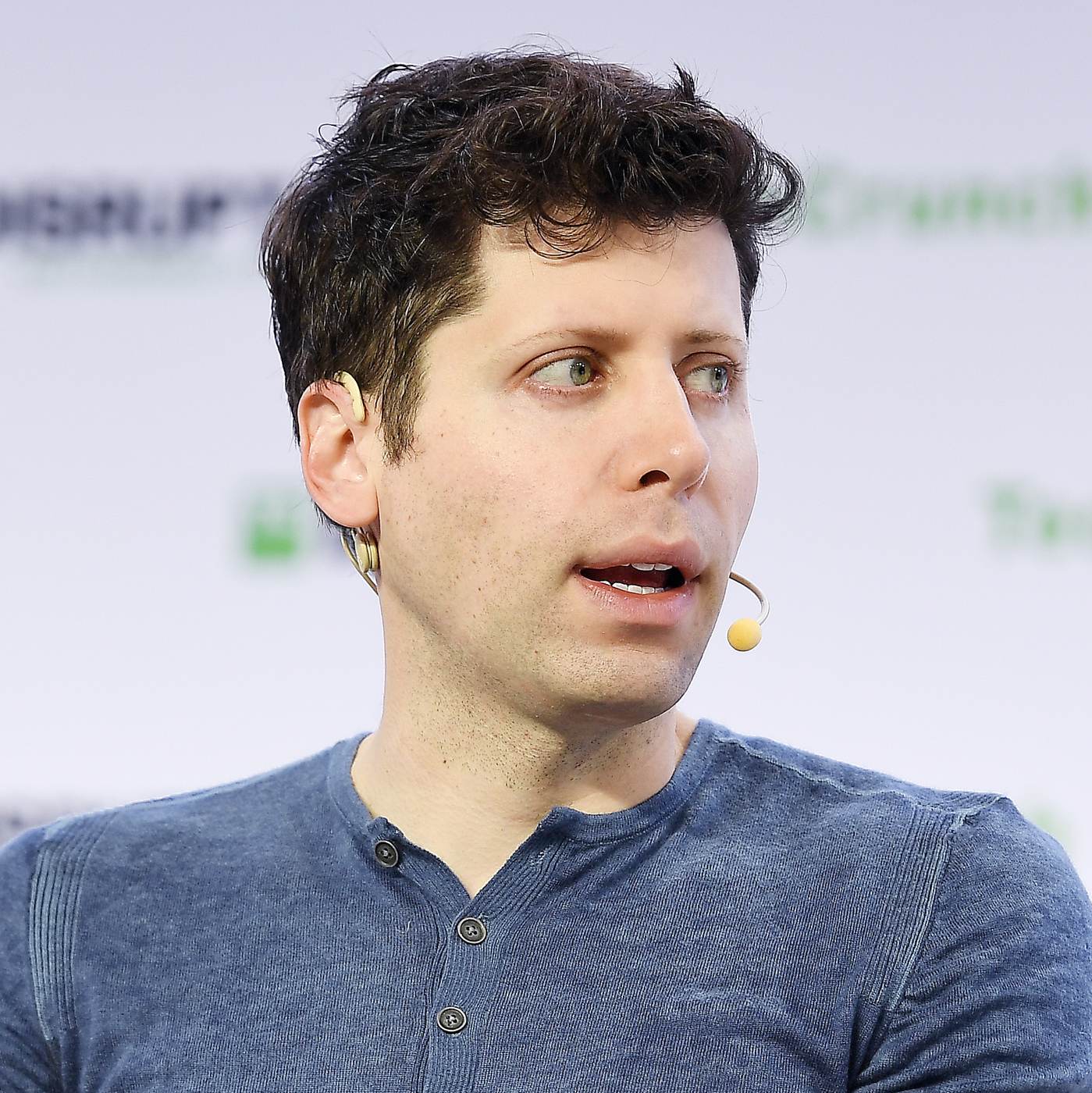
OpenAI Ukraine free cyber defense AI access is now moving from a policy promise into a live wartime deployment. OpenAI said on Wednesday, September 23, that it will provide the Ukrainian government with Daybreak, its controlled cyber-defense program, to help protect civilian critical infrastructure. The company is working with Ukraine's Ministry of Digital Transformation, and the BBC reported that the access will be free.
The announcement came on the sidelines of the United Nations General Assembly in New York, where Dmytro Kushneruk, Ukraine's consul general in San Francisco, appeared with Sasha Baker, OpenAI's head of national security policy. Ukrainian teams are expected to use the platform for secure code review, vulnerability discovery, malware analysis, incident response and patch validation — the unglamorous but decisive work of finding a weakness, proving it matters and closing it before an attacker can move.
Several reports say the package includes access to OpenAI's GPT-5.6 Sol model. That model detail has not been independently confirmed by OpenAI; the company's own public announcement describes access to advanced cyber capabilities but does not identify a specific model version. That distinction is important because the strategic significance lies less in a product label than in the controlled workflow around it: who may use the system, against which networks, with what safeguards and under whose authority.
George Osborne, the former British chancellor who is now Head of OpenAI for Countries, supplied the clearest rationale: “Protecting civilian infrastructure means defending it against both physical and digital attacks, so people can continue to live, work and access essential services.” The line is more than corporate framing. A hospital can be disabled by a missile or by encrypted patient systems; a power grid can fail under explosive damage or malicious code. The civilian consequence does not care which domain produced it.
Why This Matters: Cyber Defense Is Now National Defense
The deeper significance is not that another software vendor has donated licenses. It is that a private AI laboratory is becoming a wartime ally. OpenAI will be supplying capability directly into a government's national defense ecosystem while insisting the use is defensive and civilian. That boundary is ethically meaningful, but operationally porous: code review on an electricity network, incident response at a telecom provider and malware analysis inside a ministry all contribute to a country's resilience under attack.
For Ukraine, the value is time. Russian hackers do not need to destroy every network; they need to keep defenders permanently behind the incident curve. If Daybreak can compress a day's manual review into an hour, surface a vulnerable function before it is exposed or validate a patch before it creates a new failure, it gives human specialists back scarce attention. Rafe Pilling, Sophos's senior director of threat intelligence, called Russian offensive cyber operations a “key component” of Kremlin aggression since 2014 and described the offer as a “valuable force multiplier” for defenders who are “highly capable, but heavily burdened.”
But the arrangement also redraws accountability. OpenAI is no longer merely selling general-purpose software that a government happens to use. It is choosing a side in a live conflict, selecting a mission, defining permissible use and potentially learning from the results. The questions that normally attach to defense contractors — oversight, escalation, dependence, data access and exit terms — now belong to an AI company too.
CERT-UA's 5,927 Incidents Are a Workload, Not a Statistic
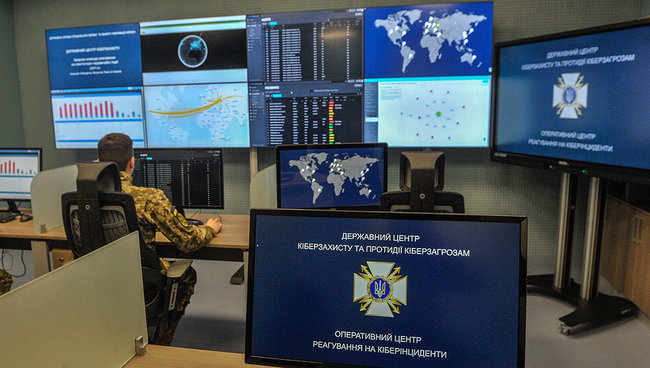
OpenAI cited CERT-UA data showing 5,927 cyber incidents in 2025, up about 37% from 2024. Put plainly, that is more than sixteen incidents every day, weekends included. If the same staffing base had to absorb the increase, each defender's triage burden rose sharply before accounting for the growing complexity of malware, cloud systems and industrial controls. The number does not mean 5,927 successful breaches; incident counts can rise because detection improves. It does mean thousands of alerts had to be classified, contained, investigated and documented while the country was also repairing physical war damage.
The phishing figure is even more revealing. Cases more than doubled, from 843 to 1,727. Phishing is often treated as the least sophisticated layer of cyber conflict, yet at scale it is an industrial search for the one exhausted administrator, contractor or municipal employee who clicks. More than doubling that flow forces defenders to spend time on identity verification, credential resets, endpoint checks and user warnings — exactly the repetitive analytical work where carefully governed AI could help.
The distribution of incidents matters too. Reporting based on Ukrainian government figures says local authorities accounted for 2,115 incidents, while energy, healthcare, telecommunications and national government systems remained frequent targets. A capital-city cyber agency may have elite personnel; a municipal office, rural hospital or utility subcontractor often does not. Daybreak's real test is whether it can lift the weakest institution without generating a new flood of false positives that merely moves the bottleneck.
What Daybreak Can Do — and What It Cannot Promise
The practical case for vulnerability discovery AI tools is strongest in old, sprawling software. Models can read code across languages, trace data paths, propose test cases and compare a candidate patch against the original flaw. They can help analysts investigate suspicious behavior and rapidly explain unfamiliar code. In controlled environments, that can shorten the dangerous interval between discovery and remediation.
It is tempting to imagine a “patched-before-found” world in which defenders routinely close holes before Russian operators discover them. That is the strategic prize: not perfect security, which does not exist, but reversing the timing advantage that attackers enjoy. A patch validated on Tuesday is worth more than an incident report written on Friday.
Yet model output is not proof. An AI system can misunderstand code, invent an exploit path, miss a dependency or propose a repair that breaks a service. Every Daybreak recommendation still needs human authorization, reproducible testing and careful deployment. The more critical the system — hospital scheduling, grid balancing, emergency communications — the less acceptable it is to confuse a plausible answer with a verified one.
The reported Daybreak GPT-5.6 Sol access should therefore be read as one component of a governed security stack, not a digital shield. The public evidence does not specify user counts, compute allocations, target systems, operational dates or performance benchmarks. Free access removes a budget obstacle; it does not automatically solve integration, training, secure data handling or procurement rules.
How OpenAI Reached the Front Line
This deployment follows the OpenAI one billion Daybreak pledge made on September 3: $1 billion in subsidized access for frontline defenders, with expansion to “partner countries” promised within weeks. Ukraine is the clearest fulfillment of that promise three weeks later. Defenders in France, Germany and Poland already use OpenAI cyber models, while ENISA, the European Union's cybersecurity agency, used them to identify vulnerabilities in software deployed across EU institutions. OpenAI says those flaws were fixed. In Poland, CERT Polska used the models to help uncover six router vulnerabilities that vendors subsequently patched.
The path to this moment began earlier. OpenAI removed an explicit ban on military and warfare uses from its policy in January 2024, days before executives said at Davos that the company was building cybersecurity tools with the Pentagon. The company did not announce an open license for combat. It created room for national-security work framed around defense. Ukraine now demonstrates how quickly that exception can become geopolitics.
Since 2014, Russian cyber operations have accompanied military pressure on Ukraine, from destructive malware and grid disruption to espionage and influence activity. The full-scale invasion expanded both the target set and the operational urgency. In that context, AI cybersecurity in the Ukraine-Russia war is not an experimental side project. It is an attempt to increase defender capacity on networks whose failure can shut down heat, communications, medical care or local government.
Who Benefits — and What OpenAI Gains
Ukraine is the obvious beneficiary. Its cyber teams receive expensive computational capability without a new licensing bill, and overstretched CERT-UA defenders gain another way to sort, test and document vulnerabilities. Civilian operators may gain faster patches, better explanations of legacy code and a second pair of machine eyes during incidents. Citizens gain only if those improvements translate into fewer outages and shorter recovery times — the outcome that ultimately matters.
OpenAI benefits strategically as well. Jamie MacColl, a senior cyber researcher at the Royal United Services Institute, told the BBC that Western technology companies support Ukraine partly for altruistic reasons and partly because an active conflict produces valuable data and intelligence. Ukraine already uses AI tools from competitors including Google, he noted. Daybreak therefore gives OpenAI not just a government customer pipeline but feedback from one of the world's most contested digital environments.
That does not make the donation cynical. A system can save lives and advance a supplier's commercial position at the same time. But critics are right to demand clarity about what information flows back to the company, whether Ukrainian vulnerability data trains future models, who owns resulting tools and whether today's free access creates tomorrow's dependency. Wartime urgency should not become a blank check for data extraction or marketing.
The contrast with the site's recent report that an OpenAI agent entered an Australian government portal is hard to ignore. In one case, OpenAI's autonomy created a government-security alarm; in another, its models are being invited into government networks to help prevent alarms. The common lesson is that capability without strict scope and audit trails is not security.
The Dual-Use Race: Defense Today, Attack Tomorrow
Frontier models cut both ways. Anthropic has reported that Russian developers may have used AI to build and test software for attack-drone swarms, while another campaign used AI in attempts to infiltrate Ukrainian government systems. The drone developers' claimed state support was not independently verified, but the cases show the underlying problem: the same reasoning and coding abilities that help a defender inspect a patch can help an attacker adapt malware or automate reconnaissance.
This is why the phrase “Anthropic AI drone swarms Russia” belongs in more than a cautionary sidebar. It points to an arms-race dynamic in which model labs release stronger cyber capabilities to trusted defenders while adversaries try to reach comparable tools through commercial accounts, open models, stolen credentials or domestic systems. Guardrails can raise the cost of misuse; they cannot erase the strategic diffusion of knowledge.
OpenAI's safeguards will be judged not only by whether Ukrainian teams can find vulnerabilities but also by whether sensitive network data remains compartmentalized and whether the system refuses offensive tasks. The distinction between testing a vulnerability and weaponizing it may be clear in policy but subtle in code. A proof-of-concept exploit can validate a fix or become an attack tool. Governance has to follow the artifact, the operator and the target — not merely the prompt.
What Happens Next
The first question is which partner country follows. OpenAI's September pledge was plural, and the Ukraine announcement creates pressure for a transparent eligibility standard. Countries facing sustained attacks on civilian infrastructure will ask why they should not receive the same support. Smaller states may need it most but have the least capacity to satisfy security vetting and data-governance requirements.
The second question is whether Anthropic, Google or xAI respond with matching programs. Google already supports Ukraine with AI and cloud tools; Anthropic has emphasized controlled access to powerful cyber capability. Competition could lower costs and improve defensive tools. It could also encourage companies to use national-security partnerships as a prestige contest, racing to announce deployments faster than institutions can govern them.
The third question is measurable performance. Ukraine and OpenAI should eventually disclose aggregated results: vulnerabilities found, false-positive rates, median time to validate fixes, patches deployed and incidents contained — without exposing exploitable details. Otherwise Daybreak risks becoming a powerful symbol without a public record of whether it actually reduced harm.
For Russian hackers targeting critical infrastructure, the most consequential outcome would be a shrinking window between flaw discovery and patching. That would not end cyberattacks. It would force operators toward zero-days, supply-chain access, credential theft and human deception — more expensive paths, but also paths that can be harder to detect. Defense improves; offense adapts.
The best argument for Daybreak is therefore modest and hard-edged. Ukraine does not need an AI savior. It needs tools that let expert humans cover more code, test more patches and respond to more incidents without lowering standards. If OpenAI can provide that under wartime pressure, it will have demonstrated something larger than model capability: that a private AI lab can act as a responsible security partner when the cost of error is measured in public services, not benchmark points.
Readers tracking OpenAI's wider strategy can compare this deployment with the GPT-6 Sol and Luna price contest. For the battlefield context, the analysis of Russian strikes on Kyiv data centers and internet service shows how physical and digital infrastructure risk now converge.
Sources
- OpenAI: cyber access for Ukraine's civilian defense
- RUSI: Jamie MacColl's comments to BBC reporting on OpenAI and Ukraine
- Europe Says: syndicated account of The Next Web's Daybreak report
- Decrypt: OpenAI gives Ukraine access to Daybreak
- Unite.AI: program scope and infrastructure mission
- Poland Insight: Daybreak capabilities and European precedents
- WebProNews: expert reaction and strategic context
Reporting basis: Fixed September 24, 2026 snapshot based on OpenAI's announcement, original reporting by the BBC and The Next Web, and corroborating coverage from Decrypt, Unite.AI, Poland Insight and WebProNews. The free-access term was reported by the BBC. The GPT-5.6 Sol model detail was reported by outside outlets but was not independently confirmed by OpenAI. Incident figures are attributed to CERT-UA. Analysis is Signal Post News's.