Trump voter midterm enthusiasm
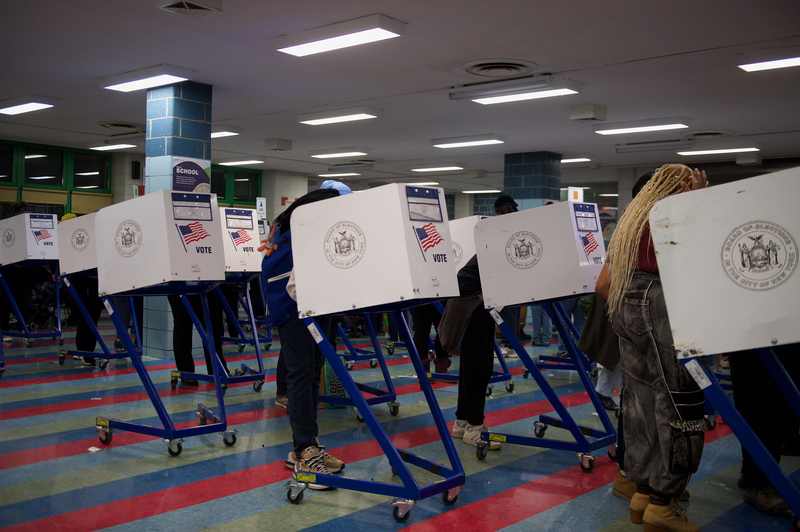
Trump voter midterm enthusiasm is cratering at the worst possible moment for Republicans. A new Reuters/Ipsos poll completed Monday found that voters who backed Kamala Harris in 2024 are far more enthusiastic about casting ballots in the November 3 midterm elections than those who supported Donald Trump: 48% of Harris voters said they were “very enthusiastic,” compared with just 30% of Trump voters, in a six-day survey of 4,506 adults with a margin of error of plus or minus 2 percentage points.
The poll also found men more enthusiastic about voting and more certain to cast ballots than women — but showing signs of shifting toward Democrats, a potential crack in the demographic pillar of Trump's 2024 victory. With control of both chambers of Congress at stake in 25 days, the findings are a warning sign for Republicans heading into the midterms.
Why this matters
Midterm elections are turnout elections. The party whose voters show up wins, and enthusiasm is one of the best early indicators of who is likely to show up. An 18-point gap — 48% to 30% — is not a rounding error; it is the kind of asymmetry that can decide House majorities. Democrats are widely favored to win control of the House and remain competitive in the fight for the Senate. If this gap is real and it holds, the November question may not be only whether Republicans lose the House, but by how much — and whether a Senate map that is less forgiving to Democrats starts to crack too.
There is a second, quieter signal inside the numbers. Among voters who said they were enthusiastic, 62% said they were energized by expressing opposition to Trump, compared with 36% who said they were eager to support the president. The motivated electorate is not merely larger on the Democratic side in this survey; it is disproportionately mobilized against the incumbent. That is the difference between an enthusiasm gap and an intensity gap, and intensity can bring marginal voters to the polls in bad weather in November.
What the numbers actually say
Harris voters are 1.6 times as likely to be “very enthusiastic”
The arithmetic is stark: 48% versus 30%. Put another way, for every ten Trump voters who say they cannot wait to vote, sixteen Harris voters say the same. In a midterm electorate that could number roughly 110 million voters, even a fraction of that gap showing up at the ballot box would matter enormously in the suburban House districts that decide majorities. That 110 million figure is an analytical estimate, not a Reuters/Ipsos forecast.
Men — Trump's steadiest pillar — are wobbling
Men were more enthusiastic about voting and more certain to cast ballots than women, the poll found. But they also showed signs of shifting toward Democrats: male voters backed Democrats over Republicans 43% to 39%, the largest Reuters/Ipsos gap recorded during Trump's second administration. Trump carried men in all three of his presidential campaigns. A four-point Democratic edge among men is more than a polling curiosity; if replicated, it would suggest erosion in the coalition that delivered him the popular vote in 2024, when strong male support combined with gains among Hispanic voters and other groups that shifted right.
The issues driving the gap: cost of living first, everything else second
Cost of living ranked as the top issue on voters' minds heading into November. “Democratic values” ranked second, followed by immigration. That ordering is difficult for the party in power: the number-one concern is the one for which voters often hold an incumbent president most directly accountable, and it is hard to message away. Voters do not need a pollster to tell them what groceries cost.
The Republican counter: the gap will narrow
Republican strategist Charlie Gerow, quoted by Reuters, said the findings raise the stakes for his party's turnout efforts but expects the enthusiasm gap to narrow as concerns about “far-left Democrats” gaining power motivate Republican voters. “The enthusiasm has to be ginned up among Republicans because turnout is what's going to determine the outcome of these midterm elections,” Gerow said. It is the standard — and not unreasonable — Republican playbook: October enthusiasm is not November votes, polls have missed before, and a closing argument can still move numbers.
The human texture: “I have lost faith in the voting process”
Linda Rivera, a 46-year-old Trump voter in Pennsylvania who responded to the poll, told Reuters she feels “neither enthusiastic or unenthusiastic” about voting next month. She said doubts about election integrity, promoted repeatedly and without substantiating evidence by Trump and his allies, have deepened her apathy. “I have lost faith in the voting process,” she said. “I have lost faith in both parties. Not just one.” It is one respondent's account, not a representative finding, but it illustrates a possible strategic trap: a movement built partly on distrust of elections may discourage some of its own voters from participating.
How we got here
The 2024 coalition that won Trump the popular vote was fueled by men and by gains among Hispanic voters and other demographic groups that shifted right. Since the start of his second term, Trump's support has dropped among every major demographic group — including double-digit declines among Hispanics, men, rural and suburban voters, voters without college degrees, and evangelical Christians, according to the Reuters/Ipsos trend.
A companion Reuters/Ipsos poll completed the same Monday put Trump's approval rating at a record-low 32%, unchanged from September's survey — the lowest of his political career. Just 24% of Hispanic Americans approved of his performance in that poll, the lowest share in either of his terms, and 26% of Hispanic registered voters said they planned to vote Republican next month, versus 52% for Democrats. Read our companion analysis of Trump's record-low 32% approval rating and the midterm stakes.
The economic backdrop explains much of the pressure. Americans are struggling with high inflation amid the war with Iran; the September jobs report added just 29,000 jobs; and an Emerson poll in September had Democrats up 11 points on the generic ballot. The Reuters/Ipsos enthusiasm numbers are not isolated; they are the latest point on a broader trend line.
Michigan offers a microcosm of the stakes. Thursday night's combative Senate debate between Republican Mike Rogers and Democrat Abdul El-Sayed — one of the country's most closely watched races — drew Trump's direct intervention on Truth Social. It is precisely the kind of race where a turnout gap can decide the winner.
Who benefits, who loses — and what the skeptics say
The near-term beneficiaries are House Democrats, widely favored to flip the chamber, and Senate Democrats, who remain competitive on a difficult map. The most exposed are Republican incumbents in suburban swing districts and the White House's legislative agenda for the final two years of Trump's term.
The skeptics have a real case, and it deserves a fair hearing. October enthusiasm is not November turnout. Polls — including Reuters/Ipsos surveys — have missed before, particularly by undercounting Republican support in some elections. Gerow's expectation that the gap narrows as the election nears has precedent: partisans often come home. And “very enthusiastic” is a soft measure; plenty of unenthusiastic voters still vote out of habit or civic duty.
But the counter-case extends beyond a single poll. Multiple Reuters/Ipsos waves show record-low approval and broad demographic erosion; a companion survey shows sharp weakness among Hispanic voters; and this poll finds an enthusiasm gap with a 62-to-36 opposition-to-support split among motivated respondents. When the top voter concern is the cost of living under an incumbent president, a pledge to close the gap still requires an effective turnout plan.
One caution the poll itself demands: it was conducted online among 4,506 adults with a ±2-point margin of error. Online panels can have house effects, and enthusiasm self-reports do not equal verified turnout. The 18-point gap is best treated as directionally meaningful rather than precisely predictive.
What happens next
Scenario 1 — the gap holds. Democrats take the House, possibly the Senate, and Trump's final two years become an era of vetoes and executive orders. The 2024 coalition starts to look like a one-election phenomenon.
Scenario 2 — the gap narrows. Republicans raise turnout the way Gerow predicts, losses stay near historical midterm norms for a president's party, and the Senate map's Republican tilt does the rest. The poll becomes a footnote.
Scenario 3 — events intervene. Hurricane Isaias is forecast to make Gulf Coast landfall tonight as a major hurricane, with the potential to scramble turnout operations across the Southeast. A fresh inflation print, a gas-price spike tied to the Iran war, or a surprise in the final debate calendar could move the needle in ways no October poll captures.
What to watch: the next Reuters/Ipsos wave, early-vote and mail-ballot returns as they begin, and whether Republican outside groups start spending like a party that believes its own strategists' warnings.
Sources and reporting notes
- Reuters, October 8, 2026 — Nathan Layne and Jason Lange on the Reuters/Ipsos enthusiasm findings, methodology and voter interviews.
- USA Today, October 8, 2026 — additional coverage of the enthusiasm gap and slipping approval.
Poll findings are snapshots, not election forecasts. Contested political claims are attributed, and analytical conclusions are labeled as analysis. The survey's stated margin of error was plus or minus 2 percentage points.