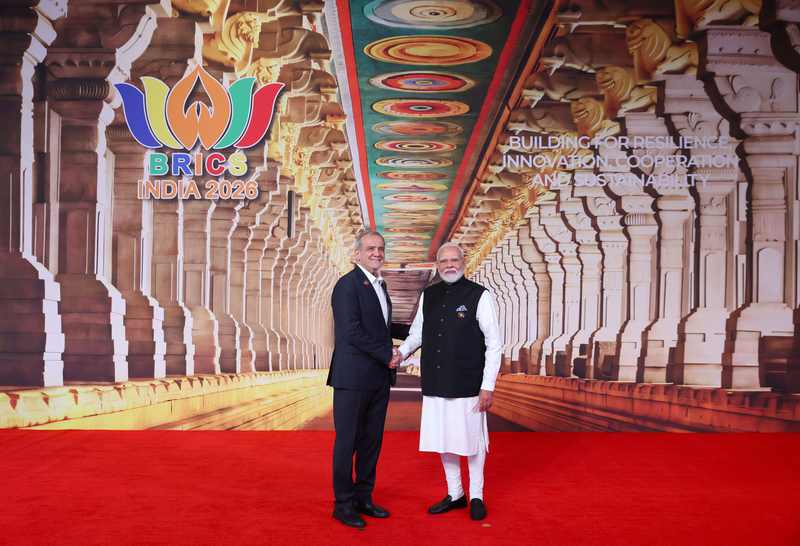
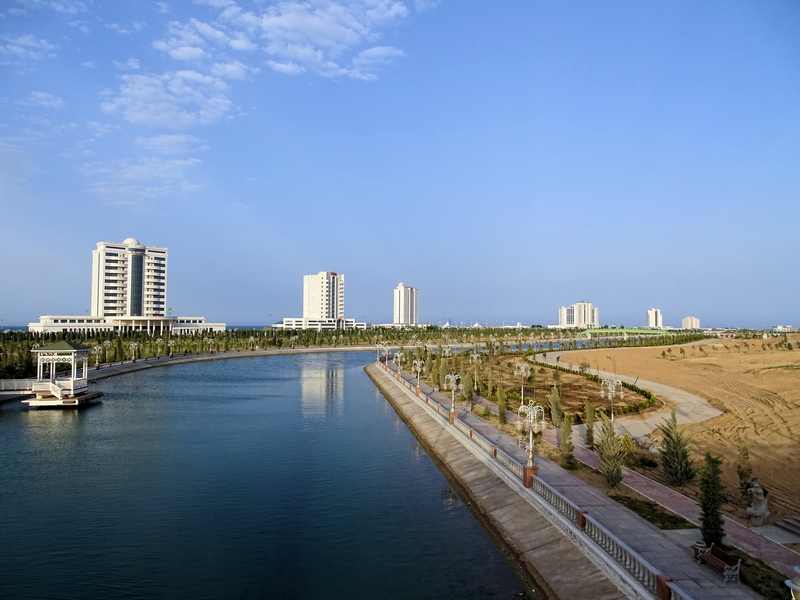
Pezeshkian Putin meeting: On Thursday evening in Turkmenbashi, Turkmenistan, Iranian President Masoud Pezeshkian told Russian President Vladimir Putin that Tehran would not leave negotiations with Washington. The two met on the sidelines of an expanded Commonwealth of Independent States summit and a Caspian Sea environmental gathering. Hours earlier, President Donald Trump wrote on Truth Social that the United States would not attack Iran before the November 3 midterms, while insisting the blockade would remain “in full force and effect” and describing the contacts as “productive negotiations.”
Put together, the statements looked less like coincidence than a call-and-response conducted across the Caspian. Washington offered a pause in military escalation without easing economic pressure. Tehran answered that talks remain possible, but did so in Moscow's presence and with Iran's grievances attached. There is no announced agreement. There is, however, a newly visible outline of how both sides may try to get through election day without closing the diplomatic door.
Why this matters
A pre-election arrangement without a signed deal
The immediate importance is not that peace has broken out; it plainly has not. It is that both capitals have now described restraint as useful. Trump removed new attacks from the calendar until November 3. Pezeshkian kept Iran at the table. Neither side surrendered its leverage: Washington retained the blockade, while Tehran retained its bargaining positions on enrichment and Hormuz.
That amounts to the outline of a tacit pre-election arrangement. Neither government appears eager to let the eighth month of war dominate the final stretch of the U.S. campaign. Markets read the signal instantly. U.S. crude remained sharply higher on the day but cooled from its intraday peak after Trump's post, a reminder that traders were pricing the difference between a pause and a widening war in real time.
Pezeshkian also chose his audience carefully. He was speaking to Moscow, not Washington. As diplomacy resumes, Tehran must manage the expectations of its most consequential major-power backer as well as those of the United States. The venue therefore made the message larger than a bilateral exchange: Iran was reassuring Russia that negotiations would not mean abandoning the strategic partnership, while asking Moscow to validate Tehran's terms.
What Pezeshkian actually told Putin
Iran will not leave the negotiating table
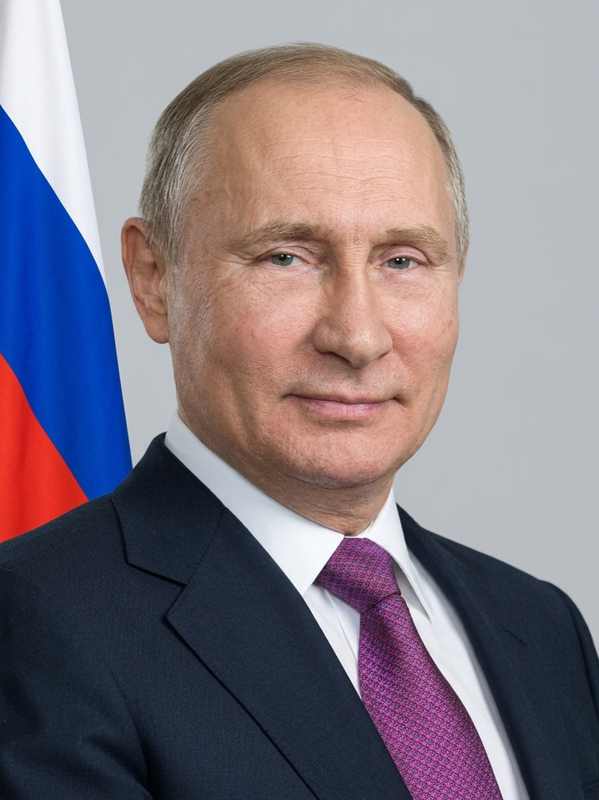
According to Press TV, Iranian state media, Pezeshkian told Putin: “We are engaged in dialogue; yet, every time we talk to the US, they launch new attacks. Nevertheless, we will not walk away from the negotiating table.” The accusation that Washington attacks whenever talks occur is Tehran's framing of events and is not independently verifiable from the material available for this report.
Pezeshkian then offered the clearest description yet of the process he says is under way: “Proposals were exchanged, both from our side and from the Americans, and we have made our own revisions to them. Once finalized, we intend to sit down with the relevant intermediaries to consolidate and conclude the matter.” That wording matters. It implies that the current phase is not direct negotiation in the familiar sense; it is an exchange of papers followed by a possible intermediary-led consolidation.
The Iranian president praised Moscow's opposition to what he called unilateralism, thanked Russia for its positions in the region and at the United Nations, and called for deeper trade, economic and people-to-people ties. Those were not ceremonial flourishes. They were a declaration that Tehran sees diplomacy with Washington and strategic alignment with Russia as parallel tracks rather than competing choices.
Putin's side supplied a carefully balanced endorsement. Sweden Herald, citing AP and TT, reported that the Russian leader said Moscow was prepared to do “everything it could to bring an end” to the war and spoke of “positive developments” in bilateral ties. The meeting had been pre-confirmed by Kremlin aide Yuri Ushakov in comments carried by RIA and TASS, both Russian state-controlled media, according to AnewZ. AnewZ also reported that Pezeshkian was the first Iranian president invited to take part in an expanded CIS session.
The proposals on the table
Iran-US negotiations move through intermediaries
Pezeshkian's reference to “relevant intermediaries” is an admission about the condition of the direct channel: it is either exhausted, distrusted or too politically costly to carry the full burden. An intermediary can preserve deniability, shuttle revised texts and allow each capital to test the other's red lines without staging a public retreat.
Any workable package must answer three questions. First, what happens to the U.S. blockade that Trump says will remain fully enforced? Second, can the parties bridge the nuclear dispute when Tehran calls enrichment “indispensable” and Washington insists Iran must not acquire a nuclear weapon? Third, who guarantees the movement of oil through the Strait of Hormuz when even basic throughput figures are contested?
Those issues are linked. The blockade is Washington's pressure mechanism. Enrichment is Tehran's sovereignty claim and bargaining chip. Hormuz is the world's price signal. A narrow understanding that touches only one of the three could lower tensions for days; a durable agreement has to address all three in a sequence each side can defend at home.
Eight months of war, in the numbers
February 28 to the November 3 deadline
February 28. The date the war began, placing the conflict in its eighth month as the U.S. election approaches.
November 3. The midterm election date Trump set as the boundary for his no-new-attack pledge.
$91.49 a barrel. U.S. crude's level after a 3.6 percent rise, according to Investors.com, down from an intraday high of $93.20 as prices cooled after Trump's post.
5.35 percent to 5.23 percent. The 10-year Treasury yield's reversal as markets digested the Iran news alongside a strong 30-year Treasury auction, according to Investors.com.
22 million barrels. Trump's claim for oil moving through Hormuz “last night alone.” Analysts dispute that figure, and it should not be treated as independently established throughput.
20 years. The term of the comprehensive strategic partnership treaty Russia and Iran signed in Moscow at the start of 2025, the institutional backdrop to Thursday's conversation.
More than two hours. The length of Putin and Pezeshkian's previous meeting, held in early September in Bishkek during the Shanghai Cooperation Organization gathering.
The military backdrop remains just as consequential. The Atlantic reported that the White House directed the Pentagon to prepare limited strike options that could be used before the midterms, while larger action after the vote was also under consideration. USA Today's account of Trump's statement placed his pause against that reporting. A delay, in other words, does not erase the plans. It changes their earliest plausible date.
Who gains, who loses
Russia gains broker status and leverage
Moscow gains most visibly from being cast as a broker. The role strengthens Russia's claim to relevance beyond Ukraine, gives the Kremlin leverage over both the tempo and presentation of diplomacy, and gives practical weight to the 20-year partnership treaty. But broker status carries risk: failure would expose the limits of Russia's influence over Tehran.
Iran gains time and a reasonableness argument
Iran can present itself as the party refusing to abandon talks even under pressure. That buys time, creates distance from the image of an actor seeking endless confrontation, and gives intermediaries a text to work with. Skeptics will note that Tehran's account of the exchanges — including its chronology of talks and attacks — cannot be independently verified here.
Trump gains calmer markets before the vote
Trump's pledge lowers immediate escalation risk and helps cool the oil-price shock heading into November 3, without taking the blockade or post-election military option off the table. It is a politically useful combination: calm now, coercive leverage later. Critics will argue that tying the strike calendar so explicitly to an election makes military policy look subordinate to campaign timing.
The exposed parties still lose certainty
Oil importers remain vulnerable while Hormuz flows are disputed. European governments and Ukraine have reason to be wary of any backchannel that expands Moscow's diplomatic leverage. And the blockade remains a pressure tactic whose costs are felt beyond the negotiating rooms. The pause lowers the temperature; it does not distribute security evenly.
What happens next — three scenarios
1. A post-election deal through intermediaries
The exchanged proposals become a consolidated text after November 3, with intermediaries sequencing relief, nuclear constraints and shipping guarantees. Trump has repeatedly said he expects the war to end after the election. Pezeshkian's language supplies a procedural route, but not yet proof that the substantive gaps have closed.
2. A post-election strike
The talks fail or become a holding operation, and the Pentagon options described by The Atlantic move back to the center of decision-making. Limited plans already drawn up could become a starting point; larger action reportedly considered for after the midterms would carry far greater risk to Hormuz, regional bases and global energy prices.
3. The long grind
The blockade stays “in full force and effect,” negotiations continue without conclusion, and neither side accepts the cost of compromise or the risk of decisive escalation. Iran's Defense Ministry has claimed that weapons production is surging; as with other wartime assertions, that claim requires independent scrutiny. The result would be a frozen, expensive standoff in which pressure accumulates but resolution does not.
For now, the shortest sentence of the day may be the most important: “We will not walk away from the negotiating table.” Everything else — the blockade, the bombers, the barrels — is leverage. The price of peace, it seems, will be named after November 3.
Sources
- Press TV — Pezeshkian's remarks to Putin, October 8, 2026 (Iranian state media)
- Sweden Herald — Putin says Russia is ready to help end the war, October 8, 2026 (via AP/TT)
- AnewZ — Pezeshkian's CIS meeting debut and Kremlin confirmation, October 8, 2026
- USA Today — Trump rules out an Iran attack before the midterms, October 8, 2026
- Investor's Business Daily — oil and Treasury market moves, October 8, 2026