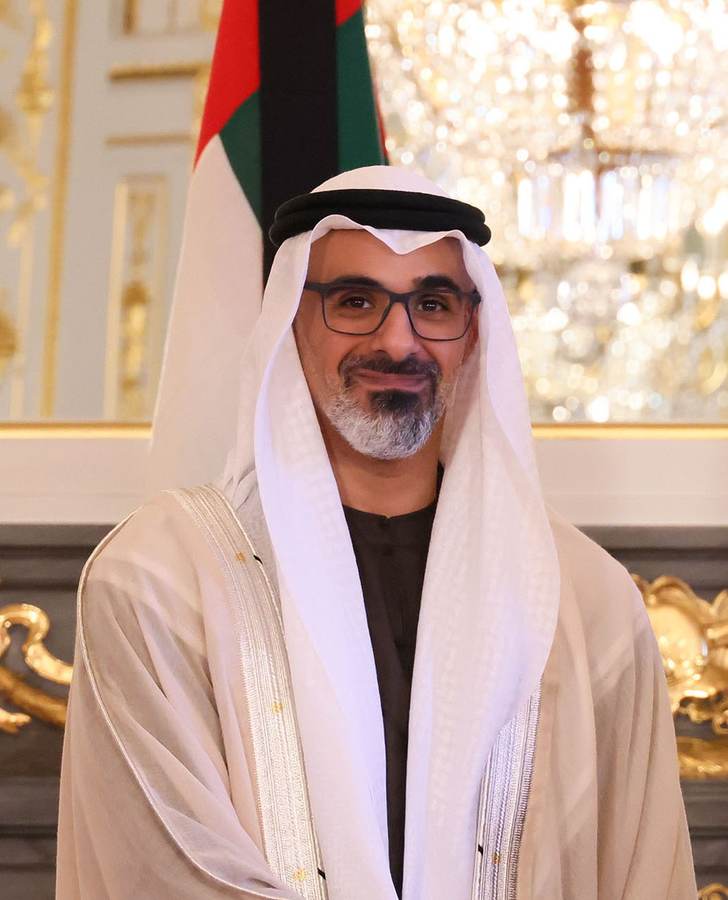
Abu Dhabi is investing because a closed Strait of Hormuz has stopped being a theoretical war-game and become an operating fact. Bloomberg's Big Take, as summarized by ZeroHedge and 7Globe, reported that the emirate has formally named the strategy “Zero Hormuz” and put Crown Prince Sheikh Khaled bin Mohamed Al Nahyan in charge. The aim is larger than one oil pipe: create export routes for crude, petrochemicals, aluminium and other commodities that reach open water without passing through the strait.
That decision is a strategic admission wrapped in an infrastructure program. For decades, Gulf producers treated Hormuz risk as a crisis to be deterred, escorted through or rapidly reversed. Abu Dhabi is now putting capital behind a harsher premise: disruption can last long enough that ships, storage, pipelines and processing capacity must be reorganized around it. The emirate is not predicting that the strait will never reopen. It is refusing to let reopening remain the only plan.
Why this matters: a Gulf state prices in permanent closure
This is the first time a Gulf state has formally priced a potentially permanent Hormuz closure into a named, top-level investment strategy. That matters because infrastructure is policy with a long memory. Diplomatic statements can change in a day; a pipeline corridor, tanker terminal or aluminium-export facility commits capital for decades. “Zero Hormuz” tells markets that Abu Dhabi's base case now includes a world in which the narrow sea lane can be unavailable for months, perhaps repeatedly.
The distinction is important. A country may build spare capacity as normal resilience. It is another thing to organize a sovereign investment campaign around bypassing the route through which, under normal conditions, roughly 20% of global oil and liquefied natural gas flows. The first approach hedges a temporary outage. The second treats geography itself as a balance-sheet liability.
Bloomberg's account, carried by ZeroHedge and 7Globe, says L'imad Holding — described in that reporting as Abu Dhabi's roughly $300 billion sovereign fund — is likely to commit tens of billions of dollars more to infrastructure outside Hormuz, focused on Fujairah. Sheikh Khaled became chairman weeks before the Iran war began, according to those reports. The timing does not prove the fund was redesigned for the conflict, but it gives the Crown Prince both the political authority and the capital platform to accelerate the response.
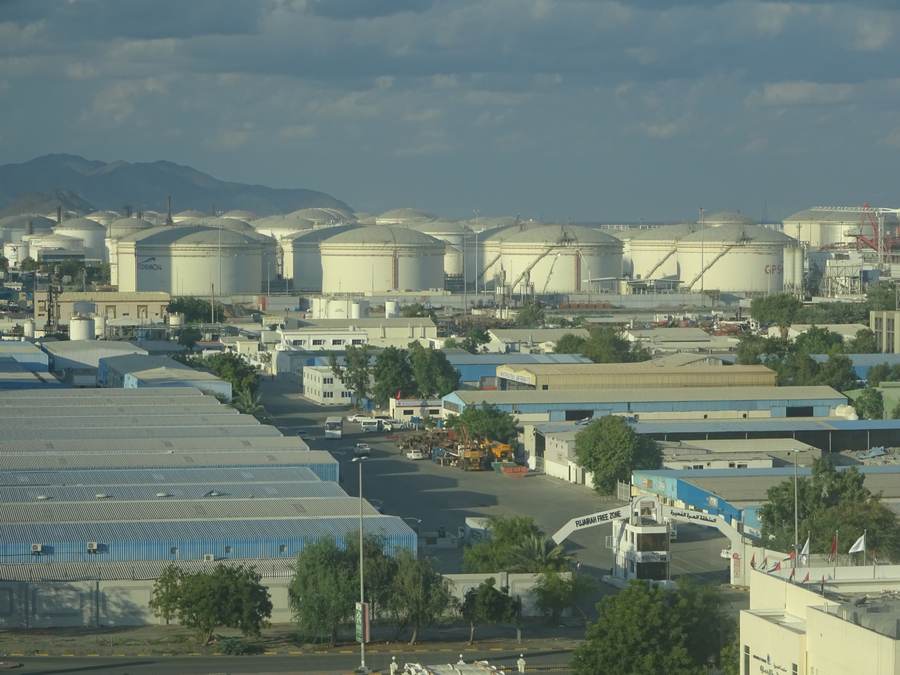
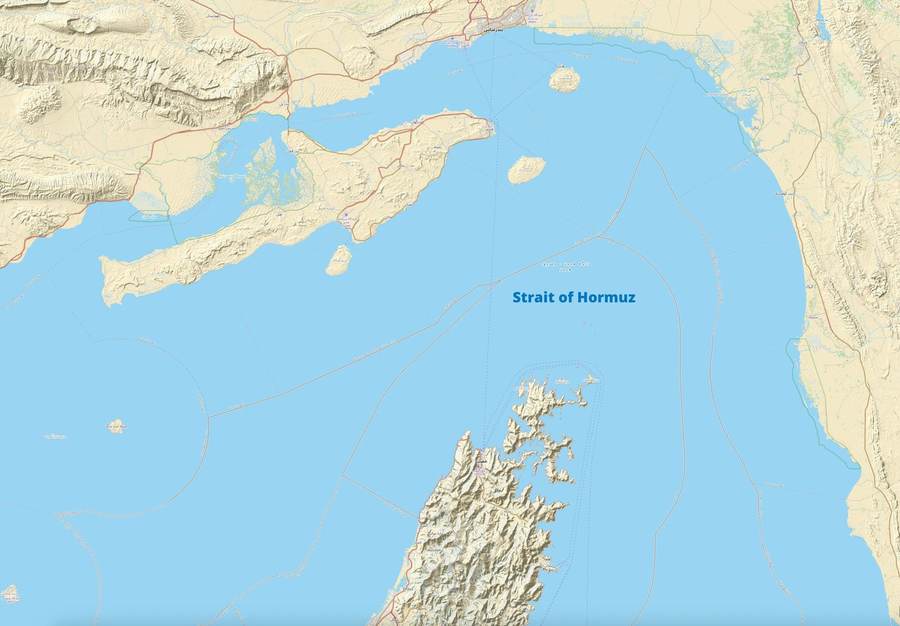
Fujairah is the hinge. It sits on the Gulf of Oman side of the UAE, beyond the strait's narrowest waters. Oil arriving there can load directly onto tankers bound for Asia or Europe. A larger Fujairah port expansion also gives petrochemical producers, metal exporters and traders a place to store, blend and ship products without first crossing the blockade. That makes the port not merely an outlet but a second economic shoreline for Abu Dhabi.
How the February 28 strikes turned a contingency into a deadline
The strategic backdrop begins on February 28, 2026, when U.S.-Israeli strikes on Iran were followed by an effective closure of the strait, according to the cited coverage. The result was not one spectacular stoppage but an accumulating seizure of normal commerce. Bloomberg's account, as carried by the two cited publications, put the queue at more than 110 anchored tankers and said the Islamic Revolutionary Guard Corps was charging roughly $1 per barrel for what it called “safe passage.” Those figures describe a market in which navigation is no longer a routine right but a negotiated risk.
Under normal conditions, roughly 20% of global oil and LNG flows pass through Hormuz, according to the industry reporting cited for this analysis. That share gives the route extraordinary influence. When the flow is constrained, the shock reaches beyond crude. Refinery feedstock, diesel, jet fuel, petrochemicals and gas cargoes all become harder or more expensive to move. Insurance premiums rise; voyages lengthen; buyers bid for substitute barrels; inventories turn from working capital into strategic assets.
The price response shows the scale of that repricing. The cited market reports put Brent crude at roughly $72 a barrel before the conflict and about $112 recently — an increase of more than 50%. Those are snapshots, not a promise that oil will stay at either level. They do show how quickly a chokepoint crisis moves from naval strategy into freight bills, airline costs and household inflation.
Governments have tried to bridge the gap. The cited coverage reports that Italy released 9 million barrels from its reserves before an International Energy Agency-coordinated response followed. These releases matter: they put physical supply into a tight market and can calm the expectation that every buyer must secure barrels immediately. But reserves only buy time. They cannot create a durable route from inland UAE fields to open water, and every barrel released today eventually leaves a hole that must be refilled.
That is why the G7 and IEA reserve releases should be read as a bridge, not a solution. The same distinction applies to Washington's argument over a possible U.S. diesel export ban and Europe's warning. Export controls can rearrange pain among allies; they cannot repair a missing shipping lane.
The numbers in context: capital, barrels and capacity
The headline numbers sound enormous because they are. The harder question is what each can actually do.
A roughly $300 billion fund. Bloomberg's reporting describes L'imad Holding at that scale. A fund of that size can finance ports, tank farms, pipelines, roads, industrial zones and long-term shipping contracts simultaneously. “Tens of billions” could therefore be a large infrastructure program without becoming an existential bet for the fund. The strategic advantage is sequencing: Abu Dhabi can finance bottleneck relief before every commercial customer signs a contract.
Tens of billions for Fujairah. That money is not synonymous with pipe capacity. Ports need dredging, berths, storage, fire protection, power, inspection systems and road or rail connections. Petrochemicals and aluminium require different handling from crude. The point of the spending is to create an export ecosystem, not merely a tube ending at the coast. It is expensive because resilience requires redundancy across the chain.
Up to 1.8 million barrels a day today. Reuters reported on May 20, through gCaptain and MarineLink, that the existing Abu Dhabi Crude Oil Pipeline — commonly called ADCOP or the Habshan–Fujairah pipeline — can carry up to 1.8 million barrels per day. That is substantial, but “up to” describes nameplate capability, not a guarantee of continuous output, tanker loading or downstream demand. Maintenance, field mix, storage and terminal schedules still govern how much moves.
A new line about 50% complete. The same Reuters report said the new West-East Pipeline bypassing Hormuz was approximately halfway built. ADNOC chief executive Sultan Al Jaber said it would double UAE crude export capacity through Fujairah by 2027, after the Crown Prince directed ADNOC to fast-track construction. His warning was blunt: “Right now, too much of the world's energy still moves through too few choke points.”
Doubling capacity does not mean replacing the world's Hormuz flow. It means the UAE could move far more of its own crude outside the strait. If the reference point is current ADCOP capability, the scale is strategically significant for Abu Dhabi and meaningful for global buyers, but it remains much smaller than the roughly one-fifth of worldwide oil and LNG trade normally using Hormuz. Saudi, Qatari, Iraqi and Kuwaiti flows do not all become Emirati barrels simply because Fujairah expands.
Winners: Fujairah, ADNOC and buyers that pay for security
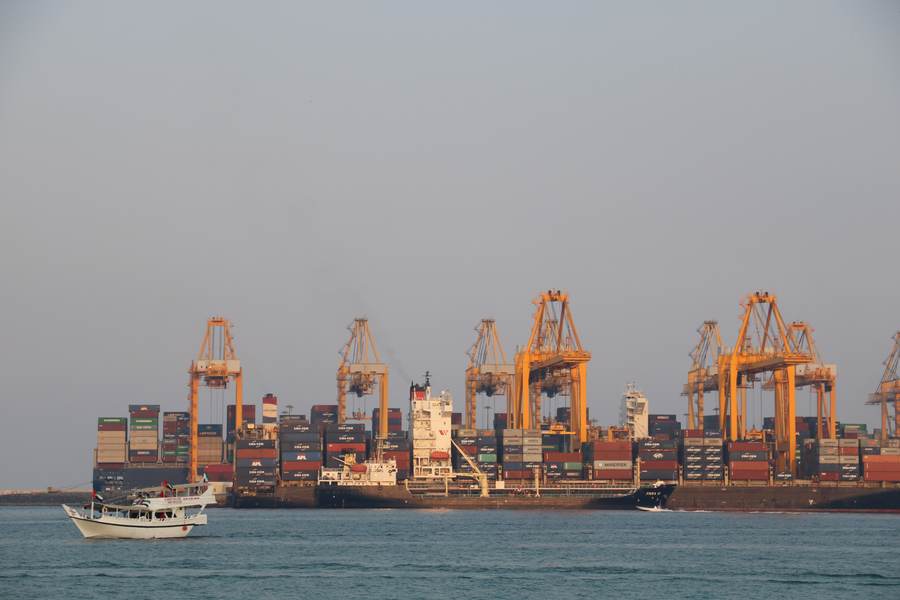
Fujairah traders are the clearest commercial winners. More storage and throughput means more blending, bunkering, inspection, ship services and price discovery. The port can deepen its role as a market in its own right rather than simply the end of an oil bypass pipeline UAE planners built for emergencies.
ADNOC also gains. The company would have more control over where and when it loads crude, a stronger negotiating position with tanker operators and a more credible promise of delivery during Gulf disruptions. Reliability can command a commercial premium even when the oil itself is unchanged. A buyer is not only purchasing molecules; it is purchasing confidence that the cargo can leave.
Energy-security buyers such as India and Japan stand to benefit from more UAE oil exports through Fujairah. Both depend heavily on imported energy and have strong incentives to diversify routes as well as suppliers. A barrel loaded east of Hormuz reduces one transit risk, even though it does not remove voyage, insurance or regional-security risks. Long-term supply agreements could become more attractive if they explicitly pair crude volumes with bypass capacity.
Losers, limits and the critics' strongest case
Iran's leverage is the most obvious potential loser. If Abu Dhabi can export most of its oil without using the strait, Tehran's ability to pressure the UAE through closure falls. The political signal may matter before the extra capacity is finished: every credible bypass encourages buyers and neighboring producers to reduce the value of the chokepoint as a coercive tool.
Asian importers can still lose if construction lags. The 2027 target is an infrastructure timetable, while the market shock is happening now. If the strait remains closed and new capacity is unavailable, refiners face expensive substitutes, longer voyages and uncertain delivery windows. Import-dependent economies bear that mismatch through higher fuel costs, weaker trade balances and pressure on currencies.
Critics make a more fundamental point: bypassing Hormuz does not bypass conflict. Fujairah itself was hit in March by debris from an intercepted drone, which started a fire at the hub. Iran has expanded its definition of the strait to include the UAE's Gulf of Oman coastline. Saudi Arabia's East-West pipeline, another celebrated bypass route, was briefly shut after attacks by pro-Iran militias. Geography reduces one vulnerability and may concentrate another.
Security experts are therefore right to reject the word “zero” if it is read as zero risk. Ports are fixed, visible targets. Pipelines cross long stretches of territory. Pumping stations depend on electricity and control systems. Tank farms can burn. Sea lanes outside the strait remain exposed to drones, missiles, mines and insurance withdrawal. The smarter reading of Zero Hormuz is zero required transit through the chokepoint — not zero exposure to the regional war.
What happens next: three paths to 2027
Scenario one: the strait reopens and stays open. A diplomatic agreement or military de-escalation restores routine transit before the new pipeline is finished. In that case, the war premium embedded in the recent Brent oil price could fall sharply from current levels as anchored tankers move and insurers reassess risk. A return to the pre-conflict level around $72 is possible only if supply, sanctions, inventories and demand also resemble the earlier market; reopening alone does not guarantee a specific price. The Fujairah investment would still proceed because the crisis has proved the value of redundancy.
Scenario two: partial passage, persistent premium. Some ships receive escorts or negotiated access while others remain delayed. Brent could retreat from the recent roughly $112 level yet remain well above its pre-conflict price because every cargo would still carry security, delay and insurance costs. This is the awkward middle ground: enough oil moves to prevent acute shortage, but not enough certainty returns to erase the risk premium. Fast-tracking the ADNOC West-East Pipeline is most valuable in this scenario because each added barrel has an immediate alternative outlet.
Scenario three: closure persists into 2027. Reserve releases buy time, demand weakens under higher prices and producers scramble for bypass capacity. The new line becomes critical, but even doubled UAE capacity cannot replace all flows normally crossing Hormuz. Brent could remain around elevated levels or move higher if physical losses outpace releases and demand destruction. No responsible analysis can assign a precise price without assumptions about war damage, OPEC production, global growth and government intervention. The direction of pressure, however, is clear.
The key milestones are physical, not rhetorical: pipeline completion percentage, testing, pumping capacity, storage additions, berth availability and actual cargo loadings. Markets should also watch whether L'imad Holding announces specific investments rather than a general envelope. “Tens of billions” becomes meaningful only when projects, contractors and deadlines emerge.
The larger lesson: redundancy is becoming production
For years, oil-market analysis separated production capacity from transport security. The Hormuz crisis collapses that distinction. A barrel that cannot reach a tanker is not available to the world market in the way price models assumed. A terminal that can load outside the blockade effectively creates usable supply even if the field produces no additional oil.
That is the deeper significance of Abu Dhabi's bet. Zero Hormuz is not simply an engineering response to one war. It is an attempt to convert sovereign wealth into control over the final miles between production and the customer. The UAE is paying now to avoid having its exports priced later by another state's leverage over a narrow waterway.
The policy is rational, but it is not magic. Fujairah can diversify routes; it cannot move the entire Gulf. Pipelines can reduce dependence on tankers inside the strait; they cannot make ports invulnerable. Reserve releases can smooth the transition; they cannot sustain consumption indefinitely. The honest case for the plan is therefore not that it ends Hormuz risk, but that it turns one catastrophic point of failure into several smaller, more manageable risks.
Readers can trace the household effect of this disruption in our analysis of why the Iran war is raising gas prices. That is where the strategic argument lands: not only in tanker queues and sovereign funds, but in the cost of commuting, freight, food and credit. Abu Dhabi is betting tens of billions that the old route is no longer dependable. The rest of the market is already paying for the same conclusion by the barrel.
Sources
- ZeroHedge — summary of Bloomberg's Big Take on Abu Dhabi's Zero Hormuz strategy
- 7Globe — UAE planning for shipping alternatives and Fujairah expansion
- gCaptain — Reuters report on the West-East Pipeline and ADNOC's 2027 target
- MarineLink — Reuters report on pipeline progress and current ADCOP capacity
Reporting note: Dollar amounts, barrel capacities, completion estimates and market figures are attributed above to the named reports. Forward-looking price paths are scenarios, not forecasts.