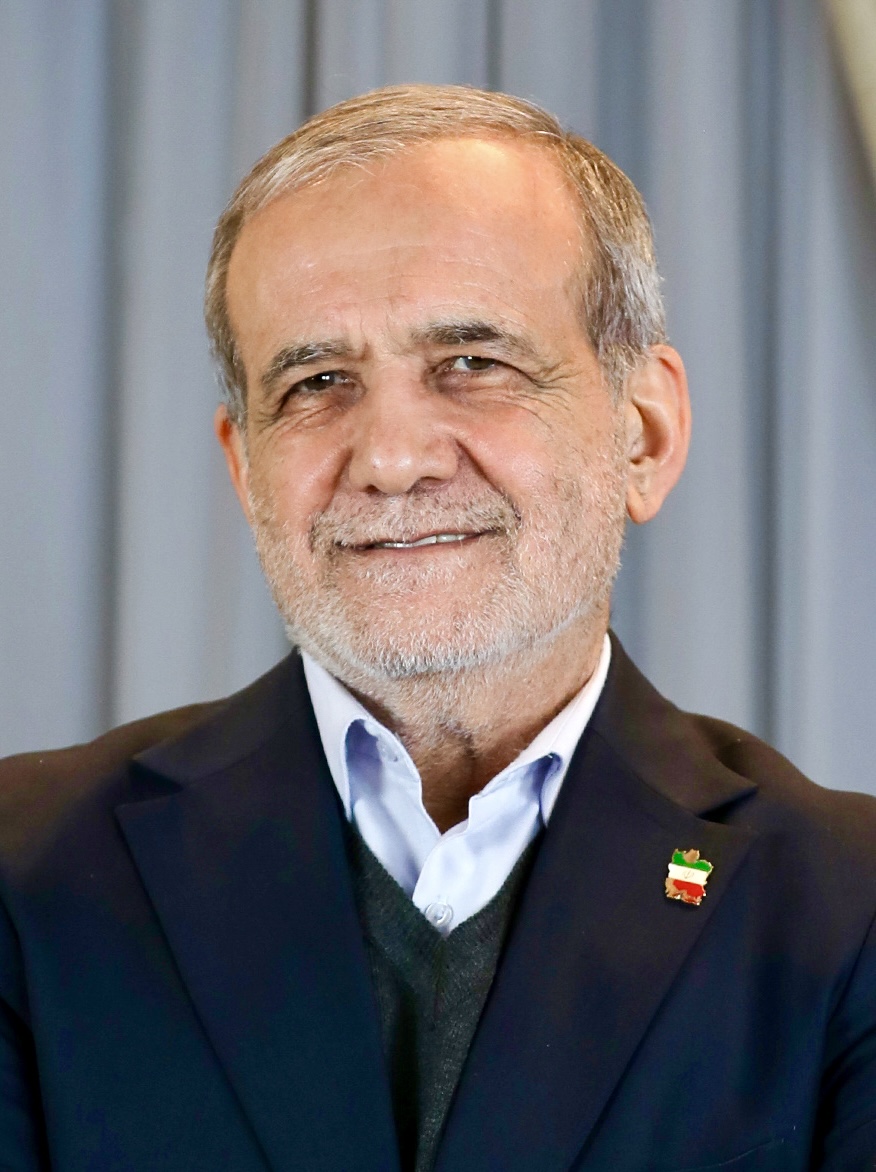
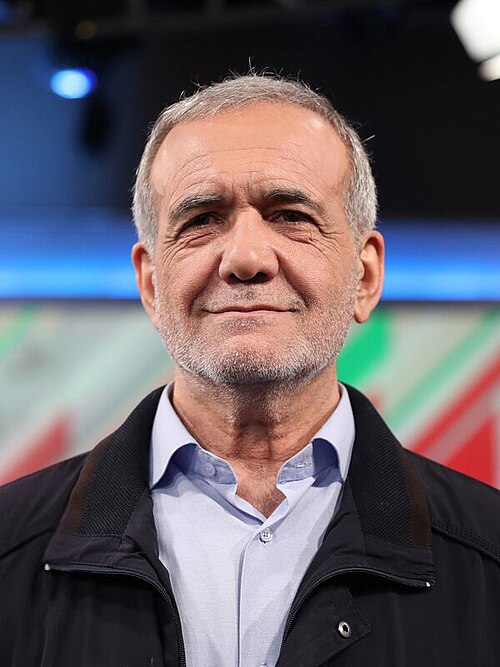
The Pezeshkian UNGA speech 2026 was diplomacy conducted in the grammar of war. On Wednesday, September 23, Iran's president addressed the 81st United Nations General Assembly in New York, seven months after the United States and Israel began a war that, according to CNN's reporting, opened with the killing of Supreme Leader Ayatollah Ali Khamenei. Pezeshkian spoke on American soil as the elected leader of a country fighting the United States, then directed his sharpest lines at President Donald Trump.
Trump had used the same rostrum a day earlier to threaten to “annihilate the Islamic Republic” and drive it “into hell,” declaring that Iran was no longer the “bully of the Middle East.” Pezeshkian's reply was calibrated for two audiences at once: Iranians demanding proof that their government had not capitulated, and foreign governments looking for any sentence that could keep negotiations alive. “Yes, they did hit us, but we did not bend the knee,” he said, after holding up photographs of schoolchildren killed in Operation Epic Fury bombings and a portrait of the late supreme leader.
Source note: The date, setting, wartime context and reported remarks are supported by CNN's report from the address, The Times and the official United Nations video and transcript page.
Why this matters
A wartime head of state had been given a microphone in his enemy's city and used it to lecture that enemy about terrorism, nuclear double standards and freedom of navigation. That is the deeper significance of the speech. The United Nations did not end the war; it created a stage on which each side could tell its public that it had faced the other without flinching.
The lone U.S. diplomat in the hall then supplied the day's defining image. Video showed the official gathering documents from the American desk and leaving shortly after Pezeshkian began. The gesture mirrored the walkout by most of Iran's delegation during Trump's speech on Tuesday. In another era, diplomacy was measured by handshakes, communiqués and late-night drafting rooms. Here, it was measured by who remained seated. Walkout theater has become the visible substitute for a relationship neither side is yet willing to normalize.
That theater should not be dismissed as empty. Symbolic defiance can protect leaders from domestic attack long enough to negotiate, but it can also harden public red lines that negotiators later cannot cross. Pezeshkian's “did not bend the knee” phrase gives his reformist camp a patriotic shield. It simultaneously gives Iran's hard-liners a slogan with which to punish any later compromise.
Source note: The U.S. walkout and the photographs displayed at the podium were reported by Daily Economy News and the Washington Examiner; the U.N. page preserves the official address.
The message: no surrender, but not no diplomacy
Pezeshkian rejected Trump's description of Iran as a terrorist state. “The United States president described us as terrorists. We have been the victims of terrorism,” he said. He also insisted, “We do not seek our security in the insecurity of others.” The pairing was deliberate: victimhood for the home audience, reassurance for neighbors that hear every Iranian threat against shipping as a threat to their own prosperity.
On the nuclear issue, he drew a bright line between weapons and technological rights. “Iran needs nuclear energy not nuclear bomb,” he said, adding that Iran “will not forgo its rights to peaceful use of nuclear technology.” He contrasted inspection demands on Tehran with Israel's policy of nuclear ambiguity, saying: “Atomic and nuclear bombs are in the hands of the Israeli regime, but the inspectors are requested to come to the Islamic Republic of Iran,” while Israel “has never allowed a single inspection.” The defensible point is that Israel neither confirms nor denies possession; Pezeshkian used that ambiguity to argue for one standard, not to resolve what remains officially unacknowledged.
Hormuz produced the speech's hardest operational warning. “We cannot let some have free access and gain their interest from a waterway while at the same time using that waterway to impose their aggressions upon us, to impose insecurity upon us, to forbid us access to our own waterways,” he said. That is not merely rhetoric about sovereignty. It is Iran's claim that commercial access to the strait cannot be separated from American military pressure and the U.S. naval blockade of Iranian ports.
Yet Pezeshkian also said, “We are ready for dialogue and diplomacy and negotiations without accepting the language of force.” The offer was narrow and conditional, but real. Read together, the speech was less a refusal to negotiate than a refusal to negotiate under a public image of defeat.
How we got here
The address followed seven months of direct war, tightening sanctions and repeated strikes. Trump's Tuesday escalation is examined in our analysis of his UN General Assembly speech. Trump left New York on Tuesday night without meeting Pezeshkian, The Times reported, but the two governments did not leave without contact.
A day before the address, Foreign Minister Abbas Araghchi spent at least two hours in New York talks with Trump's envoy Steve Witkoff. It was the first visible diplomatic opening since an agreement reached more than three months earlier failed. Our report on the Araghchi–Witkoff channel tracks that meeting and the competing accounts around it. After Pezeshkian spoke, Secretary of State Marco Rubio said the session produced no major breakthrough and that the earlier memorandum of understanding was no longer on the cards.
The previous live UNGA coverage of Pezeshkian's arrival captured the opening tension: a reformist president seeking room to bargain while Trump's threat and Iran's own maximalists steadily reduced it. The speech did not solve that contradiction; it placed it under brighter lights.
Two Iranian voices, one bargaining tactic
Iran's Supreme National Security Council chief Mohsen Rezaei told state media that Washington must move first under a new negotiating framework. “The era of rhetoric and negotiations for their own sake has come to an end,” he said. Any future talks—or reopening the Strait of Hormuz—would depend on Washington first implementing Iran's requirements. Hard-line lawmaker Ebrahim Rezaei separately demanded to know who had authorized Araghchi to meet “the representative of the aggressor enemy.” Critics attacked Pezeshkian for attending the New York diplomacy at all, arguing that even the appearance of compromise could be read as weakness.
This two-voice tactic is not necessarily confusion. Rezaei establishes the maximalist floor: America moves first. Pezeshkian advertises the diplomatic ceiling: Iran remains ready to talk. That lets Tehran test whether Washington will offer something concrete without having to describe the test as a concession. The danger is that the tactic can become a trap. If every softer signal is denounced at home and every harder signal is treated in Washington as proof of bad faith, the space between floor and ceiling disappears.
Regional security as reassurance—and threat
Pezeshkian told Iran's neighbors that either Iran's security would be guaranteed or the region would “live under insecurity together.” Sanam Vakil, director of the Middle East and North Africa program at Chatham House, told CNN that this framed regional security as indivisible: continued pressure on Iran would impose costs across the neighborhood. That is reassurance in the abstract and an implicit threat in practice. Hamidreza Azizi of the International Crisis Group also read the message as recognition that Iran ultimately must coexist peacefully with its neighbors.
The timing made the warning concrete. As Pezeshkian spoke, Oman's Maritime Security Center reported that a ship had been targeted near the Strait of Hormuz and one person killed; UK Maritime Trade Operations advised vessels to “transit with caution.” The incident was not proof that Tehran directed the attack, and this report does not claim that it was. It demonstrated instead how little separation now exists between diplomatic signaling and maritime danger.
Source note: CNN reported the Vakil and Azizi analysis, the Araghchi–Witkoff aftermath, Iran's internal dispute and the maritime alert. Statements by Oman's Maritime Security Center and UKMTO were cited in that report; attribution for the ship attack had not been established at this reporting cutoff.
Who benefits—and who pays
Pezeshkian's reformists gain a platform. He showed Iranians that engagement does not have to sound submissive. The images, direct answer to Trump and defense of nuclear rights give him political cover for keeping a diplomatic channel open.
Hard-liners gain a veto phrase. “We did not bend the knee” locks maximalism into the public record. If the next proposal requires Iran to move first, opponents can present it not as bargaining but as betrayal. American hawks will hear the same speech in reverse: evidence that pressure has not broken Tehran and therefore must be intensified.
Gulf states carry the exposure. Governments hosting U.S. bases want American protection without becoming targets in an open-ended U.S.–Iran contest. Their ports, airspace and energy systems sit closest to the retaliation cycle. Pezeshkian's indivisible-security argument warns them that neutrality may not insulate them.
Oil consumers absorb the risk premium. Roughly a fifth of the world's oil once moved through Hormuz. Brent trading around $98 after briefly moving back below $100 may look like stabilization, but it remains a wartime price. Diesel spikes following Ukrainian refinery strikes show how markets now connect disruptions across theaters: a tanker warning in Hormuz and a damaged refinery in Russia can arrive together in freight costs, airline bills and household inflation.
Three paths from New York
1. Stalemate and managed escalation. This is the default. Indirect talks continue while intermittent strikes, sanctions and maritime incidents preserve leverage. Both governments avoid a decisive rupture but accept a high level of danger. The attraction is political survivability; the cost is that one misread attack can end the “managed” part overnight.
2. A narrow Hormuz-for-relief bargain. Washington could take a first, limited step—easing selected sanctions or blockade measures—in exchange for verified shipping access and a timetable for wider talks. This would not settle the nuclear program or end the war. It would turn Hormuz from a symbol of coercion into a testable confidence-building deal. Rezaei's demand that Washington move first makes sequencing the center of any such package.
3. Talks collapse and escalation resumes. If Washington reads Pezeshkian's defiance as rejection, or Tehran treats any American proposal as insufficient, military action could return to the foreground. The public language on both sides then becomes operationally dangerous: Trump has threatened annihilation, while Iran has tied regional security to its own. Each side has told its public that yielding is unacceptable.
What happens next
The first thing to watch is Trump's response after returning to Washington. A personal counterattack would strengthen the hard-liners' claim that diplomacy only invites humiliation; a disciplined response could preserve the indirect channel. The second is the Iran dimension of the Trump–Xi White House summit. China has economic leverage through trade and oil, but Washington should not confuse leverage with control. The useful signal would be whether the summit produces a defined follow-up on regional de-escalation rather than a generic call for stability.
The third is the next U.S.–Iran contact: who attends, whether it is direct or mediated, and whether either side arrives with an executable first step. Rubio's burial of the old memorandum means there is no longer a ready-made document to revive. Pezeshkian has offered dialogue without force; Rezaei has insisted that Washington act before dialogue can matter. The gap between those positions is now the negotiation.
The United Nations speech mattered because it made that gap impossible to hide. Pezeshkian was defiant enough to survive the stage and conciliatory enough to avoid closing the door. Whether that is strategic flexibility or only eloquent stalemate will be decided not by the next walkout, but by the next concrete move.
Sources
- CNN: Iran's president laid out Tehran's demands to the world from a podium in New York.
- The Times: “We will not bend the knee”: Iranian president defies Trump at UN.
- United Nations Web TV: Iran — General Debate, 81st Session.
- Daily Economy News: video and report on the U.S. representative's walkout.
- Washington Examiner: speech details, nuclear argument and U.S. walkout.
Reporting cutoff: September 23, 2026 at 3:00 p.m. PDT. The maritime incident's attribution had not been established. Analysis of the speech's bargaining logic, distributional effects and three forward scenarios is Signal Post News synthesis.