U.S. · Illinois · Peoria
The Peoria ethanol plant bomb investigation entered its second day on Saturday with the plant still uncleared, a one-mile evacuation still in force and federal, state and local teams conducting what the police chief called an “exhaustive search” of the BioUrja Renewables facility — after bomb technicians rendered safe a real explosive device found inside the plant on Friday night.
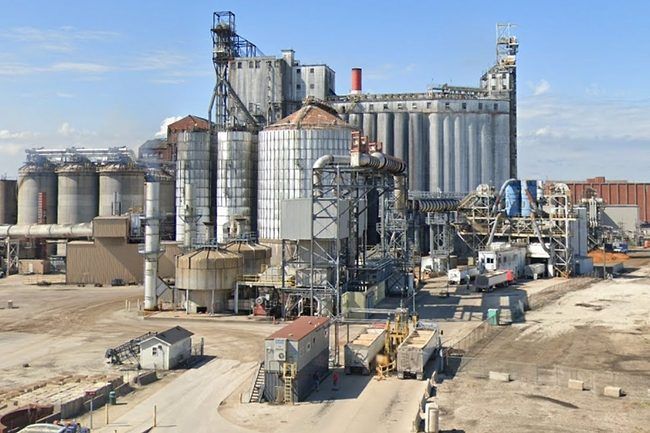
PEORIA, Ill., November 15, 2026 — The Peoria ethanol plant bomb case began, as these cases so often do, with a phone call. At about 1:08 p.m. on Friday, November 13, the BioUrja Renewables ethanol plant at 1 Edmund Street notified Peoria police of a bomb threat against the facility, according to the timeline officials laid out in the early hours of Saturday. What followed over the next eight hours turned a threat into the largest emergency evacuation in the city’s recent memory: a suspicious package found inside the plant, a determination by Friday evening that the package was a credible, real explosive device, a one-mile evacuation that displaced more than 5,000 people across two cities, and, at 9:12 p.m., the moment bomb technicians rendered the device safe. No one was injured. And as of the last official update on Saturday morning, the story was not over: the plant had not been cleared, the evacuation remained in effect, and investigators were still searching the sprawling facility for possible additional devices.
That last point is the one officials took the greatest care to state precisely, and it is the one this article will state the same way. One device was found inside the plant, and one device was rendered safe on Friday night. Officials have not confirmed any additional devices. Asked directly how many devices had been found, Peoria Police Chief Brad Dixon declined to answer. What is under way at 1 Edmund Street is a search — methodical, room by room and tank by tank, through a large industrial complex that cannot be cleared quickly or responsibly at a glance — and until that search is finished, more than 5,000 displaced residents cannot go home, and an FBI-led investigation cannot say who did this or why.
Friday, hour by hour
The timeline officials have released is spare, and its spareness is itself informative: it describes a response that escalated in measured steps as the evidence hardened, rather than a single moment of alarm. At about 1:08 p.m. Central Time on Friday, BioUrja notified the Peoria Police Department of a bomb threat. Plant threats are not rare in American industrial cities, and most end as threats and nothing more. This one did not. At about 2:00 p.m., a suspicious package was found inside the plant. For the next several hours, the response stayed inside the fence line while specialists assessed what had been found — the long, quiet middle of the day in which a threat is either downgraded or confirmed.
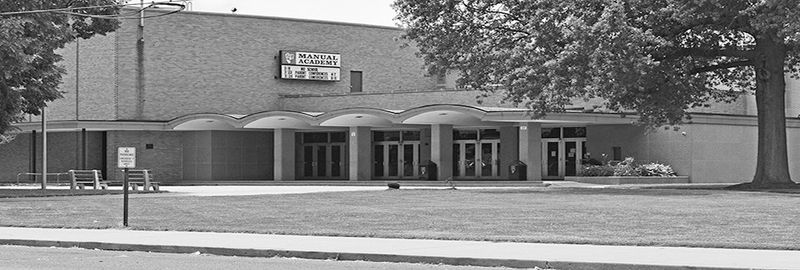
At about 6:45 p.m., officials deemed the package a credible, real explosive device. That determination changed the geography of the emergency. At 7:02 p.m., a one-mile evacuation took effect around the plant, covering parts of Peoria — including parts of downtown and the Warehouse District — and reaching across the Illinois River into East Peoria. More than 5,000 people were displaced. A shelter opened at Manual Academy, 811 S. Griswold Street, for residents who had nowhere else to go. And at 9:12 p.m., a little over two hours after the evacuation took effect, bomb technicians rendered the device safe. Police are asking anyone with information to contact the department; the incident is logged as Peoria PD incident #26-84403.
Two features of that timeline deserve emphasis, because both are easy to misread. The first is the gap between the device being rendered safe at 9:12 p.m. and everything that did not happen next: the evacuation was not lifted, the plant was not reopened, and residents were not sent home. Rendering one device safe ends one danger; it does not certify a large industrial site as free of others, and officials were explicit that they would not pretend otherwise. The second is the pace of the afternoon: nearly five hours passed between the discovery of the suspicious package and the public determination that it was a real device — the gap in which rumor lives, and the reason the precision of what officials said afterward matters as much as the facts themselves.
What officials are — and are not — saying
The clearest account of where the case stands came at 12:40 a.m. on Saturday, when Chief Dixon and Ryan Presley, the special agent in charge of the FBI’s Springfield division, briefed reporters together. Dixon’s message was, in substance, a request for patience backed by a description of scale. The plant is large. It has not been cleared. An “exhaustive search” of the facility is under way and will extend well into Saturday. The evacuation remains in effect. Each of those statements is a boundary as much as a fact: the chief was telling 5,000 displaced people, in plain terms, that the inconvenience they were enduring was the price of the search being done properly rather than quickly, and that no one would be sent back into the one-mile zone until the work was finished.
What Dixon would not say was as significant as what he would. He declined to state how many devices were found. That refusal cuts in two directions at once, and honest reporting has to hold both. On one side, a declined answer is not a confirmation of anything: it does not establish that more devices exist, and officials have not confirmed any additional devices. On the other, the refusal reflects a live investigative judgment — that the number, whatever it is, forms part of an inquiry in which a suspect, when identified, may be tested against details the public has not been given. The only statement the evidence currently supports is the one officials have made: one device was found and rendered safe, and teams are searching the facility for possible additional devices. Anything beyond that — any specific count, any claim of a wider plot — is not supported by anything officials have said, and readers should treat claims of that kind, wherever they encounter them, as unconfirmed.
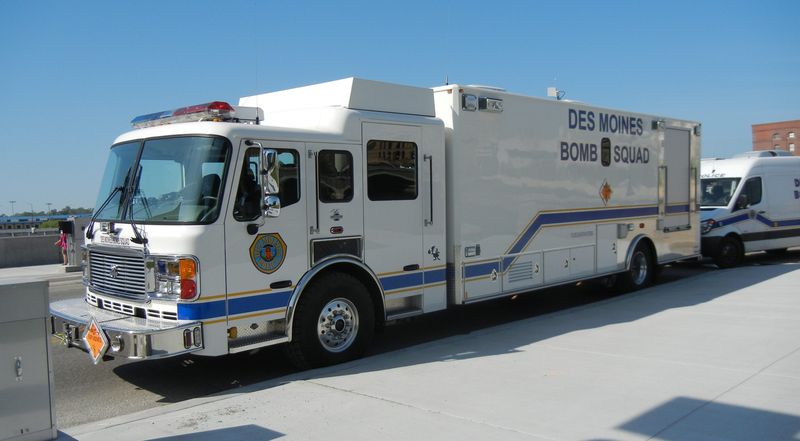
Presley, for the FBI, spoke to the other half of the case: not the search of the plant, but the hunt for the person or people behind the device. The investigation is being run with the Bureau of Alcohol, Tobacco, Firearms and Explosives, the Illinois State Police, the Peoria Fire Department, the Peoria County Sheriff’s Office, the Illinois Secretary of State’s office and local agencies — the standard architecture of a federal explosives investigation, combining the ATF’s explosives expertise, the FBI’s investigative reach and local knowledge of the plant and the city. Presley said investigators would work “tirelessly” to find whoever is responsible and “bring them to justice.” As of Saturday morning, the ledger was otherwise blank in every particular the public is entitled to ask about: no injuries, no arrests, no suspect identified, no one taken in for questioning, and no motive established. Police have not determined whether BioUrja itself was the target, or whether the target was the ethanol industry more broadly — a distinction that matters enormously to how the case will be investigated, and one officials were careful to leave open rather than fill with speculation.
The plant at 1 Edmund Street
The facility at the center of the case is not an obscure industrial site. The plant at 1 Edmund Street is the former ADM plant, a fixture of Peoria’s riverfront industrial corridor, which BioUrja Renewables acquired from Archer-Daniels-Midland in late 2021. It distills ethanol for fuel, for beverages and for hand sanitizer and other products, and its reported capacity is about 135 million gallons a year, a figure dating to 2022. In the geography of the American ethanol industry — concentrated in the corn belt, in plants that are at once agricultural processors, chemical facilities and energy infrastructure — a site of that scale is a significant node: it takes in corn from the surrounding farm economy, and it ships out a flammable fuel product by truck and rail into national supply chains.
That identity is also why a bomb at this address raises the stakes beyond those of a device at an office building or a warehouse. Ethanol is a flammable liquid produced and stored in large volumes, in a plant full of tanks, piping, distillation equipment and the ordinary ignition sources of heavy industry. An explosive device inside such a facility is not only a weapon in itself; it is a potential trigger placed inside a large inventory of fuel. None of that changes what happened on Friday — one device, rendered safe, no injuries — but it explains the shape of the official response: the one-mile radius, the refusal to rush the clearance, and the presence of federal explosives specialists in a search measured in shifts rather than hours. It also explains why the unanswered targeting question matters: a device placed by someone with a grievance against a single employer, a device placed to attack an industry, and a device placed for reasons unconnected to either would each send investigators down different roads — and officials, so far, have declined to say which road they are on.

One mile, two cities, 5,000 people
An evacuation radius is an abstraction until it is drawn on a map of a real city. One mile around 1 Edmund Street takes in far more than the plant’s fence line: it reaches into parts of downtown Peoria, the city’s commercial and governmental core; into the Warehouse District, the redeveloped industrial quarter of bars, lofts and offices along the riverfront; across residential streets whose occupants were told on a Friday evening to leave; and across the Illinois River into East Peoria, making the emergency a two-city operation from its first hour. More than 5,000 people were displaced — the figure officials and local reporting have consistently used, and the correct scale of the disruption: not a neighborhood, but a substantial share of a mid-sized American city’s urban core, emptied on a few hours’ notice.
For those with nowhere to go, a shelter opened at Manual Academy, 811 S. Griswold Street, on Peoria’s south side — the standard, unglamorous machinery of American emergency management doing exactly what it exists to do. The waiting, as of Saturday morning, was not over. Because the evacuation remains tied to the search of the plant rather than to the fate of the single device, there is no version of Friday night in which rendering the device safe at 9:12 p.m. sent everyone home; the order lifts when the facility is cleared, and the facility, Dixon said, will take well into Saturday to search. Residents should follow Peoria police channels for the lifting of the order rather than returning on the strength of the Friday-night news alone — and the next scheduled police briefing, at noon Central Time on Saturday, streamed on the Peoria Police Department’s Facebook page, was set as the moment the city expected its next authoritative update.
Why this matters, and what happens next
Analysis. It is worth being precise about what kind of event this currently is, because the category determines everything from the federal resources assigned to it to the questions Congress eventually asks. This is, on the confirmed record, a single explosive device placed inside a major piece of American fuel infrastructure, discovered because a threat was communicated, and neutralized without injury. It is not, on anything officials have confirmed, a multi-device plot, an attack on the ethanol industry as such, or an act attributable to any person, group or motive. The distance between those two descriptions is exactly the distance the investigation now has to travel, and it will travel it through evidence — the device’s construction, its placement, the threat’s provenance, plant records and camera footage — rather than through statements. The most consequential facts in this case are the ones not yet established: who accessed the area where the package was found, how the device was built and from what materials, and what the threat received at 1:08 p.m. on Friday actually said.
The industry questions, too, are real but must be framed as questions. Ethanol plants sit in an unusual security category: chemical facilities handling large volumes of flammable product, embedded in open agricultural supply chains, in plants designed for industrial efficiency rather than for the screening regimes of refineries or nuclear sites. Whether this incident exposes a general vulnerability — and whether regulators or the industry respond with new requirements for threat reporting, access control or package screening — depends on facts not yet public, beginning with how the device got inside. A device carried in by an insider, delivered through an ordinary commercial channel, or placed by an intruder would be three different security failures with three different policy answers. Until investigators establish which one occurred at 1 Edmund Street, the honest industry story is a set of open questions, and this article leaves them open.
What happens next is, in the first instance, procedural. The exhaustive search continues until the plant is cleared, however long that takes; the evacuation is lifted when officials judge the zone safe, and not before; the noon Saturday briefing is the next fixed point for verified information. The investigation then moves at the speed of forensic work on the rendered-safe device, which is precisely why it was rendered safe rather than destroyed in place: a device that survives is a device that can be read, and what it says about its maker is, at this stage, the investigation’s most valuable asset. Until then, the facts of the Peoria case are the ones Peoria’s officials stated in the small hours of Saturday morning: a threat at 1:08 p.m., a package at 2:00, a real device confirmed by 6:45, a mile-wide evacuation at 7:02, a device rendered safe at 9:12, more than 5,000 people out of their homes, and a large, uncleared plant on the Illinois River where the search goes on.
Related coverage: Viable Bomb Found in Dublin Office Near Where World Leaders Dined · Hoax Bomb Threats Hit Dozens of Flights Across Europe as Fighter Jets Scramble · FBI Foils ISIS-Inspired Mall of America Attack Plot; Minnesota Man Charged
Sources
Associated Press — reporting on the explosive device found at the BioUrja Renewables plant in Peoria, the rendering-safe of the device at 9:12 p.m. CT on Friday, November 13, 2026, and the continuing evacuation. Peoria Police Department and Peoria Police Chief Brad Dixon — statements at the 12:40 a.m. Saturday, November 14 press conference (plant not cleared; “exhaustive search” continuing well into Saturday; evacuation in effect; device-count question declined), the Friday timeline (threat reported about 1:08 p.m.; suspicious package found about 2:00 p.m.; device deemed credible about 6:45 p.m.; one-mile evacuation effective 7:02 p.m.) and incident #26-84403. FBI Springfield Division, Special Agent in Charge Ryan Presley — statements on the joint investigation with ATF, Illinois State Police and local agencies and the commitment to “bring them to justice.” WCBU Peoria, WMBD-TV, 25News (WEEK-TV) and NPR Illinois — local reporting on the one-mile evacuation covering parts of downtown Peoria, the Warehouse District and East Peoria, the displacement of more than 5,000 people and the shelter at Manual Academy, 811 S. Griswold Street. Plant background: BioUrja Renewables’ acquisition of the former ADM Peoria plant (late 2021) and reported capacity of about 135 million gallons per year (2022 figure). Photographs: Google Maps via World Grain (plant); Wikimedia Commons (bomb squad truck, file photo); Mortgage Research (Peoria skyline); Peoria MASRA (Manual Academy).