Mall of America attack plot
Mall of America attack plotSheikhdoon MohamudFBI Mall of America terror plotMinnesota ISIS plotMall of America shooting threatKash Patel FBIHmong Arts CelebrationRichfield Minnesota terrorism arrestISIS-inspired attack Minnesota
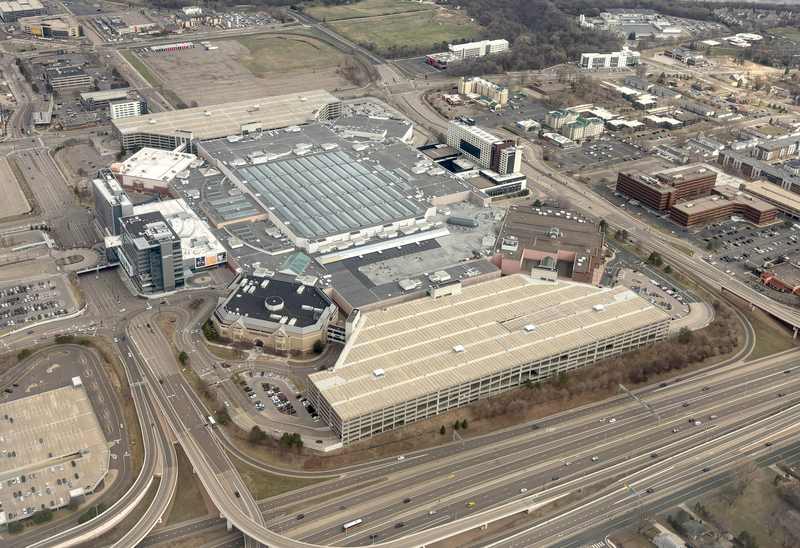
BLOOMINGTON, Minn. — The FBI has foiled a Mall of America attack plot that prosecutors say could have turned one of America's busiest public spaces into a killing ground. On Wednesday, the Justice Department charged 18-year-old Sheikhdoon Abdullahi Mohamud of Richfield, Minnesota, with one count of knowingly receiving a firearm and ammunition in order to commit a federal crime of terrorism. The day before, agents arrested him moments after he allegedly paid roughly $600 in cash for an AK-47 rifle, four 30-round magazines, and about 200 rounds of ammunition — a rifle prosecutors say the FBI had deliberately rendered inoperable before handing it over. According to the criminal complaint, Mohamud had already set his date: October 24, 2026, timed to a "Hmong Arts Celebration" at the Mall of America in Bloomington. He told the undercover operative, prosecutors allege, that he wanted to kill between 30 and 60 people.
The sting: how the FBI Mall of America terror plot was foiled
The arrest came Tuesday, October 6, shortly after the undercover sale, when agents moved in and took Mohamud into custody — allegedly as he reaffirmed his plan. He was charged the next day and made his initial appearance before U.S. Magistrate Judge Elizabeth Cowan Wright. The mechanics are familiar from major counterterrorism stings: a long-cultivated relationship, a controlled transaction, and a weapon that could never have fired. No live firearm ever changed hands; the danger, prosecutors say, was in the intent, the date, and the venue — all allegedly fixed.
According to the complaint, Mohamud claimed the mall was owned by Jewish people and said he wanted to kill non-Muslims. He sent a video pledging allegiance to ISIS in August or September 2026, prosecutors say. He is charged, not convicted: Mohamud is presumed innocent, and everything described here is the government's allegation in the criminal complaint. No attorney for Mohamud was immediately identified in initial reporting.
Sheikhdoon Mohamud: from Somalia dreams to a Minnesota mall
The radicalization arc: al-Shabaab, then ISIS
The FBI investigation began in December 2024 — roughly 21 months of messages with a confidential source and, later, an undercover contact. In the beginning, prosecutors say, Mohamud's ambition pointed outward: he wanted to travel to Somalia to fight for al-Shabaab. When he could not afford the travel, the ambition turned inward — he said he would commit a mass-casualty attack in Minnesota instead. Later, his allegiance shifted to ISIS. Along the way, he expressed admiration for a lineage of ISIS-inspired mass murder: the Pulse nightclub shooting in 2016, the New Orleans New Year's Day attack in January 2025, and the Bondi Beach shooting in Australia in December 2025 — attacks he allegedly wanted to join in infamy.
The Richfield Minnesota terrorism arrest and the parents who said no
In 2025, federal agents tried to speak with his parents about his radicalization and were rebuffed, according to U.S. Attorney Daniel N. Rosen of the District of Minnesota. The family living room is often the hardest node in the prevention chain — and the one counterterrorism professionals say matters most. Whether an earlier intervention could have worked, and why the approach was refused — fear, mistrust, denial, or something else entirely — is unknown; the complaint does not say. That unanswered question is the part of this story that will keep investigators and community workers up at night.
Why this matters
The significance starts with specificity. On the government's telling, this was not a thought-crime case built on angry messages: prosecutors allege a date, a venue, a weapon, and a desired body count were all fixed. That combination — intent plus a calendar — is what separates this week's news from the far larger pool of radicalized chatter the bureau monitors every day.
It lands in a country where public-space shootings are an ambient dread. A foiled plot does not erase that fear; it feeds a split reaction — relief, and the queasy question of how many more are out there. And it is the first major announced ISIS-plot takedown with FBI Director Kash Patel's name on it, making it a test case for the bureau's current counterterrorism posture.
For Minnesota's Somali-American community, it is a renewed stigma risk. The dynamics of collective blame after an arrest like this are well documented — and they fall on people who had nothing to do with the alleged plot.
How we got here: Minnesota's long shadow
A Minnesota ISIS plot with a familiar blueprint
The Twin Cities carry a long-documented history of al-Shabaab and ISIS recruitment — the 2015–2016 federal cases in which young Minnesota men were prosecuted for attempting to travel to Syria and Somalia to join terrorist groups. The pattern then: online grooming, travel ambitions, interception at the airport. The pattern now, allegedly: the travel option fails on money, so the target comes home. Counterterrorism officials have warned for a decade about exactly this pivot — the "stay and attack" turn — and this case reads like the warning made real.
Malls as targets: the 2015 warning and the 2016 precedent
In 2015, an al-Shabaab propaganda video explicitly named the Mall of America as a target, prompting a security surge at the mall. The complex has lived under that shadow for a decade. And in September 2016, Dahir Adan carried out an ISIS-claimed stabbing attack at the Crossroads Center mall in St. Cloud, Minnesota — wounding ten people before he was shot dead by an off-duty officer. A Minnesota mall attack is not a hypothetical. It has happened before. This week's alleged plot is the next beat in a decade-long drumbeat.
Who benefits, who loses — and what the critics say
Kash Patel FBI: the victory lap and the questions it raises
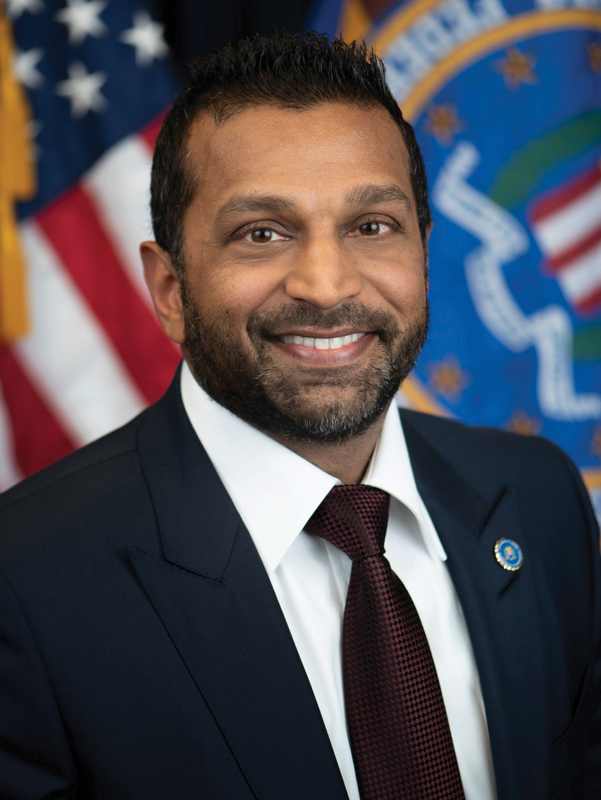
Announcing the arrest, Patel said "this FBI arrested him and put a stop to his plans," citing "over 1,100 individuals prevented from conducting attacks, over 4,000 foreign terrorist organization related disruptions and arrests, a 38% increase." Assistant Attorney General for National Security John A. Eisenberg also commented on the case. The political utility is obvious: a clean win for a director operating under constant scrutiny. Whether the statistics beneath the victory lap measure what they claim to measure is a separate question — see below.
The entrapment debate, stated fairly
Twenty-one-month undercover stings raise civil-liberties questions, and they deserve a fair hearing. The government's side: the suspect allegedly set the date, the target, the body count, and paid cash — the FBI supplied the opportunity, not the intent. On that account, this is prevention working exactly as designed.
The critics' side: nearly two years of engagement with a teenager risks manufacturing capability and momentum. Would an 18-year-old with $600 have sourced a working AK-47 and 200 rounds on his own? That is an empirical question the trial may not fully answer — and a policy question that outlives any one case. The legal reality is that entrapment is a high bar, and defendants lose those motions far more often than they win them. But the public debate is not about the motion. It is about the method.
Who loses if the stigma spreads
Start with Minnesota's Somali-American community, which has lived this cycle before. Add the Hmong community, whose cultural celebration became the alleged target date through no fault of their own. Add mall workers and shoppers, recalculating whether public spaces are safe. And if overreaction follows — sweeping surveillance, guilt by association — add the civil-liberties baseline itself.
What the numbers do — and don't — prove
21 months, 30 to 60 targets, $600
A 21-month investigation suggests the bureau watched a long radicalization arc — consistent with the Somalia-travel phase described in the complaint. Thoroughness or drift? Both readings are available; what matters is that the case, on the government's account, was built on the suspect's own escalating statements. The "30 to 60" figure is the suspect's stated ambition, not a capacity assessment — with one inoperable rifle and 200 rounds, his arithmetic was never the real constraint. And $600 for the package is a street-plausible price, which is exactly why the sting worked.
1,100 prevented, 4,000 disruptions, 38 percent
Now interrogate Patel's statistics, because press-conference numbers do political work whether or not they do analytical work. "Prevented from conducting attacks" is an agency count of interventions. It does not distinguish a fully formed plot from an early-stage aspiration, and it cannot show the counterfactual — how many would have acted without intervention.
"Disruptions and arrests" bundles two different things into one impressive number. And a "38% increase" could mean a rising threat, a more aggressive posture, or both; the number alone cannot tell you which. None of that makes the claims false. It makes them incomplete as threat measurement. The honest read: trendlines matter more than any single press-conference number.
What happens next
The legal road first. The charge — knowingly receiving a firearm and ammunition to commit a federal crime of terrorism — will be prosecuted by the Justice Department's National Security Division alongside the U.S. Attorney's Office for the District of Minnesota. Detention pending trial is near-certain in a terrorism case. Additional charges, such as material support to a designated terrorist organization, are commonly added as these cases develop. If convicted, Mohamud faces a lengthy federal prison sentence.
Then the mall. Expect a visible security posture around the October 24 event. The Mall of America fields its own large security force and has a decade of practice cooperating with federal threat briefings — practice that began with the 2015 threat video.
Then the community. The Hmong Arts Celebration becomes a resilience test — and a reminder that the alleged target was a cultural gathering, chosen, prosecutors say, precisely because people would be there. And hovering over all of it, the template question: whether this case — long-horizon undercover engagement against a travel-blocked aspirant — becomes the bureau's standard play for the next one.
Sources
- Reuters — Oct. 7, 2026 reporting on the FBI's arrest of a man accused of plotting a mass shooting at the Mall of America.
- CNN — Oct. 7, 2026 reporting on the Minnesota terrorism arrest and the undercover sting.
- U.S. Department of Justice, Office of Public Affairs — the Justice Department's press release on the arrest and the terrorism charge.
- St. Cloud Times — Oct. 7, 2026 local reporting on the FBI's arrest.