Europe · Aviation · Security
Bomb threats flights Europe: that was the emergency running across the continent’s skies on Thursday, as a second wave of threats in a single week targeted dozens of passenger flights, forced an Aer Lingus jet down at a French military air base under fighter escort, and sent warplanes up in at least four countries. No explosive device was found on any aircraft searched, no one was hurt, and no government has yet said who sent the threats — or whether they were even connected. Britain’s transport secretary called them what the evidence so far supports: “malicious hoax threats.”
Paris, France — Bomb threats targeted more than a dozen flights in Europe on Thursday, the Associated Press reported, leading to a slew of emergency landings and military escorts — and the tally kept climbing as the day went on. The BBC counted at least 21 flights affected on Thursday, while Reuters put the figure at at least 25, with one Reuters-based tally reaching 27 affected flights by Thursday evening. No hazardous or suspicious materials were found in the searches reported, in what Britain’s transport secretary, Heidi Alexander, called “malicious hoax threats.”
The wave was the second to hit European aviation this week. Several similar threats targeted planes earlier in the week, prompting searches and diversions, with at least 25 flights targeted across the week, officials told AP. Fake bomb threats are relatively common; what is unusual, AP noted, is seeing so many in a single day — and they arrived amid heightened geopolitical tension and official warnings that Russia may be ramping up so-called hybrid threats in Europe. It was not known on Thursday whether this week’s threats were linked, who sent them, or what they hoped to achieve.
The day’s diversions, flight by flight
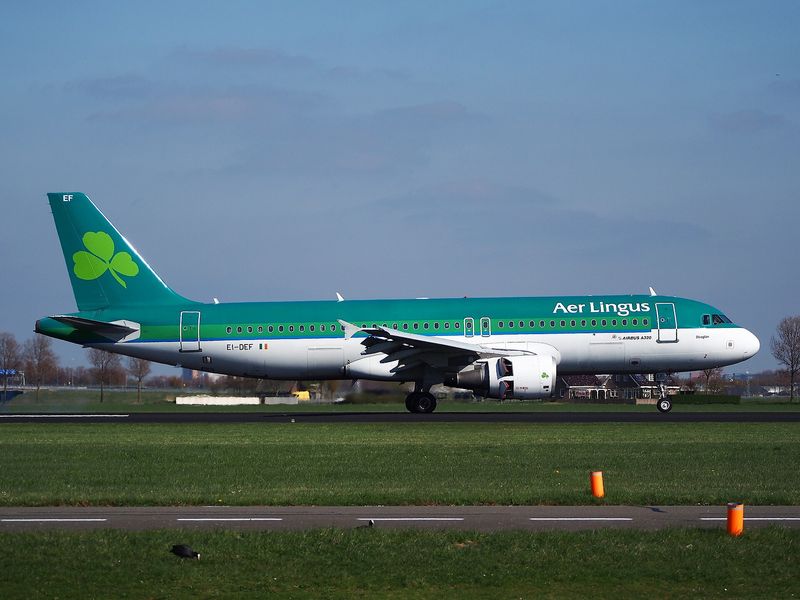
Aer Lingus EI402, Dublin to Rome. The Airbus A320 was diverted to the military air base at Évreux in Normandy after a bomb threat, French Prime Minister Sébastien Lecornu’s office said. The flight landed safely at the base, which was placed on high alert, and military bomb-disposal teams examined the plane; hours later it was still on the tarmac with a Red Cross vehicle nearby while explosive experts with dogs worked over it. The French prime minister’s office said all 151 passengers and six crew members were brought to safety. An investigation was opened by French aviation security authorities, and the regional prosecutor, Remi Coutin, said the pilot and co-pilot were questioned about what happened.
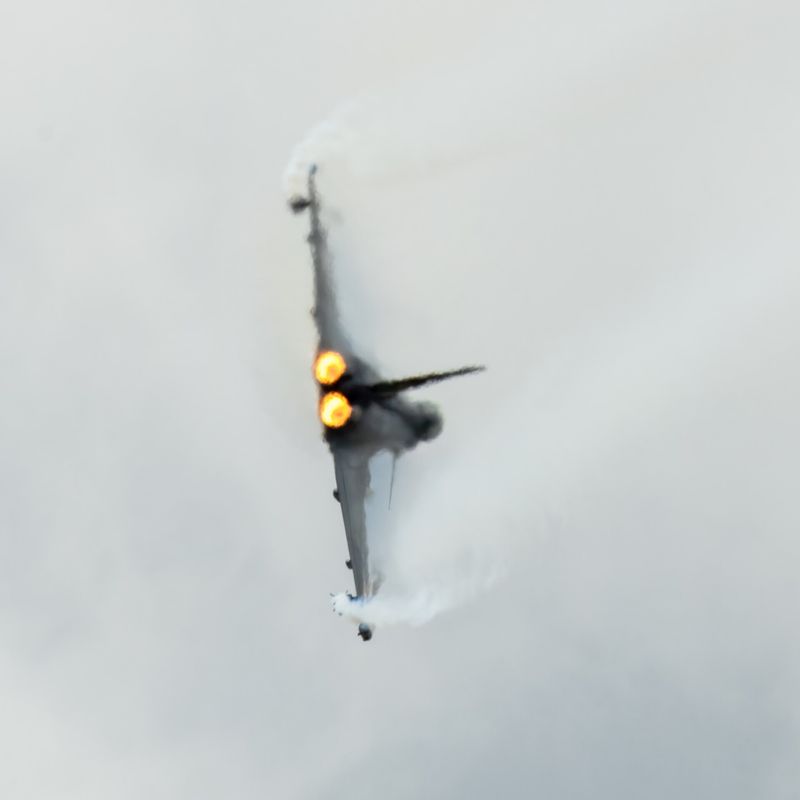
Finnair AY1761, Helsinki to Rome. Italian Air Force fighter jets escorted the Finnair flight into Rome after a threat was received by email, the Italian air force said. Croatia’s defence ministry said one of its fighter planes had first intercepted the jet in Croatian airspace before handing it off to the Italians — a two-air-force relay across the continent. Finnair said two of its flights, including the escorted one, “faced unfounded hoax bomb scares”; the second, operated by Jettime from Helsinki to Vienna, landed safely at its destination and was expected to return to service after inspection.
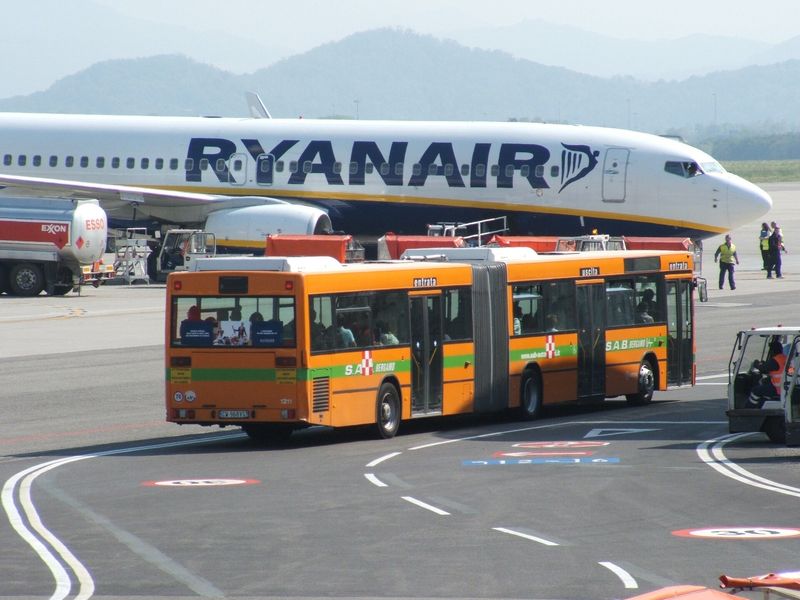
Three Ryanair flights bound for Sofia. All three received military escorts and made emergency landings after bomb threats, officials said. The flights from Copenhagen and Madrid landed safely in Sofia, airport officials said; the third, Ryanair FR1730 from London Stansted, was diverted and landed safely in Plovdiv, according to Plovdiv Airport’s CEO, Krassimir Peshev. Bulgaria’s transport ministry said inspections found nothing, and operations at Sofia and Plovdiv returned to normal.
And across the map: Czech police said searches of four planes that landed in Prague after bomb threats turned up nothing, and that they took precautions despite not finding the threats credible. A LOT Polish Airlines flight from Warsaw to Brussels landed at its destination, where inspections found no hazardous or suspicious items. A Wizz Air flight from Milan to Bucharest landed safely in the Romanian capital and checks found no bomb, an airport spokesman said; another flight to Warsaw landed in Vienna after Polish authorities received a threatening email, Lower Austria police spokesman Stefan Loidl said, and nothing was found before it continued to Warsaw. Aegean Airlines and Air Serbia flights were also among those checked and cleared in Thursday’s reporting.
The Évreux dispute: did the pilot cooperate?
The day’s sharpest disagreement concerned its most serious incident. Lecornu’s office said the prime minister ordered warplanes to intercept the Aer Lingus plane because the pilot “didn’t cooperate as expected with the authorities,” and declined to comment further. Aer Lingus later said its pilots fully cooperated with the French authorities and that “the engagement of the pilots with the authorities has now concluded.” Both statements are on the record; neither side has published the underlying communications, and French investigators’ questioning of the flight crew is the process most likely to establish what actually happened over Normandy. Until it does, the honest summary is that Paris and the airline describe the same diversion in incompatible terms.
What was in the threats
An email containing the threat against Rome-bound planes was sent on behalf of a group that described itself as anti-feminist, according to a copy provided by an airport official and reviewed by the Associated Press. An official from another European airport said the threat they received also came from a group calling itself anti-feminist and used some of the same language; it was not clear the same group sent both. The BBC reported that threat messages were signed “Fighters of the Male State” and threatened to “turn the skies red” with explosions. Officials spoke to AP on condition of anonymity because they were not authorised to share the information — which means the signature, like everything else about the senders, remains a claim in an email, not an attribution.
Officials respond: “malicious hoax threats”
Britain’s transport secretary, Heidi Alexander, told British broadcasters that flights across Europe had been hit by “malicious hoax threats,” and the UK government later said the incidents had been “resolved.” European Union Transport Commissioner Apostolos Tzitzikostas, speaking to reporters in Dublin, said it was “too early to draw conclusions on whether the reported incidents are linked,” added that national investigations remain ongoing, and confirmed that an EU information-sharing mechanism on aviation security had been activated.
At Rome’s Fiumicino airport, travellers whose flights were not affected mostly took the day in stride. “As of now, I am not scared of being in an airport or getting on board a plane,” said Alessia Strada, a 19-year-old Italian returning from Kenya. Michael Romano, 54 and headed to Colombia, was less sanguine: “These things never used to happen here in Europe. This is all new, so it is a little bit scary.”
Why this matters: a cheap weapon against an expensive system
The economics explain the tactic, whoever is using it. Each flight disruption can cost an airline as much as $250,000, Philip Baum, a visiting professor of aviation security at Coventry University, told AP — roughly the cost of dealing with an unruly passenger, multiplied across dozens of aircraft in a single day. “You might end up with the crew going out of hours. You might need replacement crew. You have got passengers that miss their flight connections. It knocks everything out of sync for the rest of the day,” Baum said. Military escorts cost money too, borne by governments rather than airlines: on Thursday, French, Croatian, Italian and Bulgarian fighters all flew escort duty for threats that, so far, have all proved empty. The sender’s cost, by contrast, is an email account.
That asymmetry is why analysts reached for the language of hybrid warfare while officials carefully did not. Jacob Funk Kirkegaard, a senior fellow at the Bruegel think tank in Brussels, told AP the threats were “stress-testing” how European governments and airport officials respond and whether those responses are coordinated, with an apparent aim “to sow chaos, uncertainty, about the reliability of air traffic across Europe” and cascading effects in inspection, investigation and cleaning costs. Matthew Borie, chief intelligence officer at Osprey Flight Solutions, told AP the explanations ranged from copycat threats to a single individual or group behind multiple alerts, and that state actors or their supporters could not be ruled out. Thursday’s wave landed in a season of exactly such disruptions — drone incursions that have closed European airspace, most recently an unidentified object in Latvian airspace, attacks on supermarket refrigeration systems, and false triggers in public alert apps, as AP catalogued. But context is not evidence: no government has attributed this week’s emails to any state, group or person, and the anti-feminist signature in at least two of them fits no obvious state playbook. The disciplined conclusion is the one Tzitzikostas gave: investigations are ongoing, and linkage itself is unproven.
The system, for its part, worked the way it is designed to. Joji Waites, who heads flight safety at the British Airline Pilots’ Association, noted that the industry has “proved mechanisms” for exactly this: assessors grading threats on a red-amber-green scale, quick notification of crews, and evacuation of aircraft on the ground. Czech police searched four aircraft while publicly judging the threats not credible — the protocol treats every threat as real until a search says otherwise, which is precisely what makes hoaxes so disruptive and so difficult to simply ignore. The vulnerability is structural, as this site’s coverage of the school bomb-threat hoaxes in Northern Ireland and Scotland showed from the other end of the system: any institution that must respond to a bomb threat as if it were real can be forced to spend real money and real fear on a fake one.
What happens next
Three questions now decide whether Thursday was a peak or a pattern. First, forensics: investigators in at least eight countries are comparing the emails’ language, routing and timing — the similar wording reported at two airports is the strongest public hint of a common sender, and email headers, not signatures, are what will prove or break it. Second, repetition: this was already the week’s second wave, after Monday’s diversion of a Wizz Air London–Sofia flight to Budapest under Hungarian Gripen escort and Tuesday’s threats against at least seven flights and a cruise ship; a third wave would harden the case for a coordinated campaign, while silence would point back toward copycats riding a news cycle. Third, policy: the EU’s aviation-security information-sharing mechanism is now active, and the political argument will be over whether Europe needs a single threat-grading standard — so that a hoax email in one capital cannot trigger a different, costlier response in another — or whether national control of aviation security remains non-negotiable even when the threat is continental. What is already certain is the bill: dozens of searched aircraft, four air forces scrambled, thousands of passengers delayed, and not one device found. Somewhere, the sender of an email knows exactly what that cost — and how little it took to impose it.
Sources
Associated Press, “More than a dozen flights in Europe receive bomb threats that an official calls ‘malicious’ hoaxes” (Nov. 5, 2026, updated 21:56 UTC), including statements from the French prime minister’s office, the Italian Air Force, Croatia’s defence ministry, Finnair, Plovdiv Airport and Lower Austria police; Reuters flight tallies (at least 25 flights; tally of 27 by 18:00 UTC, Nov. 5, 2026); BBC reporting on the Thursday wave, the Bulgarian transport ministry and the threat-message signature (Nov. 5, 2026); UK Transport Secretary Heidi Alexander via British broadcasters; EU Transport Commissioner Apostolos Tzitzikostas, remarks in Dublin (Nov. 5, 2026). Photos: Wikimedia Commons file photos as credited in captions — none of the images is from November 5.