World · Ireland · Europe · Security
The Dublin Merrion Square viable device was found on Friday afternoon in an office building on the north side of one of Ireland’s most storied squares — across the square from the National Gallery of Ireland, where the leaders gathered for the European Political Community summit had sat down to dinner less than twenty-four hours earlier. Army bomb disposal experts made it safe. Nobody was hurt. And almost everything about it — who left it there, when they left it, and why — remains unknown.
Track it live: Live war tracker
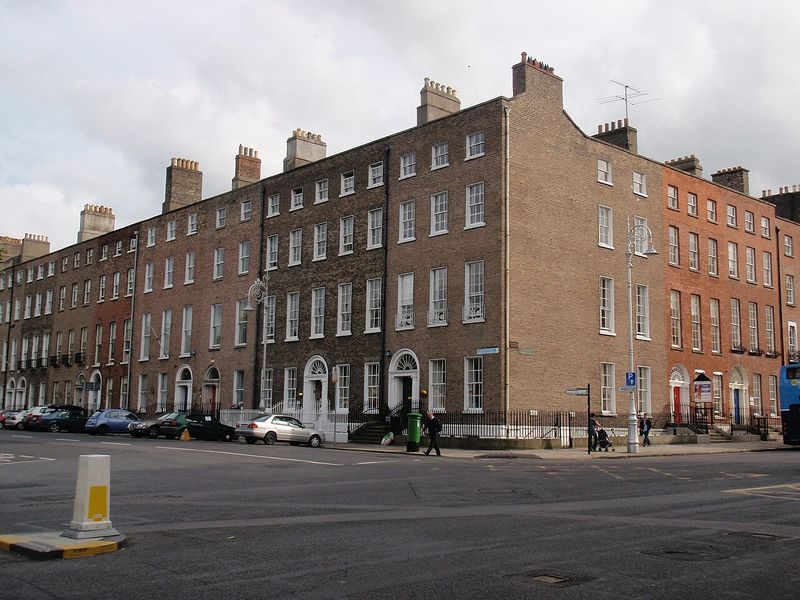
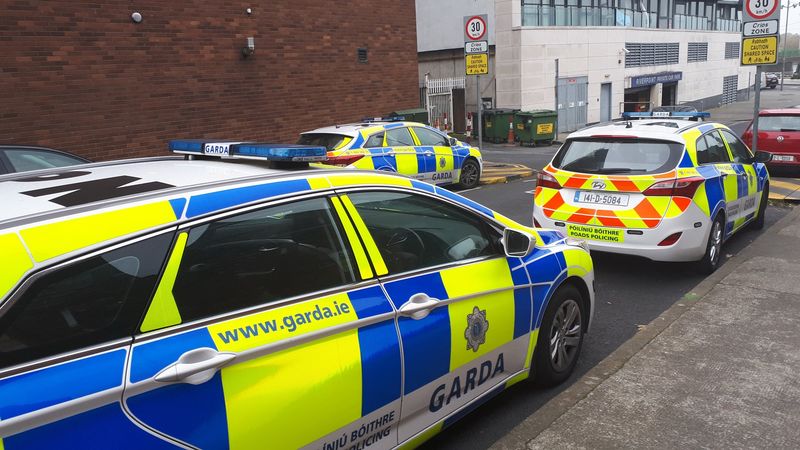
DUBLIN, November 13, 2026 — Shortly after 2:20 p.m. on Friday, Gardaí responded to reports of a suspicious device at an office building on Merrion Square, in the Georgian heart of Dublin 2. The Defence Forces Explosive Ordnance Disposal team — the Irish state’s bomb disposal specialists — attended the scene, examined what had been found, and made it safe. In the short Garda statement that followed, the object was given the description that now defines this story: “a crude but viable device.” A Garda investigation has commenced. There were no injuries.
Every word of that formulation does work. “Crude” describes how the device was made — improvised, not sophisticated. “Viable” describes what it was capable of: it would have functioned. This was not a hoax package, not a misunderstood object, and not a threat communicated by email. It was a real bomb, physically present in an ordinary office building, recovered and rendered safe by the specialists whose judgement the Irish state relies on in exactly these circumstances. The Dublin Merrion Square viable device now sits at the centre of a criminal investigation that begins, publicly at least, with almost no other facts attached to it.
Shortly after 2:20 p.m.: the response on the square
The sequence that is on the record is short, and it is worth setting out precisely, because so much of what will be said about this incident in the coming days will be built on top of it. On Friday afternoon, shortly after 2:20 p.m., Gardaí received reports of a suspicious device at an office building on Merrion Square. Officers responded. The Defence Forces EOD team attended — the standard division of labour in Ireland, under which the police secure and investigate while the military’s ordnance experts handle the device itself. The EOD team made the device safe. Gardaí then confirmed, in terms, what the specialists had found: a crude but viable device. And with that, the operational phase ended and the investigative one began: “A Garda investigation has commenced.”
What the statement does not contain is almost as notable. It does not describe the device’s construction beyond the two adjectives, say where inside the building it was found, or say how long it may have been there. It announces no arrest, because there has been none; records no claim of responsibility, because there has been none; and attributes the device to no person, group or state, because no attribution exists to make. Those absences are the accurate shape of the case on Friday evening.
One square, two buildings: the dinner across Merrion Square
To understand why a device in an office building drew attention far beyond a police log, you need the geography of a single square. Merrion Square is one of Dublin’s great Georgian set pieces: five-storey brick terraces around a railed park, in the government quarter of Dublin 2, a short walk from Leinster House and the departments of state. Its buildings are a working mixture of homes, professional offices, embassies and cultural institutions — prestigious addresses, but ordinary workplaces, staffed on an ordinary Friday by ordinary office workers. The building at the centre of Friday’s alert stands on the north side of the square.
Across the square stands the National Gallery of Ireland. On Thursday night, the Gallery was the setting for the set-piece social occasion of the European Political Community summit: a dinner for the assembled leaders, hosted by Taoiseach Micheál Martin. Among those at the table were French President Emmanuel Macron, UK Prime Minister Andy Burnham and Canadian Prime Minister Mark Carney — three of the most recognisable figures in a gathering that had brought around fifty leaders to the Irish capital. The dinner was, by design, the summit at its most concentrated: the heads of government of a continent, in one room, on one side of Merrion Square. The office building where the device was found on Friday is on the other side of the same square. That is the whole of the geographic connection, and it is important to be exact about it: the device was not found at the Gallery, not inside the Gallery, and nothing published by Gardaí says it had anything to do with the Gallery, the dinner or any person who attended it.
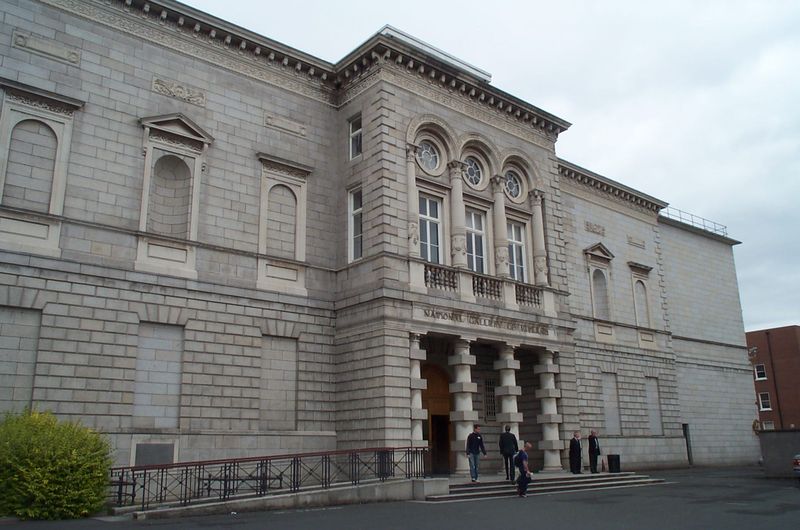
One correction matters here, because the dinner’s guest list is already being loosely reported. Ukrainian President Volodymyr Zelenskyy was in Dublin for the summit, but he did not attend the Thursday dinner at the Gallery. On Thursday evening, while the other leaders were at the table on Merrion Square, Zelenskyy was on the outskirts of Dublin, meeting the American envoys Steve Witkoff and Jared Kushner — the latest round of his shuttle diplomacy over the war in Ukraine, which has run in parallel with the summit circuit all autumn, including his energy-aid appeal at the Madrid summit earlier this month: Zelenskyy Madrid Summit Energy Aid Appeal: Ukraine Asks Latin America and Spain for Transformers, Cables and Generators. His absence from the dinner is a small fact with a large lesson attached: in a story where proximity is doing so much rhetorical work, the details of who was actually where, and when, are the difference between reporting and atmosphere.
The summit itself, meanwhile, continued around the discovery. Friday’s business — an informal meeting of EU leaders — was held not on Merrion Square but at the Convention Centre Dublin, on the north quays of the Liffey, about a kilometre and a half away. By the time the device was reported shortly after 2:20 p.m., the leaders’ Friday programme was proceeding on the other side of the city centre, inside one of the most heavily protected venues in the country. The two Dublins of this story — the sealed summit and the open square — were, at the moment of the alert, already separated by distance as well as by design.
What investigators have said — and what they have not
Set out plainly, the state of knowledge on Friday evening is quickly told. What is established: a suspicious device was reported at an office building on the north side of Merrion Square shortly after 2:20 p.m. on Friday, November 13; Gardaí responded; the Defence Forces EOD team attended and made the device safe; the device was, in the Garda formulation, crude but viable; no one was injured; and a Garda investigation has commenced. What is not established: who made it; who placed it; when it was placed; what it consisted of beyond the official description; whether it was intended for the building, for someone in it, or for anyone at all; and whether it had any connection — none has been stated — to the summit in the same city.
The discipline of the second list matters, because the vacuum around a story like this fills quickly. A viable device near a leaders’ dinner invites an instant narrative — an assassination plot, a named adversary, a thwarted attack — and every element of that narrative is currently unsupported. Gardaí have not said the device targeted the dinner. They have not said it targeted any leader, any building’s occupants, or the summit. They have not named a suspect, a group or a state, and no claim of responsibility has been made by anyone. The honest headline is the narrower one: a real bomb was found and made safe in a Dublin office, on a square where Europe’s leaders had dined the night before, and investigators have established almost nothing publicly beyond the finding itself. In security reporting, the distance between those two sentences is where accuracy lives.
A real device, in a month of hoaxes — and the difference matters
There is one comparison that will be made constantly in the coming days, and it needs to be handled with care, because this incident is different in kind from the ones it will be compared with. A week ago, on November 6, emailed bomb threats emptied Ireland’s newsrooms, taking RTÉ off air and triggering sweeps across Dublin and Europe; as Signal Post News reported in ‘Message to the West’: Bomb Threats Empty Ireland’s Newsrooms and Take RTÉ Off Air, no bomb was found at any affected site. Days later came a hoax-email wave against schools in Europe, in the aftermath of a campaign of emailed threats that had spent days diverting airliners across the continent — the wave covered in Hoax Bomb Threats Hit Dozens of Flights Across Europe as Fighter Jets Scramble. Those incidents were threats without devices: communications designed to trigger the response, in which the response itself was the payload.
Friday’s incident is not that. No email announced it and no message claimed it, so far as investigators have said. What was found on Merrion Square was a physical object, examined by the state’s own explosive ordnance specialists and assessed by them as viable — capable of exploding — before they made it safe. To file Friday under the same heading as the hoax waves would misstate the record in both directions at once: it would inflate the hoaxes by implying they had a physical counterpart they do not have, and it would deflate Friday’s finding, which belongs in the far smaller and far more serious category of real devices recovered in the capital. Investigators may in time establish connections between this device and other activity, of any kind; until they do, the correct statement is the plain one. This was different.
Why this matters
A summit wrapped in the largest security operation in the history of the Irish state
Context first. Around fifty leaders were in Dublin for the European Political Community summit — heads of state and government from across the continent and beyond, with their delegations, protection details and press corps. Protecting them required what has been described as the largest security operation in the history of the Irish state: Gardaí and Defence Forces personnel deployed across the capital, airspace and road restrictions, venues swept and sealed, motorcade routes policed end to end. The Irish Sun reported the cost of the operation at more than €30 million. That figure is worth pausing on, not for its size alone but for what it buys: an apparatus designed, above all, to control the spaces where leaders actually are — the summit venues, the hotels, the dinner room at the National Gallery on Thursday night, the Convention Centre on Friday.
The bubble, and the building outside it
Against that apparatus, set the facts of Friday afternoon. The device was not found inside a summit venue, a hotel, a motorcade route or any space inside the security bubble. It was found in an ordinary office building, on a square in the middle of a working city, reported shortly after 2:20 p.m. on a weekday afternoon, in a building whose occupants are not heads of government and whose protection is the ordinary protection of a Dublin street. That is the analytical centre of this story. Summit security, even at the unprecedented scale Dublin mounted this week, is a bubble: it hardens defined spaces for defined hours. A capital city cannot be hardened in the same way — its offices open, its post arrives, its buildings fill with people whose names are on no delegation list. Whoever placed this device, whenever and for whatever reason, placed it in the second of those two worlds, the unsealed one. Whether that was the point, an accident of opportunity, or something else entirely is what the investigation now has to establish — and what no one should pretend to know yet.
What “crude but viable” tells us, and what it does not
The official description, brief as it is, carries real information. “Crude” places the device at the improvised end of construction — assembled rather than manufactured. “Viable” is the EOD assessment that the assembly would have worked: the components were present and connected in a way that would have produced an explosion. Lethality has never required sophistication; it requires only a functioning chain from initiation to main charge. What the description does not carry is equally important: nothing about the device’s size or intended effect, nothing about a timer or trigger, nothing about provenance of components — the forensic questions on which real attribution, if it ever comes, will be built. Two adjectives are enough to establish that the threat was real. They are nowhere near enough to establish whose it was.
The unanswered question of timing
Hovering over every account of this incident is a question the Garda statement does not answer: when was the device placed? It was discovered on Friday afternoon, the day after the dinner. It does not follow that it was in the building during the dinner — the interval between placement and discovery is unknown until forensics and camera footage narrow it — nor that it was placed on Friday. Both tempting inferences run ahead of the evidence by exactly the same distance. If the investigation establishes a placement window, that fact will materially change what this incident was. Until then, the timing is an open variable.
Background: viable devices and the EOD’s quiet workload
It is worth recording, against the drama of the summit week, that the Defence Forces EOD teams who attended Merrion Square on Friday do this work in Ireland constantly, and almost always without an audience. Their callouts cover the whole spectrum of explosive risk: suspect packages, old military ordnance uncovered on building sites and farmland, and — a small minority of the total — devices assessed, like Friday’s, as viable. Most alerts end, as the newsroom sweeps did last week, with nothing found. That base rate is why the word “viable” carries such weight when it appears in a Garda statement: it is the exception, issued sparingly by specialists who spend their working lives distinguishing the real from the merely alarming.
Dublin has seen viable devices before, in contexts that investigators in those cases established through evidence — organised-crime feuds, in which improvised devices have been used as instruments of intimidation and attack, and legacy seizures connected to paramilitary activity. Those precedents are background, not evidence: they describe the range of cases in which such devices have appeared in the capital in the past, and no Garda statement has connected Friday’s device to any of them, or to anything else. The correct use of the background is to understand that a viable device in Dublin is a known category of crime with more than one possible author profile — which is another way of saying that the category alone identifies nobody. Attribution, in Irish practice, follows the forensics: components, construction signatures, fingerprints and DNA, camera footage and communications. All of that work starts now, and none of it has reported yet.
What happens next
The investigation’s first phase is forensic. The remnants of the device, preserved through the make-safe process, are the richest source in the case: component sourcing, tool marks, and any biological or fingerprint trace all feed the comparison databases that have resolved Irish device cases before. The second phase is geographic. Merrion Square sits in one of the most camera-covered districts in the country — the government quarter, with its institutional buildings, traffic cameras and private systems — and the CCTV trawl, together with the building’s own access, delivery and visitor records, is how investigators will try to close the case’s largest gap: the window in which the device arrived. Expect, in the standard pattern, a public appeal for witnesses and footage once Gardaí have defined the period they care about.
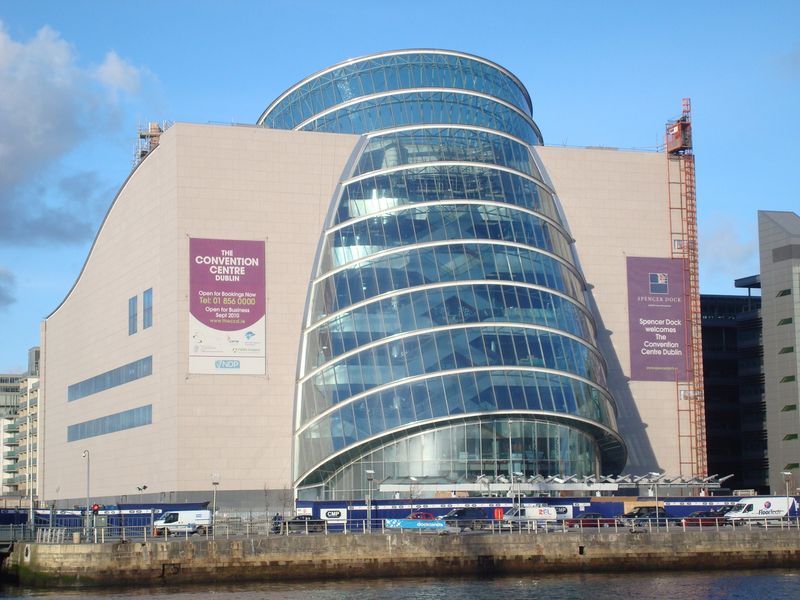
For the summit, the immediate question is simpler, and on Friday’s evidence the answer is that the programme held: the informal EU meeting continued at the Convention Centre Dublin, and no alteration to the leaders’ schedule was announced in connection with the Merrion Square alert. Whether the discovery prompts visible changes to the operation’s remaining hours — wider cordons, fresh sweeps of non-venue buildings in the government quarter — is a detail worth watching, because it will show how the security planners themselves are reading the gap between the bubble and the building. For everyone else, the watch-list is the investigative one: a first arrest, a first description of a person being sought, a first official sentence that narrows the timing or the target. Any of those would transform this story. Their absence, for now, is the story: a real bomb, found across a square from where Europe dined, made safe without injury — and, as of Friday evening, explained by no one at all.
Sources
Reuters, November 13, 2026 — Gardaí responding shortly after 2:20 p.m. to reports of a suspicious device at an office building on Merrion Square, Dublin 2; the Defence Forces Explosive Ordnance Disposal team making the device safe; no injuries. An Garda Síochána statement, November 13, 2026, as carried verbatim by the Irish Sun — the device described as “a crude but viable device” and a Garda investigation commenced; the Irish Sun also reported the cost of the summit security operation at more than €30 million. The Irish Times, November 13, 2026 — the Thursday dinner at the National Gallery of Ireland hosted by Taoiseach Micheál Martin, attended by Emmanuel Macron, Andy Burnham and Mark Carney; President Zelenskyy’s separate meeting with US envoys Witkoff and Kushner on the outskirts of Dublin that evening; and Friday’s informal EU meeting at the Convention Centre Dublin.