War · Iran · Kuwait
The Pentagon whistleblower Port Shuaiba complaint filed last week alleges that Maj. Stephen Ramsbottom warned leaders — more than once — that the site had no protection against an aerial attack, and was told not to worry. The Pentagon declined to comment on his allegations. President Trump, answering the “60 Minutes” report that aired them, cited war-wide interception figures — and did not name the major or the port.
Track it live: War trackers · Iran war tracker
PORT SHUAIBA, Kuwait, November 16, 2026 — The Pentagon whistleblower Port Shuaiba case that moved into the open this weekend rests on a single, stark allegation: that before an Iranian one-way attack drone struck a U.S. Army tactical operations centre at Port Shuaiba, Kuwait, on March 1 and killed six soldiers, the danger had been named out loud, in meetings, by an officer who was in the room when the drone arrived — and that he was told not to worry about it. That officer, Army Maj. Stephen Ramsbottom, deputy chief of operations for the Army Reserve’s 103rd Sustainment Command, survived the strike. Last week, in a whistleblower complaint filed on Friday with the House and Senate Armed Services Committees, he asked Congress to investigate. His account was first reported by CBS, a copy of the complaint was obtained by CNN, and on Sunday night Ramsbottom told it himself, on camera, to Norah O’Donnell in a “60 Minutes” interview that capped an eight-month CBS investigation. Everything attributed in this article to the complaint is exactly that — an allegation by Ramsbottom, set out in his filing and his interview. None of it is an established finding, and the Pentagon, asked about the allegations, declined to comment on them.
The sequence matters, because the story is now moving on three tracks at once. On Friday, according to the reporting, Ramsbottom submitted his disclosure to the two Armed Services Committees, seeking a formal investigation into the protection — or, as he alleges, the absence of protection — at the site. On Sunday, the “60 Minutes” interview aired. The same day, Sen. Richard Blumenthal wrote to Defense Secretary Pete Hegseth demanding a classified briefing and a full accounting. And on Monday, President Donald Trump took to Truth Social to attack the “60 Minutes” report itself, citing interception figures for the war as a whole. The president’s post, it should be said plainly at the outset, did not name Ramsbottom or Port Shuaiba, and his figures are his claims, not verified numbers; what they do and do not answer is the analytical heart of the dispute, and this article returns to it below.
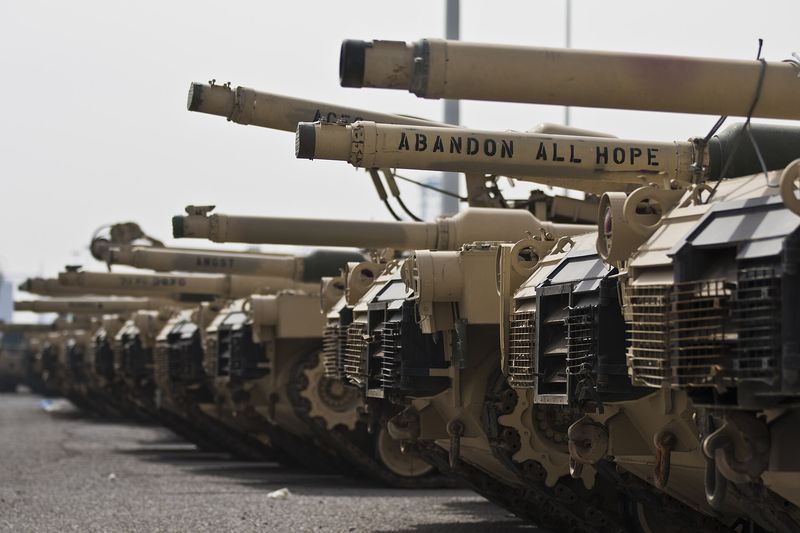
The complaint: warnings raised, and, he says, waved away
Ramsbottom’s central allegation is not that the risk was unknowable. It is that it was known, and raised. According to the complaint and his interview, Ramsbottom says he raised the lack of protection against aerial attack in meetings more than once — twice, on his account — including directly to Maj. Gen. John Hinson, the U.S. Central Command logistics chief. The answer he says he received has become the most quoted line of the weekend: “We don’t have to worry about protection.” That sentence is presented here as Ramsbottom presents it — his recollection, in his complaint and his interview, of what he was told. Hinson has not, in the reporting available on Monday, publicly answered the allegation.
The complaint’s description of the site itself is equally specific, and equally attributed. The position at Port Shuaiba, Ramsbottom says, was equipped to “stop car bombs and threats like that. There was nothing there designed to protect from an aerial attack.” On his account, the defences faced a vehicle approaching on the ground, while the threat that actually arrived came by air. Ramsbottom further alleges that a counter-drone system the unit expected never arrived, and that the medical provision matched the protection: the site, he says, had “no physician, no fixed aid station, and only one ambulance.” Each of those claims is checkable against records — delivery logs, staffing tables, force-protection assessments — which is precisely why the form he chose matters: a whistleblower complaint to the two committees that oversee the armed services is a request for the documents, not merely a television interview.
March 1: the second day of the war, and the six who were killed
The strike at the centre of the complaint came at the very start of the war. Operation Epic Fury began on February 28; on March 1, the war’s second day, an Iranian one-way attack drone hit the tactical operations centre at Port Shuaiba. Six Army Reserve soldiers were killed — the first U.S. service members killed in the U.S. war with Iran — and dozens were wounded, more than 25 by the counts in the reporting, Ramsbottom among them. The six killed, as Ramsbottom’s complaint and the reporting around the filing name them, were Capt. Cody Khork, 35; Sgt. 1st Class Noah Tietjens, 42; Sgt. 1st Class Nicole Amor, 39; Sgt. Declan Coady, 20; Maj. Jeffrey R. O’Brien, 45; and Chief Warrant Officer Three Robert M. Marzan, 54. They are named here in the complaint’s framing because the complaint is, at bottom, about them: whether their deaths were the unavoidable cost of a war’s first day, or the foreseeable result of warnings unheeded, as Ramsbottom alleges.
Port Shuaiba has been on this site’s pages before, from the other end of the same morning. In October, Signal Post News reported on the wounded of the March 1 strike and the military medical system that received them, in Port Shuaiba wounded soldiers say the military medical system failed them — an investigation in which Ramsbottom appeared as a soldier who had waited months for MRI results. The complaint’s medical allegations reach back behind that October story to the site itself, and connect the two accounts into a single question now in front of Congress: not only whether the wounded were cared for well enough after the drone arrived, but whether anything like an adequate plan existed before it did.
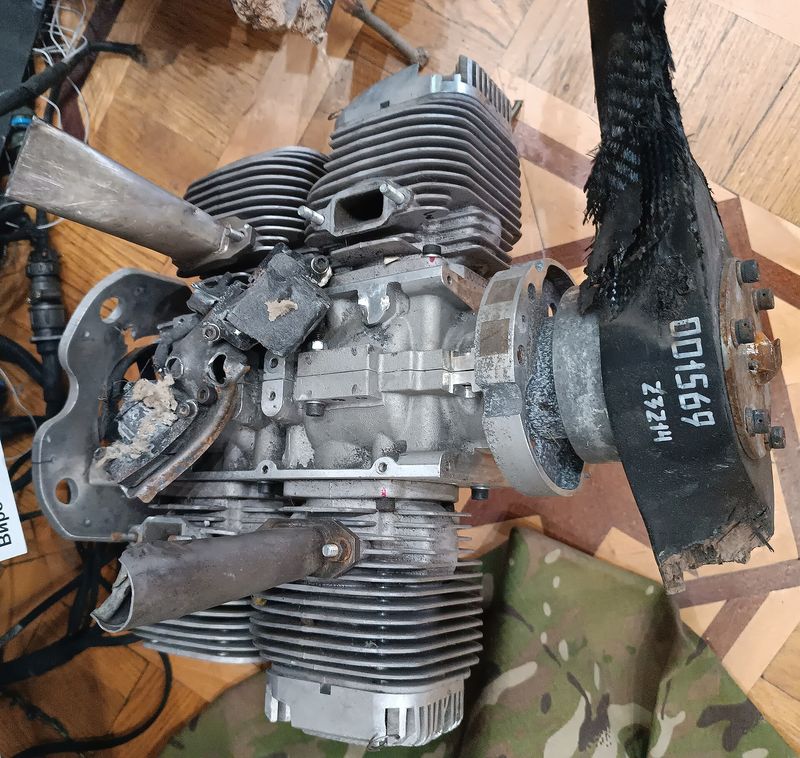
“All the way down to my level”: the whistleblower who blames himself too
What distinguishes Ramsbottom’s intervention from the standard anatomy of a Washington whistleblower story is the direction of his blame. He does not exempt himself. The attack, he told O’Donnell, was “a tactical failure by the Army, our leadership, and myself, all the way down to my level.” A complainant who assigns himself a share of the failure is harder to dismiss as a grievance with a press strategy. Ramsbottom is not an outside critic of the war; he is a serving field-grade officer of the command that was struck, describing a failure he says ran through every level including his own, and asking the institution’s overseers to establish what the institution has not said in public.
Whistleblower disclosures to the Armed Services Committees are not press releases; they are filings that create a paper trail and give committee staff a defined set of questions to put to the Pentagon. If the committees act on it, the first products will not be speeches but requests: for the site’s force-protection assessments, for the record of what counter-drone equipment was allocated, promised, shipped or never sent, and for the medical staffing plan under which, Ramsbottom alleges, a site within range of Iranian drones operated with a single ambulance. Those are factual questions with documentary answers — which is why the complaint is unlikely to be answered by silence for long.
The counter-drone system that, he says, never arrived
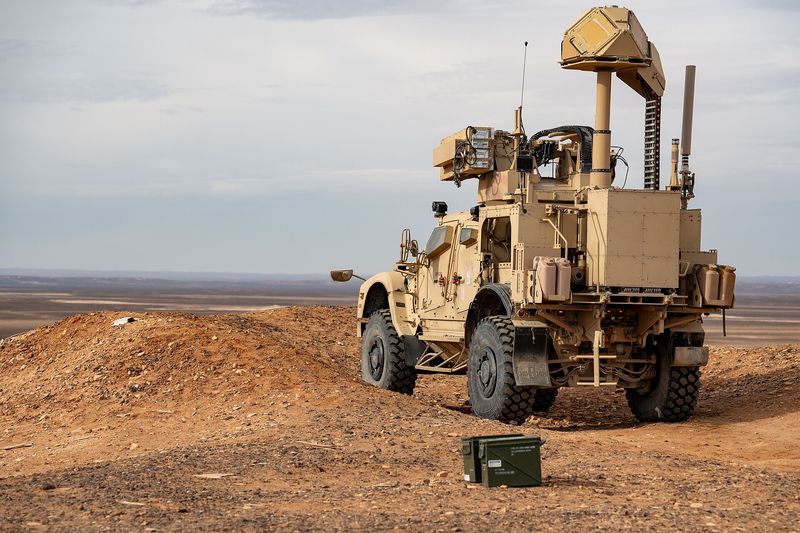
Of all the complaint’s allegations, the missing counter-drone system is the most concrete, and the most consequential if it is borne out. Modern counter-UAS defence is a layered business — detection, electronic jamming, and kinetic interceptors of the kind CENTCOM units train on across the region — and no layer of it, Ramsbottom alleges, was present at Port Shuaiba in any form designed for the purpose. The allegation invites an obvious documentary test: either a system was allocated to the site and the record will show where it went, or it was not, and the record will show that instead. Either answer is damning in a different way — a logistics failure in the first case, a planning failure in the second — and it is notable that the man making it is himself a logistics officer, speaking about the supply of protection to his own unit.
The Pentagon’s answer: no comment now; “fortified” in March
The Pentagon’s response to the complaint itself has been a refusal. The department declined to comment on Ramsbottom’s allegations to CBS, according to the CBS and TIME summaries of the exchange, and no on-the-record rebuttal had appeared by Monday evening. What does exist on the record is the department’s position from March — and the dates matter, because the March statements were not a response to this complaint and should not be read as one. In March, Pentagon spokesman Sean Parnell said the operations centre was “fortified with 6-foot walls.” The day after the attack, Secretary Hegseth said the site was properly protected, and described the drone that got through as a “squirter” — the term for a threat that leaks past a defence. Set beside the complaint, the gap is not a matter of emphasis: Ramsbottom alleges a site with nothing designed to stop an aerial attack; the secretary said the site was properly protected. Both cannot be a complete description of the same position, and establishing which is closer to the truth is the factual core of the investigation Ramsbottom is asking for.
Congress moves: Blumenthal’s demand, and the January horizon
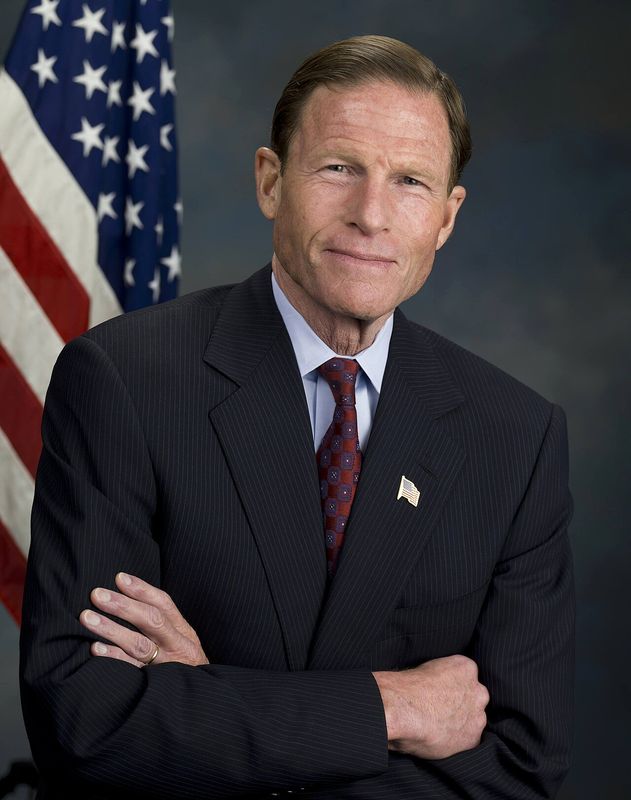
The first institutional answer came from Sen. Richard Blumenthal, the incoming chair of the Senate Permanent Subcommittee on Investigations, who wrote to Hegseth on Sunday demanding a classified briefing and a full accounting, including the force-protection assessments for the site. The choice of vehicle matters: the subcommittee is the Senate’s standing investigative machine, with subpoena power, and its incoming chair putting his name to a Sunday letter signals that the complaint has been received as the opening of an oversight file, not a weekend news story. Beyond Blumenthal, CNN has reported that Democrats are poised to launch wide-ranging Iran-war investigations when they take control of Congress in January — a framing attributed here to CNN’s reporting, and one that would put force protection at forward sites, of which Port Shuaiba is now the emblematic case, near the top of the agenda. The wider war those investigations would examine is tracked day by day on this site’s Iran war tracker.
Trump answers “60 Minutes” — with war-wide numbers
President Trump’s response, posted to Truth Social on Monday, was aimed at the messenger and the mathematics, in that order. “The new people running 60 Minutes are even worse than their predecessors,” the president wrote, saying that a study or report on an early-stage Iran attack was “not correctly stated” and had left out interception figures. He then gave figures of his own. Iran, the president claimed, has fired 8,000 to 9,000 one-way attack drones since February 28, with only two getting through and causing U.S. fatalities — both, he said, on the first day, in Kuwait and Saudi Arabia. Of roughly 2,000 ballistic missiles, he claimed, only one got through causing U.S. fatalities, in Jordan. Those are the president’s claims, stated here as his claims: they could not be independently verified, as TheDesk noted. And two precision points govern how they should be read. First, the president did not name Ramsbottom or Port Shuaiba in the post; nothing in it should be taken as a presidential confirmation, or rebuttal, of the complaint’s specific allegations. Second, the figures he offered are aggregate interception statistics for an entire war — and the complaint is not, at its core, a claim about aggregate statistics.
Two different arguments: the interception rate versus the site
That distinction is where the analytical weight of this story sits. A war-wide interception record, even taken entirely on the president’s terms, describes how a layered, theatre-wide defence performed against thousands of incoming weapons across eight months and many countries. It says nothing, one way or the other, about whether one particular operations centre, at one particular port, had anything designed to stop the one drone aimed at it. Ramsbottom’s complaint lives entirely at that second, site level: warnings given in meetings, a general’s alleged reply, a counter-drone system that allegedly never came, a medical plan that allegedly consisted of one ambulance. An aggregate can be excellent and a site can still have been naked; the two propositions do not contradict each other, which is why the president’s post does not actually engage the filing it followed. For scale on the other side of the ledger, CBS’s own analysis — based, the network said, on satellite imagery and video — concluded that Iran has hit at least 31 U.S. military and diplomatic sites in eight countries since the war began. That figure, too, is attributed: it is CBS’s analysis, not a settled count.
The wider war supplies the context in which this fight will be read. This site’s recent coverage includes US intelligence reporting on alleged Iranian ‘dirty bomb’ planning against Trump officials in Washington and Iran’s Guards claiming a strike on a U.S. radar in Bahrain as Hormuz tanker tensions rise — a conflict whose tempo is measured continuously on the war trackers. Against that backdrop, the complaint is the first formal whistleblower filing of the war to put force protection itself — what stood between a named unit and a known weapon — at the centre of a congressional file.
What happens next
The near-term path runs through the two Armed Services Committees, which now hold the complaint, and through Hegseth’s office, which holds Blumenthal’s letter. A classified briefing, if it comes, will test the distance between the Pentagon’s March description of a fortified, properly protected site and the complaint’s description of a position with nothing designed for the threat that killed six soldiers. The January horizon is larger: a new Congress, a new investigative chair already on the record, and, on CNN’s reporting, a Democratic majority preparing wide-ranging Iran-war inquiries in which Port Shuaiba would be an early exhibit. What would settle the underlying dispute is not rhetoric from any side but the paper: the force-protection assessments, the allocation and delivery records for counter-drone equipment, the record of the meetings at which Ramsbottom says he warned his superiors, and the medical plan for the site. Ramsbottom has asked Congress to go and get that paper. The six names in his complaint — Khork, Tietjens, Amor, Coady, O’Brien and Marzan — are the reason the request is difficult to wave away, and the reason the answer will be measured against a standard higher than a news cycle: whether the next operations centre, on the next war’s second day, is protected against the attack everyone in the room already knows is coming.
Sources
CNN, November 15–16, 2026 (https://www.cnn.com/2026/11/15/politics/army-soldier-whistleblower-complaint?cid=external-feeds_iluminar_meta): CNN obtained a copy of the complaint filed with the House and Senate Armed Services Committees, and reported that Democrats are poised to launch wide-ranging Iran-war investigations in January. CBS News, “60 Minutes,” November 15, 2026: Norah O’Donnell’s interview with Maj. Stephen Ramsbottom, concluding an eight-month investigation, including his “tactical failure … all the way down to my level” assessment and the “We don’t have to worry about protection” account; CBS’s satellite-imagery and video analysis counting at least 31 U.S. sites hit in eight countries; and the Pentagon’s decline to comment on the allegations. New York Post, November 16, 2026 (https://nypost.com/2026/11/16/us-news/pentagon-ignored-warnings-before-iran-drone-killed-6-us-service-members-in-kuwait-whistleblower-claims/): the text of President Trump’s Truth Social post and further complaint details. Military.com, November 16, 2026: same-day coverage of the complaint. TheDesk: the president’s interception figures could not be independently verified. Every allegation from the complaint is attributed to Ramsbottom or the complaint; the president’s figures are reported as his claims; no allegation is stated as an established finding. Photographs are file photos via Wikimedia Commons and do not depict the March 1 strike itself.