Port Shuaiba wounded soldiers
War / Iran / Military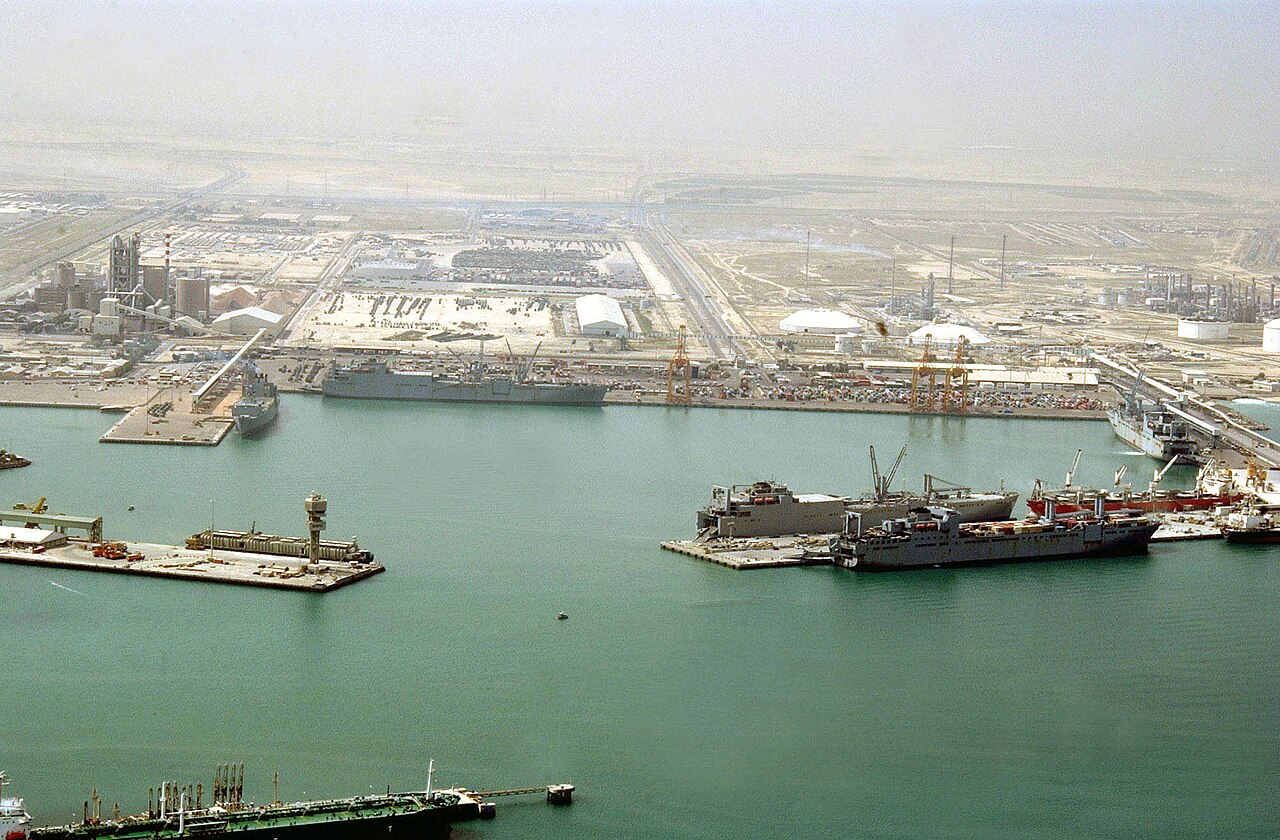
PORT SHUAIBA, Kuwait — The strike was over in moments. The medical consequences were not. On March 1, the second day of the U.S. war with Iran, a one-way attack drone hit a U.S. Army logistics site at Port Shuaiba, killing six soldiers and wounding dozens. Seven months later, the central question has widened from how the drone got through to what happened after it did.
An Associated Press investigation published via Military.com, reported by Julie Watson, Jack Brook and Konstantin Toropin, brings nine wounded active-duty soldiers onto the record. Their accounts describe traumatic brain injuries that went undiagnosed for weeks, troops using their own phones to locate hospitals, a badly injured officer sent to barracks rather than admitted at Landstuhl, and follow-up appointments delayed by bureaucracy.
The Pentagon disputes the conclusion that the system failed. It says the medical care was appropriate. The Army declined detailed comment, saying it had not yet briefed families on an investigation completed in June. That leaves two public records in tension: individual accounts with specific dates and injuries, and an institutional defense without publicly released findings.
What happened March 1 at Port Shuaiba
The Port Shuaiba drone strike in Operation Epic Fury
Operation Epic Fury was one day old when the drone reached the Kuwait logistics hub. The March 1 attack killed Chief Warrant Officer 3 Robert Marzan, Sgt. Declan Coady, Master Sgt. Class Nicole Amor, Maj. Cody Khork, Master Sgt. Class Noah Tietjens and Maj. Jeffrey O'Brien. Several were assigned to Iowa's 103rd Expeditionary Sustainment Command.
The strike was the deadliest known attack on U.S. troops since the Iran war began. Contemporary reporting compiled by The Sun described the six deaths and the broader toll. The precise number wounded has been reported as dozens; no final public casualty ledger accompanied the Army's still-withheld investigation.
Iran drone strike Kuwait March 1: warning and defense questions
CBS reported that an official characterized the site as having “basically no drone defeat capability.” The Washington Post and CBS also reported that an all-clear sounded roughly 30 minutes before the strike. Those reports do not by themselves establish who made a wrong decision, whether the all-clear concerned the same threat, or what defenses were available at that moment. They do establish a sequence investigators should be able to explain.
Descriptions of the weapon have included an Iranian Shahed drone in Kuwait, part of a family of low-cost one-way attack systems designed to stress radar, warning and interception networks. But the more important operational fact is less technical: a logistics node housing American troops was hit hard enough to create a mass-casualty event, and survivors say the medical response was not organized for one.
The AP investigation and nine soldiers' accounts
A rare public charge of military medical system failure
Active-duty troops rarely criticize their chain of care on the record. Nine doing so together gives the allegations unusual weight, but not automatic proof of every systemic conclusion. Their testimony is strongest where it is concrete: an appointment date, a missed diagnosis, a transfer decision, a test result that took months to arrive.
Soldiers told the AP there was no effective mass-casualty plan at the site. Some used personal phones to search for nearby civilian hospitals. Others said traumatic brain injuries were not diagnosed for weeks. Follow-up care depended on separate commands, facilities and authorization systems that did not behave as one continuous pathway.
DroneXL's account of the investigation highlights the mismatch between a modern drone threat and the care network available behind the front. The critique is not simply that clinicians made errors under pressure. It is that the system did not reliably carry patients from emergency stabilization to diagnosis, specialty treatment and rehabilitation.
Lt. Col. Arturo Lincón and Landstuhl Regional Medical Center
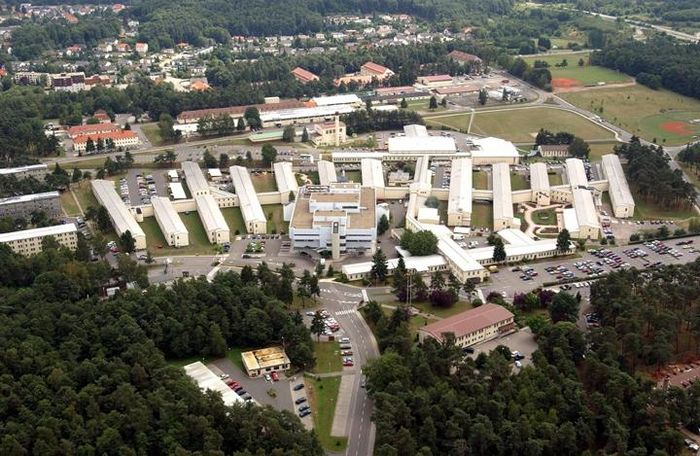
Lt. Col. Arturo Lincón survived shrapnel to his jaw, a severed neck artery and damage to a vertebral artery that left him at risk of stroke. Yet after reaching Landstuhl Regional Medical Center in Germany, the principal U.S. military hospital for casualties from the region, he was not admitted. According to his account, he was sent to barracks and told to arrange outpatient appointments.
That decision sits at the heart of the dispute over Pentagon medical care at Port Shuaiba. The Pentagon's position is that care was appropriate. Lincón's documented injuries and the sequence he described raise a narrower question that official findings could resolve: what admission criteria were used, who applied them and what monitoring was provided for the stroke risk after discharge.
Delayed diagnoses and a four-month MRI wait
Maj. Stephen Ramsbottom waited more than four months for MRI results, according to the AP account. Other troops said brain injuries were not recognized for weeks. In a mass-casualty setting, delay can come from overloaded imaging, fragmented records, triage decisions or administrative authorization. Each mechanism requires a different remedy; “red tape” is a description of the experience, not yet a complete diagnosis of the institution.
Still, four months is not a rounding error. It is long enough for symptoms to affect work, sleep, judgment and recovery without a settled clinical explanation. For U.S. troops wounded in the Iran war, continuity matters as much as emergency surgery: referrals must follow patients across Kuwait, Germany and home stations, and records must move faster than the people they describe.
Why this matters
Accountability is not the same as assigning blame early
The Army completed its investigation in June. As of October 5, findings had not been released publicly — roughly seven months after the strike and about four months after completion. The Army's stated reason, that families must be briefed first, is a legitimate procedural concern. It becomes less persuasive as an open-ended explanation unless the service provides a timeline.
Gold Star families connected to Port Shuaiba are pressing Army leaders for answers about warning, defenses and command decisions. Survivors are pressing for answers about treatment. Those are related but distinct accountability tracks. A fair inquiry should resist using medical failures to pre-judge air-defense decisions, or using classified operational details to withhold findings about patient care.
The disinvestment legacy behind the readiness gap
Years of U.S. drawdowns across the Middle East reduced the permanent medical footprint that once supported large formations. When the Iran war expanded rapidly, there was no major U.S.-run hospital in the immediate region with the depth of an established theater medical system. Civilian partner hospitals and evacuation to Europe can work, but only if plans, transport, records and authority are rehearsed before casualties arrive.
This is the strategic significance of the soldiers' accounts. Readiness is usually measured in aircraft, interceptors, ships and munitions. Medical capacity is also combat power. If a force can deploy quickly but cannot diagnose and follow its wounded across several countries, the gap affects morale, retention and commanders' freedom to accept risk.
Readiness questions for the Iran war
The arithmetic is stark: six killed, dozens wounded, nine speaking publicly, one MRI result delayed more than four months, an all-clear roughly 30 minutes before impact and no public findings seven months later. None of those figures alone proves a service-wide breakdown. Together they establish a credible readiness problem requiring evidence, not reassurance.
The unresolved question is whether Port Shuaiba was an isolated failure under extraordinary pressure or a preview of what a dispersed war produces when bases, civilian hospitals and evacuation hubs are connected more by improvisation than by a tested plan.
Gold Star families and soldiers versus the Pentagon and Army
Gold Star families Port Shuaiba: the case for disclosure
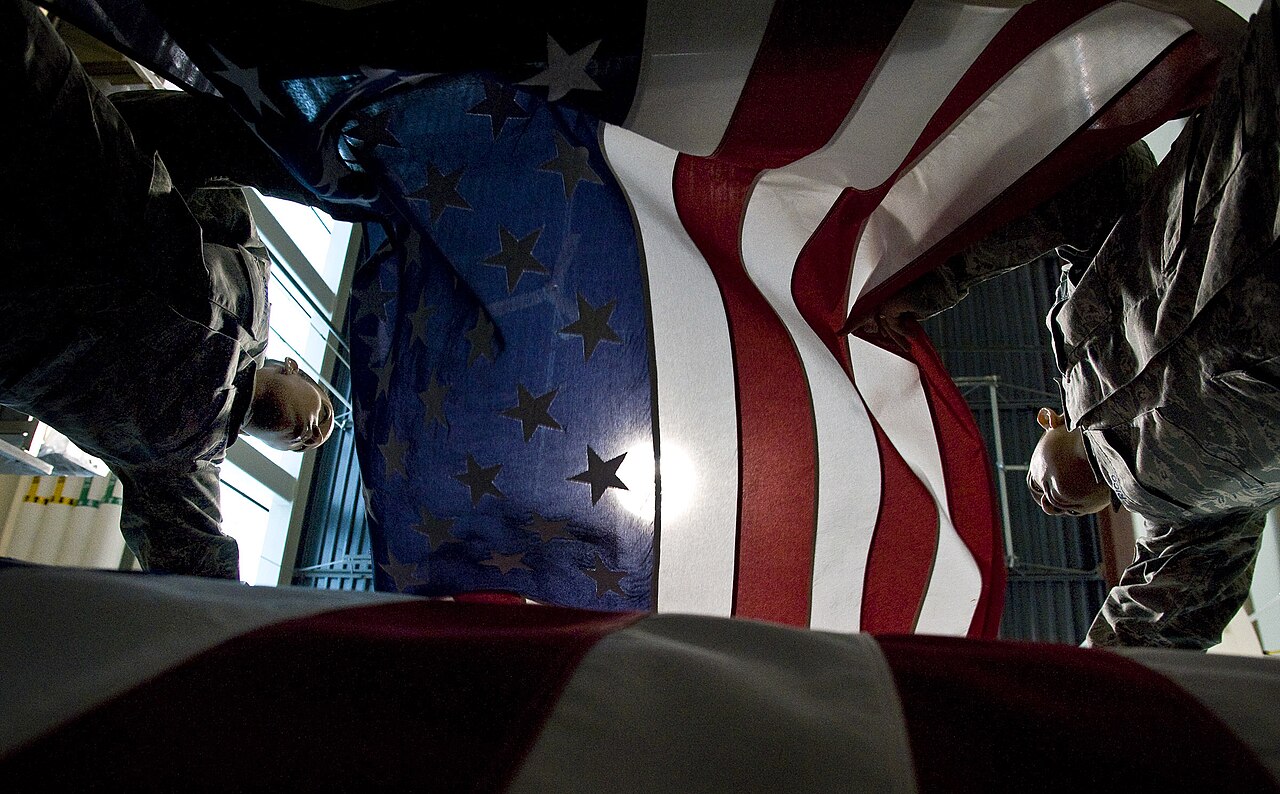
The six fallen returned through a Dover Air Force Base dignified transfer on March 7. For their families, a completed investigation is not an abstract transparency document; it is the government's account of why their relatives were exposed and what will change. Family pressure for release is therefore both personal and institutional.
The soldiers' public accounts reinforce that demand, but they do not eliminate the Army's obligations to protect medical privacy, classify operational details or brief next of kin before publication. The most credible path is a releasable report with necessary redactions, accompanied by a clear explanation of what remains classified and why.
The institutional response deserves to be tested, not dismissed
The Pentagon says the care was appropriate, and it is possible that clinicians made defensible triage decisions in a chaotic environment while later administrative failures created the impression of a single uninterrupted breakdown. It is also possible that some diagnoses emerged only as symptoms developed. Those possibilities should be tested against records.
The Army's refusal to comment before briefing families can reflect respect for them rather than evasion. But without the report, the public cannot compare the official timeline with the nine soldiers' accounts. The Daily Caller's summary similarly centers that unresolved gap between the survivors' evidence and the institution's defense.
What happens next
1. The Army releases a redacted investigation
A public version could establish the warning timeline, available defenses, casualty evacuation sequence and medical command decisions. If it identifies failures, the test will be whether corrective actions have owners and deadlines. If it supports the Army's decisions, the evidence should explain why the soldiers' experiences diverged so sharply from policy.
2. Congress opens oversight
Lawmakers could request the full report, casualty-care records and testimony from commanders, clinicians and survivors. Useful scrutiny would separate force protection from health care rather than compressing both into a single blame hearing. Funding questions would follow: deployable surgical teams, theater hospitals, drone defense and patient-tracking systems all compete for resources.
3. Wounded veterans' care becomes the lasting measure
The immediate controversy will fade faster than the injuries. Long-term neurological screening, vascular monitoring, rehabilitation and disability documentation will determine whether the system ultimately keeps faith with the wounded. A process that improves only at the next battlefield, but leaves these patients navigating today's bureaucracy, would be incomplete.
4. The report stays withheld
Continued silence would harden competing narratives: survivors alleging failure, officials offering assurance, families suspecting concealment. That is the least useful outcome for readiness. Institutions learn from documented sequences, and trust depends on showing where judgment was sound as well as where it was not.
Port Shuaiba is now two stories. One is about an Iranian drone penetrating a U.S. logistics site. The other is about whether the military system behind that site was ready to care for the people the first failure exposed. The Pentagon may ultimately substantiate its defense. The nine soldiers have made clear that reassurance alone will not settle the record.