Panama earthquake: When the ground shook across Panama on Friday, it was the planet's crust doing what it has done for billions of years — just suddenly, violently, and without warning. A magnitude 7.7 earthquake ruptured off the country's southern coast, and within minutes a tsunami threat covered coastlines from Guatemala to Peru. If you're asking what an earthquake actually is, what you're supposed to do during one, and whether a tsunami is really coming, this is the guide.
What is an earthquake?
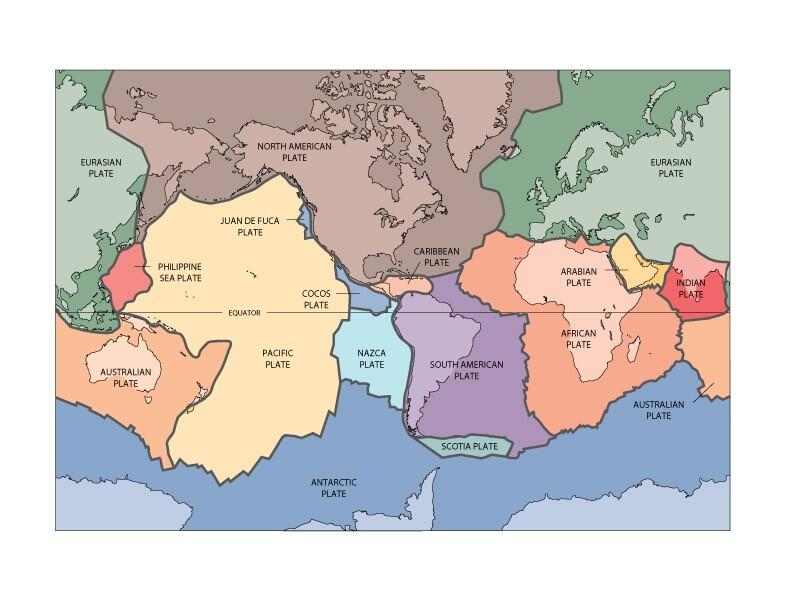
Earth's outer shell is broken into giant slabs called tectonic plates, and they never stop moving — a few centimeters a year, about as fast as your fingernails grow. Where plates grind past, collide, or dive under each other, stress builds up along cracks in the crust called faults. Most of the time the rock holds. When the stress finally exceeds the rock's strength, the fault slips all at once — and the pent-up energy radiates outward as seismic waves. That's an earthquake.
Panama sits in one of the most complicated tectonic neighborhoods on Earth. Off its Pacific coast, the Cocos and Nazca plates are diving beneath the Caribbean plate along the Middle America Trench. Friday's quake happened in that subduction zone, at a depth of 12.6 kilometers — shallow, which is why it was felt so widely and why it could shove the seafloor hard enough to threaten a tsunami.
The magnitude number — 7.7 in this case — measures the energy released at the source. The scale is logarithmic: each whole number up means about 32 times more energy. A 7.7 releases roughly 1,000 times the energy of a 5.7. (The USGS first estimated 8.0 from early data, then refined it to 7.7 as more seismic stations reported in — that's normal science, not a mistake.)
What to do during an earthquake
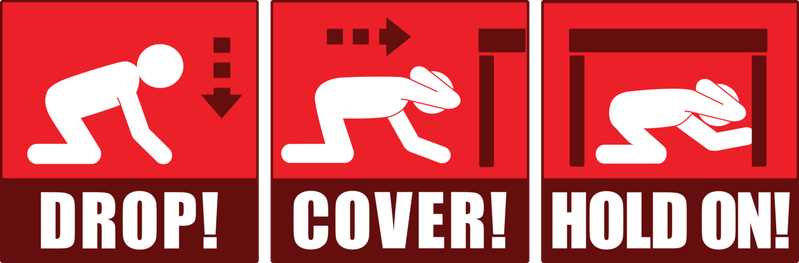
Emergency agencies in the U.S. and worldwide teach one drill, and it fits in three words: Drop, Cover, and Hold On.
Drop to your hands and knees before the shaking knocks you down. Cover your head and neck under a sturdy table or desk — or against an interior wall away from windows if no furniture is near. Hold On to your shelter until the shaking stops. That's it. Decades of injury data back this up: most earthquake injuries come from falling objects and people being thrown, not from buildings collapsing outright.
What NOT to do matters just as much. Don't run outside while the ground is moving — building facades shed glass and debris outward, and the sidewalk is one of the most dangerous places to be. Don't stand in a doorway (that's outdated advice from when doorframes were load-bearing; modern ones aren't). Don't use elevators. If you're driving, pull over clear of bridges, overpasses, and power lines, and stay in the vehicle.
What to do after the shaking stops
First, expect aftershocks — smaller quakes that follow the mainshock as the fault settles. Friday's Panama quake was followed within the hour by a magnitude 5.8 aftershock, and more are likely for days. Treat every aftershock like a fresh quake: Drop, Cover, Hold On.
Check yourself and others for injuries, then check your surroundings: gas leaks (smell), damaged wiring, cracked walls. Don't light matches or candles until you're sure there's no gas leak. If you're in a damaged building, get out — aftershocks finish what mainshocks start. Keep your phone charged and use text or messaging rather than calls, which clog networks rescuers need.
Keep an emergency kit where you can grab it: water, non-perishable food, flashlight, batteries, first-aid supplies, medications, important documents, and sturdy shoes. Panama's quake is a reminder that "it won't happen here" is not a plan.
Will there be a tsunami?
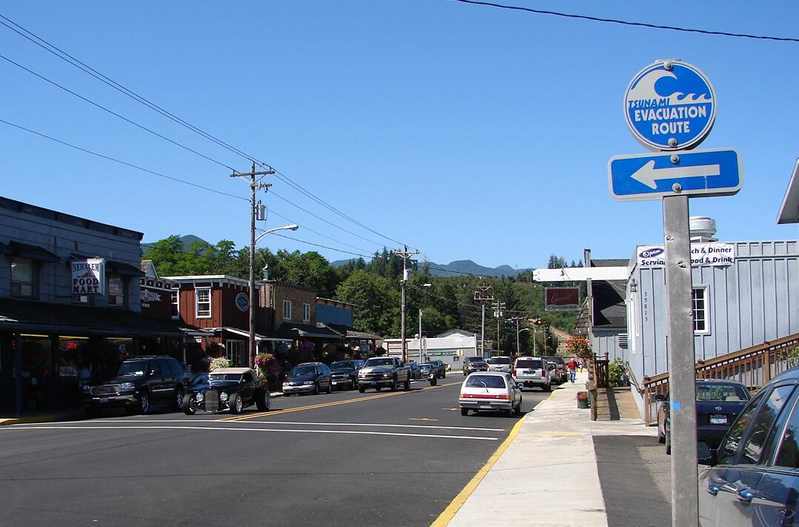
This is the question everyone on a coastline asks after a big offshore quake — and it's the right one. A tsunami isn't a single big wave; it's a series of fast-moving ocean waves triggered when a quake vertically displaces the seafloor. Shallow subduction-zone earthquakes like Panama's are exactly the type that can do this: the seafloor snaps upward, shoving the entire water column, and that energy races outward at jetliner speed.
As of the latest updates, the U.S. National Weather Service has issued a tsunami threat (not the same as a confirmed wave) covering Colombia, Ecuador, Nicaragua, Panama, and Guatemala, with potential effects from Costa Rica to Peru and Mexico. Waves of 1 to 3 meters are possible along some Panama coasts. Threat levels get upgraded or canceled as deep-ocean buoys and tide gauges report real measurements — the all-clear comes from tsunami.gov and local emergency agencies, not from social media.
Know the natural warning signs, because official alerts don't reach everyone: if shaking is so strong you can't stand, if the ocean suddenly recedes exposing the seafloor, or if you hear a loud roar from the sea — move to high ground immediately and don't wait for an alert. Tsunamis arrive as multiple waves over hours; the first is often not the largest. Stay away from the coast until authorities say it's safe.
The bottom line
Earthquakes can't be predicted, but their damage can be reduced enormously by knowing three words — Drop, Cover, Hold On — and by respecting the ocean after a big offshore quake. Panama's 7.7 is a major event, and the tsunami threat is real enough that coastal residents from Central to South America should stay alert, stay uphill, and follow official guidance. The science will keep refining the numbers; your job is simpler: be ready before the ground moves, not after.
Read our full coverage of the quake: Massive Earthquake Strikes Panama — USGS Downgrades Initial 8.0 Report to 7.7 as Tsunami Threat Is Issued.