NATO jets scrambled Poland Romania
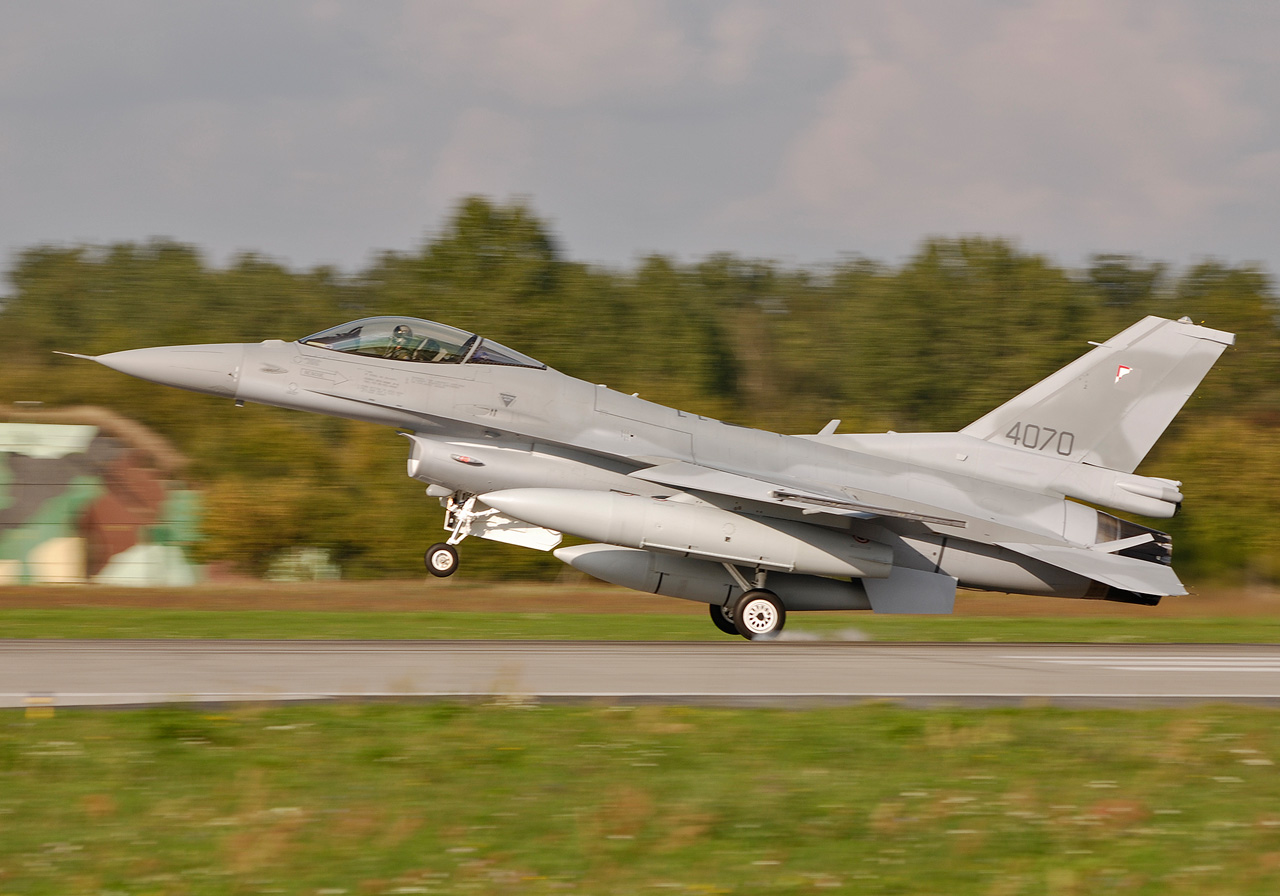
KYIV — NATO jets scrambled in Poland and Romania on September 23 as Russia sent drones and missiles across Ukraine, placing allied air defenses on alert even though Polish and Romanian authorities later said their national airspace had not been breached. Ukraine’s air force reported 161 drones in the overnight wave, including 82 jet-powered models, as well as an unspecified number of Banderol cruise missiles.
The central significance is not that NATO entered the war; it did not. It is that the speed, volume and routes of Russian attacks are narrowing the margin between a strike inside Ukraine and an allied response just across the border. A wave containing 82 jet-powered drones compresses warning time, forces commanders to sort genuine threats from decoys quickly and puts civilian aviation and military readiness into the same operational picture.
What happened overnight
Ukraine’s air force said 119 of the 161 drones were intercepted or suppressed and three cruise missiles were shot down. It reported impacts at 18 locations. Those are preliminary Ukrainian military figures, not an independently audited strike inventory; the number of missiles launched was not specified in the statement carried by the reports reviewed for this article.
In Kyiv, officials said targets and damaged sites included a business center, a nine-story non-residential building in the Solomyanskyi district, two petrol stations, railway infrastructure and data centers. Mayor Vitali Klitschko said one person was killed and seven were injured in initial reports; reporting later said a hospitalized victim died. Ukraine’s digital ministry said damage to communications infrastructure left around 100,000 Kyiv-area households without internet while repairs proceeded.
Russia’s Defense Ministry said its strikes were directed at metallurgical, chemical, fuel-and-energy and military-industrial facilities, including industrial targets in Poltava, a Kyiv enterprise it said made missile components and logistics sites near Odesa. Signal Post News could not independently verify those target descriptions or establish the function of every damaged site. Ukrainian Foreign Minister Andrii Sybiha argued that civilian infrastructure had been hit and said nationwide air alerts underscored the breadth of the threat. The two accounts remain in dispute.
The attack followed a separate wave one day earlier that Ukrainian regional officials said killed four people in Dnipro and one woman in Sumy. Those casualty reports are attributed to the respective Ukrainian authorities and were subject to further assessment.
Poland’s response: jets up, airports paused
Poland’s Operational Command said Polish and allied aircraft were scrambled “to ensure safety” while Russia attacked western Ukraine with jet-powered unmanned aerial vehicles. The alert lasted about an hour. Polish authorities said no violation of Polish airspace was recorded.
Rzeszów and Lublin airports temporarily suspended operations during the response. That precaution matters beyond ordinary flight schedules. Rzeszów has become a principal logistics gateway for international military and humanitarian aid bound for Ukraine, so an air-defense alert there affects one of the most important western supply corridors supporting Kyiv.
The fact that aircraft launched without an eventual incursion does not make the response unnecessary. Air defenders must decide before a target’s route is fully known. Waiting for an aircraft to cross the frontier would reduce the time available to identify, track or intercept it; launching fighters provides options while ground systems and radar operators refine the picture.
Romania’s response: F-16s watch the Danube border
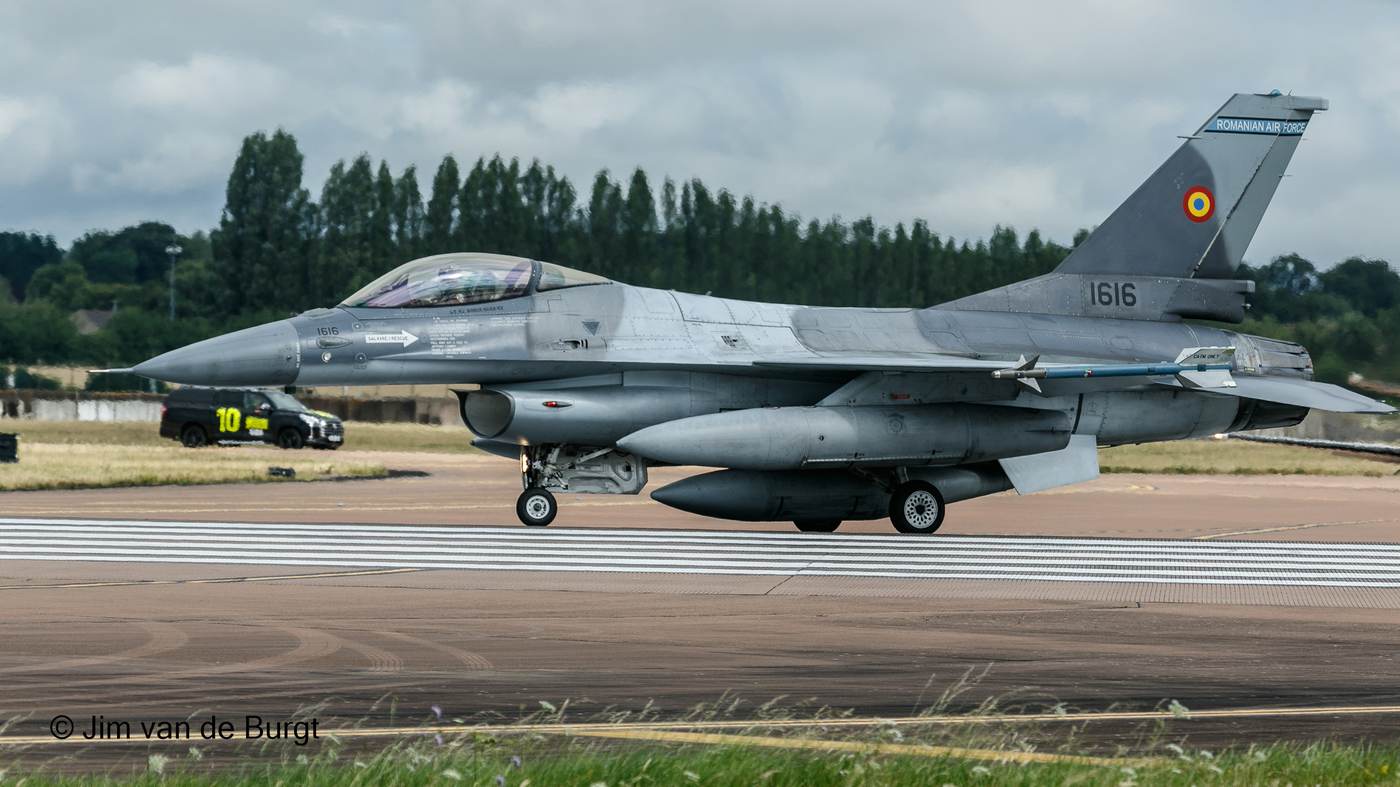
Romania’s Defense Ministry said two Romanian F-16s responded after radar detected a target northeast of Valkove on Ukrainian territory, close to the Romanian border. The alert ended roughly an hour later, and the ministry said it found no incursion into Romania’s national airspace.
Valkove lies in Ukraine’s Odesa region near the Danube delta, where the river’s channels and the Black Sea coast place Ukrainian ports, shipping routes and Romanian territory in close proximity. That geography has repeatedly forced Romanian authorities to monitor attacks on Ukrainian Danube infrastructure. Drone fragments have previously been found on Romanian territory, and earlier incidents prompted searches, alerts and allied consultations even when officials did not conclude that Romania was deliberately targeted.
The response therefore reflects accumulated experience, not only one radar track. An object approaching the border from the Odesa area may turn, fall, be jammed or be destroyed before crossing. Fighters give Romania an airborne observation and interception layer while ground authorities determine whether people near the frontier need warning.
Why the jet-drone barrage matters
Russian barrages aimed at western and southern Ukraine increasingly trigger NATO eastern-flank early warning. Poland watches routes toward the Lviv region and the aid corridor around Rzeszów; Romania watches the Danube approaches and Odesa region. The common operational problem is that a weapon does not need to be aimed at NATO for its route, malfunction, jamming or interception to create risk inside allied territory.
Jet-powered drones change that calculation. Compared with propeller-driven attack drones, they are generally faster, can operate at higher altitude and leave less time for mobile fire teams or fighter controllers to react. The Ukrainian air force’s reported count of 82 jet-powered models in one wave suggests scale as well as speed. It does not establish that every aircraft carried a warhead—large attacks may mix strike weapons with decoys—but it multiplies the tracks defenders must classify.
The timing adds diplomatic weight. The barrage came before President Volodymyr Zelenskyy’s address to the United Nations and after his New York meeting with U.S. President Donald Trump, where the possibility of a limited energy ceasefire was discussed. Timing alone does not prove the attack was ordered as a response to those talks. It does show why any proposed pause will be judged against events on the ground rather than declarations alone.
Moscow’s argument that it struck military-linked industrial and logistics targets and Sybiha’s argument that civilian infrastructure and nationwide alerts show broader coercion cannot be reconciled from public claims alone. Some infrastructure can also be dual-use. The correct analytical response is to keep the attribution explicit, distinguish confirmed damage from stated intent and avoid treating either government’s target list as independently established fact.
The numbers behind the night
The Ukrainian air force’s figures describe a 161-drone wave, of which 82 were jet-powered. It said 119 drones were stopped, equivalent to about 74% of those launched, and three cruise missiles were downed. It also reported impacts at 18 sites. The 74% calculation measures the stated drone interception or suppression rate; it does not include the unspecified cruise-missile total or prove that every remaining drone hit its intended target.
Russia’s Defense Ministry separately claimed that Russian forces downed 297 Ukrainian drones over 14 regions. That figure, included in reporting tied to the same period, was not independently verified. An Associated Press affiliate later carried a different Russian claim of 514 drones over 17 regions and other areas. The two claims may reflect different reporting windows or definitions, but the available reports do not establish a common basis; they should not be combined or treated as one confirmed total.
Initial reports in Kyiv put the human toll at one killed and seven injured, with later reporting saying a hospitalized victim died. Around 100,000 households lost internet service, according to Ukraine’s digital ministry. Those numbers illustrate two distinct kinds of harm: the immediate casualties and the wider disruption that follows damage to communications nodes used by homes, businesses and public services.
A pattern, not an exception
NATO scrambles along the eastern flank are becoming increasingly routine because Russia’s long-range attacks repeatedly approach allied borders. Fighters are not launched only after a confirmed crossing; they are used to create a protective margin during uncertainty. Each response also generates radar, route and timing data that can improve future detection.
Russian drones have previously entered or crashed in NATO territory, especially in Poland and Romania. Some incidents involved debris or weapons that authorities assessed had gone off course rather than deliberate attacks. Intent matters politically, but air-defense systems must manage the physical risk first. A falling or malfunctioning weapon can kill regardless of its intended destination.
The structural change is the combination of faster jet-powered drones and persistent allied readiness. Air policing designed around occasional aircraft incidents now overlaps with frequent mass drone attacks, civilian airport closures and potential debris searches. That puts continuing pressure on pilots, maintainers, controllers and local emergency services.
Who gains, who loses
Russia can gain by stressing allied readiness and revealing response patterns without deliberately striking NATO territory. Every alert consumes flying hours, personnel attention and civilian-airspace capacity. But Russia also exposes routes and tactics that NATO can study, allowing the alliance to refine sensors, command procedures and coordination with Ukraine.
NATO gains by demonstrating that it can launch quickly and monitor more than one frontier at once. The cost is recurring escalation and accident risk: a misidentified track, an interception near a border or ambiguous debris could force political decisions before investigators have a complete account.
Ukraine gains a limited indirect shield on its western approaches because allied radars and aircraft watch the same air picture near NATO territory. That shield is not a defense of Ukraine as a whole. Ukrainian cities, fuel sites, railways and communications infrastructure still absorb the attacks.
Civilians lose most directly. Damage to petrol stations, rail systems, data centers and ordinary urban buildings affects mobility, communications, work and emergency response long after an air alert ends. The scale of interception may reduce harm, but it does not eliminate it.
What comes next
More NATO scrambles are likely whenever large attacks approach Poland or Romania, especially as Russia and Ukraine increase drone production and adapt routes. The principal danger is miscalculation: an object crosses unexpectedly, debris causes casualties, or a rapid response is interpreted as hostile intent before facts are established.
Winter raises the stakes. Ukraine expects renewed pressure on power and heating infrastructure, while Russia says energy and industrial facilities can support military operations. Any energy ceasefire will therefore need a precise list of covered sites, a way to investigate alleged violations and a channel that can operate during an active alert.
U.S. Secretary of State Marco Rubio said after meeting Russian Foreign Minister Sergei Lavrov that both sides had expressed interest in a limited grain-and-energy ceasefire. Egypt, India and Turkey proposed options for Black Sea maritime arrangements, according to reports reviewed for this article. Moscow had not publicly backed those proposals at the reporting cutoff. The diplomatic test is whether the parties turn general interest into verifiable rules while attacks continue.
The September 23 response offers the likely near-term template: Ukraine tracks and intercepts the main barrage; NATO aircraft launch when routes approach allied territory; civilian airports pause; and officials announce afterward whether a border was crossed. That process can reduce risk, but it is evidence of a war pressing against NATO’s frontier, not evidence that the danger has been contained.
Sources
- Associated Press affiliate: NATO jets scrambled in Poland and Romania as Russia strikes Ukraine
- Reuters: Russia hits Kyiv petrol stations and kills one
- Reuters: attacks disrupt internet service for about 100,000 Kyiv households
- Reuters: Ukraine says it is ready for a maritime truce and puts the onus on Russia
- Europe Says: compiled official statements and reporting on the September 23 attack
Reporting basis: Fixed September 23, 2026 snapshot. Strike, interception, casualty and damage figures are attributed to the Ukrainian or Russian authorities that supplied them and were not independently verified by Signal Post News. Polish and Romanian airspace findings are attributed to their respective defense authorities. Analysis is Signal Post News’s.