NATO Rutte Lithuania Russia warning
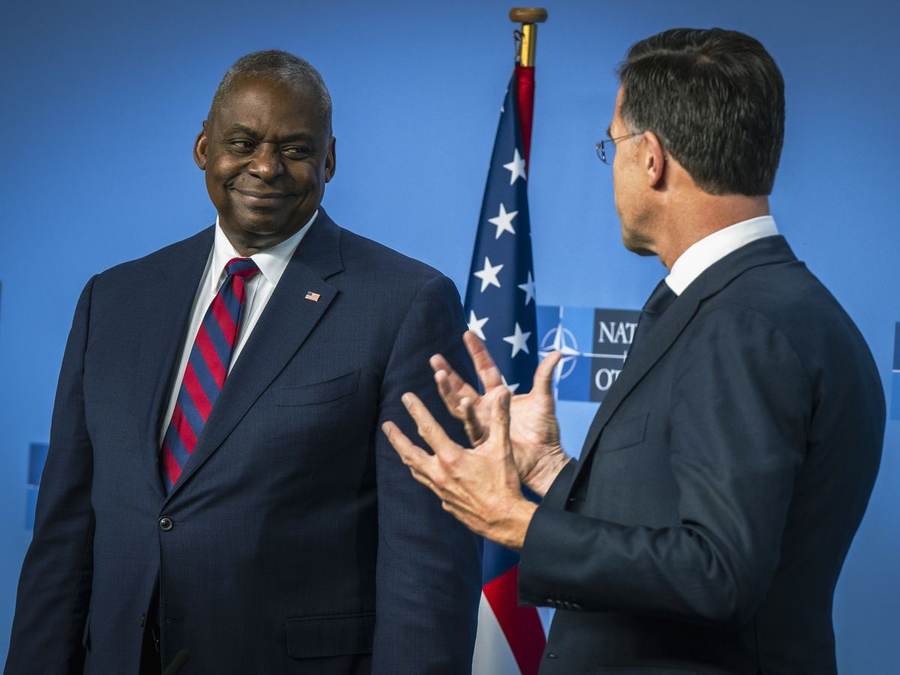
NATO Rutte Lithuania Russia warning — NATO Secretary General Mark Rutte received Lithuanian Prime Minister Mindaugas Sinkevičius at NATO headquarters in Brussels on Tuesday, September 29, 2026, for a joint press conference dominated by one subject: Russia's escalating campaign of drone incursions, sabotage, and cyberattacks against alliance territory. Rutte's message had two halves, and both were aimed at Moscow. The first was reassurance turned outward to allied publics: stay calm, he said, because the alliance is investing in its defense and “Russia is not in a good situation.” The second was a warning with the serial numbers filed off: NATO will defend “every inch” of allied territory, it is strengthening its integrated air and missile defenses with a modern multi-layered approach, and the correct answer to Russian gray-zone pressure is more support for Ukraine — not less.
“Russia is failing,” Rutte said, in the line that will travel furthest. “It is failing on the battlefield in Ukraine and it is failing in its attempt to undermine our unity and our support for Ukraine.” He argued that the Kremlin's objective with its hybrid campaign is to fracture the alliance's cohesion, get partners to “lose focus on Ukraine,” and divert attention toward the drip-feed of incidents on NATO soil — and that the campaign is not working. The two leaders also discussed Lithuania's defense spending, preparations for the permanent deployment of a German brigade to Lithuania, continued NATO support for Ukraine, and backing for Ukraine's energy infrastructure ahead of winter.
Why this matters
The press conference matters less for what was announced than for what it confirms about NATO's theory of the current confrontation. Rutte essentially laid out the alliance's operating doctrine for the gray zone: absorb the provocations without panic, invest visibly in the defenses the provocations expose as inadequate, and refuse the trade Moscow is implicitly offering — your quiet frontier for our quiet Ukraine. “The best response to any action in this gray area by Russia is more support for Ukraine, not less, because in the end what they want is to divide us,” Rutte said. That is a strategy, not a slogan: it tells the Baltic states they will not be left to face the drone campaign alone, and it tells Kyiv that the price of allied solidarity on the eastern flank will not be extracted from Ukraine's war effort.
It also matters because of the venue and the partner. Lithuania is the alliance's tripwire state — the place where abstract Article 5 commitments meet a 227-kilometer border with Belarus and the Russian exclave of Kaliningrad. When the Secretary General chooses Vilnius's prime minister for this message, the audience is not only Moscow. It is also the Lithuanian public, which has watched drones fall out of its own sky, and the rest of the alliance, which is being asked to keep paying for a defense buildup while the incidents multiply.
A summer of drone incursions
The backdrop to Tuesday's press conference is a pattern of incidents that has put the eastern flank on edge for weeks. On September 15, a NATO fighter jet shot down a drone in Lithuanian airspace near the village of Pratkunai; the Lithuanian army released photos of the debris. The same day, Denmark said a Russian frigate fired flares toward a Danish military helicopter conducting routine surveillance over the Baltic Sea, and Copenhagen summoned the Russian ambassador. Earlier in September, Russian drones crossed into Polish airspace, prompting a NATO response. On Monday, NATO's top military commander, U.S. General Alexus Grynkewich, told EU lawmakers that Russia's sabotage campaign across Europe — he cited an explosive-laden drone found at a German airport and the Danish helicopter encounter — was not deterring allied support for Ukraine.
Each incident on its own is deniable, minor, or both. Together they form the signature of gray-zone warfare: actions calibrated to stay below the threshold that would trigger a collective military response, while steadily testing where that threshold actually is. Attribution is frequently contested, and Moscow has variously denied responsibility or framed allied reactions as hysteria. That ambiguity is the point — and it is what makes Rutte's “stay calm but keep investing” formulation the alliance's attempt to deny Moscow both the panic and the complacency it might hope to produce.
The German brigade: a postwar first
Buried in the press conference agenda was one of the most consequential military developments in modern European history: preparations for the permanent deployment of a German brigade to Lithuania. Germany's 45th Panzer Brigade — expected to number around 4,800 soldiers plus some 200 civilian staff and to be fully operational by 2027 — will be the first permanent stationing of German troops on foreign soil since World War II. The historical weight of that sentence is difficult to overstate. For eighty years, German military deployments abroad were temporary, reluctant, and hedged with caveats. A permanent armored brigade in the Baltics, explicitly positioned as a deterrent to Russia, marks the end of that era as cleanly as anything has.
The numbers tell the story of a continent rearming. Lithuania already spends well above NATO's 2% of GDP benchmark on defense and has pushed for further increases; the brigade's arrival will make the country host to a standing multinational deterrent force rather than a rotational tripwire. For Moscow, the brigade is evidence for its narrative that NATO is the aggressor encircling Russia. For the Balts, it is the difference between a promise and a presence. Both readings can be sincerely held, and the tension between them is the central dynamic of European security.
Who gains, who pays
For the Baltic states, Tuesday was a good day. A Secretary General standing in Brussels, pledging “every inch” and a multi-layered air defense upgrade, is exactly the visible reassurance that frontline allies have been demanding since the drone campaign began. For Ukraine, the linkage Rutte drew — gray-zone pressure answered with more support, including for energy infrastructure ahead of winter — is a firewall against the fear that allied attention will drift from Kyiv to the Baltic the moment the incidents multiply.
For Russia, the press conference was a signal that the gray-zone strategy is producing the opposite of its intended effect: instead of dividing the alliance or siphoning support from Ukraine, it is accelerating the very military buildup — counter-drone systems, a German brigade, higher defense spending — that Moscow claims to find threatening. Whether the Kremlin reads it that way is another matter; Russian doctrine has historically treated NATO enlargement and forward deployment as justification for further pressure, which risks a slow escalation spiral neither side says it wants.
The critics, and there are serious ones, split in two directions. One camp argues Rutte's “calm” risks reading as complacency — that drones in allied airspace and flares fired at allied aircraft merit sharper, more concrete responses than investment pledges, and that ambiguity about how NATO would answer the next incursion invites further testing. The other camp warns that the steady militarization of the eastern flank, however defensive in intent, narrows the space for any future de-escalation and hands Moscow a permanent grievance to mobilize around. Both critiques deserve weight; neither is answered by a press conference.
What happens next
Three things to watch. First, whether the counter-drone defense pledge becomes a funded program or remains a talking point. The September incidents exposed a genuine capability gap — cheap drones versus expensive interceptors is a losing economic exchange, and NATO's air defense architecture was built for aircraft and missiles, not swarms of low-cost unmanned systems. A serious initiative would mean procurement, doctrine, and likely a dedicated mission along the eastern flank. Second, the German brigade's timeline: full operational capability by 2027 is the current target, and any slippage will be read in Moscow as a signal of allied irresolution.
Third, the winter. Rutte and Sinkevičius specifically discussed support for Ukraine's energy infrastructure, and the timing is not accidental: Russia has systematically targeted Ukrainian power and heating in past winters, and Kyiv has warned Moscow is preparing to do so again. An allied energy-support package — air defenses for power plants, repair equipment, grid assistance — would be the concrete expression of Rutte's “more support, not less” doctrine. If the drones keep coming over the Baltic and the missiles keep falling on Ukrainian substations, the alliance's gray-zone doctrine will face its first real stress test before spring.
Sources
- NATO official media advisory: NATO Secretary General meets the Prime Minister of Lithuania — the September 29, 2026 meeting at NATO headquarters in Brussels; joint press conference at 10:30 CEST; official confirmation of the event.
- Demócrata: Rutte calls for calm in the face of Russian hybrid attacks — Rutte's “stay calm and keep investing” message; “Russia is failing… on the battlefield in Ukraine and… in its attempt to undermine our unity”; the best response to gray-zone actions is more support for Ukraine, not less.
- The Independent via EuropeSays: Europe live, September 29, 2026 — Rutte–Sinkevičius meeting amid growing Russian pressure on NATO's eastern flank; Odesa port strikes context; the day's European security agenda.
- The Independent via EuropeSays: Ukraine-Russia war latest, September 29, 2026 — Putin's September 28 decree expanding the Russian army to 1.55 million active servicemen; Grynkewich's Monday remarks to EU lawmakers on Russia's sabotage campaign.
This article is based on NATO's official media advisory and press reporting on the September 29, 2026 Rutte–Sinkevičius press conference, with background on eastern-flank incidents drawn from Reuters, Associated Press, and Fox News Digital reporting as referenced. Direct quotations from the press conference are as reported by the outlets cited above. Signal Post News has not independently verified every incident attribution; claims by either side about drone incursions and hybrid attacks are contested, and this article distinguishes reported facts from analysis where the record is disputed.