Lebanon PM demands Israeli withdrawal
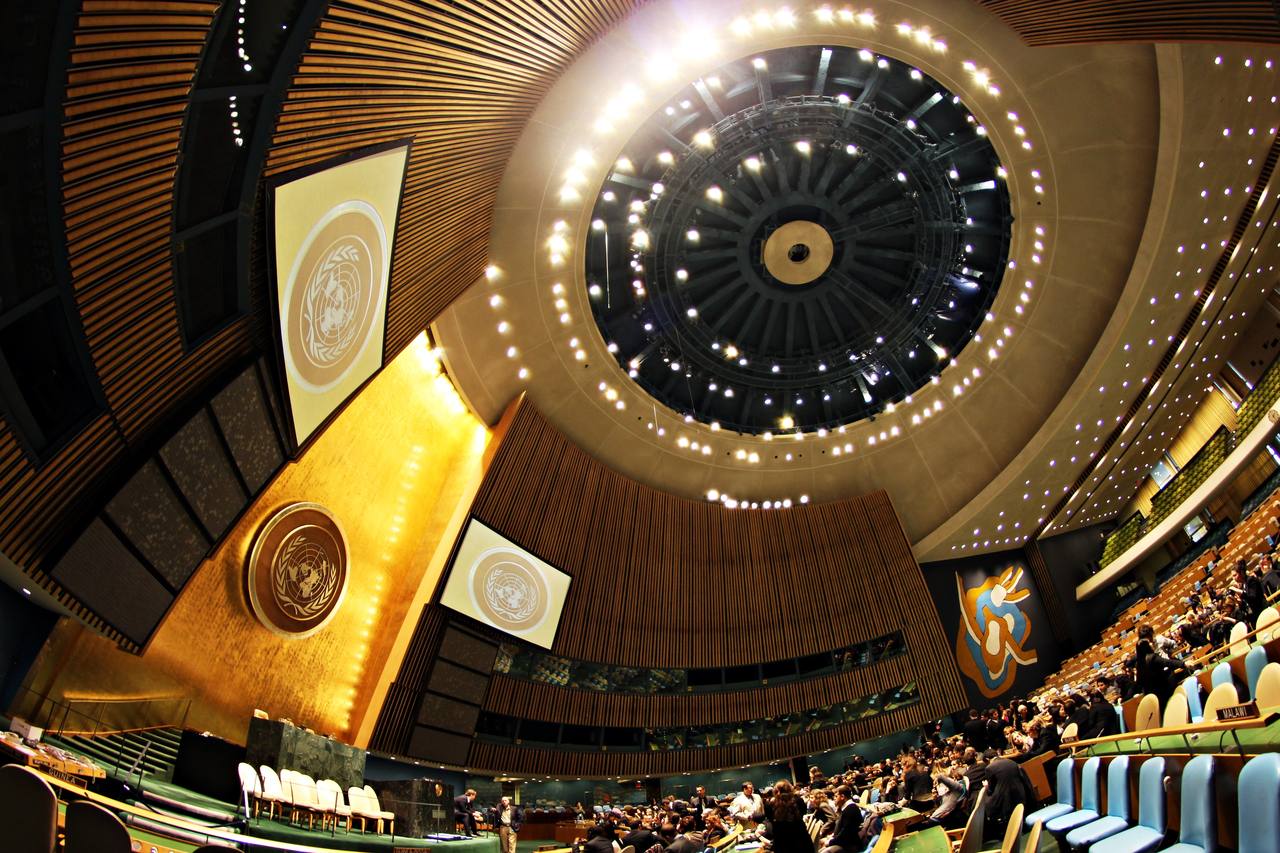
Lebanese Prime Minister Nawaf Salam used the United Nations General Assembly on Friday, September 25, to set out a demanding sequence for ending Lebanon's war: a consolidated ceasefire, full Israeli withdrawal from Lebanese territory to the country's internationally recognized borders under the 1949 General Armistice Agreement, the release of Lebanese detainees, the safe return of displaced residents and reconstruction of destroyed communities.
He joined those demands to a claim about authority inside Lebanon. “No one speaks on behalf of Lebanon, and no one negotiates for it except the Lebanese State,” Salam said, according to the United Nations' account of his speech, adding that constitutional institutions must control the country's diplomacy. He also backed Gulf states and Jordan after Iranian attacks, an unusually direct regional alignment for a Lebanese leader speaking while Hezbollah, Iran's closest Lebanese ally, remains armed and politically influential.
The address was therefore more than another appeal for an end to Israeli operations. It was a bid to define who owns Lebanon's foreign policy after years in which war, deterrence and negotiation have often been shaped outside state institutions. Salam rejected the country being used “as an arena for others' conflicts or as a bargaining chip,” while insisting that Israeli withdrawal and Lebanese state control must advance together. The proposition is politically coherent. Whether it is operationally achievable is the question now facing Beirut, Washington, Israel, Hezbollah and the United Nations.
Why this matters: sovereignty is the argument connecting every demand
At first glance, the speech carried several separate messages: Israel should leave; prisoners should be released; displaced families should go home; Iran should not attack Arab states; UN peacekeepers should not depart without a replacement; Hezbollah's weapons should come under state authority. In Salam's formulation, however, these are parts of one sovereignty doctrine. Lebanon cannot credibly demand that Israel respect its borders while accepting armed decisions by a domestic faction beyond the state's control. Nor can it absorb the security consequences of outside conflicts and still claim that national policy is made in Beirut.
That symmetry is what gives the Nawaf Salam UNGA address its force—and what makes it difficult. Israel has long argued that withdrawal cannot be separated from the removal of Hezbollah's military infrastructure. Hezbollah rejects disarmament under pressure and has characterized the U.S.-brokered framework as a surrender of sovereignty, according to regional reporting cited in accounts of the negotiations. Salam's answer is that sovereignty must not be divided between those two vetoes: Israeli forces should leave, and Lebanese institutions should become the only authority entitled to negotiate and bear arms.
The speech in detail: withdrawal, detainees, return and reconstruction
Salam's territorial demand was precise. He called for full withdrawal “up to our internationally recognized borders, in accordance with the 1949 General Armistice Agreement,” according to UN News. That wording is meant to move the discussion away from temporary security lines and unilateral buffer zones toward a legal baseline recognized by the Lebanese government. It also raises the political cost of any partial arrangement presented as a final settlement.
The demand for Lebanese detainees in Israel to be released sits beside the border question because Salam framed an end to war as a package rather than a pause in fire. A ceasefire that leaves prisoners unresolved, towns inaccessible and residents unable to return would be an interruption, not a restoration of state authority. The same applies to reconstruction. Homes, public facilities, infrastructure and productive sectors have been extensively damaged, Salam said, leaving a humanitarian crisis that cannot be repaired by military de-escalation alone.
He thanked UN agencies and urged continued funding for displaced people, early recovery and reconstruction. The request joins immediate relief to the institutions needed for a durable return.
Bytes Europe reported that Salam also criticized efforts to weaken the UN agency for Palestinian refugees, UNRWA. That point was less central in the available official summary than his Lebanon-specific demands and should be read with that attribution. It nonetheless fits the larger argument: selective support for international institutions, Beirut contends, weakens the rules Lebanon invokes when demanding enforcement of its own borders.
The Gulf and Iran pivot
Salam's solidarity with Gulf states and Jordan following Iranian attacks expanded the speech beyond Lebanon's southern front. ANEWZ reported him saying that Lebanon “stands with” those states and that the attacks threaten regional security as well as the freedom and safety of maritime navigation. The Jerusalem Post live-blog account, carried by NewsBeep, described him as condemning Iran's attacks on Arab states.
He translated that security warning into economic terms. The effects of regional conflict, Salam said, do not remain confined to the theatres of confrontation; they reach supply chains, food and energy prices and inflation. For Lebanon—whose households and public finances have already endured years of economic crisis—the route from a missile or maritime incident to higher import costs is not theoretical. An interruption to shipping or energy flows can reach consumers faster than diplomacy can contain the confrontation.
This Lebanon solidarity with Gulf states after Iran attacks also signals a competition over Beirut's orientation. Gulf capitals have historically been important investors, employers and political partners for Lebanon, but many have been wary of Hezbollah's power and Iran's reach. By placing Lebanese solidarity with Arab states alongside exclusive state authority over arms and negotiations, Salam offered them a reason to invest in the state rather than disengage from a country they see as captured by a rival axis.
Salam also criticized the “selective application” of international law, according to ANEWZ. His position was that sovereignty, civilian protection and enforceable agreements must apply to Israel, Iran and armed Lebanese actors alike.
UNIFIL mandate ends in 2026—and the vacuum problem begins
Salam praised the United Nations Interim Force in Lebanon and warned against allowing its departure to create a security vacuum. UN Security Council Resolution 2790 provides for UNIFIL operations to end by the close of 2026, followed by a gradual withdrawal. The force has been present since 1978, making its end not a routine rotation but the removal of a monitoring and liaison structure embedded across generations of conflict.
The prime minister said there should be no vacuum “without agreement on a new international force to take its place and continue monitoring, reporting and liaison work.” Those functions are central when incidents are contested: liaison can limit escalation, while monitoring and reporting provide an independent record.
The problem is that the June framework does not specify a role for the UN or UNIFIL, according to a UK House of Commons Library briefing. If the force winds down before a replacement is agreed, bilateral and U.S.-facilitated mechanisms may inherit tasks they were not designed to perform. If a new force is proposed, governments will have to decide its mandate, contributors, rules of engagement, geographic reach and relationship with the Lebanese Armed Forces. The clock is already running.
The US Lebanon Israel framework signed in June 2026
Salam's appeal sits on top of a diplomatic structure signed in Washington on June 26. Accounts by The Maltese Herald and the Foundation for Defense of Democracies describe a 14-point Trilateral Framework linking sequenced, verified Hezbollah disarmament to a phased and conditions-based Israeli withdrawal. The framework envisages the Lebanese Armed Forces assuming control and a U.S.-facilitated trilateral Military Coordination Group overseeing implementation. Washington also pledged up to $100 million in humanitarian assistance.
The design attempts to solve the sequencing trap through verification. Instead of asking either side to move entirely on trust, it divides implementation into steps that can in theory be confirmed before the next step. Salam told the UN that the framework needs practical measures, a clear timetable and a verification mechanism, warning that success should be judged by implementation rather than declared intentions.
The pilot zones in southern Lebanon are the test. Le Monde reported that the first three—Zawtar al-Gharbieh, Froun and Srifa—were launched on July 21. The model is meant to demonstrate that the Lebanese Armed Forces can assume effective control, Hezbollah's military presence can be removed or neutralized and Israeli withdrawal can follow under verifiable conditions. A pilot is valuable only if it answers those questions. If it merely relocates weapons, leaves Israeli forces in place or excludes residents from destroyed neighborhoods, it demonstrates process without producing sovereignty.
An analysis by the Israel-based Meir Amit Intelligence and Terrorism Information Center, reported by the Algemeiner, says implementation is stalling and that the Lebanese army has not demonstrated disarmament while Hezbollah remains entrenched. That is the institute's assessment, not a neutral audit. Hezbollah rejects direct talks with Israel and disarmament under the framework. Taken together, those positions show why Salam's call for a timetable and verification mechanism is more than diplomatic phrasing: without an accepted referee, every side can declare the other in default.
The view from the south: a pilot zone measured against daily life
Le Monde's reporting from Zawtar al-Gharbieh described residents navigating destroyed neighborhoods and areas that remained occupied. That ground-level view is the necessary correction to negotiation language. “Control,” “withdrawal” and “verification” are not abstract milestones for people deciding whether a home is safe to enter, a road is usable or a livelihood can restart.
The danger persisted while Salam spoke. InfoHandle, citing UN News and Al Jazeera reporting, said Israeli shelling and strikes continued in southern Lebanon during the address. EA WorldView's regional digest reported a large explosion near Khiam shortly after midnight on September 26 and artillery fire around al-Mansouri and valleys near Zibqin at dawn. Those reports should be treated as attributed accounts rather than a complete battlefield picture, but they underline the gap between the diplomatic calendar in New York and the physical reality in the south.
Lebanese health authorities put the number killed since October 2023 at nearly 9,000, according to a secondary account cited in reporting on the conflict. The same account lists 4,386 deaths and more than 12,400 injuries in the recent escalation phase and says Israel holds a self-declared security zone covering about 6% of Lebanese territory. These are attributed figures, not independently verified totals. Their importance lies in scale: even with uncertainty around definitions and periods, the human and territorial costs are far beyond what a narrow ceasefire communiqué can repair.
Who benefits, who loses and what each side is testing
The Lebanese state benefits if Salam can turn broad diplomatic backing into authority on the ground. A verified withdrawal, an army-led security arrangement and reconstruction funding would strengthen institutions that have often been bypassed. But the state also assumes the hardest responsibility: proving it can control weapons, protect communities and enforce an agreement without becoming the instrument of an external power.
The United States benefits if the framework works because it would show that verification can reduce a war while advancing Lebanese sovereignty. Failure would expose the limits of U.S. mediation. Gulf states gain from a Lebanon less exposed to Iranian regional strategy, but their support will be judged by whether it helps rebuild institutions rather than only rewarding political alignment.
Hezbollah and Iran lose strategic freedom under Salam's doctrine because the state, not an armed party or external patron, would decide when Lebanon fights and negotiates. Hezbollah can argue that its weapons deter Israel and that disarmament before full withdrawal leaves Lebanon exposed. Salam's counterargument is that permanent parallel command also leaves the country exposed—to decisions it did not collectively make and wars it cannot control.
Israel gains if the framework produces verified Hezbollah disarmament and stronger Lebanese army control near the border. It loses the rationale for an open-ended security zone if those conditions are met. The crucial test is whether Israel treats disarmament as a measurable condition in a reciprocal sequence or as an indefinitely expandable reason to delay withdrawal. Salam's appeal to the 1949 armistice line seeks to make the endpoint non-negotiable even if the path is staged.
Four numbers that frame the diplomatic test
1978 marks the beginning of UNIFIL's presence. 2026 is the year its operations are due to end. Fourteen is the reported number of points in the June framework. Three is the number of initial pilot zones launched in July. These figures describe a transition from a decades-old international presence to a new system that has barely begun to prove itself.
The nearly 9,000 deaths attributed to Lebanese health authorities and the roughly 6% of territory described as an Israeli-held security zone show why process cannot substitute for outcome. Yet neither figure, by itself, resolves the security dispute. Casualty totals explain urgency; territorial percentages show exposure. A durable arrangement still requires a verified link between withdrawal, disarmament, state deployment, civilian return and independent monitoring.
The pilot-zone model is therefore more informative than declarations. If families return, Lebanese forces operate without parallel armed control, Israeli units withdraw on schedule and monitors can report violations, the framework has a mechanism worth expanding. If any one of those elements is missing, announcing more zones could multiply ambiguity rather than sovereignty.
What happens next: Rome, the withdrawal clock and three scenarios
Israeli and Lebanese ambassadors are expected to meet in Washington, and formal talks are due to resume in Rome in October after a September round was postponed amid the UN General Assembly, Jewish holidays and a conference on support for the Lebanese Armed Forces, according to Worthy News. Seven rounds of U.S.-mediated talks have reportedly taken place. The next round must move from political formulas to the timetable and verification Salam demanded.
Scenario one: the framework holds. The pilot zones produce verifiable steps; the army expands control; Israel withdraws in phases; detainee and return arrangements advance; donors begin reconstruction; and a successor monitoring arrangement is agreed before UNIFIL's departure. That is the state-building path Salam presented in New York.
Scenario two: implementation stalls. Israel says disarmament is inadequate, Hezbollah says withdrawal is incomplete, the army lacks resources or political cover, and the pilot zones become isolated demonstrations. Talks continue because no party wants full escalation, but the security zone and displacement harden into a new normal. This may be the most plausible danger precisely because it can persist without a formal collapse.
Scenario three: escalation outruns diplomacy. Continuing strikes, an incident involving Iran or Gulf shipping, or a disputed move in the south overwhelms the timetable. UNIFIL draws down as accusations multiply, and no replacement force is ready. In that case, Salam's warning about a vacuum becomes the central fact rather than a contingency.
The speech's strength was its refusal to separate what outsiders often divide: Israeli withdrawal from Hezbollah disarmament, state authority from regional alignment, humanitarian recovery from security, and Lebanon's rights from its responsibilities. Its weakness is not conceptual but practical. The state must acquire the capacity and consent to do what Salam says only it may do. Israel must accept that verified security cannot mean indefinite occupation. Hezbollah must decide whether sovereignty is a national institution or a justification for retaining independent arms.
“Lebanon's future is not to be decided on its behalf,” Salam said. The coming months will show whether that is a description of a new order or a statement of the order Lebanon still lacks.
Sources
- UN News: Lebanese prime minister's General Assembly address
- ANEWZ: UN General Assembly fourth-day live report
- NewsBeep: Jerusalem Post live-blog report
- InfoHandle: Salam address and reported shelling
- Bytes Europe: speech readout
- The Maltese Herald: June framework
- Foundation for Defense of Democracies: framework analysis
- Algemeiner: implementation dispute
- Worthy News: next round of talks
- UK House of Commons Library: Lebanon and UNIFIL
- Le Monde: reporting from a southern Lebanon pilot zone
- Secondary account citing Lebanese health authorities on casualties and territorial control
Related Signal Post News coverage
- Netanyahu's UNGA speech, delegate walkouts and Israel's election fight
- Pezeshkian's UN address and Iran's regional posture
- Shehbaz Sharif's Kashmir and Indus water warnings at the UN