Abbas UNGA speech Gaza genocidal war
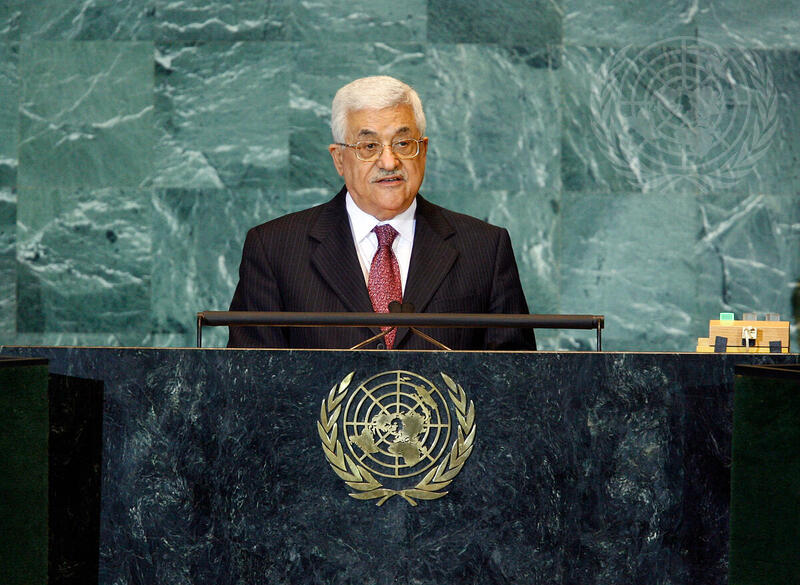
UNITED NATIONS — Palestinian President Mahmoud Abbas used a prerecorded address to the 81st United Nations General Assembly on September 25 to accuse Israel of conducting what he called a “genocidal war” in Gaza and to demand an enforceable path to two states. The Abbas UNGA speech on the Gaza “genocidal war” charge was delivered remotely after the United States denied visas to the Palestinian delegation. Abbas said approximately 70,000 Palestinians had been killed and described an “unprecedented humanitarian catastrophe.” Those figures and characterizations were his claims; Israel rejects the genocide allegation and says its war is directed at Hamas.
A remote address for a second consecutive year
Abbas appeared by video rather than from the General Assembly rostrum, the second consecutive year he addressed the gathering remotely. The United States said it denied visas because the Palestinian Authority and Palestine Liberation Organization were not meeting their obligations and were pursuing what Washington described as unilateral recognition and legal campaigns against Israel.
The visa decision changed the staging but not the reach of the speech. It also made access itself part of the political story. Supporters of the Palestinian delegation argued that a host country should facilitate U.N. participation; Washington maintained that its treaty obligations allow exceptions related to security and foreign policy. The dispute sits alongside, rather than resolves, the substance of Abbas’s claims.
Abbas’s central accusation
Abbas said Israel was carrying out a “genocidal war” and creating an “unprecedented humanitarian catastrophe” in Gaza. He accused the Israeli government of trying to destroy Palestinian existence and warned of a “malicious colonial scheme” that could produce another Nakba, the Arabic term Palestinians use for the mass displacement surrounding Israel’s creation in 1948.
Those words carry legal as well as political weight. Genocide is a specific international crime requiring proof of prohibited acts and intent to destroy a protected group in whole or in part. A political leader’s use of the term is not itself a legal judgment. Courts and investigative bodies assess evidence under separate standards. Israel rejects the accusation and says its military campaign targets Hamas after the October 7 attack.
The death toll and attribution
Abbas referred to approximately 70,000 Palestinians killed. Reuters context cited more than 73,000 deaths according to Palestinian authorities and more than 1,400 since the ceasefire. Those numbers should be attributed to the named authorities and source rather than presented as an independently established count by Signal Post News.
Fatality databases in Gaza are produced under wartime conditions, and outside access is limited. Disputes concern verification, the civilian-combatant breakdown and the completeness of records. The scale of death and destruction is not erased by those methodological questions, but precision requires naming who counted and what the number covers.
Settlement violence and West Bank fragmentation
Abbas connected Gaza to the occupied West Bank, warning about settlement expansion, settler violence and territorial fragmentation. His argument was that the war cannot be understood only through conditions inside Gaza because policies in the West Bank are reshaping the geographic basis of a future Palestinian state.
Roads, checkpoints, settlement blocs and areas of differing administrative control affect whether Palestinian territory can function as a contiguous political unit. Israel cites security needs and historical claims; Palestinians and most of the international community consider settlements illegal under international law, a characterization Israel disputes. The practical question is whether facts on the ground are closing the space for negotiated partition.
Another Nakba
The warning of another Nakba invokes both history and present fear. Palestinians use the term for the displacement of hundreds of thousands of people in 1948 and the loss of homes and communities. In current debate, it expresses concern that temporary wartime displacement could become permanent.
Israeli officials say evacuation orders are intended to move civilians away from combat zones, while critics argue repeated displacement, destroyed housing and restrictions on return create conditions of forced removal. Intent and permanence are central to the legal and factual dispute. Abbas framed the risk as part of a broader project; Israel rejects that characterization.
The state Abbas proposed
Abbas called for “an independent, democratic, non-militarized Palestinian state” living beside Israel. Each adjective is consequential. Independent implies sovereignty; democratic implies accountable institutions and elections; non-militarized suggests limits on armed forces; living beside Israel confirms a two-state framework rather than Israel’s elimination.
The proposal does not answer every implementation question. Negotiators would still need borders, security arrangements, Jerusalem, refugees, settlements, movement, resources and mutual recognition. A non-militarized state would need guarantees against external attack and internal armed challenges. Democracy would require credible elections and an accepted transfer of authority.
His rejection of terrorism and antisemitism
Abbas explicitly rejected terrorism and antisemitism. That language matters because Israel and the United States have accused Palestinian institutions of failing to confront incitement and of using international forums to isolate Israel. A clear rejection seeks to place Palestinian national claims within a universal rights framework rather than an ethnic or religious conflict.
Words alone will not satisfy critics. They will look for changes in official messaging, education, security cooperation and the handling of armed factions. Supporters will argue that the statement should be matched by pressure on Israel to prevent settler violence and protect Palestinian civilians. Credibility will depend on policy, not a single speech.
The Board of Peace opening
Abbas conditionally welcomed Trump’s Board of Peace initiative for Gaza recovery but said he had not seen it materialize. The phrasing preserves diplomatic flexibility: it does not reject a U.S. plan before details are available, yet it refuses to endorse an undefined structure.
A recovery board would face fundamental questions. Who appoints it? Does it govern, fund, supervise or merely coordinate? How does it relate to Palestinian institutions, Israel, Arab states and the United Nations? Who controls crossings and security? Reconstruction without political legitimacy can become temporary administration with no agreed destination.
The U.S. visa rationale
Washington said the delegation’s visas were denied because Palestinian leaders were not complying with commitments and were pursuing unilateral measures through recognition campaigns and international legal institutions. The U.S. position treats those initiatives as obstacles to direct negotiation.
Palestinians argue that international recognition and legal action are responses to a process that has failed to end occupation. The argument is circular: Washington asks for negotiation before recognition, while Palestinian leaders say they need international leverage because bilateral negotiations have not delivered statehood. The visa dispute condensed that structural disagreement into a decision about physical access to New York.
Israel’s rebuttal
Israel rejects allegations that its Gaza campaign is genocidal and says it is fighting Hamas, which led the October 7 attack, killed civilians and took hostages. Israeli officials argue that Hamas operates among civilians and that military operations are subject to legal review and precautions. Critics question the adequacy and effectiveness of those precautions given the casualty and destruction levels.
Fair treatment requires keeping two propositions separate: Hamas’s crimes and hostage-taking do not remove Israel’s obligations toward civilians, and Palestinian civilian suffering does not erase Hamas’s responsibility for attacks or conduct during the war. The legal evaluation of particular operations depends on targets, expected civilian harm, precautions and proportionality.
Netanyahu’s speech hours later
Israeli Prime Minister Benjamin Netanyahu addressed the General Assembly hours later and rejected the genocide allegations. He compared criticism of Israel to failures to confront earlier atrocities, defended strikes on Iran and accused delegates who walked out of abandoning moral clarity.
The paired speeches showed that the parties are not merely offering different policies; they are offering incompatible narratives about responsibility, legitimacy and survival. Abbas described a people threatened with erasure. Netanyahu described a state fighting enemies after a mass-casualty attack. Any diplomatic process must contend with both narratives without allowing either to substitute for verifiable facts.
The delegate walkout
A number of delegates left the hall during Netanyahu’s address. The walkout was a visible political judgment, but it did not itself settle the allegations under debate. Such gestures can signal diplomatic isolation, solidarity or domestic positioning. They can also reduce opportunities for direct listening.
Netanyahu called critics “moral cowards,” intensifying the confrontation. Supporters saw defiance; opponents saw dismissal of civilian suffering and international concern. The episode illustrated how the General Assembly functions as both diplomatic forum and global stage, where images can travel farther than policy details.
Mamdani’s criticism
New York political figure Zohran Mamdani criticized Netanyahu in remarks quoted in coverage of the speech, adding a local American dimension to the U.N. confrontation. His intervention reflected growing debate inside the United States over military support, civilian protection and the language used to describe the war.
A quoted criticism should not be treated as proof of the underlying allegation. Its significance is political: views once concentrated in activist spaces have entered mainstream municipal and national debate. That shift can affect congressional pressure, party coalitions and the conditions attached to aid.
Abbas’s authority and legitimacy problem
Abbas leads the Palestinian Authority in parts of the West Bank. He does not govern Gaza, where Hamas seized control in 2007, and he is widely reported to have little support among Palestinians. No recent national election has renewed his mandate. These facts complicate his claim to speak for the whole Palestinian people.
Weak popularity does not make the institutions he represents irrelevant. The PA remains central to international diplomacy, civil administration and any proposed transfer of governance in Gaza. But a durable settlement cannot rely on external recognition alone. It will need Palestinian political legitimacy, public consent and a credible process for leadership renewal.
The non-militarization bargain
A non-militarized Palestinian state could address Israeli fears about rockets, cross-border raids and armed groups. For Palestinians, accepting that limit would require robust guarantees that borders, airspace, movement and civilian security are not controlled indefinitely by another state.
Possible models range from international monitors to multinational forces and phased security transfer. Each has weaknesses. Foreign forces need rules of engagement and political consent; monitors can document violations without stopping them; phased plans can stall. The bargain is therefore not simply fewer weapons in exchange for a flag. It is sovereignty designed alongside credible protection.
Recognition versus negotiation
Support for Palestinian statehood has expanded in international forums, but recognition does not by itself create contiguous territory, functioning institutions or security. Direct negotiations have likewise failed to deliver those outcomes. The debate often presents recognition and negotiation as alternatives when each may be insufficient alone.
Recognition can establish a legal and diplomatic baseline. Negotiation is still needed for borders, security and implementation. The danger is symbolic progress without material change, or an endless process without a defined destination. Abbas’s address sought to turn broad support for two states into a timetable and mechanism, though it did not provide a fully specified one.
Who gains, who loses, who criticizes
Abbas gains international visibility and can frame Palestinian demands in state-building language, but the remote format and his domestic legitimacy problem limit his leverage. Israel gains an opportunity to emphasize Hamas and October 7, while facing sustained scrutiny over Gaza’s civilian toll and West Bank policy.
The United States preserves pressure on the PA through the visa decision but risks appearing to obstruct U.N. participation. Arab and European governments gain a platform to support two states yet must decide whether to commit money, recognition, monitors or political pressure. Gaza’s civilians remain the least empowered stakeholders despite bearing the greatest costs.
What the numbers mean
Abbas’s approximately 70,000 figure was a rounded claim in a political address. The Reuters context of more than 73,000, citing Palestinian authorities, uses a more recent or differently framed tally. The two should not be added or treated as separate groups of victims.
The reported more than 1,400 deaths since the ceasefire is likewise attributed context, not an independently audited Signal Post News count. Numbers in this war carry moral and political force; careful sourcing is how readers can understand that force without mistaking attribution for independent verification.
What happens next
Watch whether the Board of Peace initiative acquires a public charter, Palestinian participation and funding. Watch whether Washington revisits visa access or offers another diplomatic channel. Watch whether governments supporting two states attach concrete conditions to recognition, aid or arms.
Inside Palestinian politics, the critical questions are governance in Gaza, institutional reform and a path to elections. On the Israeli side, the questions include the course of military operations, hostage negotiations, settlement policy and the government’s response to international legal processes. A speech can frame these choices; it cannot make them.
What would make the two-state demand concrete
A practical path would require more than another declaration of support. It would need an agreed political horizon, limits on actions that preclude territorial contiguity, a reconstruction authority accountable to Palestinians and donors, and security arrangements accepted by both peoples. It would also need mechanisms for disputes, because any plan will face violations and political shocks.
The sequence is contested. Some governments favor reforming Palestinian institutions before recognition; others argue recognition is needed to create bargaining equality. Israel prioritizes security and the dismantling of Hamas’s military capacity; Palestinians insist that occupation and settlement expansion cannot continue during an open-ended transition. A workable framework must state which steps happen together and what follows if one party does not perform.
The bottom line
Abbas’s UN address combined maximal moral accusation with a comparatively conventional political proposal: two states, a non-militarized Palestine, rejection of terrorism and conditional engagement with a U.S. recovery initiative. The combination was designed to show that condemnation of the war and willingness to negotiate are not mutually exclusive.
Its impact depends on what follows. If governments convert two-state language into enforceable diplomacy and legitimate Palestinian governance, the speech may mark a useful intervention. If the visa dispute, rhetorical confrontation and walkout become the enduring images, the General Assembly will have documented division without narrowing it.
Related coverage
- Netanyahu’s UNGA speech and delegate walkout
- King Abdullah’s UNGA warning on Gaza
- Trump’s proposed Board of Peace for Gaza recovery
Sources
- UN News, September 2026: Abbas’s address, stated proposals and principal allegations.
- Asia Post: report on Abbas’s “genocidal war” accusation and two-state proposal.
- WMOT/NPR, September 25, 2026: Netanyahu’s speech, walkout and quoted criticism.
- Al Jazeera, September 24, 2026: Abbas’s warnings about Palestinian existence, displacement and statehood.
Reporting cutoff: September 26, 2026. Claims are attributed to the people, governments and organizations that made them. Where the underlying evidence or operational picture was not independently available, this article says so. Analysis is by Signal Post News.