US · Politics · Courts
The East Potomac Golf Links closure was supposed to begin on Sunday: gates shut at one of the most democratic pieces of ground in American golf, and a 15-month redevelopment started on the island parkland between the Potomac River and the Washington Channel. Instead, golfers will tee off as usual on Sunday morning. A federal judge’s order, issued on Saturday, keeps the course open for at least two more weeks — and converts a fight over fairways into the latest courtroom test of how far a president can go in remaking the capital’s public spaces.
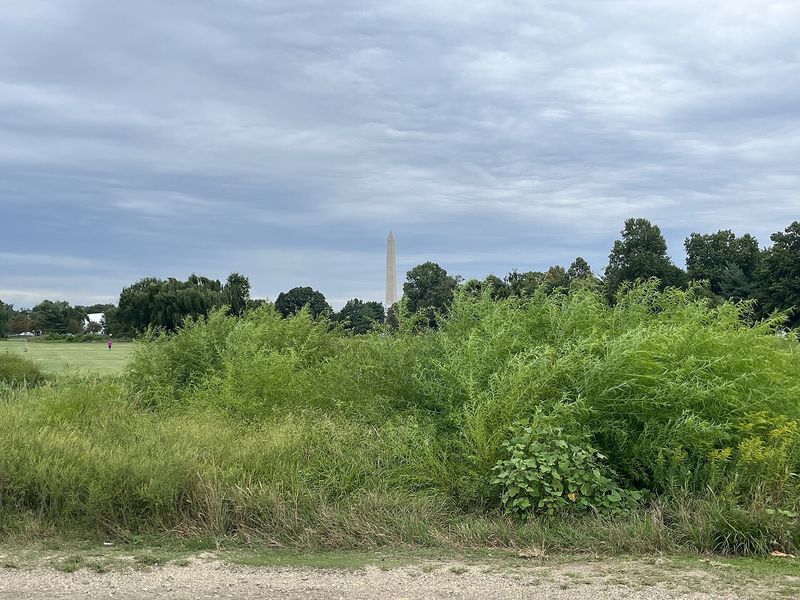
WASHINGTON, November 15, 2026 — The East Potomac Golf Links closure ordered by the Trump administration will not happen this weekend. U.S. District Judge Ana Reyes issued a temporary restraining order on Saturday, November 14, blocking the administration from closing East Potomac Golf Links, the public course in East Potomac Park in Washington, D.C., one day before the shutdown was to take effect. The closure, scheduled for Sunday, November 15, was to be the first step in a planned 15-month redevelopment of the course into a championship-style facility championed personally by President Donald Trump. Under Judge Reyes’s order, the park and the course must remain open during their normal operating hours; the restraining order stays in effect through November 28, 2026, or until the court orders otherwise.
The ruling came in DC Preservation League v. Department of the Interior, No. 1:26-cv-00477, a case filed in February in the U.S. District Court for the District of Columbia, in which the preservation group challenged the administration’s authority to close and rebuild the historic course on the timeline it had set. Saturday’s order did more than move a date. Judge Reyes also opened an inquiry into whether Justice Department lawyers made misrepresentations to the court in the course of the litigation — a step judges do not take casually, and one that now hangs over the government’s side of the case alongside the merits. The Justice Department, for its part, pointed to what the court had acknowledged: that the National Park Service may limit access to the park where the public is at risk, and that planning for the redevelopment may continue while the order is in place.
Both halves of that outcome deserve emphasis, because both are likely to be lost in the retelling. The redevelopment has not been cancelled. It has been paused, by an emergency order whose defining feature is that it decides almost nothing about who is ultimately right. What Saturday produced is a two-week window, a skeptical judge, and a case that now moves to the fight that actually matters. Everything else — the president’s posts, the preservation law, the century-old statute that created the park — is the terrain on which that fight will be waged.
What a temporary restraining order is — and is not
Analysis. A temporary restraining order is the fastest instrument in federal civil procedure, and the easiest to misread. It is not a verdict. It is not a finding that the DC Preservation League’s claims are correct, or that the administration broke the law, or that the redevelopment is unlawful. A TRO is an emergency pause: a judge, presented with a claim that something irreversible is about to happen, freezes the status quo long enough for the court to hear the argument properly. Its logic is the logic of the fire door, not the trial. The question before Judge Reyes on Saturday was not “who wins this case?” It was “what happens if the gates close on Sunday and the court later decides they should not have?”
That framing explains the order’s shape. Once a century-old public course is closed, fenced and put under construction, the harm the plaintiffs describe — lost access, disrupted historic fabric, a redevelopment that proceeds on momentum no court order can fully rewind — cannot be undone by a judgment issued months later. Money cannot re-open a demolished clubhouse on the schedule a golfer lost. Against that, the government’s harm from a two-week delay in a 15-month project is, by comparison, a calendar problem. Emergency orders live on exactly that asymmetry: the party asking for the pause must show a credible claim and a risk of harm that cannot be repaired; the party opposing it must show that even a brief delay does real damage. On Saturday, the balance tipped toward keeping the tee sheets open.
Two features of a TRO matter for what comes next. The first is its clock. Restraining orders are built to be short — days, not months — and this one runs through November 28 unless the court extends, modifies or dissolves it. The second is what it converts into. The ordinary sequel is a motion for a preliminary injunction, in which the same judge hears a fuller record, weighs the plaintiffs’ likelihood of success on the merits, the balance of the equities and the public interest, and issues an order that can last for the life of the case. That hearing, not Saturday’s emergency ruling, is where the legal fate of the redevelopment will begin to be decided. Readers who treat the TRO as the story’s ending will misunderstand it; it is closer to the story’s subpoena — an order that everyone stop, come back, and argue.
A park set aside in 1897
To understand why a golf course closure produced a federal lawsuit within days, start with the ground itself. East Potomac Park is not surplus federal real estate that happens to have fairways on it. It is an island landscape at the southern end of the monumental core — Hains Point at its tip, the Potomac on one side, the Washington Channel on the other — that Congress set aside for public recreation by statute in 1897. That act matters because it converts an argument about taste into an argument about authority. A park created by an act of Congress, for a stated public purpose, is not simply managed by the executive branch the way a landlord manages a property. The plaintiffs’ case, at its foundation, asks whether an administration may suspend that congressionally declared recreational use wholesale, for more than a year, in service of a redevelopment the statute’s authors never contemplated — and whether the process it followed to get there was the process the law requires.
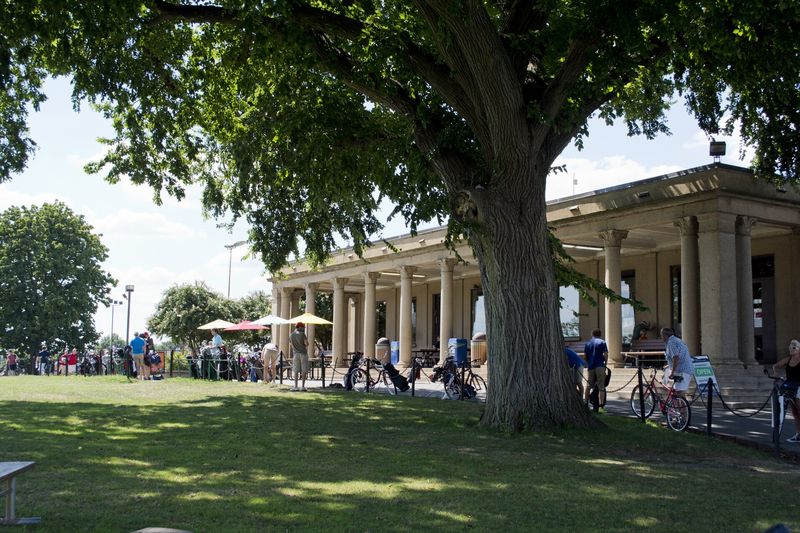
Layered on top of the 1897 act is the National Historic Preservation Act, the statute that governs what federal agencies must do before they alter historic places. East Potomac Park, the golf course included, is listed on the National Register of Historic Places, and that listing is not ceremonial. Under the preservation act’s review process, a federal undertaking that may affect a historic property triggers obligations: identify what is historic, assess the effects of the proposed work, consult with preservation authorities and the public, and consider alternatives before the damage is done. The process does not guarantee that preservation wins. It guarantees that preservation is heard — in order, on the record, before the fact. Preservation litigation in the United States is therefore usually process litigation: the claim is rarely “you may never touch this place” and almost always “you were required to do the work of deciding properly, and you did not.”
That is the ground on which the DC Preservation League has fought, and it is stronger ground than the phrase “golf course lawsuit” suggests. East Potomac is not a private club whose members are resisting a landlord. It is one of the capital’s genuinely public courses: municipal in character, priced for ordinary players, spread across 36 holes of White, Red and Blue layouts with a driving range and miniature golf, and woven into a park that cyclists, runners, anglers and picnickers use as their front yard on the river. Its defenders describe it, with some justice, as the most democratic golf ground in America — a place where the view from the rough takes in the Washington Monument and where a round costs what a round costs at a city course anywhere. A 15-month closure of that ground, for a championship-style rebuild, is precisely the kind of federal action the preservation statutes were written to slow down and examine.
The president’s case: “Trash Island”
No account of this fight is honest that treats the redevelopment as a bureaucratic initiative the president merely signed. The East Potomac project is a Trump project in the most literal sense: he has argued for it in public, in his own words, on his own platform. In a Truth Social post on October 26, and again on Saturday as the court fight came to a head, the president described the course in the vocabulary he reserves for places he intends to remake — old, dilapidated, a civic embarrassment — calling the park “Trash Island” and promising that his administration would make it the “Best Golf Course anywhere in the World.” The posts did legal work as well as rhetorical work. According to NPR’s reporting, the president’s October 26 post weighed heavily in the proceedings — a reminder that in this administration, the president’s social-media voice is not commentary on policy. It is evidence of it, and opposing counsel will quote it back.
Strip away the superlatives and the administration’s substantive case is not frivolous. East Potomac’s facilities are tired; nobody who has used the clubhouse or walked the course after heavy rain on its low, river-built ground disputes that the place needs serious investment. The government’s argument, as the Justice Department presented it, runs on two rails. The first is safety and stewardship: the National Park Service, which manages the park, has the authority — acknowledged, the department noted, by the court itself — to limit access where conditions put the public at risk, and a course in the condition the administration describes presents exactly the kind of deferred-maintenance hazards that land managers are obliged to act on. The second is ambition: a capital city’s public golf, on this view, should not be a byword for shabbiness, and a 15-month closure that returns a championship-caliber facility is a trade any serious manager would make. The golfers of Washington, the argument goes, are being asked to lend their course back for fifteen months in exchange for getting a far better one.
The weakness of the administration’s position has never been its description of the course’s condition; it is the sequence. Preservation law does not ask whether a redevelopment is a good idea. It asks whether the agency did the prescribed work, in the prescribed order, before committing the historic property to the plan — and whether closing a congressionally designated recreation park for fifteen months is a step the executive can take on its own authority, at its own pace, with the consultation trailing behind the announcement. A president who posts the verdict (“Trash Island”) before the process concludes hands his opponents their best exhibit: the claim that the decision was made first and the paperwork arranged afterward. That is the claim now in front of Judge Reyes.
The preservationists’ case
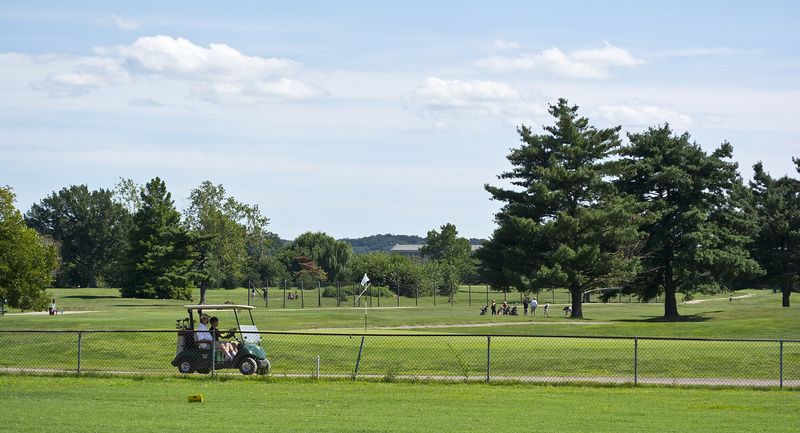
The DC Preservation League’s case rests on three legs, and it is worth separating them, because they do not stand or fall together. The first is statutory: the 1897 act dedicated this land to public recreation, and a fifteen-month total closure for reconstruction is, on the plaintiffs’ telling, not a management decision within that dedication but a suspension of it — the kind of step that requires more than an agency’s say-so. The second is procedural: the National Historic Preservation Act’s review obligations, owed because the park and course sit on the National Register, were not satisfied before the closure was ordered; the government, in this account, treated consultation as a courtesy to be extended after the decision rather than a discipline to be observed before it. The third is about access and character. A championship-style facility is not a neutral upgrade of a municipal course. Championship golf comes with championship economics — and the fear animating the League and the course’s regulars is that what returns after fifteen months will be a different institution wearing the same name: pricier, more polished, and oriented to events and visitors rather than to the Washingtonians who now walk it.
Each leg answers a different part of the administration’s case. To the safety argument: targeted, evidenced limits are the Park Service’s tool for risk — the very authority the Justice Department cited — and a blanket fifteen-month closure is a redevelopment decision dressed in safety’s clothing. To the ambition argument: nothing in preservation law forbids improving the course; it forbids improving it by shortcut. It is a coherent case. Whether it is a winning one is a different question, and Saturday’s order — a pause, expressly not a merits ruling — does not answer it.
The inquiry hanging over the government’s lawyers
The most consequential paragraph of Saturday’s proceedings may prove to be the one that is not about golf at all. Judge Reyes opened an inquiry into whether Justice Department lawyers made misrepresentations in the case. Precision matters here, because the word “inquiry” does specific work: the judge has announced that she will examine the question. She has not found that any lawyer misled the court, and nothing in Saturday’s order should be reported as such a finding. But an inquiry of this kind is not routine, and federal judges do not open them as theater. Candor to the court is the load-bearing obligation of government litigation; the United States appears in court on the strength of an institutional presumption that its lawyers’ representations can be relied on, and a judge who begins to doubt that presumption in a specific case has tools ranging from demands for clarification to sanctions and referrals.
For the redevelopment itself, the inquiry’s significance is practical as much as reputational. A government defending an aggressive timeline needs the court to trust its account of that timeline: what was decided, when, by whom, and what process actually occurred. The administration’s lawyers will now litigate the preliminary-injunction fight under a cloud of the court’s own making: the government is no longer merely defending a golf project. It is defending its credibility in the courtroom where the project’s fate will be decided.
One more front in the fight over Washington’s spaces
Analysis. East Potomac is the newest front in a war that has been running all year, and its geography is the point. Washington, D.C. is a city whose residents elect no voting members of Congress and whose most important public spaces — its parks, monuments, circles and museums — sit substantially under federal control. That arrangement, tolerable as background for decades, becomes politically live whenever a president decides to treat the capital’s landscape as a personal canvas. This president has, repeatedly: a triumphal arch project that a federal judge halted hours after a panel approved it; a running public feud over the Kennedy Center, conducted partly through posts aimed at the judge in that case; and now a golf course at Hains Point, renamed “Trash Island” by the president of the United States in advance of its federally ordered transformation.
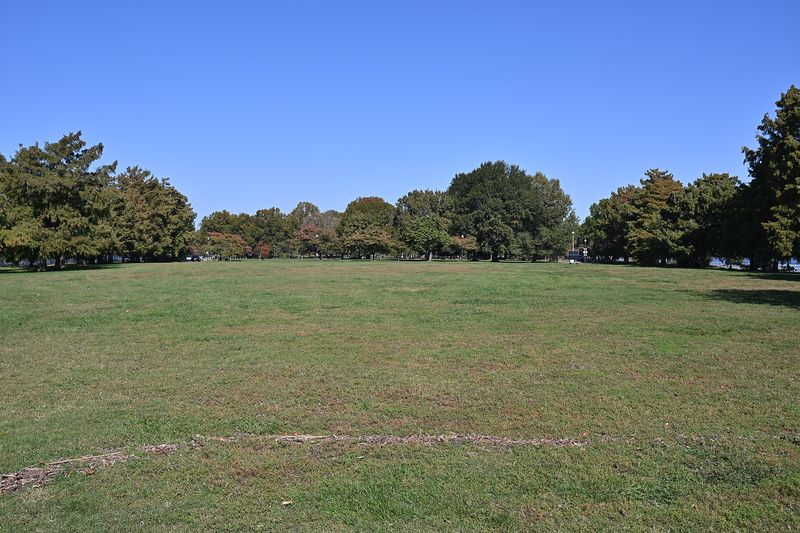
The home-rule tension underneath these episodes is structural, not rhetorical. When a president remodels a park in Ohio, the affected public has senators, representatives, a governor and a statehouse through which to object; the argument happens in politics. When a president remodels a park in Washington, the affected public has a non-voting delegate, a mayor whose authority over federal land is thin, and — as this case demonstrates — the courts. That is why the legal process keeps becoming the venue: it is the only venue in which the city’s interest in its own landscape is entitled to a full hearing. The DC Preservation League is, formally, a private nonprofit enforcing federal statutes. Functionally, in a case like this, it is also the standing that Washington itself does not have. Every TRO in this line of cases is therefore doing double duty: deciding a legal question, and registering, in the only register available, a city’s objection to being redecorated without being consulted.
It would be a mistake, though, to file the pattern as simply presidential appetite versus judicial resistance. The courts in these cases have not claimed a general veto over the president’s building program; they have enforced process — the statutes Congress wrote, the reviews Congress required, the candor the courts demand. Saturday’s order is faithful to that pattern. It does not say the course may never close. It says the government may not close it yet, on this record, by this route — which is why the administration’s loss, though real, is narrower than its critics will claim and more dangerous than its defenders will admit: narrower, because the project lives; more dangerous, because the judge now doubts the messengers.
What happens next
The immediate calendar is set by the order itself. Through November 28, East Potomac Golf Links stays open on its normal schedule; golfers keep their tee times, and the Park Service keeps its authority to respond to genuine hazards on the ground. Planning for the redevelopment may continue — the Justice Department has been explicit that the order permits it — but no closure, and no irreversible step toward one, may proceed while the restraining order holds. If the government wants the gates closed after November 28, it must win the next round, not merely wait for this one to expire unopposed.
That next round is the preliminary-injunction fight, and it will be a different species of proceeding from Saturday’s emergency ruling. Expect fuller briefing on the 1897 act and the preservation-review record, a harder look at the plaintiffs’ likelihood of success, and argument over the balance of harms on evidence rather than urgency. Running alongside it, on its own track, is Judge Reyes’s inquiry into the Justice Department’s representations, which will oblige the government to explain itself on the record in a way that could matter well beyond this case. The administration’s options, if the court extends the freeze, include seeking a stay from the D.C. Circuit — a request that would ask an appeals court to let a closure proceed while the lawfulness of that closure is still being litigated, a posture appellate judges traditionally view with suspicion when the irreversible step belongs to the government.
And the redevelopment itself? It sits, for now, in limbo — designed, announced, defended by the president in public, and blocked from its first physical act. Fifteen-month projects do not absorb indefinite legal delay without consequence: schedules slip, seasons turn, and a course whose closure was supposed to begin in mid-November faces a winter in which it must be maintained as a going concern rather than a construction site. But limbo is not cancellation, and no honest account of Saturday’s ruling can promote it into one. The president has promised the “Best Golf Course anywhere in the World” on an island Congress set aside for public recreation in 1897. A federal judge has now told him that the promise, like every other federal undertaking in a historic place, has to go through the process first. The next fourteen days will show whether the administration treats that as an obstacle to route around or as the decision it actually has to win.
Related coverage: Judge Blocks Trump Arch Construction Hours After Panel Approved the 250-Foot Monument · Trump Kennedy Center Truth Social Posts Target Judge Cooper · ICE Tracking Apps Court Order Bars Feds From Pressuring Apple and Facebook
Sources
Bloomberg Law — reporting on Judge Ana Reyes’s November 14 temporary restraining order: the order keeps East Potomac Park and East Potomac Golf Links open for two weeks, issued one day before the scheduled closure, in DC Preservation League v. Department of the Interior, No. 1:26-cv-00477 (D.D.C.). NPR — reporting on the two-week delay to the planned November 15 closure, the temporary restraining order, and the weight given in the proceedings to President Trump’s October 26 Truth Social post about the course. The facts of the order’s term (in effect through November 28, 2026, or until further court order), Judge Reyes’s inquiry into possible Justice Department misrepresentations, the president’s October 26 and Saturday Truth Social posts (“Trash Island”; “Best Golf Course anywhere in the World”), and the Justice Department’s response — that the court acknowledged the Park Service may limit access where the public is at risk and that redevelopment planning may continue — are as reported by Bloomberg Law and NPR. The inquiry is described in this report as an inquiry only; no finding has been made. Photographs: ~delta (CC BY-SA 4.0), Tim Evanson (CC BY-SA 2.0) and G. Edward Johnson (CC BY 4.0), all via Wikimedia Commons.