Breaking · United States · Washington, D.C.
President Donald Trump’s 250-foot triumphal arch won its final planning approval late on Thursday, November 5 — and lost its right to break ground less than two hours later. U.S. District Judge Tanya Chutkan’s 14-day temporary restraining order freezes every kind of construction work at Memorial Circle, on Columbia Island between the Lincoln Memorial and Arlington National Cemetery, while the courts decide whether Congress ever authorized the arch at all.
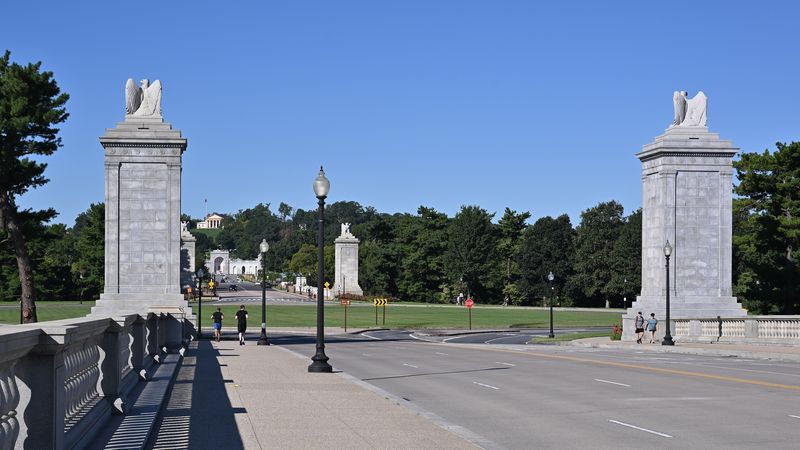
WASHINGTON, November 6, 2026 — President Donald Trump’s 250-foot triumphal arch won its final planning approval late on Thursday, November 5 — and lost its right to break ground less than two hours later. The National Capital Planning Commission voted 8-4 to approve the monument’s final site and building plans after nearly nine hours of testimony from about 100 opponents. Before midnight, U.S. District Judge Tanya Chutkan issued a 14-day temporary restraining order barring the administration from any construction-related work at Memorial Circle, on Columbia Island between the Lincoln Memorial and Arlington National Cemetery, while the courts decide whether Congress ever authorized the arch at all.
The order grants an emergency request from the District of Columbia and Virginia, which sued the National Park Service and the Department of the Interior on October 31, calling the project “legally indefensible” and arguing Congress never authorized the monument. In a 33-page opinion in the consolidated cases — Lemmon v. Trump and District of Columbia v. National Park Service — Chutkan found the two governments are likely to succeed on that argument. The ruling does not cancel the project and does not erase the commission’s approval. It freezes everything — construction, excavation, demolition, land-disturbing work, utility installation and roadway closures — for 14 days, and orders the government to certify by Monday, November 9, that every employee, contractor and subcontractor has been told to stop.
What happened on Thursday night
The administration was ready to move immediately. The Justice Department had told the court an initial six to eight months of excavation and foundation work could begin as early as Thursday if approvals came through, and the National Park Service posted its own decision record approving the project the same evening. Above-ground construction would have started in May 2027 at the earliest, on a total schedule of 33 to 39 months.
The Justice Department had also notified the court that a contractor had already carried out site-preparation work on October 31, apparently without National Park Service authorization. Rep. Don Beyer of Virginia, whose district includes the site, told the commission the arch would “snarl traffic for years, impact the nearby airport, and present even more serious threats to public safety that this commission has refused to acknowledge and grapple with.” Veterans, preservationists, lawmakers and residents testified for hours, most against. The commission approved the plans anyway — and Chutkan, who had asked the government to notify the court within an hour of any approval, ruled the same night.
The arch itself, by the numbers
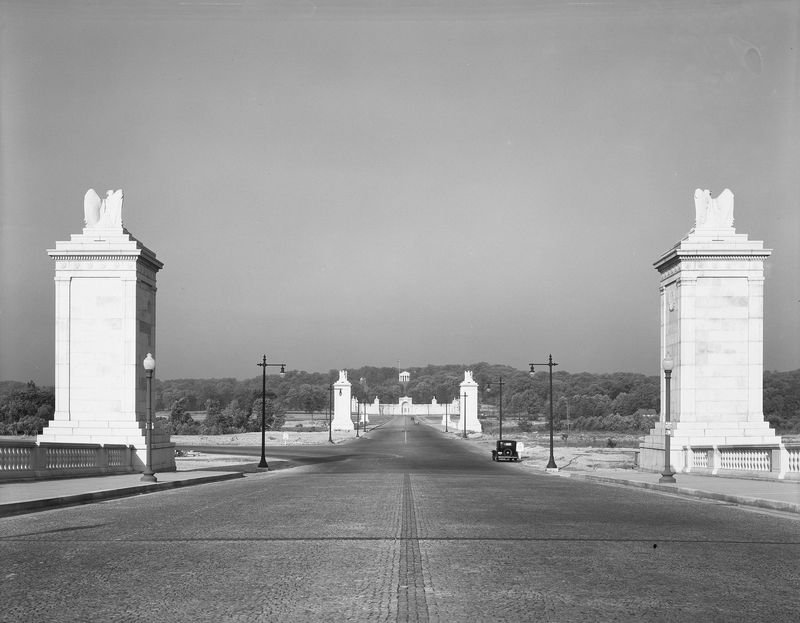
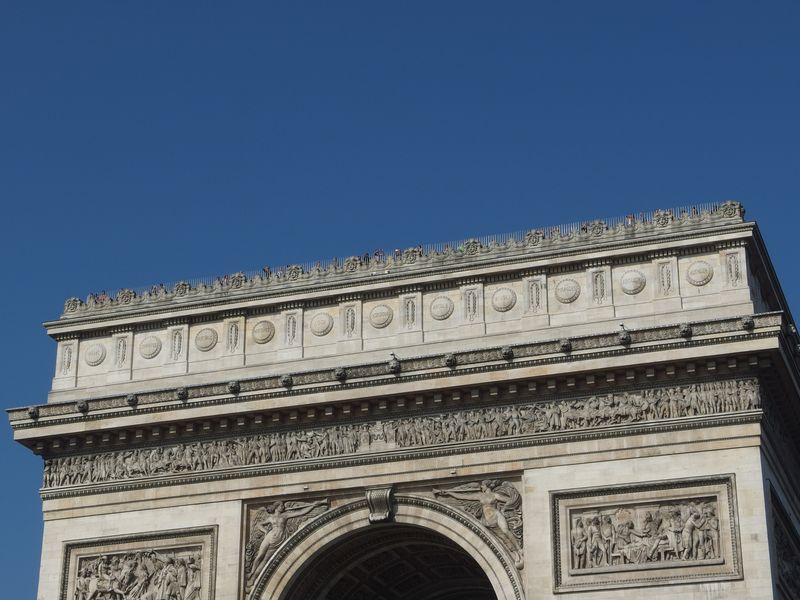
Officially named the Triumphal Arch and described by the National Park Service as honoring the nation’s 250th anniversary, it would rise on a highway roundabout at the western end of Arlington Memorial Bridge, across the Potomac from the Lincoln Memorial and at the entrance to Arlington National Cemetery. The stone arch would stand 166 feet, with gilded figures bringing the total to 250 feet (about 76 metres) — more than 80 feet taller than the Arc de Triomphe it is modeled on, roughly twice the scale of the Lincoln Memorial, and approaching the 288-foot height of the U.S. Capitol. Plans include gold statues, six stairways, five elevators and an observation deck. Trump has promoted it as both a landmark and a military asset: on November 2 he said the arch could house drones and snipers, calling it “right smack in the middle of everything, so very important for our military,” and “the most beautiful arch in the world.”
Why this matters
The fight is about who gets to build on the most symbolically loaded ground in American public life — and whether a president can do it on a law passed a century ago for a different structure. Chutkan rejected, provisionally, the administration’s central claim that Congress authorized an arch when it authorized the Arlington Memorial Bridge project in 1925; no statute, she found, authorizes this arch. She also treated the late-emerging national-security justification skeptically, calling it a “belated and unsupported assertion.”
Practically, Memorial Circle is a working traffic artery in the flight path of Ronald Reagan Washington National Airport; the judge credited the argument that starting now would disrupt traffic, force large-scale excavation and noise, and commit D.C. and Virginia resources irrecoverably — even a president who eventually wins cannot un-dig a traffic circle.
Context
Three Vietnam War veterans and an architectural historian sued in February; D.C. and Virginia filed October 31; Chutkan consolidated the cases and deferred ruling on a longer injunction/stay. Rep. Don Beyer has a bill to ban and defund the arch with about 80 co-sponsors, and Democrats, who won both chambers in the midterms, take over the House in January. The arch is one front in a wider remaking of the capital (White House ballroom, Kennedy Center overhaul, Reflecting Pool rebuild). Signal Post News first reported the arch plan — and the military role the president described for it — in September: Trump’s Planned D.C. Triumphal Arch Becomes ‘Military Complex’ Amid Backlash.
Who gains, who loses
D.C. and Virginia won a clean early victory and a court-endorsed reading of the authorization question; veterans and preservationists saw their February legal theory validated by the “likely to succeed” finding.
The administration holds final planning approvals from both the commission and the Park Service but cannot use them, and the first judicial word on its 1925-law theory was a rejection; contractors face a stop-work certification regime with a compliance report due November 9.
What happens next
Within 14 days Chutkan must decide whether to extend the block; the administration can appeal; the November 9 certification will show whether the stop-work order reached every contractor, including whoever did the October 31 site preparation; and a new Congress in January may formally refuse the authorization the White House says it does not need — turning “Congress has not said yes” into “Congress has said no.” If Congress stays silent, the case turns on the 1925 bridge law. For at least two weeks, the arch exists only on paper — approved, celebrated, and frozen in the same evening.
Sources
USA TODAY, November 5, 2026 (contributing: Reuters) — the National Capital Planning Commission’s 8-4 approval and the court fight that followed. Wall Street Journal, November 6, 2026 — the federal judge’s temporary block on construction of Trump’s 250-foot arch. Associated Press and Reuters syndicated reporting, November 6, 2026. NPR reporting, November 6, 2026, on the opinion in Lemmon v. Trump, No. 26-cv-544 (TSC). Photos: Wikimedia Commons, as credited in the captions.