U.S. · Politics · Technology
The ICE tracking apps court order is now permanent: a federal judge in Chicago has barred the Justice Department and the Department of Homeland Security from pressuring Apple and Facebook to suppress the Eyes Up video app and the “ICE Sightings – Chicagoland” group — a First Amendment ruling the government itself agreed to, and one that draws a bright line around how far officials may go when they want a platform to silence speech they dislike.
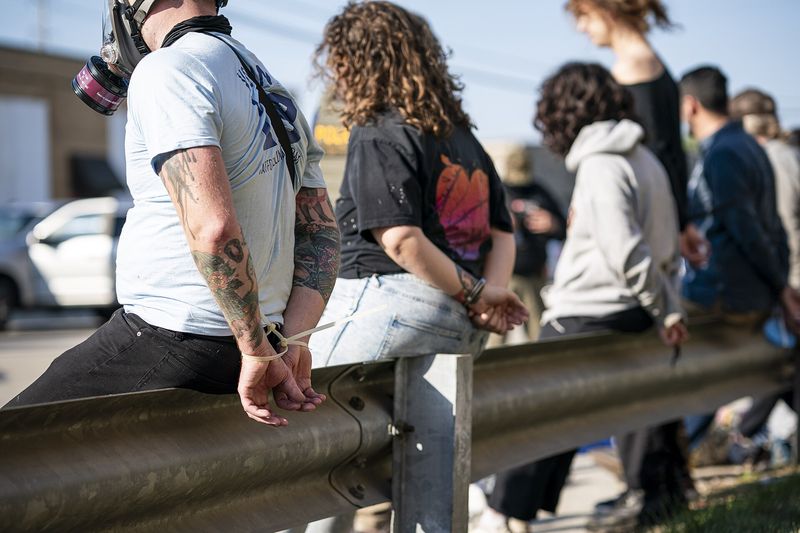
CHICAGO, November 14, 2026 — The federal government has agreed to stop pressuring Apple and Facebook to restrict two community tools used to report Immigration and Customs Enforcement activity, after a federal judge made permanent an injunction that bars officials from leaning on the platforms to suppress them. The ICE tracking apps court order, issued on November 13 by U.S. District Judge Jorge L. Alonso of the Northern District of Illinois, states that the federal government “shall take no actions, formal or informal, to demand or pressure” Facebook to suppress the “ICE Sightings – Chicagoland” group, or Apple to suppress Eyes Up, an app for recording and viewing videos of ICE operations. The free-speech group FIRE, the Foundation for Individual Rights and Expression, announced the agreement on Friday; the Justice Department and the Department of Homeland Security, whose top officials were the defendants, did not immediately respond to requests for comment, Reuters reported.
What the court ordered
A permanent ban on pressure — formal or informal
The order’s wording is the story. It does not merely prohibit a formal takedown demand, a court filing or an official letter. It bars “any actions, formal or informal” to demand or pressure the two companies — the phone call, the public threat, the raised eyebrow from a cabinet official all included. That breadth matters because the pressure campaign alleged in this case was never a legal order in the first place: it worked, the plaintiffs say, precisely because it was informal. On November 12, the government itself joined the plaintiffs in asking the court to convert the preliminary injunction first granted in April into a permanent one, and on November 13 Judge Alonso granted it and the case was dismissed with prejudice. The government must also take steps within seven days to notify the relevant parties, including the platforms, of the ruling.
Who sued, and over what
FIRE filed the lawsuit in February 2026 against the Justice Department and the Department of Homeland Security on behalf of two people. Kassandra “Kae” Rosado, a Chicago woman, created the Facebook group “ICE Sightings – Chicagoland,” where members reported ICE activity in the Chicago area; Facebook disabled the group, the suit alleged, in response to demands by federal officials, violating her free-speech rights. Mark Hodges, of Brown County, Indiana, built Eyes Up through his company, Kreisau Group; the app lets users upload, record and view videos of ICE activity and police encounters, stamped with location and time on a map. Apple removed Eyes Up from the App Store in the October 2025 sweep of ICE-related apps, and the suit alleged that removal, too, came under government pressure. The case began as Rosado v. Bondi and is now Rosado v. Blanche, after Attorney General Todd Blanche and Homeland Security Secretary Markwayne Mullin succeeded the original defendants in office.
How we got here
October 2025: the removals
The fight began in the autumn of 2025, when immigration enforcement became the most visible domestic operation of the Trump administration and community reporting tools proliferated alongside it. After the September 24, 2025 shooting at a Dallas ICE facility, in which two detainees were killed, then–Attorney General Pam Bondi publicly said the Justice Department had contacted Apple and demanded the removal of ICEBlock, a crowdsourced app that let users pin sightings of ICE agents on a map and alert others within a five-mile radius. Apple removed ICEBlock and similar apps on October 2–3, 2025, saying it had received information from law enforcement about safety risks. Eyes Up was swept up in the same removal wave, and the Chicago Facebook group was disabled in the same period. The distinction between the tools matters, and the court case turned on it: ICEBlock broadcast where officers were, in near real time; Eyes Up archived video of what officers had done. One is a location alert. The other is a record.
2026: Congress asks, Apple answers, the court acts
The removals never left the political agenda. ICEBlock’s creator, Joshua Aaron, sued administration officials in December 2025 in a separate case that is still being fought. In Congress, House Judiciary Committee Ranking Member Jamie Raskin opened an inquiry into whether the Justice Department improperly pressured Apple and Google; Apple replied in a July 2026 letter, reported by CNN in September, that its decision followed the Dallas attack and representations from the Justice Department that ICEBlock threatened officer safety, and that the apps violated its guidelines by providing precise location information that could create a roadmap for targeted violence. Raskin answered that there was no evidence the apps were used to carry out the Dallas shooting and asked Apple to conduct an independent review and disclose every app removed after federal requests. While that argument ran in public, FIRE’s case ran in court — and it is the court case that has now produced a binding answer.
Why this matters
The legal idea at the centre of this case has an ugly name and a long pedigree: “jawboning” — government censorship achieved not by law but by pressure, where an official who cannot constitutionally order speech removed instead persuades, warns or threatens the private platform that hosts it. The Supreme Court recognised the problem more than sixty years ago, when informal government threats to book distributors were held unconstitutional, and it has shadowed every modern fight over platform moderation since, from pandemic-era content disputes to the arguments in Murthy v. Missouri. What makes the Chicago order significant is not that a court theorised about jawboning. It is that the government, facing a concrete record — a named group disabled, a named app removed, officials who had publicly claimed credit for demanding removals — chose not to defend the practice and instead accepted a permanent, written prohibition on repeating it against these speakers.
The numbers behind the principle
Strip the case to its arithmetic and its shape is unusual. Two individual plaintiffs, one Facebook group and one small app, against two cabinet departments. Nine months from filing in February to a permanent order in November. Zero findings that the plaintiffs’ speech was unlawful — no court has held that recording immigration officers, or telling your neighbours you saw them, is anything other than protected activity. And one sentence of operative language, covering “formal or informal” pressure alike, that now binds every official acting for the defendants. Compare that with the parallel congressional track, which after more than a year of letters has produced explanations but no binding limit, and with the separate ICEBlock litigation, which the government is still contesting. The fastest, hardest constraint on the pressure campaign came from the smallest case in the pile.
Who benefits, who loses
The immediate winners are Rosado and Hodges, whose speech the government may no longer work to suppress, and the wider ecosystem of community monitoring groups that operate on large platforms and can now point to a permanent order when officials come calling. FIRE gains a clean, quotable precedent in a field where jawboning claims usually dissolve into disputes about what was said on which call. The government’s loss is real but bounded: it keeps every lawful tool it ever had — it can prosecute actual crimes, seek actual court orders, and argue its case in public — and officials, including the Department of Homeland Security, continue to maintain that ICE-tracking tools endanger agents, a position the department has stood by throughout. The platforms, notably, are neither winners nor losers in the order itself, because the order is not addressed to them.
What the order does not do
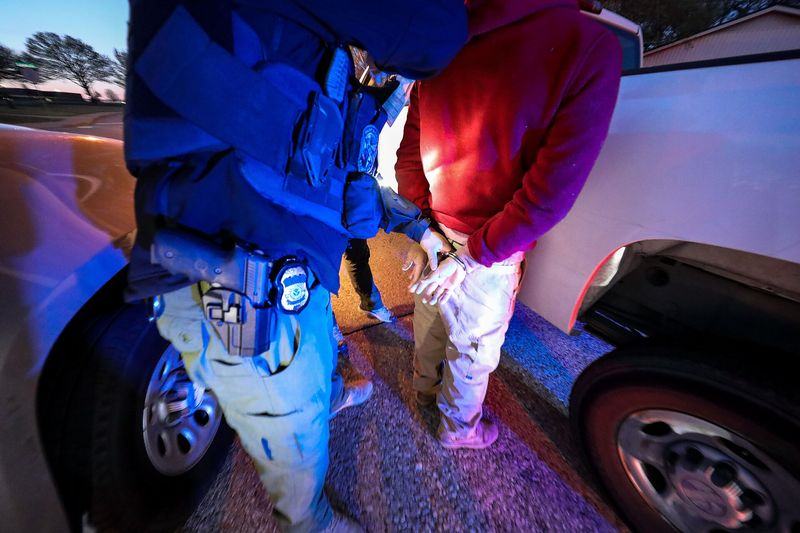
Precision matters here, because the order will be claimed as more than it is. It does not order Apple to restore Eyes Up, or Facebook to reinstate the Chicagoland group; both companies remain free, as a legal matter, to keep the removals in place under their own policies, and Apple has publicly defended its 2025 decision on safety grounds as recently as its July letter to Congress. It does not settle the separate ICEBlock case, where the government denies it was directly responsible for the removal and has asked for dismissal. It does not create a general statute: a bipartisan bill, the JAWBONE Act sponsored by Senators Ted Cruz and Ron Wyden, would bar federal officials from coercing platforms into removing speech across the board, but it remains a proposal, not a law. And it binds the defendants in this case as to these plaintiffs’ speech — powerful as a template, narrower than a universal rule.
What happens next
Three clocks now start. First, the seven-day notification window: the government must inform the relevant parties, including Apple and Facebook, of the order — at which point both companies face a purely commercial and reputational decision about reinstatement, with the government’s thumb formally off the scale. Watch whether either moves; silence from the platforms after notice would itself be a statement about how much of the 2025 removals was ever really theirs. Second, the ICEBlock litigation and the Raskin inquiry continue in parallel, and the Chicago order hands both a documented concession to cite. Third, the politics: Democrats, who won majorities in both chambers in this month’s midterms, have promised oversight of the administration’s immigration policies, and a permanent First Amendment order against two cabinet departments is ready-made hearing material. The administration, for its part, agreed to this outcome rather than litigating it to judgment — a choice that limits the precedent’s reach while conceding its core. The speech, meanwhile, goes where it has always gone when a channel closes: to the next group, the next app, the next neighbour with a phone. The court has now said the government may watch that speech, argue with it, and answer it. What it may not do is quietly arrange for it to disappear.
Related coverage: Brooklyn Bridge ICE protest coverage · the Austin ICE shooting · federal judge blocks DOJ threats against election workers
Sources
Reuters (Kanishka Singh, November 13, 2026), “Free speech nonprofit says US to end efforts to curb Facebook group and app reporting ICE activity” — syndicated text. Court-order details and timeline via FIRE’s case page reporting and The Indiana Lawyer, summarised at Daily Beltway and Reclaim The Net. Background on the 2025 removals and Apple’s July 2026 letter: CNN and the House Judiciary Committee Democrats.