War · Israel · Lebanon
The IDF said its air force hit a shipment moving from Syria into Lebanon for Hezbollah in the Janta area of the eastern Bekaa Valley overnight — the first Israeli strike in the Bekaa region in about three months, and a direct test of where the ceasefire’s enforcement line now runs. No casualties have been officially reported.
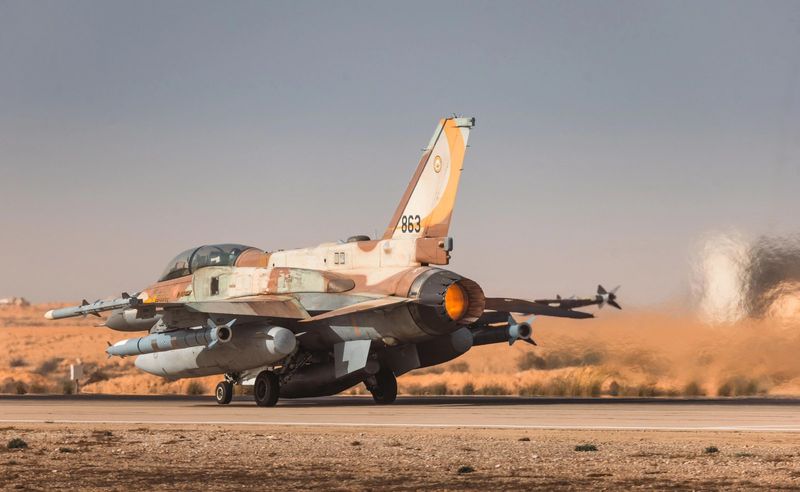
JERUSALEM, November 16, 2026 — Israel strikes Hezbollah weapons shipment routes when it says it finds them, and in the early hours of Monday it announced it had found one: the Israeli Air Force struck a weapons shipment in the Janta area, in the barrens near Nabi Chit in Lebanon’s eastern Bekaa Valley, on the Syria–Lebanon border. In its official announcement on November 16, as reported by the Jerusalem Post, the Israel Defense Forces said the shipment was moving from Syria into Lebanon for Hezbollah and was intended to strengthen the group’s operational capabilities for attacks on Israeli civilians and soldiers. No casualties have been officially reported.
Track it live: Israel war map — follow strikes, ceasefire lines and movements on the northern front as they develop.
The strike matters less for its size — a single shipment, hit in open barrens before dawn — than for its address and its timing. Janta sits on one of the oldest smuggling corridors between Syria and Lebanon, and the Bekaa had not seen an Israeli strike in about three months, according to Xinhua’s account, which cited Lebanese Al Jadeed TV. Israel did not strike a launcher, a command post or a village. It struck the supply line itself, a day after the United States ambassador arrived in Beirut for talks on security and sovereignty, and at a moment when Israeli assessments describe a Hezbollah that is quietly rebuilding an arsenal of some 10,000 rockets and missiles. The message, and the risk, are both in that choice of target.
What we know
- The announcement: the IDF announced on Monday, November 16, that the Israeli Air Force had struck a weapons shipment in the Janta / Al-Shaara area, in the Nabi Chit barrens of the eastern Bekaa Valley, on the Syria–Lebanon border. The Jerusalem Post reported the announcement, which was syndicated widely.
- The IDF’s account: the shipment was moving from Syria into Lebanon for Hezbollah, the IDF said, and was intended to strengthen Hezbollah’s operational capabilities for attacks on Israeli civilians and soldiers. The military said Janta has served as a route for numerous previous shipments. The weapons-shipment characterisation is the IDF’s, and it is attributed as such throughout this article.
- The timing: the Alma Research and Education Center put the strike at about 04:30 local time on November 16, in the overnight hours of November 15–16, and said it followed a day of UAV intelligence gathering over the area.
- The corroboration: Xinhua, citing Lebanese Al Jadeed TV, reported the strike as the first Israeli strike in the Bekaa region in about three months. Lebanon’s National News Agency (NNA) reported the dawn strike at Mahallat Al-Shaara, in the Baalbek district.
- Casualties: no casualties have been officially reported. Anadolu reported no casualties and no material damage for the Al-Shaara strike. Claims circulating on social media of two fatalities are unconfirmed; Signal Post News does not publish them as fact, and no official source has reported any death toll.
- The pattern: since May 2026, the Alma Center says it has identified six attempted Syria-to-Lebanon smuggling operations, including rockets, drones, anti-tank missiles and cruise-missile components.
A dawn strike in the barrens
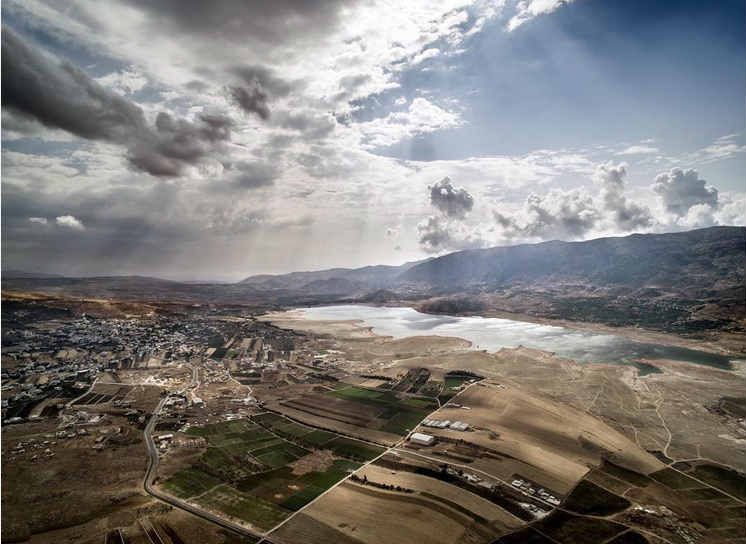
The geography explains the operation. Janta and Al-Shaara lie in the dry barrens east of Nabi Chit, where the eastern Bekaa Valley rises toward the Anti-Lebanon range and the Syrian border. It is open, sparsely settled country crossed by tracks that have carried contraband for decades — and, in Israel’s telling, weapons for Hezbollah. Lebanon’s NNA located the dawn strike at Mahallat Al-Shaara, in the Baalbek district, the administrative frame for the same ground the IDF described as the Janta area.
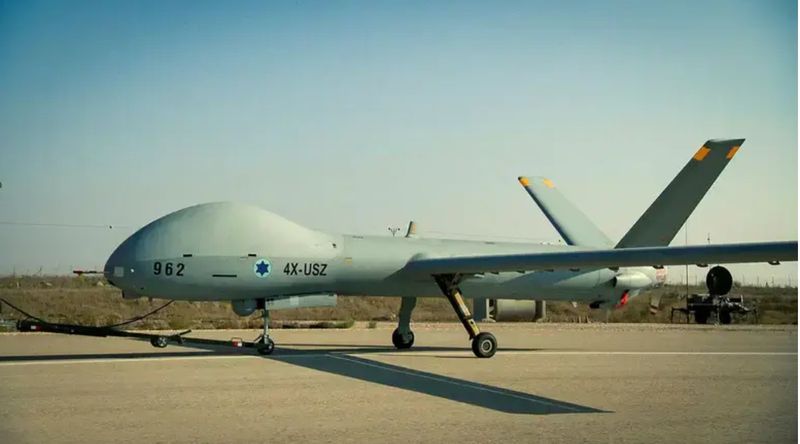
According to the Alma Center’s analysis, the strike did not come out of a clear sky. It followed a day of UAV intelligence gathering — the patient, watchful pattern in which a route is observed, a movement is confirmed, and only then is a strike authorised. That sequence, if Alma’s account is right, is the point: this was not a reactive strike against fire coming out of Lebanon, but a deliberate interdiction of a movement Israel says it tracked from Syria toward Hezbollah’s heartland in the Bekaa.
Signal Post News has covered this border war of interdiction before, including an earlier IDF drone strike on the Lebanon-Syria border in October. The Janta strike is the same campaign at a larger scale: not a drone against a single vehicle, but an air-force strike against a shipment, announced openly by the IDF rather than left unclaimed. The openness is itself a signal. Israel wanted this one attributed, named and understood — in Beirut, in Damascus and in Tehran.
The route Israel keeps striking
Janta’s role, in the IDF’s announcement, is not new. The military said the area has served as a route for numerous previous shipments from Syria into Lebanon. The Alma Center’s running count gives that claim a wider frame: since May 2026, Alma says, it has identified six attempted smuggling operations along the Syria-to-Lebanon corridor, moving cargo that included rockets, drones, anti-tank missiles and components for cruise missiles. Each category maps to a capability Hezbollah used heavily in the last war — and to the arsenal Israel says it is determined the group will not rebuild.

That is why the target was a shipment and not a site. A warehouse can be emptied; a launcher can be replaced. A route, struck repeatedly and watched constantly, becomes expensive to use: every crossing has to assume it is seen, every convoy has to price in the chance it does not arrive. Israel’s interdiction campaign is an attempt to raise that price until the rearmament pipeline slows to a trickle. Whether it is working is the question the Alma count cuts both ways on — six identified attempts since May can be read as a pipeline under pressure, or as a pipeline that is still, persistently, flowing.
First Bekaa strike in three months — and the ceasefire line
The strike’s sharpest edge is diplomatic. Xinhua, via Al Jadeed, reported it as the first Israeli strike in the Bekaa region in about three months — a pause that had begun to look, from Beirut, like the outline of an enforcement bargain: Israel would act in the south, where its forces and its grievances are concentrated, and the Bekaa would stay quiet. Monday’s strike redraws that assumption. The supply route, Israel is saying, is inside the enforcement line wherever it runs, including deep in the east, far from the southern border villages covered in our reporting on Israel’s evacuation orders and strikes in southern Lebanon.
The IDF paired the strike with a familiar formula: it said it remains committed to the ceasefire understandings between Israel and Lebanon, while accusing Hezbollah of continued smuggling and movement in violation of them. In that framing, the strike is not a breach of the ceasefire but its enforcement — a distinction Beirut has never accepted, and one that Lebanon’s diplomacy has been testing for months, most recently in the process covered in Lebanon Takes Its Case to Tampa, where Beirut demanded an end to Israeli attacks altogether. The timing adds a further layer: the strike came a day after US Ambassador Mike Waltz arrived in Beirut, on November 15, for talks on security and sovereignty. No source cited here links the two events, and this article does not claim a link. But a strike on the Syria corridor, delivered while Washington’s ambassador is in the Lebanese capital discussing sovereignty, will be read in the region as part of the same conversation.
The rearmament question behind the strike
Underneath the single shipment sits the number Israeli officials keep returning to. Israeli assessments reported by Army Radio on November 15 put Hezbollah’s rebuilt arsenal at roughly 10,000 rockets and missiles, and judge it likely that Hezbollah would join any renewed Israel–Iran fighting. Those are assessments, attributed here as assessments — not verified counts, and not facts this newsroom can independently establish. But they explain the urgency in Israel’s interdiction logic: if the arsenal is already five figures and growing through corridors like Janta, then every shipment stopped is, in the IDF’s arithmetic, a salvo that never gets fired.
The same logic is visible across the region’s other Hezbollah file. In Iraq, the campaign against the Iran-aligned Kataib Hezbollah’s finances and smuggling networks — covered in our report on Iraq’s crackdown on Kataib Hezbollah oil smuggling — reflects the same strategy of squeezing the logistics and money that sustain armed groups, rather than waiting to fight the weapons those networks deliver. At Janta, the squeeze took the form of a single dawn strike. The strategy is identical; only the instrument differs.
What has not been reported: casualties
One fact in this story is defined by its absence, and it deserves its own plain statement. No casualties have been officially reported from the Janta strike — not by the IDF, not by Lebanon’s NNA, and not by the Lebanese authorities. Anadolu, reporting on the Al-Shaara strike, said there were no casualties and no material damage. Against that official silence, claims have circulated on social media of two fatalities. Those claims are unconfirmed: no official source, hospital, or named authority has substantiated them, and Signal Post News does not publish any death toll for this strike as fact. If an official casualty figure is reported by a competent authority, this article will be updated to carry it, attributed to that authority.
Why this matters, and what happens next
The Janta strike is a small operation carrying a large argument. Israel is arguing, with ordnance, that the ceasefire understandings permit it to strike Hezbollah’s rearmament anywhere the supply chain runs — including a barrens track in the eastern Bekaa, three quiet months notwithstanding. Hezbollah’s answer, so far, is the pipeline itself: the Alma Center’s count of six attempted transfers since May describes a group still moving rockets, drones, anti-tank missiles and cruise-missile components across the Syrian border, ceasefire or not. Between those two positions sits Lebanon, whose government is being asked by Washington to assert sovereignty over exactly the territory and the armed group it does not control, and whose eastern valley has now been reminded that the war’s geography never really shrank to the south.
What to watch is whether Janta stays an exception or becomes a tempo. A single interdiction, unanswered, will be filed by all sides as enforcement. A second and third Bekaa strike in quick succession would read differently — as the reopening of a front that had been dormant since the summer, with the northern border’s stability then hostage to the same Iran escalation calculus that Israeli assessments say would pull Hezbollah in. For now, the established facts are narrow and should be stated narrowly: a shipment was struck at dawn in the Janta barrens, Israel announced it and explained it, three months of Bekaa quiet ended, and no casualties have been officially reported.
Sources
- Israel Defense Forces (IDF), official announcement, November 16, 2026, as reported by the Jerusalem Post (syndicated widely) — the Israeli Air Force struck a weapons shipment in the Janta area on the Syria–Lebanon border; the shipment was moving from Syria into Lebanon for Hezbollah and was intended to strengthen its operational capabilities for attacks on Israeli civilians and soldiers; Janta has served as a route for numerous previous shipments; the IDF said it remains committed to the ceasefire understandings while accusing Hezbollah of continued smuggling and movement in violation of them.
- Xinhua, November 16, 2026, citing Lebanese Al Jadeed TV — the strike was the first Israeli strike in the Bekaa region in about three months.
- Alma Research and Education Center, analysis, November 16, 2026 — the strike took place at about 04:30 local time in the Janta / Al-Shaara area, Nabi Chit barrens, and followed a day of UAV intelligence gathering; since May 2026 Alma has identified six attempted Syria-to-Lebanon smuggling operations, including rockets, drones, anti-tank missiles and cruise-missile components.
- Lebanon National News Agency (NNA), November 16, 2026 — the dawn strike at Mahallat Al-Shaara, Baalbek district.
- Anadolu Agency, November 16, 2026 — no casualties and no material damage reported for the Al-Shaara strike. No casualties have been officially reported by any authority; social-media claims of two fatalities are unconfirmed and are not published here as fact.
- Army Radio (Israel), November 15, 2026, as reported in Israeli assessments — Hezbollah assessed at roughly 10,000 rockets and missiles and judged likely to join any renewed Israel–Iran fighting; reported here as an attributed assessment, not as a verified count.
- Reporting context: US Ambassador Mike Waltz arrived in Beirut on November 15, 2026, for security and sovereignty talks, a day before the strike.
- Signal Post News, related coverage: IDF drone strike on the Lebanon-Syria border; Israel’s evacuation orders and strikes in southern Lebanon; Lebanon Takes Its Case to Tampa: Beirut Will Demand an End to Israeli Attacks; Kataib Hezbollah Oil Smuggling: Iraq’s Prime Minister Readies Troops to Confront the Militia.
- Photos: an Israeli Air Force F-16I Sufa taking off, Israel Defense Forces (IDF) via idf.il; an Israeli Heron UAV, file photograph via JForum; the Anti-Lebanon range, Mountains Magazine Lebanon; the Bekaa Valley from the air, file photograph via BlogBaladi — each credited in its caption and labelled as a file photograph; none depicts the November 16 strike itself.