
BEIRUT — Israel's military issued new Israel Lebanon evacuation orders on Sunday for more than 10 villages and towns across southern Lebanon, including several communities in the Nabatieh district north of the Litani River. That geography matters: the warnings extend beyond Israel's current zone of occupation and mark a significant expansion of the area in which civilians are being told to leave.
Avichay Adraee, the Israeli military's Arabic-language spokesman, told residents: “For your safety, you must evacuate your homes immediately and move away from the villages and towns by at least 1,000 metres [0.6 miles] into open areas.” Three towns were receiving such orders for the first time, according to the lead reporting reviewed by Signal Post News.
Lebanon's state-run National News Agency then reported strikes across the south, including in places not named in the displacement warning. The distinction is consequential. An evacuation map is not a complete map of danger, and civilians outside a named zone cannot assume they are outside the campaign.
Why this matters: the Litani line is no longer a boundary
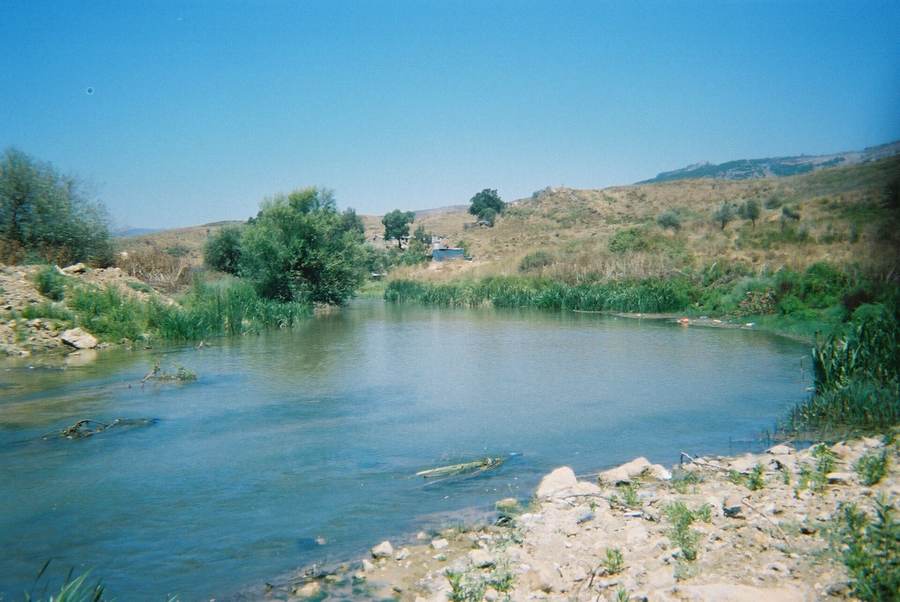
The Litani River has served as more than a landmark in this war. It is a military and diplomatic reference point: a line invoked in arguments over Hezbollah's armed presence, Lebanese state control and the limits of Israeli operations. Orders reaching into Nabatieh north of the river therefore signal that the operational logic is widening beyond the occupied belt in the south.
That prospect had been foreshadowed on Wednesday, when Israeli military chief Eyal Zamir threatened action “beyond the Yellow Line,” the line marking Israel's area of control. “Any threat, anywhere, against our communities or our forces – including beyond the Yellow Line and north of the Litani – will be eliminated,” he said.
Sunday's warnings turn that threat into a civilian fact. Whether or not Israeli ground forces move, the public definition of the battlespace has changed. For families, local officials and aid agencies, the immediate question is not where the occupation line sits but how far the next order or strike might reach.
The pattern also sharpens the stakes described in our earlier coverage of Lebanon's demand for a full Israeli withdrawal. If the zone of military action expands while negotiations remain indirect, each new warning erodes the premise that the conflict can be contained geographically.
What happened across southern Lebanon
Saturday's attacks had already shown how dispersed the campaign had become. The National News Agency, in reporting carried by Anadolu and other outlets, said Israeli forces demolished a school with explosives in Houla, in the Marjayoun district, and set fire to homes there. It reported shelling in Khiam, Tallouseh and Bani Hayyan, and on the outskirts of Mayfadoun and Zawtar al-Sharqiyah.
Warplanes struck Bani Hayyan twice, as well as Kfar Tibnit, Mayfadoun and the Doha Kfar Rumman area, according to the same reporting. One strike was said to have destroyed a house in Mayfadoun. Large detonations were reported in Aitaroun and Tallouseh, while blasts in Mansouri in the Tyre district were powerful enough to be felt in Tyre.
Israel says its operations answer an alleged Hezbollah explosive-laden drone launched Saturday toward its forces in what it calls the southern Lebanese “security zone.” Hezbollah had not commented on that drone claim at the reporting cutoff. The absence of an immediate response does not verify or disprove the Israeli account; it leaves the trigger contested while the military consequences are plainly visible.
Background: a ceasefire that exists mostly on paper
The current escalation began on March 2. A U.S.-brokered ceasefire took effect April 17 and was recently extended to mid-May, but its core bargain has not been realized. Israel maintains five divisions in the south, according to the reporting behind Sunday's story, and has continued bombing and demolishing homes. Lebanese officials describe the arrangement as a ceasefire that “exists only in name.”
A U.S.-sponsored Framework Agreement announced in June was meant to create a gradual Israeli withdrawal matched by deployment of the Lebanese army. Talks in Rome supplied a diplomatic track, but the battlefield has repeatedly outrun it. Every strike beyond the existing control line makes sequencing harder: Israel argues it must act before withdrawing; Beirut argues withdrawal is required before sovereign state control can take hold.
The dispute also sits inside a wider regional strategy. Israeli officials say the objective is to stop Hezbollah from rebuilding weapons and launch capacity. Lebanese officials answer that continuing strikes and demolitions obstruct the stability and state authority Israel says it wants. Our earlier report on Hezbollah chief Naim Qassem's posture explains why disarmament remains the political hinge, while calls inside Israel for a wider regional war show the pressure pushing in the opposite direction.
The drone war of the past week
The latest orders follow a costly week for Israeli forces. Two soldiers and an army contractor were killed in drone attacks in the area, and dozens of soldiers were wounded. Those losses give Israel a clear tactical rationale for trying to push launch threats farther away from its positions and communities.
They also show why the conflict is difficult to fence inside a line on a map. Small, mobile drones can be launched from beyond a fixed occupation zone. Israel's answer is to extend surveillance, strikes and displacement warnings farther north. Hezbollah's incentive, meanwhile, is to demonstrate that an occupied security belt does not insulate Israeli forces. The result is an expanding contest in which civilians bear the cost of both mobility and counter-mobility.
Multiple angles: who benefits and who loses
Israel's rationale: suppress the launch network
From Israel's perspective, the deaths and injuries of the past week demonstrate that a static line is not enough. The military says Hezbollah retains the ability to launch drones against troops and communities, and its statements frame strikes north of the Litani as pre-emption rather than expansion for its own sake. The evacuation orders are presented as civilian protection before attacks on alleged military infrastructure.
That rationale has two limits. First, directing families into open areas does not guarantee safety or shelter. Second, strikes in towns not named in an order weaken the claim that the warning system offers a reliable civilian boundary. Protection depends not just on notice but on a safe destination and a predictable scope of attack.
Lebanon's case: attacks weaken the state they are meant to empower
Lebanese officials argue that continued Israeli attacks make the Framework Agreement harder to execute. The Lebanese army cannot easily extend authority into communities being bombed or evacuated, and the government cannot sell disarmament as a path to sovereignty while Israeli divisions remain on Lebanese soil.
President Joseph Aoun said Wednesday that Israel must fully implement the ceasefire before direct peace negotiations can advance. That is not simply a procedural objection. It is a political survival argument: talks conducted while occupation and strikes continue would expose Beirut to the charge that it is normalizing pressure rather than ending it.
Washington's gamble: direct talks before the framework collapses
The United States is pressing Lebanon and Israel toward direct peace negotiations. Washington's logic is understandable: indirect mechanisms have failed to close the distance between the parties, and a negotiated border-security arrangement could replace recurring military tests.
But timing cuts both ways. Direct talks could create the political channel the ceasefire lacks, or they could become cover for an indefinite military status quo. Aoun's insistence on implementation first and Israel's insistence on neutralizing threats first are mirror-image conditions. Each side wants the other to deliver the end state before negotiations begin.
The numbers in context
Lebanon's Health Ministry says at least 10 people were killed in Israeli attacks on Saturday. Since the escalation began March 2, it counts 2,659 people killed and 8,183 injured. Those figures measure more than battlefield intensity; they show that the April ceasefire did not produce a clean break in casualties.
The five Israeli divisions maintained in the south are another measure of scale. A force presence that large is not a narrow raid posture. It requires supply, protection and freedom of action, all of which create continuing pressure on surrounding Lebanese communities. Against that, more than 10 communities named in a single new warning represent a broad civilian footprint even before counting the towns struck outside the list.
The 1,000-metre order deserves similar scrutiny. On a map it sounds limited; in a chain of closely spaced southern villages, a one-kilometre radius can overlap roads, fields and neighboring communities. It can also push residents into exposed terrain with no assurance that open areas are serviced, marked or outside the path of subsequent attacks.
What happens next
Scenario one: a contained flare-up
Israel completes a limited series of strikes tied to the alleged drone launch, Hezbollah avoids immediate retaliation, and the new warnings lapse without a ground advance north of the Litani. U.S. diplomacy then uses the pause to revive withdrawal and army-deployment sequencing. This is the least destructive path, but it requires both sides to resist the incentive to restore deterrence with one more strike.
Scenario two: the framework bends but survives
Strikes and drone launches continue at a lower tempo while Rome and U.S.-backed talks produce local arrangements: phased Israeli pullbacks, Lebanese army deployments and inspection or monitoring mechanisms. The agreement would remain imperfect, but the parties could convert military facts into a managed boundary rather than an expanding war.
Scenario three: framework collapse
Additional drone casualties bring wider Israeli attacks north of the Litani; Hezbollah responds at greater range; Israel retains or expands its security zone; and Beirut suspends the political track. In that scenario, Sunday's orders will look less like an isolated warning and more like the first public notice that the war's geography had changed.
Indicators to watch
- New geography: whether future evacuation orders name more communities north of the Litani or remain tied to Sunday's list.
- Ground movement: whether Israeli units move beyond the existing Yellow Line, not only whether airstrikes cross it.
- Hezbollah's response: any comment on the alleged Saturday drone, claimed retaliation or shift in launch range.
- Lebanese army deployment: visible movement under the June Framework Agreement and whether Israel matches it with withdrawal.
- U.S. diplomacy: a date, venue or agenda for direct negotiations rather than general pressure for talks.
- Civilian access: whether residents can return, whether open areas receive aid and whether towns outside warning zones continue to be struck.
Sources and reporting notes
- Al Jazeera lead report: new forced displacement orders in southern Lebanon, including communities north of the Litani.
- Fana / QNA: National News Agency reporting on the demolished school, burned homes and strikes across southern Lebanon.
- Crossfire Arabia, citing Anadolu: details of Saturday's attacks and detonations.
- Israeli military statements by Avichay Adraee and Eyal Zamir, as quoted in the lead reporting; Lebanon's National News Agency; Lebanon's Health Ministry casualty figures.
Reporting cutoff: October 4, 2026 at 2:30 a.m. UTC. Claims by the Israeli military and Hezbollah are attributed to the party making them. Hezbollah had not commented on Israel's account of the alleged Saturday drone launch at the cutoff. Geographic photographs are used for context and do not depict the attacks described.